
Showing Results for Wireless Access Points
-
Save $0.01
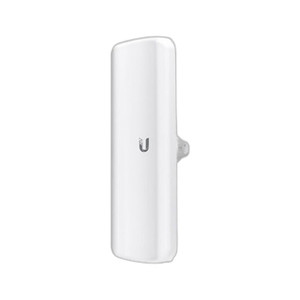
Ubiquiti LAP-GPS-US Outdoor Wireless Access Point with GPS
Outdoor AP with integrated GPS for synchronized multi-site mesh networks
- Integrated GPS enables precise frame timing sync across multi-site mesh cells, reducing interference.
- 16 dBi antenna gain and AirMax ac protocol support reliable long-range P2P and P2MP bridge links.
- Single-cable 48V passive PoE at 7W simplifies remote endpoint installation with no added power runs.
In stock · Ships same business day Free shipping over $499Add to quote$99.00 $98.99 Save $0.01 -
Save $1,072.01

Code Blue CB1E00539 Access Point Module
N access point module designed for integration into surveillance and paging systems
- Runs on 120V AC power, simplifying integration into standard electrical infrastructure.
- BLE connectivity enables low-energy wireless communication within Code Blue security systems.
- Functions as a gateway/access point module, supporting networked security deployments.
Usually Ships in 2-3 Weeks Free shipping over $499$7,990.00 $6,917.99 Save $1,072.01 -

Cradlepoint Inc 170836-000 Dual-Band WiFi Antenna Charcoal
Dual-band WiFi antenna with RPSMA connector for Cradlepoint routers
- Dual-band 2.4 GHz and 5 GHz Wi-Fi antenna for remote site connectivity
- 194 mm RPSMA direct-attach charcoal antenna for field deployment
- Direct OEM-branded Wi-Fi antenna with manufacturer warranty
Usually Ships in 2-3 Weeks Free shipping over $499$14.99 -
Save $86.01

Cradlepoint Inc LW03-AP2600-G0 AP2600 Wireless Access Point
Enterprise Wi-Fi access point with 3-year cloud management included
- Enterprise AP with NetCloud cloud management
- Dynamic channel selection and band steering built in
- Single-cable PoE deployment for retail/branch sites
In stock · Ships same business day Free shipping over $499$839.00 $752.99 Save $86.01 -
Save $76.01

Cradlepoint LW01-AP2600-G0 Wireless Access Point with 1-Year
Dual-band managed access point with 1-year cloud management included
- Dual-band AP with 2.4 GHz + 5 GHz simultaneous coverage
- NetCloud-managed for centralized branch wireless policy
- Band steering and dynamic channel selection built in
In stock · Ships same business day Free shipping over $499$739.00 $662.99 Save $76.01 -
Save $97.01

Cradlepoint LW05-AP2600-G0 Wireless Access Point
Dual-band access point with 5-year managed service for distributed sites
- Dual-band 2.4/5 GHz Wi-Fi access point with 5-year service
- NetCloud-managed with band steering and dynamic channel
- Single-cable PoE deployment with TAA-compliant build
In stock · Ships same business day Free shipping over $499$939.00 $841.99 Save $97.01 -
Save $222.00
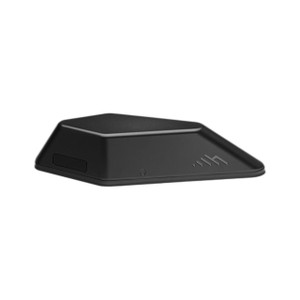
Cradlepoint TAA-170900-014 5G Modem with Integrated WiFi
5G modem with integrated WiFi, TAA-compliant for government procurement
- 5G modem with integrated Wi-Fi for high-throughput edge
- Native 5G plus LTE fallback for mobile and remote sites
- TAA-compliant build for federal procurement use
In stock · Ships same business day Free shipping over $499$2,153.99 $1,931.99 Save $222.00 -
Save $76.01

Cradlepoint TAA-LW01-AP2600-G0 Wireless Access Point
TAA-compliant dual-band Wi-Fi AP with PoE+ for federal deployments
- Dual-band 2.4/5 GHz AP for warehouse and industrial IoT
- Concurrent legacy + modern clients without bottlenecks
- NetCloud Wi-Fi AP Essentials subscription included
In stock · Ships same business day Free shipping over $499$739.00 $662.99 Save $76.01 -
Save $828.01
HPE ANW AP-679 (US) Outdoor Access Point - S0P60A
In stock · Ships same business day Free shipping over $499$4,019.00 $3,190.99 Save $828.01 -
Save $0.01
HPE Ceiling Grid Rail Adapter for Basic Flat Rails Mount Kit - JW044A
In stock · Ships same business day Free shipping over $499$31.00 $30.99 Save $0.01 -
Save $0.01
HPE Outdoor AP Hanging or Tilt Install Mount Kit - JW054A
In stock · Ships same business day Free shipping over $499$154.00 $153.99 Save $0.01 -
Save $220.13

NETGEAR 1PT Insight Managed EXT WIFI7 DB AP - WBE700Y-100NAS
WiFi 7 (802.11be) managed outdoor access point engineered for extended-range deployments in surveillance networks, warehouse facilities, and
- WiFi 7 (802.11be) with multi-link operation cuts latency for outdoor surveillance feeds.
- Single GbE uplink with 802.3at PoE support simplifies pole-mounted cable runs.
- NETGEAR Insight cloud management enables remote provisioning across distributed sites.
In stock · Ships same business day Free shipping over $499$724.12 $503.99 Save $220.13 -
Save $287.11

NETGEAR Insight Managed Smart Cloud Wireless - WAC510P8-100NAS
N AC1300 dual-band wireless access point designed for multi-site deployments where centralized cloud provisioning and monitoring replace on-site
- AC1300 dual-band 802.11ac supports concurrent 2.4 GHz and 5 GHz client loads.
- 8-pack bundle includes one power adapter per unit, eliminating separate PSU procurement.
- NETGEAR Insight cloud management provisions and monitors all APs from a single dashboard.
Usually Ships in 2-3 Weeks Free shipping over $499$956.10 $668.99 Save $287.11 -
Save $97.89

Netgear Insight Managed WIFI 6 AX1800 - - WAX610PA-100NAS
Business-class WiFi 6 access point engineered for cloud-managed deployments across retail, office, and light-industrial environments
- WiFi 6 AX1800 dual-band radio delivers 1.2 Gbps (5 GHz) + 600 Mbps (2.4 GHz).
- 2.5GBASE-T uplink over Cat5e/Cat6 eliminates wired bottleneck at the AP.
- 802.3bt PoE support and Insight cloud onboarding cut installation time per site.
Usually Ships in 2-3 Weeks Free shipping over $499$254.88 $156.99 Save $97.89 -
Save $437.95
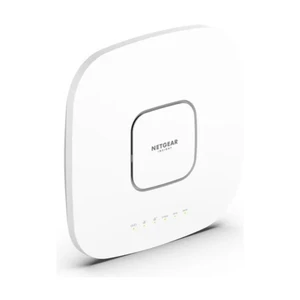
Netgear Insight Managed WIFI 6E AXE7800 - WAX638E-111NAS
Tri-band WiFi 6E access point designed for enterprise surveillance, commercial deployments, and bandwidth-constrained environments where wireless
- Tri-band 6 GHz offload keeps cameras, VoIP, and clients on separate channels.
- 7.8 Gbps AXE7800 aggregate handles simultaneous 4K PTZ streams without bitrate drop.
- PoE+ 802.3at input powers the AP from existing switches—no AC wiring required.
Usually Ships in 2-3 Weeks Free shipping over $499$1,091.94 $653.99 Save $437.95 -
Save $300.21
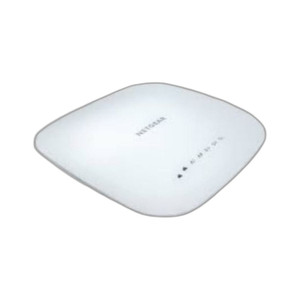
NETGEAR WAC540B03-100NAS Tri-band Access Point
Tri-band wireless access point designed for enterprise deployments requiring centralized cloud management and high-density client support
- Tri-band Wi-Fi 6 (2.4GHz + dual 5GHz) handles mixed camera and client traffic without congestion.
- Single PoE+ port (802.3at, 30W max) eliminates separate power supply on PoE+ switch deployments.
- NETGEAR Insight cloud dashboard centralizes provisioning, firmware, and monitoring across all sites.
Usually Ships in 2-3 Weeks Free shipping over $499$981.20 $680.99 Save $300.21 -
Save $36.79
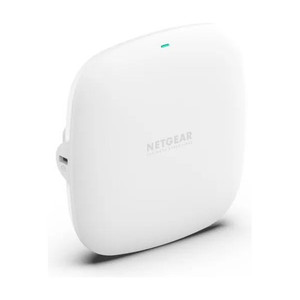
NETGEAR WAX210-100NAS 1PT AX1800 WiFi 6 Access Point
Wall-mount AX1800 WiFi 6 access point engineered for small-to-medium office, retail, and hospitality deployments where compact form factor and
- WiFi 6 AX1800 delivers 1.8 Gbps aggregate over dual-band 2.4 GHz and 5 GHz.
- Single 802.3af PoE port eliminates AC wiring — drops into any PoE switch fabric.
- 4.5" × 4.5" × 1.2" footprint at 0.48 lb mounts to wall or ceiling without reinforcement.
In stock · Ships same business day Free shipping over $499$124.78 $87.99 Save $36.79 -
Save $41.39
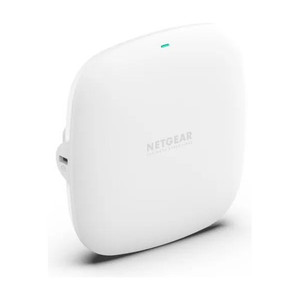
NETGEAR WAX210PA-100NAS 1PT AX3000 Wifi 6 Ap
Compact WiFi 6 (802.11ax) access point delivering 1.8 Gbps combined throughput across dual-band concurrent operation—600 Mbps at 2.4 GHz and 1.2 Gbps
- WiFi 6 dual-band delivers 1.8 Gbps combined (600 Mbps @ 2.4 GHz, 1.2 Gbps @ 5 GHz).
- 802.3af PoE at 13W minimum powers the AP directly from any standard PoE switch port.
- Compact 4.5" × 4.5" × 1.2" form factor mounts to ceilings or walls without an adapter.
In stock · Ships same business day Free shipping over $499$140.38 $98.99 Save $41.39 -
Save $97.89

NETGEAR WAX610-100NAS 1PT Business WiFi 6 AP
Single-port business-class WiFi 6 (802.11ax) access point engineered for mid-sized commercial deployments—retail, office, and hospitality spaces
- WiFi 6 (802.11ax) delivers up to 1.2 Gbps on 5 GHz for dense client environments.
- Standard 802.3af PoE input simplifies deployment—no injector or special switch required.
- Standalone Web UI with per-SSID QoS eliminates controller dependency for faster rollout.
In stock · Ships same business day Free shipping over $499$254.88 $156.99 Save $97.89 -
Save $94.61

NETGEAR WAX610W-100NAS WiFi 6 AX1800 Dual-band
WiFi 6 access point designed for distributed security camera networks, facility coverage, and warehouse connectivity across multi-site deployments
- WiFi 6 AX1800 delivers 1.2 Gbps on 5 GHz for high-bandwidth NVR streams.
- 802.3af PoE at 12–13W deploys on existing switch infrastructure, no AC runs needed.
- Insight cloud management enables remote provisioning and firmware updates across multi-site AP fleets.
In stock · Ships same business day Free shipping over $499$318.60 $223.99 Save $94.61 -
Save $126.38

NETGEAR WAX615-100NAS WiFi 6 AX3000
Single-port WiFi 6 (802.11ax) access point delivering 3 Gbps aggregate throughput designed for small to medium-sized business deployments across
- WiFi 6 (802.11ax) delivers 3 Gbps aggregate across 2.4 GHz and 5 GHz bands.
- PoE+ (802.3at, 30W max) eliminates AC wiring runs to wall or ceiling mount points.
- NETGEAR Insight cloud management enables zero-touch provisioning with no local controller.
Usually Ships in 2-3 Weeks Free shipping over $499$296.37 $169.99 Save $126.38 -
Save $199.17

NETGEAR WAX618-111NAS WiFi 6 AX3000
WiFi 6 (802.11ax) access point delivering AX3000 throughput (2.4 Gbps combined across 5GHz and 2.4GHz bands) designed for small-to-medium commercial
- WiFi 6 AX3000 delivers 2.4 Gbps combined across 5 GHz and 2.4 GHz bands.
- Cloud-managed via Insight—no on-site controller needed for multi-site deployments.
- 802.3af/at PoE powered (~20 W typical), eliminating separate AC runs at mount point.
In stock · Ships same business day Free shipping over $499$499.16 $299.99 Save $199.17 -
Save $124.58

NETGEAR WAX620-100NAS WiFi 6 Dual Band
WiFi 6 (802.11ax) access point engineered for distributed security camera and IoT deployments where Ethernet runs are cost-prohibitive or
- WiFi 6 AX3600 dual-band handles 20+ concurrent cameras without airtime congestion.
- Multi-gig Ethernet uplink eliminates backhaul bottlenecks for simultaneous high-bitrate streams.
- WPA3 + 802.1X with Insight cloud management enables zero-touch provisioning across sites.
Usually Ships in 2-3 Weeks Free shipping over $499$326.57 $201.99 Save $124.58 -
Save $204.86

NETGEAR WBE710-100NAS WiFi 7 Access Point
Tri-band wireless access point purpose-built for enterprise deployments requiring high-density wireless coverage with integrated PoE power delivery
- WiFi 7 tri-band radio delivers 9.4 Gbps aggregate wireless throughput.
- Powered via 2.5G PoE++ (802.3bt) input — no separate power supply required.
- Wall or ceiling mount form factor suits both open-floor and corridor deployments.
In stock · Ships same business day Free shipping over $499$493.85 $288.99 Save $204.86 -
Save $485.51

NETGEAR WBE718 Tri-Band PoE 2.5G Insight - WBE718-111NAS
WiFi 7 tri-band access point designed for managed enterprise networks requiring dense AP deployments with centralized visibility and control
- WiFi 7 tri-band (2.4/5/6 GHz) cuts congestion in dense camera and access-control deployments.
- 2.5G Ethernet uplink prevents backhaul bottlenecks on PoE switches serving real-time security devices.
- Single-cable 802.3at PoE eliminates auxiliary power runs on ceiling and wall-mount installs.
In stock · Ships same business day Free shipping over $499$1,035.50 $549.99 Save $485.51 -
Save $299.72

NETGEAR WBE750-100NAS WiFi 7 Access Point
Tri-band WiFi 7 wireless access point engineered for enterprise and high-density environments where you need reliable, scalable wireless
- 18.4 Gbps tri-band WiFi 7 handles concurrent voice, video, and IoT traffic.
- 10G Ethernet uplink prevents backhaul bottlenecks in high-density deployments.
- PoE++ (802.3bt) input eliminates separate power runs for wall or ceiling mounts.
In stock · Ships same business day Free shipping over $499$987.71 $687.99 Save $299.72 -
Save $493.10

NETGEAR WBE758 Tri-Band PoE 10G Insight - WBE758-111NAS
Tri-band Wi-Fi 7 access point engineered for high-density enterprise deployments, including surveillance networks, corporate campuses, and
- Wi-Fi 7 tri-band delivers 19+ Gbps aggregate, handling mixed camera and client loads.
- 10G PoE uplink eliminates uplink saturation across multi-AP surveillance deployments.
- 802.3bt PoE++ input removes auxiliary power runs, simplifying ceiling-mount installs.
In stock · Ships same business day Free shipping over $499$1,593.09 $1,099.99 Save $493.10 -
Save $341.01

Speco Technologies AP2PLR Long Range 5.8 GH
5.8 GHz wireless point-to-point bridge up to 1.5 miles, PoE powered
- 867 Mbps throughput over 802.11ac/n/a for video and access control
- DIP switch configuration eliminates complex setup; field-deployable in minutes
- Dual Gigabit Ethernet ports with IP65 outdoor rating for campus links
Usually Ships in 2-3 Weeks Free shipping over $499$556.00 $214.99 Save $341.01 -
Save $191.51
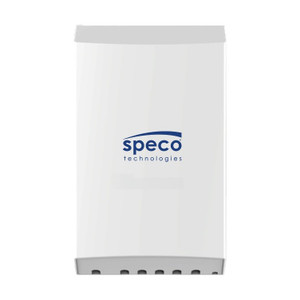
Speco Technologies AP2PMD 5.8 GHz
5.8 GHz wireless bridge with dual PoE for 1.5-mile IP camera links
- Up to 300 Mbps throughput with 1.5-mile line-of-sight range
- Dual PoE output (15W + 30W) powers multiple cameras from one unit
- Five 10/100 Mbps ports for multi-device connectivity over wireless link
Usually Ships in 2-3 Weeks Free shipping over $499$312.50 $120.99 Save $191.51 -

TP-Link CPE210 Outdoor 2.4GHz 300Mbps WiFi Access Point
Fixed outdoor 2.4GHz access point engineered for point-to-point and point-to-multipoint bridging where wired infrastructure is impractical
- Outdoor 2.4 GHz fixed wireless access point with 9 dBi antenna
- 27 dBm transmit power for point-to-point bridge links
- Replaces wired backhaul where cabling is impractical
In stock · Ships same business day Free shipping over $499$48.99 -

TP-Link CPE510 Outdoor 5GHz 300Mbps WiFi Access Point
Fixed outdoor 5GHz wireless access point designed for point-to-point and point-to-multipoint long-range transmission where wired backhaul is
- Outdoor 5 GHz fixed wireless access point with 13 dBi antenna
- Long-range point-to-point and point-to-multipoint bridge
- Centrally manageable for multi-site deployments
Usually Ships in 2-3 Weeks Free shipping over $499$62.99 -
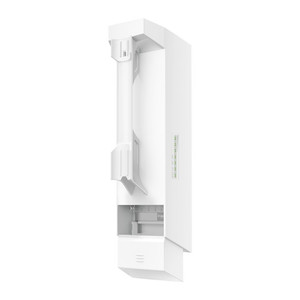
TP-Link EAP211-BRIDGE KIT AC867 Access Point
5GHz AC867 access point designed to extend and bridge wireless networks in surveillance, retail, and warehouse deployments
- 5 GHz AC867 indoor/outdoor wireless bridge access point
- 867 Mbps peak throughput over 802.11ac wireless link
- PoE input — single-cable install for surveillance backbone
In stock · Ships same business day Free shipping over $499$109.99 -

TP-Link EAP225-OUTDOOR AC1200 WiFi AP Outdoor
N AC1200 dual-band outdoor access point built to extend WiFi coverage across surveillance yards, loading docks, and distributed campus environments
- AC1200 dual-band outdoor Wi-Fi access point — IP65 rated
- Extends coverage to yards, docks, and outdoor campuses
- Gigabit Ethernet uplink with PoE input for single-cable install
In stock · Ships same business day Free shipping over $499$69.99 -

TP-Link EAP610 AX1800 Ceiling Mt Wi-Fi 6 Access Point
Dual-band 802.11ax (Wi-Fi 6) access point designed for ceiling-mount deployment in enterprise office, retail, and light-industrial environments
- AX1800 Wi-Fi 6 ceiling-mount access point — dual-band
- Supports 802.11a/b/g/n/ac/ax client devices on one AP
- WPA3 security and central Omada SDN management
Usually Ships in 2-3 Weeks Free shipping over $499$89.99 -
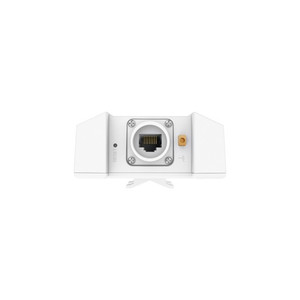
TP-Link EAP610-OUTDOOR AX1800 Indoor/Outdoor Access Point
Dual-band Wi-Fi 6 access point engineered for outdoor deployment across campuses, warehouses, loading docks, and perimeter zones where standard
- AX1800 dual-band Wi-Fi 6 indoor/outdoor access point — IP67
- 1,775 Mbps combined — 574 Mbps 2.4 GHz plus 1,201 Mbps 5 GHz
- Fully sealed against rain and dust for perimeter installs
Usually Ships in 2-3 Weeks Free shipping over $499$129.99 -

TP-Link EAP615-WALL AX1800 Wall Plate Wi-Fi 6 Access Point
Wall plate–form wireless access point engineered for in-wall deployment in office perimeters, conference room boundaries, and warehouse environments
- AX1800 dual-band Wi-Fi 6 wall-plate access point
- Flush in-wall mount for offices and conference rooms
- PoE input with passthrough on ETH3 for downstream devices
In stock · Ships same business day Free shipping over $499$89.99