
Door Locks & Strikes
Showing Results for Door Locks & Strikes
-

Aiphone
SKU: EL-12S
Aiphone EL-12S 12V AC Electric Door Strike
12V AC electric door strike with 4,000 N break-in resistance
- 12VAC electric door strike with 4,000N break-in resistance
- Zinc die-cast jaw and body for industrial durability
- Direct integration with Aiphone intercom systems
$130.00 $71.99 Save $58.01 -
Camden
SKU: CI-3BXL
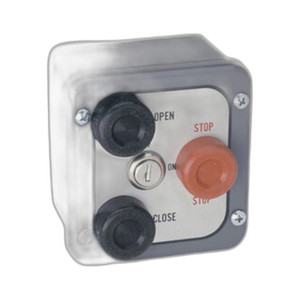
Camden CI-3BXL Electronic Door Lock with Key Override
- Key lockout blocks manual entry when electronic access is active, preventing bypass.
- Accepts 12V or 24V supply, fitting directly into existing access control panel wiring.
- Fail-safe or fail-secure mode is field-selectable to match site egress requirements.
$480.00 $293.99 Save $186.01 -

Geovision
SKU: 81-ML200-001
Geovision GEO Vision ML200SLD Electric Bolt IT - 81-ML200-001
- Integrates with Geovision access control panels that support electric bolt relay outputs.
- Supports lock sensor and door status sensing for real-time door state monitoring.
- Accepts 12V or 24V DC input — verify system voltage before installation.
$120.00 $92.99 Save $27.01 -

Geovision
SKU: GV-ML200
Geovision GV-ML200 ML200SLD Electric Bolt Lock
Remote electric bolt lock for Geovision access control systems
- Built-in spike suppressor and position sensor cut wiring complexity on retrofit installs.
- Accepts 12V or 24V DC, wiring directly to GV-AS series controllers without adapters.
- Surface-mount form factor requires no mortise cutting, reducing labor on legacy door frames.
$175.00 $112.99 Save $62.01 -

HES
SKU: 1006-612-LBSM
HES Electric Strike (Satin Bronze Latchbolt - 1006-612-LBSM
- Electric door strike for commercial access control
- Satin bronze latchbolt finish for commercial entryways
- Low-voltage DC coil activation for hardwired control systems
$1,187.00 $599.99 Save $587.01 -

HES
SKU: 1006-630
HES Fail Secure Universal 12/24VDC Electric Strike - 1006-630
- Fail-secure operation keeps the door locked during power loss, protecting secured areas.
- Accepts 12V or 24VDC input, fitting existing power architectures without added conversion hardware.
- Universal frame footprint installs on wood or metal frames, reducing retrofit fabrication time.
$842.00 $425.99 Save $416.01 -
HES
SKU: KR-1KEY
HES KR-1KEY Replacement Key for KR-1 Electronic Lock
OEM replacement key for HES KR-1 electronic lock systems
- Replacement key for the HES KR-1 electronic lock
- OEM-fit guarantees mechanical and electrical compatibility
- 35VDC + IP40 spare for commercial entry points
$17.00 $16.99 Save $0.01 -
Hikvision
SKU: DS-K4T100
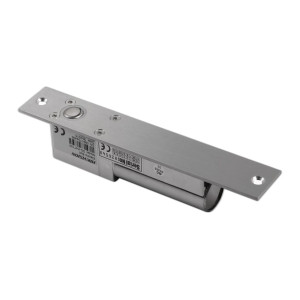
Hikvision DS-K4T100 Electric Bolt Lock
800 kg electric bolt lock for glass, metal, wood, and fireproof doors
- 1764 lb maximum holding force with fail-safe design unlocks on power loss
- Stainless steel construction rated -10°C to 55°C, 8 mm magnetic detection
- Configurable 0/3/6/9 second delay, 100 mA standby at 12 VDC
$104.00 $71.99 Save $32.01 -

SDC
SKU: 101-4AM
SDC 101-4AM Four Door Annunciator Controller
Four-door controller with 250K user capacity and HID credential support
- Manages 4 doors from a single controller, cutting distributed node wiring and labor.
- Stores 250,000 user profiles natively—no hardware swap as credential rosters scale.
- OSDP over TCP/IP enables vendor-neutral reader integration across standard Ethernet.
$393.00 $231.99 Save $161.01 -

SDC
SKU: 101-KDENA
SDC 101-KDENA 4-Door Access Controller with Key Switch
4-door controller with 250K credentials, OSDP/TCP-IP, emergency key switch
- Manages 4 independent door zones and stores 250,000 credentials on-device.
- OSDP and TCP/IP dual-protocol support eliminates proprietary reader and network lock-in.
- Integrated key switch enables emergency manual override; lifetime warranty included.
$1,135.00 $668.99 Save $466.01 -

SDC
SKU: 1091AIDLV
SDC 1091AIDLV 1091A Deadlock 12/24VDC 628
24VDC electric deadlock strike for multi-credential access control
- Field-selectable 12/24 VDC ± 10% eliminates separate power supplies across mixed installations.
- Failsafe bolt retraction on power loss satisfies fire and life safety egress code requirements.
- SPDT monitoring contacts (4A @ 30 VDC) report bolt position directly to the access control panel.
$523.00 $307.99 Save $215.01 -

SDC
SKU: 1091AIV
SDC 1091AIV Spacesaver Mortise Bolt
Compact mortise bolt for single-door access, supports four credential types
- Supports DESFire, MIFARE, NFC, and 125 kHz prox in one mortise body—no converters needed.
- Native OSDP and TCP/IP eliminate proprietary gateways, shortening panel commissioning time.
- Stores up to 250,000 user records on-device, reducing panel dependency at high-traffic doors.
$444.00 $261.99 Save $182.01 -

SDC
SKU: 110IV
SDC 110IV Electronic Door Lock 12/24VDC OSDP
Dual-voltage electronic lock with OSDP protocol for mixed 12/24VDC systems
- Accepts 12VDC or 24VDC input, eliminating voltage regulators in mixed-power deployments.
- OSDP communication delivers encrypted, supervised transactions with tamper-event reporting.
- NFC/13.56MHz credential support enables contactless badge and mobile authentication.
$228.00 $134.99 Save $93.01 -

SDC
SKU: 1291AHD
SDC 1291AHD Electronic Door Lock 12/24VDC 606
Multi-credential 606 strike for single-door access, 12/24VDC
- Field-selectable 12/24VDC ±10% simplifies power distribution across mixed-voltage deployments.
- Supports DESFire, MIFARE, NFC, and 125kHz prox—no hardware swap during credential migrations.
- 250,000-user capacity handles enterprise enrollment loads without controller-side database limits.
$682.00 $416.99 Save $265.01 -
SDC
SKU: 1490AIV
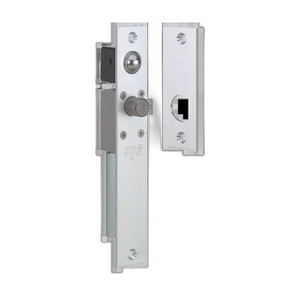
SDC 1490AIV Narrow Style Bolt Lock Strike
Narrow bolt lock strike, 24VDC wired, handles 63 doors and 250K credentials
- Scales to 63 doors and 250,000 users without adding per-door controllers.
- OSDP and TCP/IP communication prevents vendor lock-in across multi-brand deployments.
- Accepts DESFire, MIFARE, NFC, and 125kHz prox—no forced credential migration.
$524.00 $308.99 Save $215.01 -

SDC
SKU: 15-4S12U
SDC 15-4S12U Electric Strike 12VDC 4-Door
4-door electric strike with 12VDC power and OSDP/TCP/IP control
- Controls 4 doors from one 12VDC module, cutting panel count and wiring runs.
- Failsecure latch locks automatically on power loss, protecting secured areas.
- Native OSDP and TCP/IP support integrates with Salto, Kantech, and Genetec.
$107.00 $65.99 Save $41.01
Door Locks & Strikes
Electric strikes and electromechanical locks for access-controlled doors. Available in fail-safe and fail-secure configurations with ANSI/BHMA-rated durability for high-traffic commercial entry points.
Plan Your Deployment
- Match strike to door frame material and latch bolt geometry
- Confirm fail-safe or fail-secure mode per fire and building code
- Specify voltage and current draw for power supply sizing
- Evaluate weather-sealed models for exterior or parking garage doors
Door Locks & Strikes — Engineering-Grade Door Hardware for Commercial Deployments
This category covers 361 working models of door locks & strikes sourced manufacturer-direct or through channel-direct US distribution. Build the rest of your system around the architectural choices below — compatibility, environmental rating, and lifecycle decisions made here propagate through every downstream component you specify.
What to Look For
Fail-safe versus fail-secure determines what happens during power loss. Fail-safe locks unlock on power loss (used on egress doors where life safety dominates); fail-secure locks remain locked (used on storage, server rooms, and exterior doors where security dominates). Code typically mandates fail-safe on stairwell and egress doors. Confirm with the AHJ before specifying — misapplied lock mode is a common code violation.
Strike, mortise, magnetic lock, and electrified panic hardware each have distinct installation, current draw, and code implications. Electric strikes work with most mechanical locksets and are easiest to retrofit. Magnetic locks (maglocks) provide high holding force on glass and wood doors but require dedicated REX and panic-bar interfaces for egress compliance. Verify the door's existing prep before choosing.
Power draw and inrush current dictate power supply sizing. A 5-door system with 1A peak per lock can exceed an undersized 12VDC supply at simultaneous lock-down events. Account for accessories — REX motion sensors, door-position switches, electrified levers — when sizing the supply and the battery backup required for code compliance.
Tamper switches, door-position monitoring, and request-to-exit sensors generate the audit trail your security team needs. Mechanical contact switches are cheaper; magnetic reed switches resist tampering better. Pair each door with a position switch and a REX sensor at minimum — without door-position monitoring, you can't distinguish 'authorized entry' from 'door held open after authorized entry,' which is a common compliance gap.
Key Specs in This Category
| Spec | Available Options |
|---|---|
| Connectivity | Wired |
| Type | Controller, Lock/Strike, Reader, Access Point, Accessory, Credential, Control Panel |
Top Brands in This Category
Frequently Asked Questions
Fail-safe or fail-secure for stairwell doors?
Fail-safe is mandatory on most stairwell doors and other code-designated egress paths — the lock must release on fire alarm or power loss to allow evacuation. Fail-secure on those doors is a code violation. Confirm the local fire code and AHJ requirements; commercial buildings in the U.S. follow NFPA 101 and the International Building Code, both of which detail egress lock behavior in detail.
What current draw should I plan for electrified locks?
Typical 12VDC electric strikes draw 200-500 mA continuous, with inrush spikes of 1-2A at engagement. Magnetic locks rated for 1,200 lbs holding force draw around 500 mA continuous at 24VDC. Power supplies need to handle simultaneous lock-down current — emergency lockdown events activate all locks at once. Size the supply with at least 25% headroom and confirm battery backup runtime requirements.
Do I need a request-to-exit (REX) sensor?
Most code-compliant electrified door installations require a REX sensor to shunt the alarm during authorized egress. Without REX, every egress event registers as a forced-door alarm. PIR motion sensors are the common choice and integrate with the door controller's REX input. Mechanical push-bar REX is also acceptable for hardware that includes that switch natively.
Can I use one lock for both card and mechanical key entry?
Yes — most electrified strikes and locks allow mechanical key override on the same door. Maintaining a master key for emergency mechanical access is required by code in many jurisdictions and recommended in all. Document the master key holders carefully; an uncontrolled master key program undermines the electronic audit trail.
What's the lifespan of a magnetic lock?
Quality maglocks (Securitron M62, HES, von Duprin) typically last 15-20 years with no mechanical wear. Failure points are the connector, the armature plate-to-lock alignment, and contamination of the magnetic face. Plan for armature replacement at year 10 as a hedge against alignment drift. Strike-type locks with mechanical parts last 5-10 years before strike-plate wear becomes a reliability issue.
Need help choosing? Talk to a Senior Specialist — direct line 877-277-7147 or request a quote.