
How to Choose the Right Commercial Intercom and Door Station
A technical buyer's guide for security integrators, property managers, facility directors, and IT teams specifying IP intercoms and door stations for commercial entrances, multi-tenant buildings, healthcare facilities, schools, and high-security sites. Covers SIP and proprietary protocols, video quality, audio performance, PoE powering, environmental ratings, access control integration, and station-count scaling.
In This Guide
Modern door intercoms have changed from analog two-wire systems to IP-based stations that integrate with access control, VMS platforms, and VoIP phones. The shift unlocked capabilities like remote answering and video recording, but it also introduced integration complexity: SIP registration, NAT traversal, audio codec compatibility, and PoE powering. Choosing the right intercom requires aligning the protocol with the existing phone and access control platforms before anything else.
Key Specifications Explained
Protocol: SIP, Proprietary IP, or Analog
SIP (Session Initiation Protocol) is the open standard for IP intercoms and lets a door station register with any SIP-compatible PBX or cloud phone system (3CX, Asterisk, RingCentral, Zoom Phone, Microsoft Teams). Calls ring desk phones, mobile apps, and VoIP endpoints exactly like any other extension. Enterprise deployments prefer SIP for this interoperability.
Proprietary IP (Aiphone IX, Comelit ViP, 2N IP) often provides richer features but locks you into that vendor ecosystem. Legacy 2-wire analog systems still suit small deployments where simplicity matters more than integration. Confirm protocol support before specifying; a SIP station cannot integrate with a proprietary master station and vice versa.
Video Quality and WDR
Video-capable door stations range from 720p SIP-only devices to 4MP stations with true WDR. For reception, visitor management, and multi-tenant buildings, 1080p is the working minimum. For entry positions where you need to identify packages, delivery drivers, and vehicles beyond the doorstep, 4MP with 2.8-3.7mm lens provides a useful field of view without fisheye distortion.
True WDR matters in any outdoor-facing door position where sunlight backlights the visitor. Digital WDR on door stations produces silhouette images during daylight hours. Night-mode IR is critical; most stations include 5-10m IR illumination which suits doorstep ID but not parking lot or extended outdoor view.
Audio Quality and Full-Duplex
Half-duplex (push-to-talk) audio limits natural conversation and is only acceptable for simple check-in scenarios. Full-duplex with echo cancellation is the working standard for any commercial deployment; both parties can speak simultaneously without clipping.
For noisy outdoor environments (parking entrances, industrial loading docks), specify stations with beamforming microphones and active noise cancellation. Standard omnidirectional mics pick up traffic, wind, and HVAC noise. For ADA-compliant installations, add induction loop output for hearing-aid T-coil compatibility at public entrances.
PoE Powering
IP door stations typically use 802.3af (Class 3, 15W) PoE from the network switch. Stations with displays, heaters (cold climate), or video-over-PoE cameras may require 802.3at (30W). Confirm the rated PoE class before installation.
For extended outdoor runs beyond 100m, use a PoE injector at the far end or switch to fiber with local power injection. Specify UPS backup at the central switch for the intercom VLAN; losing intercom during a power event defeats emergency door-unlock workflows.
IP and IK Ratings for Outdoor Stations
Outdoor stations need IP65 minimum (dust and water-jet rated) plus IK08 vandal resistance. Parking structures, rear-entry doors, and lower-floor residential lobbies need IP66/IK10. The ratings apply only to properly installed equipment; unsealed conduit penetrations, incorrect gaskets, or flush-mount boxes without gasket kits void the rating.
For surface-mount in protected locations (covered entry, car park lobby), IK08 suffices. For flush-mount in brick or concrete, verify the trim ring and gasket match the actual wall thickness. For ADA call boxes at vehicle entry (where a driver operates from inside a car), specify extended-range microphones and visible LED feedback for hearing-impaired users.
Access Control Integration
Intercom-to-access-control integration determines how doors actually unlock. Three integration methods: (1) dedicated relay output from the station to the door strike, (2) Wiegand or OSDP output to a door controller, or (3) API-based unlock through a central access control platform.
For small deployments, a standalone relay output works. For any multi-door system, integrate with access control through OSDP (preferred) or Wiegand so all unlock events route through a single audit log. OSDP adds encryption and bidirectional communication with the panel. See card readers for compatible OSDP readers.
Station Count and Enterprise Scaling
Small deployments use 1-8 stations with a master station or SIP phone answering calls. Commercial deployments scale to 20-50 stations, typically with a dedicated SIP server or intercom management platform. Enterprise deployments (multi-building campuses, hospitals, prisons) support hundreds of stations managed from a central intercom server with call routing logic, schedule-based answer points, and event logging.
Check vendor limits on stations per server, simultaneous active calls, and redundancy options. For mission-critical applications (emergency call stations on a campus), specify redundant intercom servers with failover. Code Blue emergency towers and tower accessories are designed for this use case.
Mobile Answer and App Support
Modern SIP intercoms support mobile app answer via the SIP server, letting property managers, concierge, or security staff answer calls from a smartphone. Check app platform support (iOS, Android), encryption (TLS/SRTP), and offline behavior. For 24/7 coverage, route unanswered calls to a central monitoring center (UL-listed central stations) with logged response times. Integrate visitor self-service features through cloud-connected platforms where appropriate.
Compliance and Emergency Codes
ADA compliance requires specific visual and tactile feedback on public entry intercoms: a visible call indicator, Braille labeling, height-appropriate mounting (15-48 inches for the primary operable element), and a minimum reach distance. IBC and NFPA 101 apply to intercoms at emergency exits. Elevator emergency phones (ASME A17.1) require specific line monitoring, auto-testing, and hands-free operation. For healthcare facilities (NFPA 99), nurse call integration may require coordination with fire/life-safety systems. Confirm the intercom meets applicable code for the specific installation type.
Featured Intercoms and Door Stations
Top-selling intercoms in stock, selected by our technical team.
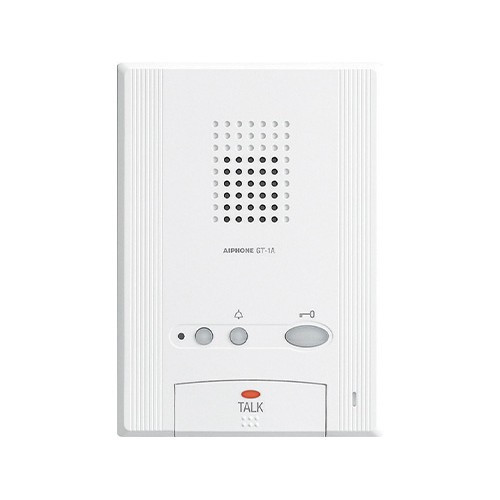
Aiphone GT-1A Open Voice Audiio Tenant Station
GT-1A
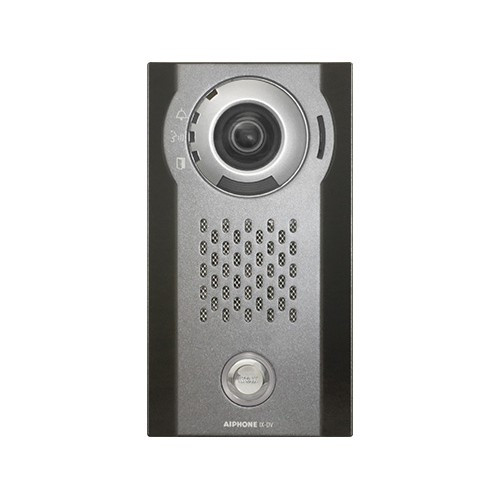
Aiphone IX-DV IP Video Door Stn Surf
IX-DV
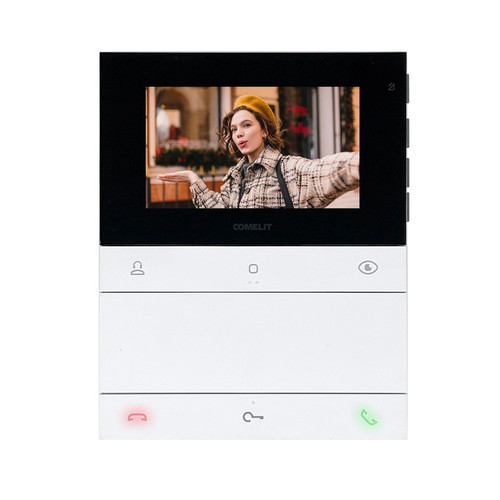
Comelit PL6721 Hands-Free People Door Entry Monitor 4.3
PL6721
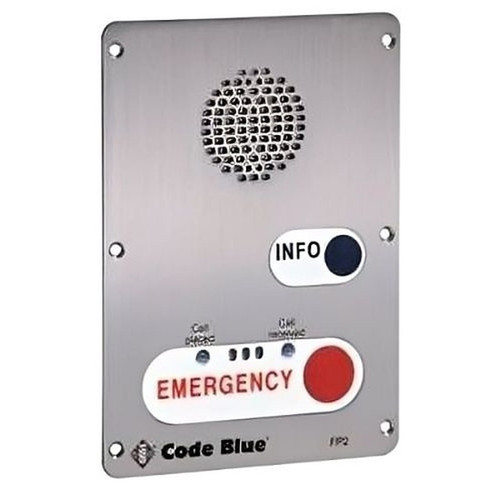
Code Blue 60005 IA4100 FP2 Dual Recessed Button Phone
60005
Deployment Scenarios
Commercial Office Reception
Corporate lobbies need a door station at the front entrance that rings the reception desk SIP phone plus a concierge mobile app. Recommended: IP video door station with 1080p camera, true WDR, full-duplex audio with echo cancel, OSDP or Wiegand output to access control, IP65/IK08 for outdoor-facing surface mount. Pair with card readers at the door for authenticated entry. Integrate with reception SIP extension and a backup route to security office.
Multi-Tenant Residential
Apartment buildings, condos, and gated communities need a lobby directory panel that rings each unit's smartphone app or dedicated monitor. Recommended: SIP directory door station supporting 50-200 unit call codes, 1080p camera with WDR, OSDP output to building access control, integration with a cloud-based tenant app. Code Blue and Comelit families suit this class. For call-box positions at vehicle entry gates, add IP66 weather rating and induction loop for hearing-aid users.
Healthcare and Nurse Call
Hospital entries, emergency room triage, and after-hours entry require IP intercoms tied to dispatch software. Recommended: 1080p video station with two-way audio, SIP integration to nurse-call platform or desktop dispatcher app, IP65 for weather-exposed positions, anti-ligature-compatible for psych and behavioral-health doors. Pair with interior cameras for full entry coverage. Coordinate with fire alarm for code-compliant release during fire conditions.
K-12 and Higher Ed Entry
Schools with secured entries use video door stations at the main entrance that ring the front office during school hours and route to a security office after hours. Recommended: 4MP IP video station with true WDR (for daylight backlighting), full-duplex audio, integrated door release via OSDP, vandal-rated IK10, and visitor pre-registration integration. Integrate with the campus VMS for call recording and with access control for logged entry. Route after-hours calls to a monitored central station.
Emergency Call Tower
Parking garages, campuses, and industrial sites use emergency call towers with blue lights and one-button call. Recommended: Code Blue or equivalent emergency tower with IP66 enclosure, hands-free two-way SIP audio, beamforming microphone for wind/traffic noise rejection, visible LED strobe, standalone relay output to local emergency beacon, auto-test reporting for UL listing compliance, and integration with central station monitoring platform. Cover the tower with a nearby outdoor camera and PTZ camera for scene view.
Vehicle Gate and Parking Entry
Vehicle entry points need call boxes operable from the driver's seat at varying heights (standard car, pickup, semi-truck). Recommended: call-box intercom with extended-range microphone, wide-angle camera (to capture driver + license plate), IP66 enclosure, induction loop for hearing-aid users, integration with LPR cameras for automated recognition of pre-registered vehicles, and standalone relay output to gate operator for authorized codes. Route unknown calls to the security office with captured license plate metadata.
More Top-Selling Intercoms
Additional intercom and door station models in stock.
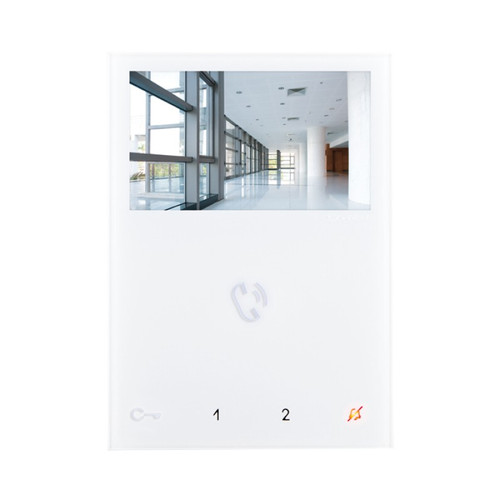
Comelit 6721W Simplebus Mini Hands-Free Monitor
6721W
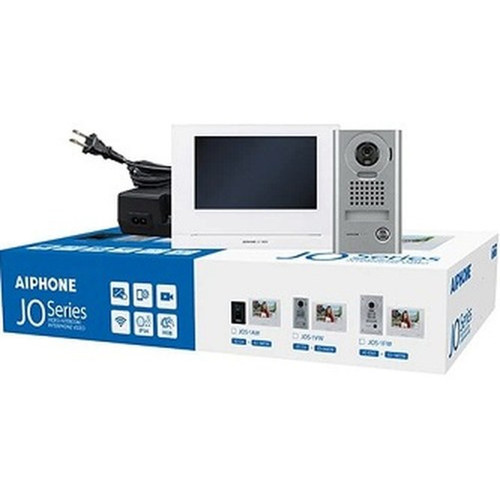
Aiphone JOS-1VW Mobile-Ready Intercom Box Set
JOS-1VW
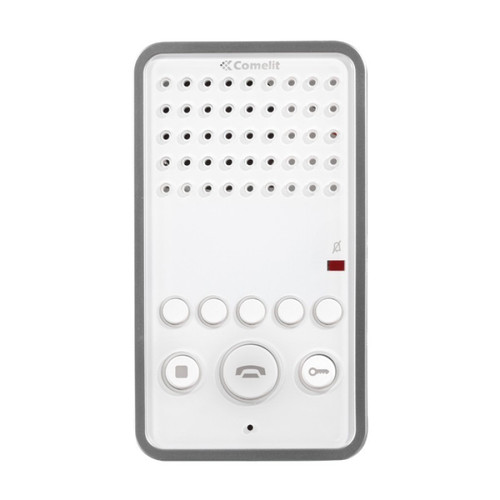
Comelit 6203W VIP Easycom White Door-Entry Phone
6203W
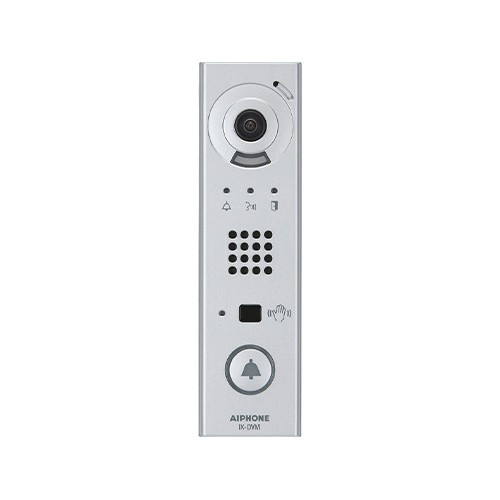
Aiphone IX-DVM Mullion Video DR Stn
IX-DVM
Common Mistakes to Avoid
- Mixing SIP and proprietary IP in the same system. A proprietary Aiphone IX master station cannot talk to a SIP-only door station. Choose one ecosystem per deployment or specify gateway bridges explicitly.
- Skipping true WDR on outdoor-facing stations. Daylight silhouettes a visitor against the sky. Specify 120dB+ WDR on any door station facing the exterior.
- Using half-duplex audio on commercial stations. Push-to-talk audio breaks the rhythm of normal conversation. Full-duplex with echo cancellation is the floor for commercial use.
- Integrating through dedicated relays instead of OSDP. Standalone relays bypass the access control audit trail. For any deployment with managed access control, integrate through OSDP for full logging and bidirectional feedback.
- Overlooking PoE budget. Stations with displays and IR can exceed 15W. Verify the switch PoE class and total budget before deploying.
- Assuming mobile app support equals enterprise redundancy. Mobile answer apps depend on cloud connectivity. For 24/7 mission-critical call handling (emergency towers, afterhours security), specify a local SIP server with redundant answering endpoints.
- Missing ADA and code compliance at public entries. Visible indicators, tactile elements, Braille labeling, and operable-height requirements apply to any public entrance intercom. Confirm during design, not inspection.
What to Ask Your Integrator
- What is the protocol (SIP, proprietary, analog) for each station, and how does it integrate with the existing phone system and access control?
- What video resolution and WDR rating is specified for outdoor stations?
- Is the audio full-duplex with echo cancellation? Is beamforming required for the outdoor environment?
- How does the station unlock the door? Direct relay, OSDP, Wiegand, or access control API?
- Where do calls route during business hours, after hours, and during emergencies?
- What is the PoE class and total switch budget for all intercom stations?
- Are public-entry intercoms ADA-compliant (visible indicators, operable height, induction loop)?
- For emergency towers and elevator phones: is the system UL-listed for the intended use, and who monitors unanswered calls?
Quick Comparison: Intercom Tiers
| Specification | Residential / Small Facility | Commercial Standard | Enterprise / High-Security |
|---|---|---|---|
| Protocol | Proprietary 2-wire | SIP or vendor IP | SIP + OSDP + VMS integration |
| Video | Optional, 720p | Standard, 1080p | 4MP+ with WDR, night mode |
| Audio | Half-duplex, basic | Full-duplex, echo cancellation | Full-duplex, beamforming mic, noise cancel |
| Powering | Transformer or station power | PoE 802.3af (15W) | PoE 802.3at (30W) + UPS backup |
| IP Rating (Outdoor) | IP54 | IP65 with IK08 | IP66/IK10 + anti-vandal |
| Access Control Integration | Standalone relay | Wiegand or OSDP output | Native OSDP + VMS + ACS API |
| Station Count | 1-4 stations | Up to 50 stations | Hundreds with enterprise server |
| Relay Outputs | 1 (single door) | 2 (door + aux) | Multiple + logic programmable |
| Typical Price Range | $400 - $1,500 kit | $800 - $3,000 per station | $1,500 - $6,000+ per station |
Frequently Asked Questions
What's the difference between IP intercoms and traditional audio-only intercoms?
Traditional audio-only intercoms use dedicated 2-wire or 4-wire cable with analog audio, limited to voice call-in and door release. IP intercoms use standard Ethernet, integrate audio plus HD video, run over PoE with no separate wiring, and connect to your VMS, access control, and mobile apps. IP intercoms also support SIP for integration with VoIP phone systems, letting employees answer the lobby door from their desk phone or mobile. IP is the standard for any new commercial deployment.
Should I choose a video door station or audio only?
Video door stations have become the standard because they add visual verification at a modest premium. Visual identification reduces tailgating, verifies deliveries, and provides recorded evidence of incidents. A 2MP color camera with wide-angle lens, IR night vision, and 2-way audio costs $400-1,200 per station. Audio-only stations remain useful in multi-resident buildings with 50+ units where cost multiplies, but even there most new deployments specify video at the main entrance.
How do I pick between single-tenant and multi-tenant intercom systems?
Single-tenant systems serve one business or residence with 1-8 call buttons routing to a handful of internal stations. Multi-tenant systems serve apartment, condo, and office buildings with 10-500+ call buttons, a name directory, and call routing to individual tenant phones, smartphones, or in-unit station. Multi-tenant systems also support package delivery modes, concierge integration, and visitor access codes. Price scales with tenant count from $2,000 for 10 units to $30,000+ for 200+ units.
Can I integrate intercoms with my existing access control?
Yes, most modern IP intercoms integrate with access control via Wiegand, OSDP, relay output, or API. The intercom's door release button triggers the access controller, which logs the event, enforces schedules, and manages lock state. Tighter integrations (Aiphone with AXIS, 2N with Milestone, Akuvox with Paxton) share events, audit trails, and unified management. Always verify the specific integration in the vendor's certified partner matrix before specifying a combined solution.
Do intercoms work with my mobile phone?
Yes, most modern intercoms offer mobile apps (iOS and Android) or SIP integration with softphone apps, letting authorized staff answer the door station from anywhere. This is useful for receptionists who step away, remote workers, and after-hours property management. Cloud-connected systems like DoorBird, Akuvox, and 2N also enable SMS or push notifications on button press with 2-way audio from your phone. Confirm the number of mobile users included in the license, since some vendors charge per user or limit to 5-10 phones.
What cabling do I need for an IP intercom?
One Cat6 cable per IP intercom handles both data and PoE (802.3af or 802.3at depending on model). For stations with heated enclosures or electric strike power, plan for PoE+ or an additional low-voltage wire. Cable runs limited to 100 meters (328 feet) from the PoE switch. For longer runs, use PoE extenders or fiber-to-copper media converters. Surge protection is required on any exterior intercom run to prevent lightning damage to internal network equipment.
Ready to Specify Your Intercom System?
Share the site type, station count, phone platform, access control system, and outdoor/indoor mix. We will recommend the right protocol, station class, and integration strategy.