
Showing Results for Electric Strikes
-
Save $111.01

HES 5000-12/24D-630 Dual-Voltage Electric Strike
Fail-secure strike with 12/24V DC selectable power for access control
- Dual-voltage operation (12V or 24V DC) eliminates SKU duplication across sites
- Fail-secure design locks on power loss or control signal failure for high-security areas
- Standard door frame form factor integrates with proximity readers and access panels
Usually Ships in 2-3 Weeks Free shipping over $499$226.00 $114.99 Save $111.01 -
Save $175.01

HES 7440-628 Ultraline Electric Strike for Radius Jamb
Ultraline electric strike built for radius jamb frames in commercial doors
- Compact Ultraline profile fits tight radius jamb installations without frame mods
- Clear anodized aluminum resists corrosion in institutional and healthcare settings
- Integrates with standard 12VDC electric strike control systems and keypads
Usually Ships in 2-3 Weeks Free shipping over $499$350.00 $174.99 Save $175.01 -
Save $62.01
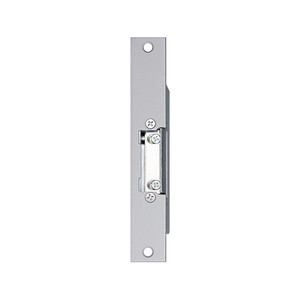
Aiphone EL-12S 12V AC Electric Door Strike
12V AC electric door strike with 4,000 N break-in resistance
- 12VAC electric door strike with 4,000N break-in resistance
- Zinc die-cast jaw and body for industrial durability
- Direct integration with Aiphone intercom systems
Usually Ships in 2-3 Weeks Free shipping over $499$140.00 $77.99 Save $62.01 -
Save $165.01
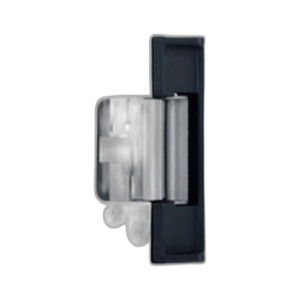
Camden ‘Universal’ Low Profile Grade 1 ANSI Fire - CX-ED1420
Low-profile Grade 1 ANSI fire-rated electric strike designed for networked access control systems in commercial and institutional entryways
- Grade 1 ANSI fire-rated per UL 1034 — compliant for egress and fire-rated door installs.
- TCP/IP connectivity enables remote unlock and audit logging without per-door hardwired strike circuits.
- Universal latch compatibility reduces SKU count and simplifies replacement across multi-building campuses.
Usually Ships in 2-3 Weeks Free shipping over $499$410.00 $244.99 Save $165.01 -
Save $278.01

Camden 1/2\" Surface mount Grade 1 RIM strike - CX-EPD1299L-BK
Grade 1 surface-mount RIM electric strike designed for Pullman-type latches in commercial door frames
- Grade 1 rated at 1,500 lbs static strength meets ANSI/BHMA high-security requirements.
- Surface-mount, no-cut install with included metal jig reduces field labor on any frame.
- 12/24V AC/DC field-selectable with fail-safe/fail-secure mode; no rewiring required.
Usually Ships in 2-3 Weeks Free shipping over $499$700.00 $421.99 Save $278.01 -
Save $0.01

Camden 1/8\" Spacer plate for CX-EPD1289L - CX-EPD1289-SPC
1/8" stainless steel spacer plate designed for the Camden CX-EPD1289L surface mount RIM strike
- Closes frame-to-jamb gaps to preserve the CX-EPD1289L's 1,500 lb. static strength rating.
- Passive stainless steel plate installs with existing CX-EPD1289L fasteners—no extra hardware needed.
- 1/8" additive spacing corrects frame deviations common in retrofit and non-standard jamb installations.
Usually Ships in 2-3 Weeks Free shipping over $499$25.00 $24.99 Save $0.01 -
Save $10.01

Camden 1\" Lip Extension for CX-ED1079 and - CX-ED-LIP1
1" lip extension designed to adapt the mounting depth of Camden CX-ED1079 and CX-ED-2079 series magnetic lock strikes
- Adds 1" projection to bridge frame depth gaps without relocating or rewiring the strike.
- Direct-mounts to CX-ED1079 and CX-ED-2079 using existing fastener points — no new hardware.
- Purely mechanical with zero additional current draw on the access control panel.
Usually Ships in 2-3 Weeks Free shipping over $499$27.00 $16.99 Save $10.01 -
Save $12.01

Camden 2\" Lip Extension for CX-ED1079 and - CX-ED-LIP2
2-inch lip extension accessory designed for the CX-ED1079 and CX-ED-2079 series magnetic lock strikes
- Shifts strike lip 2 inches forward to match non-standard frame rabbet depths.
- Mounts directly to CX-ED1079 or CX-ED-2079 housing using existing holes—no brackets.
- Passive metal hardware preserves full holding force and fail-safe/fail-secure operation.
Usually Ships in 2-3 Weeks Free shipping over $499$32.00 $19.99 Save $12.01 -
Save $280.01

Camden All-black finish 3/4\" surface mount - CX-EPD1289L-BK
Surface mount electric strike designed for RIM latch hardware on single and multi-door access control installations operating at 12/24V AC/DC
- 12/24V AC/DC jumper-selectable voltage reduces SKU count on multi-voltage sites.
- Fail-safe/fail-secure field-configurable via jumper—no strike swap needed.
- ANSI/BHMA Grade 1 and UL10C 3-hour fire-rated; survives 500k UL cycles minimum.
Usually Ships in 2-3 Weeks Free shipping over $499$650.00 $369.99 Save $280.01 -
Save $0.01
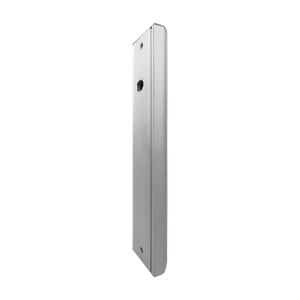
Camden Aluminum surface mounted adapter box for - CX-RIM-SB
Surface-mounted aluminum adapter box engineered to position Camden electric RIM strikes on double-door assemblies with RIM exit devices
- Eliminates strike alignment guesswork on double-door RIM assemblies via included jig.
- Compatible with CX-EPD1289L and CX-EPD1299L electric RIM strikes for predictable fit.
- Aluminum surface-mount housing (9.19" × 1.97" × 1.25") ships with full fastener kit.
Usually Ships in 2-3 Weeks Free shipping over $499$80.00 $79.99 Save $0.01 -
Save $21.01

Camden ANSI Round 4 7/8\" X 1 1/4\" stainless steel - CX-ESP2
Magnetic strike designed for networked access control systems operating on standard ANSI-profile door frames
- ANSI 4 7/8" × 1¼" profile drops into standard strike pockets with no frame modification.
- Stainless steel housing resists corrosion, reducing maintenance cycles on high-traffic entries.
- Runs directly off access control panel relay outputs—no auxiliary power modules required.
Usually Ships in 2-3 Weeks Free shipping over $499$55.00 $33.99 Save $21.01 -
Save $21.01

Camden ANSI Square 4 7/8\" X 1 1/4\" - CX-ESP1
Magnetic strike lock engineered for networked access control deployments requiring fail-secure locking on standard ANSI square door frame preparations
- ANSI 4 7/8" × 1 1/4" form factor fits standard North American frames without custom cuts.
- TCP/IP integration enables remote unlock commands and audit logging across multi-door deployments.
- Fail-secure design keeps doors locked on power loss, meeting life-safety egress code requirements.
Usually Ships in 2-3 Weeks Free shipping over $499$55.00 $33.99 Save $21.01 -
Save $283.01

Camden CM-SK336/42S Electric Strike
N electric strike designed for integration into professional access control and security systems
- Fail-secure operation keeps the door locked on power loss, reducing breach risk.
- Integrates with standard access control panels and credential readers via conventional wiring.
- Backed by manufacturer warranty, supporting commercial and institutional deployment accountability.
Usually Ships in 2-3 Weeks Free shipping over $499$720.00 $436.99 Save $283.01 -
Save $24.01
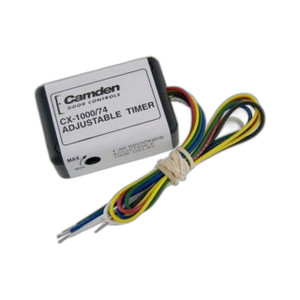
Camden CX-1000/74 Electric Strike Lock
Network electric strike, 24VDC fail-secure, TCP/IP control
- TCP/IP integration for centralized access control across multiple doors
- Fail-secure locking mode holds strike in locked position during power loss
- 24VDC operation with wall, ceiling, or pole mount for flexible installation
Usually Ships in 2-3 Weeks Free shipping over $499$62.00 $37.99 Save $24.01 -
Save $45.01

Camden CX-1000/77 Electric Strike
24VDC electric strike designed for hardwired access control systems
- Fail-secure 24VDC design keeps door locked on power loss or panel fault.
- SPDT relay input requires no firmware, VMS, or network integration to deploy.
Usually Ships in 2-3 Weeks Free shipping over $499$115.00 $69.99 Save $45.01 -
Save $554.01
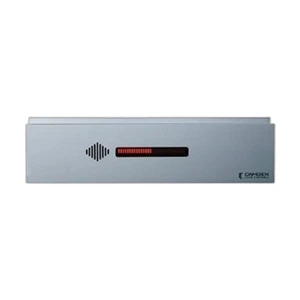
Camden CX-DE1200-B1 15 Second Fixed Exit Delay
Fixed exit delay controller designed for multi-door access control installations requiring synchronized egress timing
- Controls up to 4 doors from a single TCP/IP-networked controller, cutting installation overhead.
- 15-second fixed exit delay supports emergency egress compliance across all coordinated door strikes.
- 24VDC operation with proximity reader compatibility eliminates additional decoder hardware at each door.
Usually Ships in 2-3 Weeks Free shipping over $499$1,400.00 $845.99 Save $554.01 -
Save $554.01

Camden CX-DE1200-B2 30 Second Fixed Exit Delay
30-second fixed exit delay controller designed for multi-door access control installations
- Controls exit delay sequencing across up to 4 doors from a single 24VDC unit.
- Fixed 30-second delay ensures consistent, repeatable egress timing on every cycle.
- Compatible with proximity readers and magnetic locks for straightforward integration.
Usually Ships in 2-3 Weeks Free shipping over $499$1,400.00 $845.99 Save $554.01 -
Save $554.01
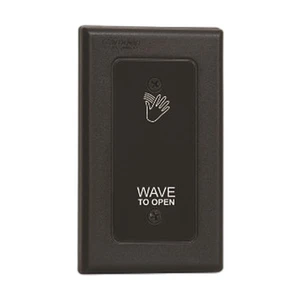
Camden CX-DE1200-B3 15 Second Fixed Exit Delay
Fixed exit delay module designed for multi-door access control environments requiring timed electromagnetic lock control
- Controls up to 4 electromagnetic locks from a single 24VDC module.
- Fixed 15-second egress delay ensures consistent, predictable lock release timing.
- Proximity reader integration supports card/badge credential workflows across all doors.
Usually Ships in 2-3 Weeks Free shipping over $499$1,400.00 $845.99 Save $554.01 -
Save $560.01

Camden CX-DE1200-N1 15/30 Selectable Exit Delay
Programmable exit delay controller designed for small-to-medium access control deployments requiring synchronized door release timing
- Controls up to 4 magnetic lock strikes simultaneously from a single 24 VDC unit.
- Selectable 15 or 30-second exit delay configures field-side without firmware changes.
- TCP/IP connectivity enables remote monitoring, configuration, and audit logging.
Usually Ships in 2-3 Weeks Free shipping over $499$1,400.00 $839.99 Save $560.01 -
Save $554.01

Camden CX-DE1200-N2 15 Second Fixed Exit Delay
15-second fixed exit delay lock system designed for multi-door access control installations
- Controls up to 4 magnetic lock doors from a single 24VDC unit.
- TCP/IP communication enables centralized monitoring across networked access control systems.
- 15-second fixed exit delay supports proximity card credential enforcement on every door.
Usually Ships in 2-3 Weeks Free shipping over $499$1,400.00 $845.99 Save $554.01 -
Save $561.01

Camden CX-DE1200-N3 30 Second Fixed Exit Delay
Networked exit delay controller designed for multi-door access control installations
- Controls magnetic strikes across 4 independent doors from a single 24VDC controller.
- TCP/IP connectivity enables centralized remote monitoring and ACS integration over Ethernet.
- 30-second fixed exit delay delivers consistent, synchronized egress timing with proximity readers.
Usually Ships in 2-3 Weeks Free shipping over $499$1,400.00 $838.99 Save $561.01 -
Save $554.01
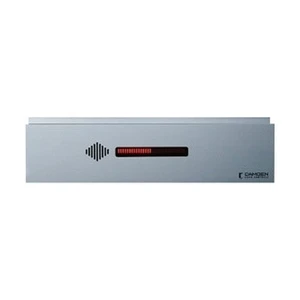
Camden CX-DE1200-N4 15 Second Fixed Exit Delay
Networked exit delay controller designed for multi-door access control installations requiring synchronized egress timing across multiple portals
- Controls exit delay timing across 4 independent doors from a single 24VDC device.
- TCP/IP Ethernet connectivity enables centralized monitoring from any access control platform.
- Fixed 15-second egress delay enforces consistent door hold timing for mag lock installations.
Usually Ships in 2-3 Weeks Free shipping over $499$1,400.00 $845.99 Save $554.01 -
Save $0.01

Camden CX-DE1214-38 3/8" Filler Plate
3/8" filler plate engineered for the Camden CX-DE1200 series delayed egress magnetic lock
- Fills a 3/8" recess gap for flush strike alignment without frame modification.
- Compatible with the full CX-DE1200 series, covering single and double door configs.
- Speeds retrofit installs on hollow metal or wood doors with non-standard jamb widths.
Usually Ships in 2-3 Weeks Free shipping over $499$36.00 $35.99 Save $0.01 -
Save $0.01

Camden CX-DE1214-58 5/8" Filler Plate
5/8" metal filler plate for Camden magnetic lock door frame prep
- Standardizes door frame alignment for 4-door access control systems
- Metal construction fits Camden proximity reader magnetic strike setups
- Operates on 24VDC power for integrated security deployments
Usually Ships in 2-3 Weeks Free shipping over $499$39.00 $38.99 Save $0.01 -
Save $0.01
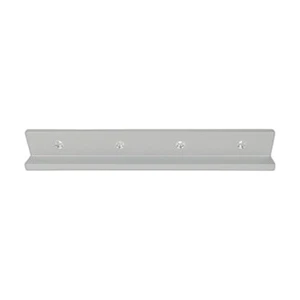
Camden CX-DE1215 1 x 1.5" Angle Bracket
1 x 1.5" angle bracket designed to mount and align magnetic lock strike hardware in access control installations
- Mounts CX-DE1200 series single-door delayed egress magnetic locks at 24VDC.
- 1 x 1.5" profile provides standoff clearance for solenoid wiring without cable kinks.
- Compatible with CX-DE1200-N1 through B3 models; not suitable for CX-DE1220 double-door.
Usually Ships in 2-3 Weeks Free shipping over $499$48.00 $47.99 Save $0.01 -
Save $0.01
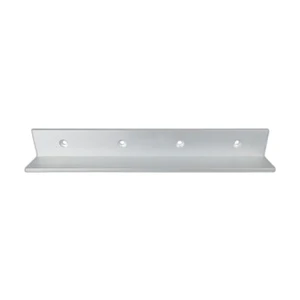
Camden CX-DE1216 1.5" x 1.5" Angle Bracket
1.5" x 1.5" steel angle bracket designed to reinforce mounting and alignment of magnetic lock strike assemblies on door frames in access control
- 1.5" × 1.5" steel bracket ensures precise strike alignment, preserving full magnetic holding force.
- Compatible with CX-DE1200 series single-door and CX-DE1220 double-door 24VDC mag-lock assemblies.
- Fits standard wood, steel, and aluminum door frames with minimal frame modification required.
Usually Ships in 2-3 Weeks Free shipping over $499$48.00 $47.99 Save $0.01 -
Save $994.01

Camden CX-DE1220-B1 15 Second Fixed Exit Delay
Networked exit delay controller designed for multi-door access control installations requiring synchronized egress management
- Fixed 15-second exit delay controller for up to 4 doors
- Consistent egress delay timing across all connected doors
- 24VDC operation with magnetic lock strike output drive
Usually Ships in 2-3 Weeks Free shipping over $499$2,525.00 $1,530.99 Save $994.01 -
Save $1,008.01

Camden CX-DE1220-N1 15/30 Selectable Exit Delay
Dedicated exit delay controller designed for multi-door access control installations requiring synchronized magnetic lock release and egress timing
- Controls up to 4 magnetic locks from one unit, cutting wiring runs and hardware count.
- Selectable 15- or 30-second exit delays per door support varied egress compliance needs.
- TCP/IP connectivity enables remote monitoring and integration with enterprise AC platforms.
Usually Ships in 2-3 Weeks Free shipping over $499$2,525.00 $1,516.99 Save $1,008.01 -
Save $47.01

Camden CX-DESPK Remote Speaker Station
Remote speaker station designed to extend audio communication and credential-reading capability across multi-door access control deployments
- Controls up to 4 independent door circuits with 24VDC magnetic lock activation.
- Native proximity reader support eliminates decoder modules, reducing wiring overhead.
- Wall and rack mount options allow flexible placement at doors or equipment cabinets.
Usually Ships in 2-3 Weeks Free shipping over $499$120.00 $72.99 Save $47.01 -
Save $59.01
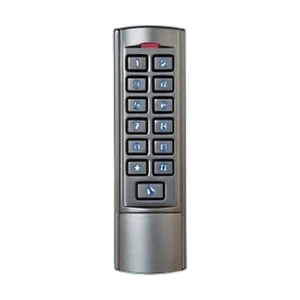
Camden CX-DESPK15SM 15W External Audio Speaker Station
15W external audio speaker station purpose-built to amplify voice alerts, countdown timers, and evacuation announcements from delayed-egress magnetic
- 15W output delivers 90dB+ SPL for clear voice alerts in moderate-noise environments.
- 24VDC operation ties directly into existing access control power—no extra transformer needed.
- Integrates with Camden CX-DE1200 and CX-DE1220 delayed-egress locks for code-compliant audio.
Usually Ships in 2-3 Weeks Free shipping over $499$150.00 $90.99 Save $59.01 -
Save $59.01

Camden CX-ED0010 Electromechanical Cabinet Lock
N electromechanical cabinet lock designed for high-security drawer, display case, equipment enclosure, and retail-counter applications
- 440 lb holding force handles high-traffic retail, medical, and evidence-locker duty.
- Dual 12/24VDC field selection integrates into legacy panels or modern IP controllers.
- Onboard door and lock sensors report status directly to ACS—no external relays needed.
Usually Ships in 2-3 Weeks Free shipping over $499$150.00 $90.99 Save $59.01 -
Save $89.01

Camden CX-ED1079 Low Profile Grade 1 Electric Strike
Grade 1 ANSI A156.31-certified electric strike designed for cylindrical locksets in commercial access control installations requiring high mechanical
- Grade 1 ANSI A156.31-rated with 1,500 lbs static holding force for high-traffic doors.
- Field-selectable 12VDC or 24VDC eliminates factory reconfiguration across multi-site installs.
- Low-profile 4.88"×1.88"×1.22" body fits standard frames with no modifications required.
Usually Ships in 2-3 Weeks Free shipping over $499$225.00 $135.99 Save $89.01 -
Save $97.01
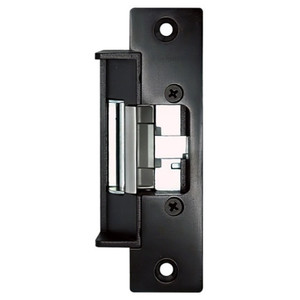
Camden CX-ED1079-BK Low Profile Grade 1 Electric Strike
Grade 1 low-profile electric strike for 12VDC access control systems
- 12VDC operation integrates with standard access control platforms
- Low-profile form factor fits standard door frames with space constraints
- Grade 1 classification rated for commercial security applications
Usually Ships in 2-3 Weeks Free shipping over $499$246.00 $148.99 Save $97.01 -
Save $0.01
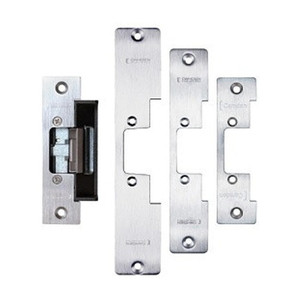
Camden CX-ED1079D Standard Depth Grade 1 Electric Strike
Grade 1 networked electric strike for enterprise access control
- TCP/IP integration with remote credential verification and door release
- Standard depth installation fits typical commercial door frame profiles
- Compatible with enterprise security platforms for centralized management
Usually Ships in 2-3 Weeks Free shipping over $499$225.00 $224.99 Save $0.01 -
Save $97.01

Camden CX-ED1079D-BK Electric Strike
Standard-depth Grade 1 electric strike designed for cylindrical locksets in access control door systems
- Grade 1 BHMA/ANSI A156.31 rated for 1,000,000 cycles with 1,500 lbs holding force.
- Dual 12V/24V AC/DC input with field-selectable fail-safe or fail-secure operation.
- SPDT latch monitoring output integrates directly into access control panel supervision.
Usually Ships in 2-3 Weeks Free shipping over $499$246.00 $148.99 Save $97.01 -
Save $0.01

Camden CX-ED1079DL Standard Depth Electric Strike
Standard-depth electric strike sized for 5/8" to 3/4" latch projection — the correct choice when your door frame geometry doesn't accommodate a
- Grade 1 ANSI A156.31 rated with 1,500 lb static hold force for high-traffic doors.
- Field-selectable 12/24V AC/DC and fail-safe/fail-secure modes eliminate rewiring at config.
- Optional SPDT latch monitor (100mA @ 24V DC) delivers position feedback to your access panel.
Usually Ships in 2-3 Weeks Free shipping over $499$250.00 $249.99 Save $0.01