Camden CX-1000/77 24VDC Electric Strike
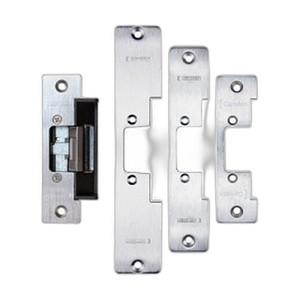
The Camden CX-1000/77 is a 24VDC electric strike designed for hardwired access control systems. It delivers momentary latch release when triggered by a relay output or timer module, making it the foundation of door-access wiring in facilities that rely on distributed relay logic rather than networked controllers. The fail-secure posture — strike remains locked without power — is a core safety attribute for emergency egress and power-loss scenarios.
Key Features
- 24VDC Hardwired Trigger: Form C (SPDT) relay contact input. No network communication or firmware updates required — voltage-in, latch-out topology.
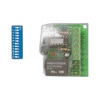
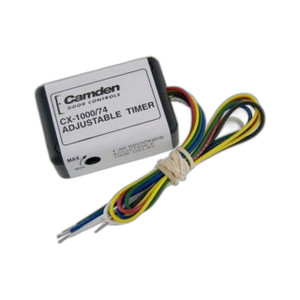
- Adjustable Release Duration: Pairs with Camden CX-1000/74 MicroMinder (1–30 second delay) or any SPDT relay timer module for configurable door-hold time.
- Peak Current 300–500 mA: Standard 1–2A fuse rating. Low auxiliary power consumption — integrates into legacy relay panels without backbone upgrades.
- Fail-Secure Design: Strike energizes to release; de-energizes to lock. Door remains secured during power loss, battery backup discharge, or control-panel fault.
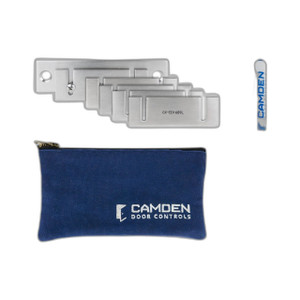
- Standard Frame Mount: Fits hollow-metal and aluminum door frames with compatible strike-pocket cutouts. Wall, ceiling, and pole installation options with supplied framing hardware.
- No Configuration Overhead: Zero network setup, zero VMS integration, zero firmware patches. Wired installation only — suitable for air-gapped or offline access-control runs.
The CX-1000/77 integrates into any access control topology that outputs a 24VDC relay signal — from standalone badge readers with local relay modules to distributed fire-alarm door-unlocking schemes. Common pairings include card readers feeding a relay module, intercom unlock buttons triggering a timer, or building management system (BMS) logic driving door-release outputs. The strike itself contains no intelligence: it is purely an electromechanical actuator responding to voltage presence or absence.
Installation begins with frame inspection — the strike cutout must match Camden specification dimensions (refer to datasheet /content/product-datasheets/CX-1000/77.pdf for exact measurements). A poorly sized or out-of-square cutout causes binding and reduces solenoid reliability. Power supply sizing is straightforward: 24VDC source rated for 500 mA peak draw, with a dedicated 1–2A fuse on the strike circuit. Wire the relay contact (Form C) directly to the strike terminals; no intermediate modules or surge protection are needed for simple hardwired runs. Upon energization, the solenoid retracts the latch bolt, allowing door push-through. Upon de-energization, the spring-return mechanism re-engages the bolt and re-locks the door frame.
Total cost of ownership on this strike is minimal — no licensing, no network bandwidth, no VMS seat requirements. A single CX-1000/77 costs less than a networked smart lock and requires no IP infrastructure or software maintenance. For facilities with older relay-based access systems (card reader + relay timer + solenoid strike) or for isolated emergency-egress doors, the CX-1000/77 remains the standard-of-practice solution. It pairs seamlessly with standalone door-control relays, fire-panel unlocking outputs, or manual push-button releases wired through a timer. Warranty coverage is provided by manufacturer warranty.
Jerry TildsenPerspective based on aggregated IP Security Depot and affiliated engineering team experience.
We've installed hundreds of Camden electric strikes across hospitals, offices, and manufacturing facilities, and the CX-1000/77 remains one of the most reliable hardwired latch-release mechanisms in the field. What sets it apart from networked smart locks is precisely what makes it durable: simplicity. No Wi-Fi dropout risk, no Bluetooth pairing headaches, no firmware vulnerabilities. For emergency egress doors, high-traffic secure corridors, or facilities running air-gapped relay logic, the hardwired solenoid strike is genuinely the right choice — not a compromise. The fail-secure behavior is non-negotiable in healthcare and corrections, where power loss must never unlock a secured door. We've seen integrators spec the CX-1000/77 on fire-alarm door-unlocking circuits (where the fire panel triggers relay outputs), on manual push-button entry systems in secure areas, and on distributed card-reader relay loops in warehouses. The strike itself is bulletproof; the installation gotchas are all framing and power-supply related.
Technical Highlights:
- 24VDC Peak Current 300–500 mA: Allows low-cost 1–2A fused circuits shared with other control relays. No need for dedicated high-amperage power supplies. In a multi-door facility, a single 24VDC/2A supply can feed 4–6 strike circuits with proper sequencing or time-division control.
- Form C (SPDT) Relay Trigger: Works with any standard relay output — fire panels, intercom systems, badge readers, building automation controllers. No proprietary wiring harnesses or firmware handshakes. This is why the CX-1000/77 survives technology generational shifts; it will work with legacy relay logic from 1995 and modern IP intercom systems from 2024 equally well.
- Fail-Secure Solenoid Spring Return: When power drops (UPS discharge, AC outage, intentional control cutoff), the spring automatically re-engages the latch. No battery backup needed on the strike itself. Pairs naturally with emergency egress requirements and unattended door security.
- Adjustable Hold Time via External Timer: Pair with the CX-1000/74 MicroMinder to dial release duration from 1–30 seconds. Different doors may need different hold times (emergency exit doors 3–5 sec, loading-dock doors 10–15 sec) — one strike model, infinite timer configurations.
- Standard Frame Cutout: Compatible with the vast majority of hollow-metal and aluminum commercial door frames. Verify cutout dimensions before order, but no exotic mounting hardware or custom framing required for 95% of installations.
Deployment Considerations:
- Frame cutout must be clean and square to the door plane. Out-of-square frames cause solenoid binding and reduce latch engagement reliability. If the existing frame cutout is oversized or damaged, recommend frame repair or metal plate shimming before strike installation.
- 24VDC power supply must be dedicated to the strike circuit with its own 1–2A fuse. Sharing high-impedance power supply rails with other controls can cause voltage sag during solenoid energization and weaken latch release. Separate fused supply = reliable operation.
- Wire the relay contact (Form C) directly to strike terminals — no intermediate power conditioning or surge suppression modules. Hardwired relays are inherently robust; adding extra components introduces failure points and complexity.
- If the door is part of an emergency egress route, confirm that the strike release time (typically 0.5–1 second after relay energization) complies with life-safety code and fire-marshal requirements. Document the complete release sequence (relay delay + strike solenoid response) in commissioning notes.
- For multi-door installations, stagger strike energization to avoid power-supply inrush peaks. If 4 doors unlock simultaneously, a 2A supply will sag; use a relay sequencer or time-division logic to spread the load.
The CX-1000/77 is the right spec for integrators and end-users who need bulletproof hardwired door access with zero network dependency. If your facility runs relay logic, fire-alarm circuits, or standalone badge readers with timer modules, this is the proven foundation. See the Camden catalog for complementary relay timers and compatible frame-mounted latches.