
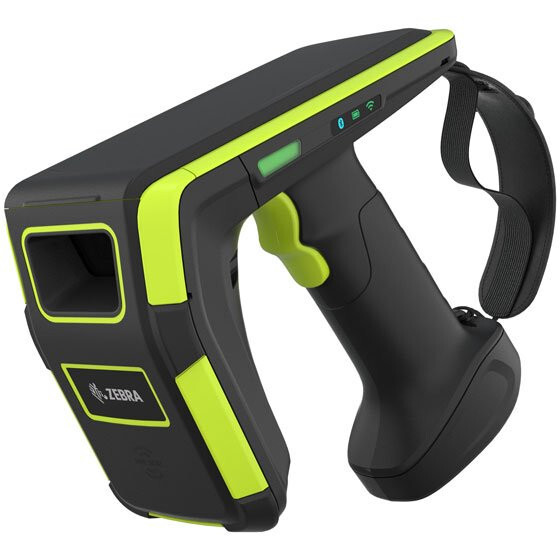
Showing Results for RFID Systems
-
Save $21.01

2N Access Unit Dual-Frequency RFID Reader - 02146-001
Dual-frequency RFID module reads 125kHz + 13.56MHz NFC credentials
- Dual-frequency RFID reader (125kHz + 13.56MHz NFC)
- Supports mid-migration card-format mixing
- Network-connected for centralized access management
Usually Ships in 2-3 Weeks Free shipping over $499$689.00 $667.99 Save $21.01 -
Save $15.01

2N Access Unit Dual-Frequency USB NFC RFID Reader - 01527-001
Dual-frequency USB reader for 125 kHz and 13.56 MHz cards
- Reads legacy proximity and modern NFC credentials from one reader
- Encrypted RFID transactions with authentication to prevent card cloning
- ISO/IEC 14443 Type A and B compliant, plug-and-play USB connectivity
Usually Ships in 2-3 Weeks Free shipping over $499$499.00 $483.99 Save $15.01 -
Save $32.01
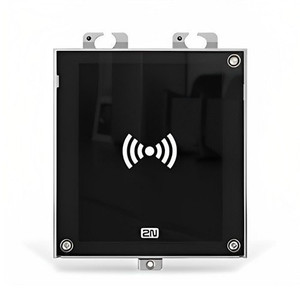
2N Access Unit Multi-Frequency RFID Reader - 02773-001
Single reader for 125kHz, 13.56MHz, and NFC credentials with PICard encryption
- Multi-frequency RFID reader (125kHz + 13.56MHz + NFC)
- Reads MIFARE, iClass, proximity, and NFC mobile phones
- One reader replaces stacked separate credential models
Usually Ships in 2-3 Weeks Free shipping over $499$1,039.00 $1,006.99 Save $32.01 -
Save $24.01

2N AU2.0 Multi-Frequency RFID Reader - 02774-001
Multi-frequency RFID reader: 125kHz, 13.56MHz, NFC in one compact unit
- Multi-frequency RFID reader (125kHz + 13.56MHz)
- Reads legacy proximity cards alongside modern cards
- 0.51 lb pole-mount terminal for gate-arm installs
Usually Ships in 2-3 Weeks Free shipping over $499$769.00 $744.99 Save $24.01 -
Save $28.01

2N AU2.0 Multi-Technology RFID Reader - 02775-001
Single reader for 125kHz, 13.56MHz, and NFC credentials plus PIN
- Multi-tech RFID reader: 125kHz + 13.56MHz + NFC
- Reads ISO/IEC 14443A cards alongside legacy badges
- 0.51 lb wall-mount terminal - no reader stacking
Usually Ships in 2-3 Weeks Free shipping over $499$909.00 $880.99 Save $28.01 -
Save $11.01

2N IP Force 2.0 Dual RFID Reader - 03355-001
Dual-frequency RFID reader with Wiegand output for enterprise access control
- Multi-frequency RFID reader with Wiegand interface
- Network-connected for centralized credential mgmt
- PoE+ (802.3at) + 0.18 lb compact reader head
Usually Ships in 2-3 Weeks Free shipping over $499$335.00 $323.99 Save $11.01 -
Save $12.01

2N IP Force 2.0 Dual RFID Reader - 03356-001
Dual-frequency RFID reader with Wiegand output for legacy and modern access control
- Dual-frequency RFID reader for IP Force 2.0 intercoms
- Seos credential ecosystem with advanced encryption
- PoE+ (802.3at) + 0.18 lb compact reader head
Usually Ships in 2-3 Weeks Free shipping over $499$389.00 $376.99 Save $12.01 -
Save $13.01

2N IP Force Dual RFID Reader - 03358-001
Dual-frequency RFID reader with native OSDP for enterprise access control
- Dual-frequency RFID reader with native OSDP interface
- Seos compatibility for HID ecosystem integration
- PoE+ (802.3at) for single-cable install
Usually Ships in 2-3 Weeks Free shipping over $499$402.00 $388.99 Save $13.01 -
Save $11.01

2N IP Force Dual RFID Reader 125/13.56 MHz - 03357-001
Dual-frequency RFID reader for mixed-credential access control
- Dual-frequency RFID reader (125 kHz + 13.56 MHz)
- OSDP interface for encrypted panel communication
- PoE+ (802.3at) + 0.18 lb compact reader head
Usually Ships in 2-3 Weeks Free shipping over $499$350.00 $338.99 Save $11.01 -
Save $24.01

2N IP Verso Dual-Frequency RFID Reader Intercom - 02444-001
Dual-frequency RFID + BLE reader with integrated two-way intercom over IP
- Dual-frequency RFID intercom reader (125kHz + 13.56MHz)
- Bluetooth credentials supported on the same reader
- Built for multi-tenant building card-format mixing
Usually Ships in 2-3 Weeks Free shipping over $499$799.00 $774.99 Save $24.01 -
Save $19.01

2N IP VERSO Multi-Protocol RFID Reader - 02778-001
Multi-protocol RFID reader with 125kHz, 13.56MHz, NFC, and BLE support
- Multi-protocol reader (125kHz + 13.56MHz + NFC + BLE)
- Native IP - no serial or Wiegand converter needed
- Wall, pedestal, or door-frame mount options
Usually Ships in 2-3 Weeks Free shipping over $499$609.00 $589.99 Save $19.01 -
Save $7.01

Axis 03423-001 RFID Reader Module
Secure, contactless credential verification for access control installations requiring robust identification capabilities
- RFID reader module for Axis access control credential verification
- IP65-rated wall-mount housing for protected entry deployment
- Black NCS S 9000-N finish matches standard reader install aesthetics
Usually Ships in 2-3 Weeks Free shipping over $499$229.00 $221.99 Save $7.01 -
Save $477.92

CipherLab ARS38UHFNRSS1 UHF RFID Reader
IP65 UHF RFID reader with protective boot for warehouse & logistics
- UHF RFID plus NFC reader with ISO14443A/B and ISO15693 tag support
- Single-device RFID and barcode scanning removes separate hardware
- IP65 protective boot for warehouse dust and water-spray durability
Usually Ships in 2-3 Weeks Free shipping over $499$1,963.91 $1,485.99 Save $477.92 -
Save $0.01

Datalogic CC-SLED01 Charging Cradle for 2128P RFID Reader
OEM charging cradle for Datalogic 2128P RFID reader
- Purpose-built dock for 2128P RFID reader with wireless communication
- Compact design (6.22" W × 3.86" H) fits enterprise staging workflows
- Operates -10°C to 50°C with 0.9 m drop tolerance across temp range
Usually Ships in 2-3 Weeks Free shipping over $499$164.00 $163.99 Save $0.01 -
Save $0.01

Datalogic CC-SLED02 Charging Cradle for 3138/2128P RFID SLED
OEM charging cradle for Datalogic 3138/2128P RFID SLED devices
- Purpose-built dock for 3138 and 2128P RFID SLED compatibility
- Bluetooth v4.2 connectivity for centralized fleet management workflows
- Enterprise-grade construction meets Mil-Std 810F durability standards
Usually Ships in 2-3 Weeks Free shipping over $499$174.00 $173.99 Save $0.01 -
Save $1,076.01
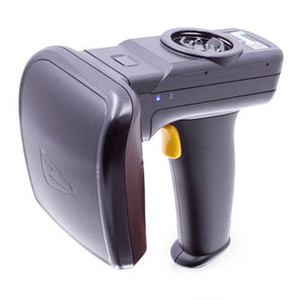
Datalogic DLR-SLED01-US UHF RFID Reader Sled
UHF RFID reader sled for Datalogic Memor mobile devices
- UHF RFID technology with Bluetooth wireless connectivity for inventory capture
- Built for Datalogic Memor—OEM accessory ensures native compatibility
- Rated for -10°C to 50°C operation with 0.9 m drop durability
Usually Ships in 2-3 Weeks Free shipping over $499$2,450.00 $1,373.99 Save $1,076.01 -
Save $812.01

Datalogic DLR-SLED02-US Memor RFID Sled Accessory
RFID sled for Datalogic Memor with US-POGO connector
- Genuine OEM accessory compatible with Datalogic Memor devices
- US-POGO pin connection for secure, reliable electrical contact
- Bluetooth v4.2 wireless connectivity for mobile data capture
Usually Ships in 2-3 Weeks Free shipping over $499$1,850.00 $1,037.99 Save $812.01 -
Save $28.01

ELO Touch Elo Edge Connect RFID Reader - E673037
N RFID reader and barcode scanner designed for retail, warehouse, and inventory management operations
- Combines RFID reading and barcode scanning in one unit for multi-format data capture.
- Elo Edge Connect interface integrates directly into ELO-based POS and inventory systems.
- Built for high-volume retail and warehouse deployments requiring reliable daily throughput.
Usually Ships in 2-3 Weeks Free shipping over $499$350.00 $321.99 Save $28.01 -
Save $0.96
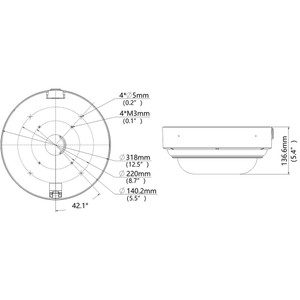
Geovision 81-Ssuhktg-1004 Gv-Uhf Tag
UHF RFID tag component designed to pair with Geovision IP PTZ camera systems
- UHF RFID tag triggers PTZ camera pan, tilt, zoom, and event logging automatically.
- Pairs with Geovision IP PTZ camera systems for wireless object and personnel tracking.
- Industrial-grade build suits typical indoor and light outdoor surveillance deployments.
Usually Ships in 2-3 Weeks Free shipping over $499$2.95 $1.99 Save $0.96 -
Save $250.01

Geovision GV-RU9003 GV-RU9003 Outdoor UHF RFID Reader
Outdoor UHF RFID reader with long-range detection for access control
- UHF RFID technology enables long-range tag reads for gate and perimeter access control.
- Outdoor-rated weatherproof housing supports permanent exterior mounting in exposed sites.
- Compact 12.5 × 11.25 × 4 in form factor integrates with IP-based access control platforms.
Usually Ships in 2-3 Weeks Free shipping over $499$870.00 $619.99 Save $250.01 -
Save $324.01

Janam Attachable RFID Reader For XT2 Series - RFD-T1-002UL
Modular RFID reader attachment designed for the Janam XT2 Series mobile computer, enabling field teams to add real-time RFID tag reading to existing
- Attachable RFID reader module for Janam XT2 mobile computers
- Powered directly from host XT2 battery — no extra charger
- Adds RFID capture to existing XT2 fleet without replacement
Usually Ships in 2-3 Weeks Free shipping over $499$1,295.00 $970.99 Save $324.01 -
Save $144.85
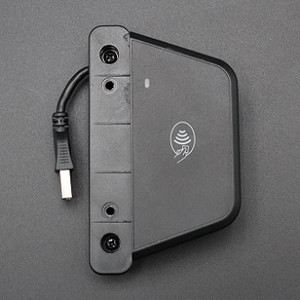
PioneerPOS Proximity RFID Reader Dual Band USB-A - T3P-RFR202
Proximity RFID reader designed for retail POS terminals, hospitality self-service kiosks, and access-control integration points
- Dual-band 125 kHz and 13.56 MHz support bridges legacy and NFC/MIFARE deployments.
- USB-A plug-and-play eliminates external power supplies and serial adapters at the terminal.
- Sub-100 ms read cycles sustain high-throughput card processing at busy POS lanes.
Usually Ships in 2-3 Weeks Free shipping over $499$439.84 $294.99 Save $144.85 -
Save $144.85

PioneerPOS RFID Reader (Keyboard Output) for T3S - T3S-RFR104
Dual-frequency RFID reader designed for T3S POS terminals and retail point-of-sale environments
- Dual-frequency 13.56 MHz and 125 kHz support eliminates need for separate readers.
- USB keyboard emulation requires no drivers or middleware for instant POS integration.
- Bus-powered USB-A connection simplifies deployment on T3S terminals without adapters.
Usually Ships in 2-3 Weeks Free shipping over $499$439.84 $294.99 Save $144.85 -
Save $132.09

PioneerPOS RFID Reader 125kHz & 13.56MHz USB - Q12-T3P-RFR200
USB-connected RFID reader designed for access control, healthcare credentialing, and credential verification workflows
- Reads both 125kHz (EM4100/4200) and 13.56MHz (Mifare, ISO 14443A/B, NFC) from one unit.
- USB-A plug-and-play connection requires no external power supply or serial adapter.
- Supports mixed-credential facilities, eliminating duplicate hardware during card migrations.
Usually Ships in 2-3 Weeks Free shipping over $499$402.08 $269.99 Save $132.09 -
Save $168.35

PioneerPOS RFID Reader USB Dual Band - 49B-B1-RF001
USB-attached RFID reader designed for retail point-of-sale systems, warehouse inventory management, and asset tracking workflows
- Dual-band RFID handles mixed legacy and modern tag standards in one unit.
- USB interface enables plug-and-play integration with any POS terminal or workstation.
- No external power supply or controller board required, reducing deployment complexity.
Usually Ships in 2-3 Weeks Free shipping over $499$512.34 $343.99 Save $168.35 -
Save $13.01

Socket Mobile TX4133-3374 1d/2d Nfc-rfid Scanner
1D/2D barcode + NFC-RFID read/write for retail and mobile POS
- Reads 1D/2D barcodes and performs NFC-RFID read/write in a single handheld unit.
- USB wired and wireless modes let you deploy at fixed POS or mobile carts without hardware swaps.
- Bidirectional NFC-RFID access enables asset-state updates and inventory lookups on the same device.
Usually Ships in 2-3 Weeks Free shipping over $499$349.00 $335.99 Save $13.01 -
Save $23.01

Socket Mobile TX4136-3377 1d/2d Nfc-rfid Scanner
1D/2D barcode + NFC-RFID scanner for warehouse and retail inventory
- Reads and writes 1D/2D barcodes and NFC-RFID tags from a single handheld device.
- NFC-RFID write capability enables dynamic asset tagging and pallet-level tracking.
- On-device charging keeps the scanner in workflow without daily docking-station returns.
Usually Ships in 2-3 Weeks Free shipping over $499$419.00 $395.99 Save $23.01 -
Save $13.01
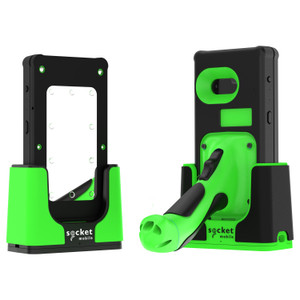
Socket Mobile TX4137-3378 DScan D751 NFC-RFID Scanner
1D/2D barcode + NFC-RFID read/write in compact handheld form
- Dual 1D/2D barcode and NFC-RFID read/write eliminates the need for two separate devices.
- Native tag encoding support enables real-time asset updates without secondary reader infrastructure.
- Compact handheld form factor supports untethered deployment across warehouse and field locations.
Usually Ships in 2-3 Weeks Free shipping over $499$349.00 $335.99 Save $13.01 -
Save $21.01

Socket Mobile TX4139-3380 NFC-RFID Scanner with Charging
1D/2D barcode + NFC-RFID reader/writer in compact handheld form
- Reads 1D/2D barcodes and writes NFC-RFID tags in one device, cutting hardware per station.
- USB interface connects to POS systems and WMS platforms with no proprietary drivers required.
- Rated -40°C to +85°C, supporting cold-chain, outdoor, and temperature-variable deployments.
Usually Ships in 2-3 Weeks Free shipping over $499$385.00 $363.99 Save $21.01 -
Save $23.01

Socket Mobile TX4140-3381 1D/2D NFC-RFID Scanner with Charging
1D/2D barcode + NFC-RFID scanner with Bluetooth and charging dock
- Reads 1D/2D barcodes and NFC-RFID tags, covering dual-capture workflows in one device.
- Bluetooth connectivity enables untethered scanning across pallet, shelf, and floor levels.
- Included charging dock eliminates shift downtime and simplifies multi-unit power management.
Usually Ships in 2-3 Weeks Free shipping over $499$419.00 $395.99 Save $23.01 -
Save $13.01

Socket Mobile TX4141-3382 1d/2d Nfc-rfid Scanner
1D/2D barcode + NFC-RFID read/write for warehouse and retail ops
- Reads 1D/2D barcodes and UPC without requiring precise label alignment.
- Integrated NFC-RFID read/write eliminates line-of-sight dependency for asset tracking.
- Single handheld device handles both barcode and RFID workflows, reducing carried equipment.
Usually Ships in 2-3 Weeks Free shipping over $499$349.00 $335.99 Save $13.01 -
Save $21.01
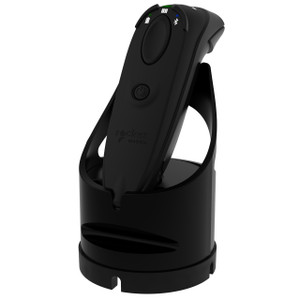
Socket Mobile TX4143-3384 1d/2d Nfc-rfid Scanner
1D/2D barcode + NFC-RFID scanner for warehouse and retail capture
- Reads 1D/2D barcodes and UPC symbologies, cutting dwell time in high-volume receiving.
- NFC-RFID read/write support enables on-site tag programming without external processing.
- Included charging dock sustains shift-based operations and ships ready for immediate deployment.
Usually Ships in 2-3 Weeks Free shipping over $499$385.00 $363.99 Save $21.01 -
Save $20.01

Socket Mobile TX4157-3971 NFC-RFID Reader/Writer
Portable 1D/2D barcode + NFC-RFID read/write for field inventory
- Reads and writes NFC-RFID tags for real-time asset tracking and chain-of-custody logging.
- Dual-mode 1D/2D scan engine captures UPC, QR, and DataMatrix without manual data entry.
- Pocket-sized red housing aids device accountability in shared multi-scanner deployments.
Usually Ships in 2-3 Weeks Free shipping over $499$369.00 $348.99 Save $20.01 -
Save $20.01

Socket Mobile TX4158-3972 1d/2d Nfc-rfid Scanner
1D/2D barcode + NFC-RFID scanner for asset tracking and inventory
- Reads 1D/2D barcodes and NFC-RFID tags from a single handheld unit.
- Bluetooth pairing integrates with Socket Mobile CX/DX/TX series and SMD infrastructure.
- Supports ISO 14443 Type A/B NFC for tag read/write in asset-tracking workflows.
Usually Ships in 2-3 Weeks Free shipping over $499$369.00 $348.99 Save $20.01 -
Save $20.01
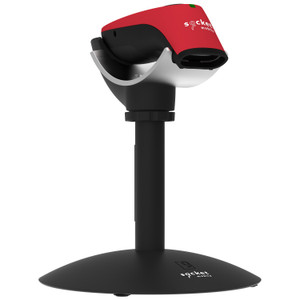
Socket Mobile TX4159-3973 1d/2d Nfc-rfid Scanner
1D/2D barcode + NFC-RFID read/write in one compact handheld
- Dual-mode 1D/2D barcode and NFC-RFID capture eliminates the need for two separate devices.
- Reads and writes passive NFC-RFID tags, supporting existing tag infrastructure without added cost.
- Compact handheld form factor integrates into belt or pocket workflows across warehouse deployments.
Usually Ships in 2-3 Weeks Free shipping over $499$369.00 $348.99 Save $20.01 -
Save $21.01
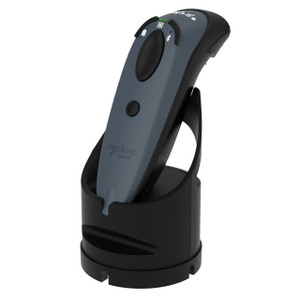
Socket Mobile TX4165-3979 NFC-RFID Reader/Writer Scanner
1D/2D barcode + NFC-RFID read/write for retail and warehouse ops
- Scans 1D/2D barcodes and reads/writes NFC-RFID tags from a single device.
- Eliminates separate tag-writer hardware, reducing infrastructure in asset-tracking deployments.
- Supports handheld and counter-mounted workflows with standard POS and WMS integration.
Usually Ships in 2-3 Weeks Free shipping over $499$385.00 $363.99 Save $21.01