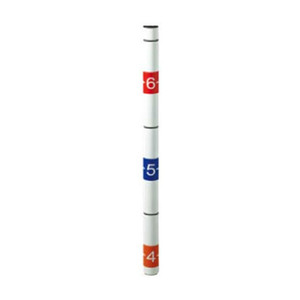
What is a height strip IP camera and why is vertical mounting critical?
A height strip camera is a specialized surveillance device mounted vertically to capture head-on facial images as subjects pass through a doorway or checkpoint. Vertical mounting minimizes perspective distortion and ensures consistent framing across all subjects, enabling reliable facial identification. Horizontal or angled mounts degrade image quality and reduce identification confidence. Height strips are standard in retail entry control, banking, and access-control integration.
How do I calculate the right resolution for facial identification?
Facial identification requires meeting DORI (Detection, Observation, Recognition, Identification) thresholds. Start by measuring your entry width, estimating subject distance from the camera, and consulting pixel density + DORI guidance to determine required megapixel count. Most entry-point height strips deliver 2–5 MP; verify that your chosen model's actual field of view and pixel density align with your doorway geometry and identification distance target.
Will a single PoE switch power multiple height strip cameras?
A single 95 W PoE switch can power approximately 15–18 standard IP cameras (5–8 W each). Height strips with IR, heaters, or white-light LEDs consume 8–15 W. For multi-entry deployments, calculate total wattage (e.g., 6 height strips × 10 W = 60 W) and ensure your PoE switch supplies at least 1.5× total draw. See PoE budget planning to avoid power starvation.
What bitrate and storage should I plan for height strip recordings?
Identity-grade height strip streams typically consume 4–12 Mbps at 30 FPS, depending on resolution and codec. H.265 reduces bitrate by ~40% vs. H.264. For a 3-camera entry installation, budget 15–30 Mbps aggregate. Use retention math calculations to size storage based on motion-detection duty cycle, desired archive length (30–90 days), and redundancy. Most retail deployments store 30–60 days at 50% motion duty cycle.
How does frame rate affect height strip effectiveness in high-traffic areas?
Standard 30 FPS is sufficient for most doorway capture; higher frame rates (60 FPS) improve subject-motion continuity but double bitrate. Frame rate guidance suggests prioritizing bitrate headroom and NVR capacity over inflated frame rates. During peak traffic, dropped frames from NVR over-subscription cause far more forensic issues than 30 FPS playback. Verify your NVR has documented capacity for your full camera count.
Which brands offer height strip cameras, and what are the key differences?
Leading manufacturers include Axis, Hanwha, and Vivotek. Axis models emphasize high-resolution facial detail and advanced codecs; Hanwha delivers cost-effective 2–4 MP options with robust IR; Vivotek specializes in compact, low-power designs for retrofit installations. Compare models by resolution, lens distortion spec, PoE consumption, and low-light performance to match your entry-point requirements and infrastructure constraints.