Digital Signage
Showing Results for Digital Signage
-
Ubiquiti
SKU: UC-CAST
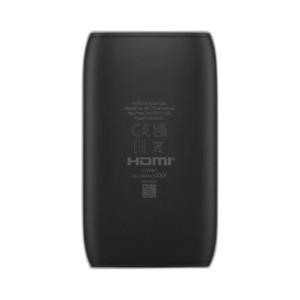
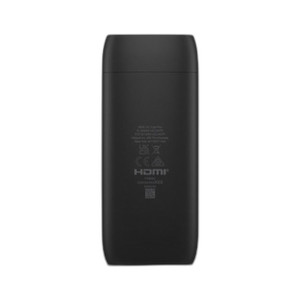
Ubiquiti UC-CAST PoE/USB-C Digital Signage Adapter
Plug-and-play HDMI signage adapter powered by PoE or USB-C
- Powers via PoE 802.3af, eliminating separate power runs to each display.
- USB-C alternative input enables retrofit installs without rewiring existing drops.
- Managed via UniFi Connect for centralized playlist scheduling across all endpoints.
$249.00 $227.99 Save $21.01 -
Ubiquiti
SKU: UC-CAST-LITE-US
Ubiquiti UC-CAST-LITE-US Digital Signage Media Player
Network-based media player with UniFi management for multi-display signage
- Powered via PoE+ (802.3at), eliminating separate power runs to each display location.
- Managed through UniFi, consolidating signage control with existing cameras and APs.
- 1.9 GHz processor handles network-delivered playlist scheduling without local storage.
$185.44 $178.99 Save $6.45 -
Ubiquiti
SKU: UC-CAST-PRO
Ubiquiti UC-CAST-PRO Managed digital signage player
Compact 4K signage player with PoE power and UniFi management
- Octa-core ARM processor drives 4K playback without external compute or x86 overhead.
- Single PoE 48V connection (802.3af, 0.35A) eliminates separate power runs at each display.
- 32 GB onboard storage enables offline playback during network interruptions, load once.
$279.00 $278.99 Save $0.01 -
Ubiquiti
SKU: UC-DISPLAY
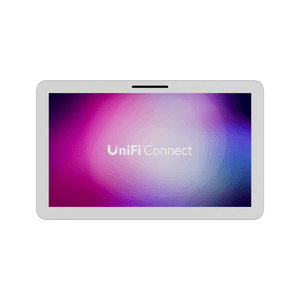
Ubiquiti UC-DISPLAY 21.5" Full HD PoE++ touchscreen
21.5" Full HD touchscreen display with PoE++ power and UniFi integration
- Single PoE++ (802.3bt) cable delivers both power and network—no separate circuit needed.
- 21.5" Full HD touchscreen integrates with UniFi Connect for access control and visitor management.
- Quad-core Cortex-A55 at 1.9 GHz handles real-time facility alerts and occupancy dashboards.
$699.00 $698.99 Save $0.01 -
Ubiquiti
SKU: UP-VIEWPORT
Ubiquiti UP-VIEWPORT UniFi Protect HDMI Live View Appliance
HDMI live view appliance for UniFi Protect camera feeds
- Streams UniFi Protect camera feeds to any HDMI display in real time.
- PoE-powered via 802.3af eliminates separate power supplies at each display point.
- Single Gigabit Ethernet port handles both power and data for simplified cabling.
$206.17 $205.99 Save $0.18
Digital Signage
Digital signage players, displays, and content management platforms for commercial messaging and wayfinding. Network-managed screens for lobbies, retail environments, and corporate communications.
Plan Your Deployment
- Select display size and brightness for viewing distance and ambient light
- Evaluate content management platform for scheduling and zone layouts
- Confirm network connectivity for remote content updates
Digital Signage — Engineering-Grade Network Infrastructure for Commercial Deployments
This category covers 7 working models of digital signage sourced manufacturer-direct or through channel-direct US distribution. Build the rest of your system around the architectural choices below — compatibility, environmental rating, and lifecycle decisions made here propagate through every downstream component you specify.
What to Look For
Port count and PoE budget come first. An 8-camera install needs at least 9 ports (cameras + uplink), with PoE budget covering the sum of per-camera PoE class. Account for uplink speed: 1 Gbps uplinks bottleneck under heavy video load on switches with 8+ high-resolution cameras. SFP+ or 10 Gbps uplinks remove that bottleneck on growing sites.
Managed versus unmanaged switches affect troubleshooting and VLAN segmentation. Managed switches (HPE Aruba, Cisco, Netgear ProSAFE M-series) support VLANs, link-aggregation, port mirroring, and SNMP monitoring — essential for any deployment over 16 cameras or with mixed traffic. Unmanaged switches work for small isolated camera networks but limit growth and troubleshooting visibility.
Layer 3 capability (routing, VLAN inter-VLAN routing) becomes important when surveillance, access control, and corporate traffic share the same physical network. Surveillance VLAN isolation is now standard practice — segregate camera traffic from corporate Wi-Fi and guest networks to prevent broadcast storms and lateral attack paths. Confirm the switch supports the VLAN count and ACL complexity you need.
Outdoor/industrial deployments need ruggedized switches. ComNet, Antaira, and Moxa make hardened switches rated for -40°C to +75°C, vibration, and waterproof housings. DIN-rail mounting fits standard outdoor enclosures. Standard data-closet switches in outdoor enclosures fail within 1-2 years from condensation and temperature swings; spec the right environment rating up front.
Key Specs in This Category
| Spec | Available Options |
|---|---|
| Resolution | 2MP |
| Connectivity | Wired |
| Power | PoE, PoE++ |
| Type | VoIP Phone, Access Point, Accessories, IP Camera |
Top Brands in This Category
Frequently Asked Questions
What's the difference between managed and unmanaged PoE switches?
Unmanaged switches power-on and forward traffic without configuration — simplest deployment but no VLAN, no monitoring, no troubleshooting visibility. Managed switches add VLANs, link-aggregation, port mirroring, SNMP, and remote-management interfaces. For deployments above 16 cameras or those sharing infrastructure with other systems, managed is the right choice; the per-port cost is modest and the operational benefit is large.
How much PoE budget should I size for?
Sum the PoE-class budget of all PoE-powered devices, then add 20-30% headroom for growth. Eight 802.3at cameras at 30W max each is 240W minimum — but a 130W-budget 8-port PoE+ switch can't deliver that. Confirm both per-port budget and total PoE budget; many entry-level switches advertise PoE+ ports but cap aggregate budget at half the per-port maximum.
Do I need 10 Gbps uplinks?
For installations under 32 cameras with mid-resolution streams, 1 Gbps uplinks suffice. Above that, or when you need fast investigative playback for many simultaneous reviewers, 10 Gbps (SFP+) uplinks remove the choke point. NVRs writing to NAS over the network also benefit. SFP+ has become reasonably affordable on managed switches; opt for it on new installs over 16 cameras.
Can I run VoIP and video on the same switch?
Yes — modern managed switches use VLAN segregation to keep VoIP, video, and data traffic separated even on shared physical ports. Use QoS (Quality of Service) to prioritize VoIP for low latency and assign video its own queue. Avoid mixing untagged traffic types on a single switch port without VLAN configuration; broadcast storms and bandwidth competition cause both voice and video quality issues.
What's the right uplink between buildings on a campus?
Single-mode fiber for runs over 100 m, multi-mode for shorter runs (typically up to 550 m on OM3, 300 m on OM4 at 10 Gbps). Bidirectional SFPs (single fiber instead of pair) save fiber count when the run is already deployed. Avoid copper between buildings — ground-potential differences during lightning strikes destroy switch SFP modules even when surge-protected.
Need help choosing? Talk to a Senior Specialist — direct line 877-277-7147 or request a quote.