
Thermal Transfer Ribbons
Showing Results for Thermal Transfer Ribbons
-

Epson
SKU: C13S015339
Epson C13S015339 PLQ-20 Ribbon Cartridge Box of 3
3-pack ribbon cartridges for Epson PLQ-20 label and receipt printers
- PLQ-20 ribbon cartridge in box of 3 OEM consumables
- Maintains scannable barcode print across handling
- Replacement consumable for PLQ-20 impact printer
$38.25 $37.99 Save $0.26 -

Epson
SKU: C33S020407
Epson C33S020407 Black Ink Cartridge for TM-J7000/J7500
Genuine black ink for Epson TM-J7000/J7500 receipt and label printers
- Black ink cartridge for TM-J7000/J7500 printers
- OEM-genuine inkjet consumable for receipt printing
- Supports 600 dpi resolution capability
$53.50 $36.99 Save $16.51 -
Epson
SKU: C33S020484
Epson C33S020484 Black Ink Cartridge
Original black ink for Epson S2000 and S9000 printers
- Black ink cartridge for S2000 and S9000 printers
- OEM-genuine Epson formulation for text clarity
- Direct-fit consumable at 0.18 lb form factor
$41.70 $28.99 Save $12.71 -
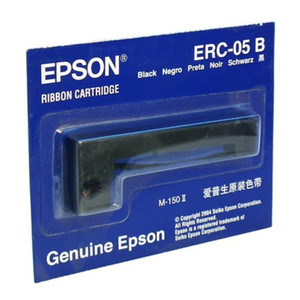
Epson
SKU: ERC-05B
Epson ERC-05B Ribbon Cartridge for M150
Black ribbon cartridge for Epson M150 impact printing
- ERC-05B black fabric ribbon for M150 printer
- Direct-fit replacement consumable cartridge
- 0.1 lb impact dot-matrix ribbon supply
$4.30 $3.99 Save $0.31 -

Epson
SKU: ERC-09B
Epson ERC-09B Printer Ribbon 10-Pack
10-pack impact printer ribbons for Epson M-Series receipt printers
- ERC-09B black ribbon 10-pack for M-Series printers
- Consistent ink supply for high-volume receipt printing
- Impact dot-matrix consumable for fleet operations
$6.00 $5.99 Save $0.01 -
Epson
SKU: ERC-18B
Epson ERC-18B Black Ribbon Cartridge 10-Roll Pack
10-roll black ribbon pack for Epson direct thermal printers
- ERC-18B black ribbon cartridge 10-roll pack
- Direct thermal consumable for label/receipt printers
- 2.35 lb pack at 6.6 x 8.2 x 8.2 in form factor
$60.00 $59.99 Save $0.01 -
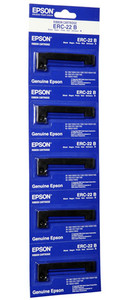
Epson
SKU: ERC-22B
Epson ERC-22B Black Ribbon 10-Pack for M-Series Printers
Black ribbon 10-pack for Epson M-Series impact printers
- ERC-22B black ribbon 10-pack for M-Series printers
- Continuous inventory for high-volume receipt printing
- Impact dot-matrix consumable for fleet sites
$6.99 -
Epson
SKU: ERC-23B
Epson ERC-23B Thermal Printer Ribbon 10-Pack
10-pack thermal printer ribbons for Epson M267, RP267, TM267, TM270
- ERC-23B thermal printer ribbon 10-pack consumable
- Direct thermal supply for high-volume printing
- Black ribbon at 1 lb pack for fleet sites
$4.70 $3.99 Save $0.71 -

Epson
SKU: ERC-23BR
Epson ERC-23BR Ribbon Cartridge 10-Pack Black/Red
10-pack ERC-23BR ribbons for Epson thermal receipt printers
- ERC-23BR black/red ribbon cartridge 10-pack
- Two-color highlight for transaction differentiation
- Impact dot-matrix consumable for retail/hospitality
$4.85 $3.99 Save $0.86 -
Epson
SKU: ERC-35B
Epson ERC-35B Black Ribbon Cartridge
Black ribbon cartridge for Epson M875 thermal printers
- ERC-35B black ribbon cartridge for M875 printer
- Direct-fit replacement for receipt printer
- 0.1 lb at 3.5 x 6.9 x 1.4 in cartridge form
$9.60 $8.99 Save $0.61 -
Epson
SKU: ERC-43B
Epson ERC-43B Black Endorsement Ribbon
Black endorsement ribbon for Epson TM-H6000IV check printers
- ERC-43B black endorsement ribbon for check processing
- Banking/financial back-office consumable supply
- Impact dot-matrix consumable at 0.05 lb
$7.50 $6.99 Save $0.51 -

Epson
SKU: S015329
Epson S015329 Black Fabric Ribbon for FX-890
Black fabric ribbon for FX-890 impact printers, 7.5M character duty cycle
- S015329 black fabric ribbon for FX-890 printer
- 7.5M character duty cycle for high-volume labels
- Direct-fit OEM consumable at 0.3 lb
$10.50 $9.99 Save $0.51 -
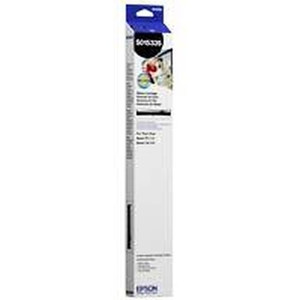
Epson
SKU: S015335
Epson S015335 Black Fabric Ribbon for FX-2109/LQ-2090
Black fabric ribbon for Epson FX-2109/LQ-2090 impact printers
- S015335 black fabric ribbon for FX-2109/LQ-2090
- 12M character duty cycle for sustained warehouse output
- Impact dot-matrix consumable at 0.45 lb
$31.00 $30.99 Save $0.01 -

Epson
SKU: S015337
Epson S015337 Black Printer Fabric Ribbon
Black fabric ribbon for Epson LQ-590 impact dot-matrix printers
- S015337 black fabric printer ribbon consumable
- 5M character duty cycle for high-volume warehouse labels
- Impact print method at 0.1 lb cartridge weight
$18.50 $17.99 Save $0.51 -

Epson
SKU: S015384
Epson S015384 Black Impact Printer Ribbon for DFX-9000
OEM black ribbon for Epson DFX-9000 dot-matrix printer
- S015384 black impact printer ribbon for DFX-9000
- Direct-fit OEM cartridge with no adapter rings
- Drop-in install at 1 lb consumable form factor
$38.25 $37.99 Save $0.26 -
Epson
SKU: S015631
Epson S015631 Black Print Ribbon for LX-350
Black ribbon for Epson LX-350 dot-matrix, 4M character duty cycle
- S015631 black print ribbon for LX-350 printer
- 4M character duty cycle (~20 workdays at 500 labels/day)
- Direct-fit consumable for impact dot-matrix output
$7.25 $6.99 Save $0.26
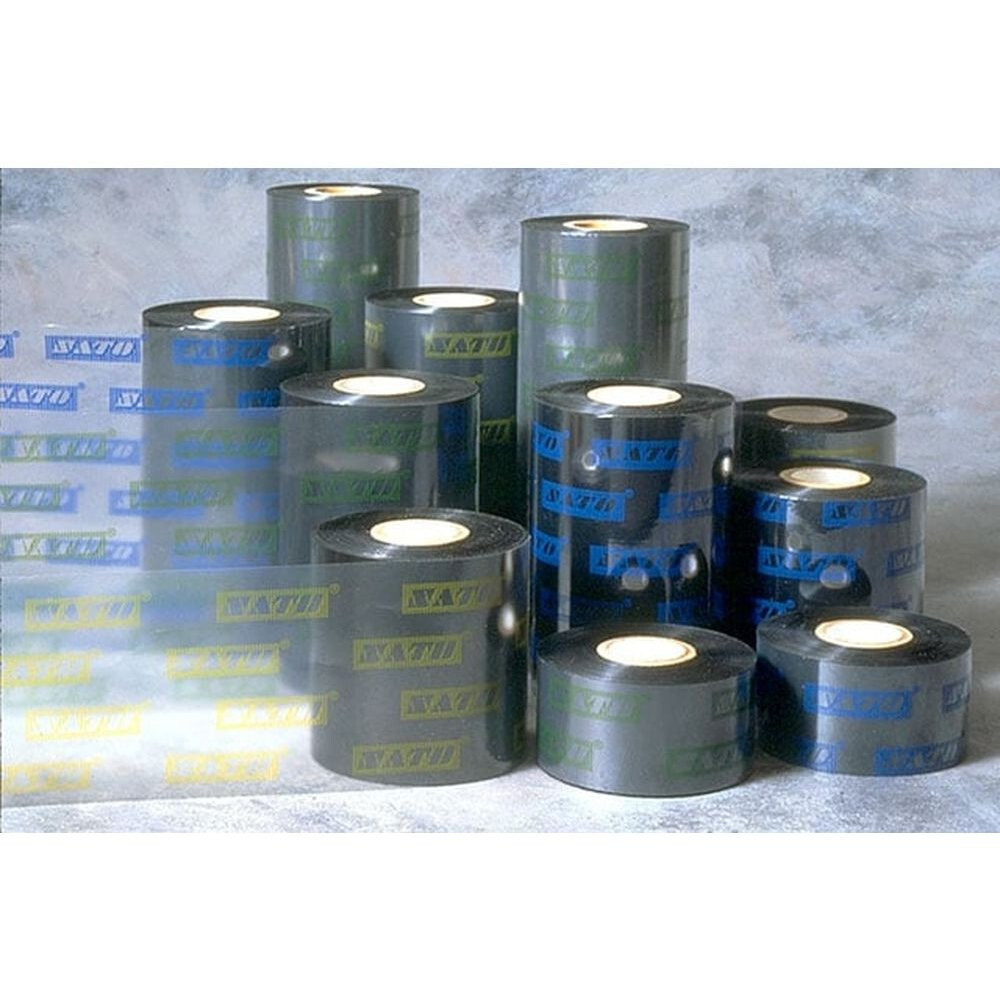
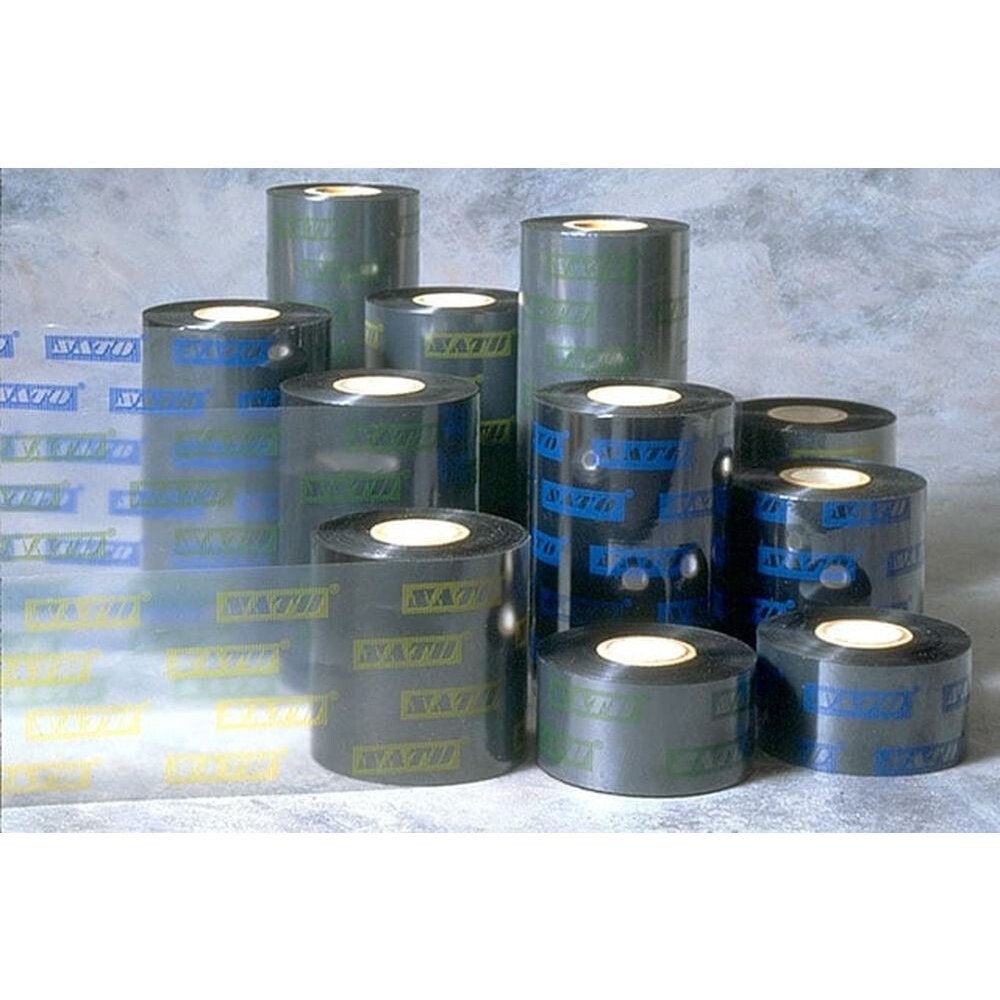
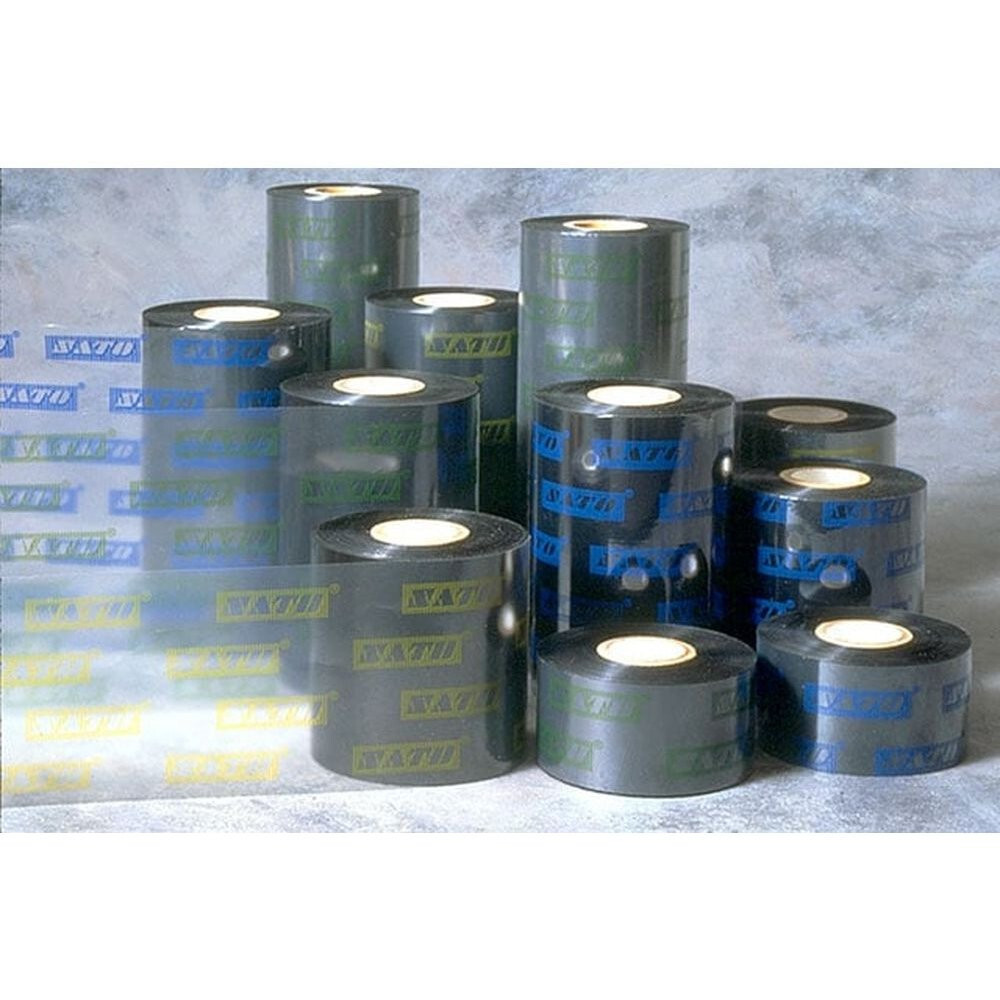
Thermal Transfer Ribbons
Wax, wax-resin, and resin thermal transfer ribbons for barcode label printing. Matched to label material and printer model for optimal print quality, durability, and barcode scan-readability.
Plan Your Deployment
- Match ribbon type to label material: wax for paper, resin for synthetics
- Confirm ribbon width matches or slightly exceeds label width
- Specify ink side (in or out) based on printer model requirements
- Calculate ribbon length for label-to-ribbon usage ratio and ordering
Thermal Transfer Ribbons — Engineering-Grade Warehouse Data Capture for Commercial Deployments
This category covers 34 working models of thermal transfer ribbons sourced manufacturer-direct or through channel-direct US distribution. Build the rest of your system around the architectural choices below — compatibility, environmental rating, and lifecycle decisions made here propagate through every downstream component you specify.
What to Look For
Read range and barcode symbology drive scanner choice. Linear (1D) scanners read UPC, Code 128, EAN. 2D imagers read QR, DataMatrix, Aztec — increasingly required for compliance labels, mobile payment, and DSCSA pharma serialization. Long-range scanners reach 20-30 feet for high-rack inventory; short-range handhelds work at arm's length on conveyors.
Form factor and connectivity affect operator throughput. Handheld scanners, ring scanners, mobile computers, and presentation scanners each suit different workflows. Wireless (Bluetooth, Wi-Fi) scanners free operators from cable but require battery management. Mobile computers (Zebra TC, Honeywell CT) bundle scanning into a phone-style device with apps for inventory, picking, and put-away.
Label printer choice depends on volume, media type, and durability requirements. Thermal-transfer printing uses a ribbon and produces durable labels for outdoor or chemical exposure. Direct-thermal needs no ribbon but labels fade in sun and heat; correct for shipping labels and short-term applications. Print volume per shift dictates desktop versus industrial printer (Zebra ZT, Honeywell PD/PX, TSC TTP).
Media compatibility and ribbon-printer matching is the slow-burn problem of label-printing deployments. Cheap mismatched ribbon/media combinations cause printhead wear, smudging, and label adhesion failure. Use the manufacturer's recommended ribbon/media pairings — the slight cost premium pays back in printhead life. Plan ribbon and media inventory together; running out of either stops the operation.
Key Specs in This Category
| Spec | Available Options |
|---|---|
| Connectivity | Wi-Fi, Wired |
| Type | Printer, Mobile Computer, Accessory, Thermal, Scanner |
Top Brands in This Category
Frequently Asked Questions
Should I buy a handheld scanner or a mobile computer?
Handheld scanners (Zebra DS, Honeywell Granit, Code CR) are best for high-volume single-purpose scanning — receiving, shipping, point-of-sale. Mobile computers (Zebra TC, Honeywell CT, Datalogic Skorpio) bundle scanning into a device that runs picking, inventory, and warehouse-management apps. For operations where the operator needs more than scan-and-confirm, mobile computers are worth the additional cost. Pure scan-and-confirm workflows are cheaper with handhelds.
What's the difference between direct-thermal and thermal-transfer printing?
Direct-thermal printing applies heat to chemically-treated labels — no ribbon needed. Labels fade in sun and heat, so it's correct for short-term applications like shipping. Thermal-transfer printing melts ribbon ink onto durable label stock — used for permanent asset tags, outdoor labels, and chemical-exposure labels. Choose direct-thermal for cost on short-term labels and thermal-transfer for durability on long-life labels.
How long does a label printer printhead last?
Industrial printheads last 30-50 million inches of printing on a well-maintained printer with matched ribbon and media. Desktop printers run 20-30 million inches. Mismatched ribbon/media, abrasive labels, and inadequate cleaning shorten life dramatically — to under 5 million inches in worst cases. Schedule printhead inspection at every label-roll change and cleaning at every shift.
Can I use generic ribbons in any printer?
Technically yes for ribbons in compatible width — practically no without quality risk. Manufacturer-recommended ribbons match the printhead's resistance, dot timing, and ink chemistry. Generic ribbons often cause faded prints, increased printhead wear, or static buildup that damages electronics. The cost savings on ribbon rarely justify the operational risk; stick with the manufacturer's recommended consumables for production printers.
What barcode symbology should I print?
Code 128 is the universal default for 1D barcodes — high density, alphanumeric. UPC-A and EAN-13 are required for retail goods. QR and DataMatrix are required for compliance, mobile payment, and many compliance labels (pharma DSCSA). Code 39 is older and lower-density — used in legacy systems. For new applications, lead with Code 128 (1D) and DataMatrix (2D) and add others only when required.
Need help choosing? Talk to a Senior Specialist — direct line 877-277-7147 or request a quote.