
Showing Results for Workstations & Terminals
-
Save $0.01

Axis S9301 Mk II Dual 4K Workstation NVR - 03426-004
Micro 4K workstation NVR for dual-monitor surveillance command centers
- Dual 4K DisplayPort outputs run synchronized live and playback feeds
- Intel Core processor with 16GB RAM and Windows 11 IoT Enterprise LTSC
- 182×36×178mm compact form factor fits desks, walls, and tight spaces
In stock · Ships same business day Free shipping over $499$2,199.00 $2,198.99 Save $0.01 -
Save $96.01
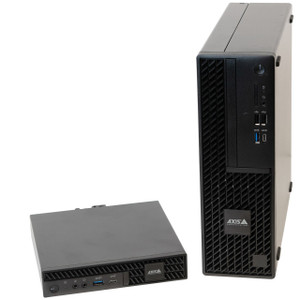
Axis S9302 4K Quad Monitor Workstation - 03427-004
Four 4K monitors, Intel Core + dual graphics, Windows 11 IoT Enterprise
- Quad 4K display support via DisplayPort 1.4a + 3x Mini DisplayPort outputs
- Intel Core processor with 16GB RAM, Intel UHD + Nvidia RTX A400 graphics
- FIPS 140-2 Level 2 TPM 2.0 and Secure Boot for regulated environments
Usually Ships in 2-3 Weeks Free shipping over $499$3,199.00 $3,102.99 Save $96.01 -
Save $60.01

Axis W800 Network Video System Controller - 01964-004
Centralized network video controller with 470GB storage and 12VDC power
- Single management interface for Axis cameras and compatible third-party devices
- Low 16W power draw supports continuous 24/7 operation in equipment racks
- 0.47TB internal storage for local recording buffering and configuration backups
In stock · Ships same business day Free shipping over $499$1,999.00 $1,938.99 Save $60.01 -
Save $3,276.01

Digital Watchdog DW-BJDXCLIENT2 Blackjack DX Workstation
Purpose-built surveillance management workstation designed for enterprise security operations and multi-camera video management
- Blackjack DX workstation with Intel i7 multi-core processing
- Handles 20+ simultaneous camera streams without frame drops
- 45-port connectivity for mixed analog and IP camera aggregation
Usually Ships in 2-3 Weeks Free shipping over $499$7,855.00 $4,578.99 Save $3,276.01 -
Save $4,921.01

Digital Watchdog DW-BJDXCLIENT4 Blackjack DX Workstation
Professional client workstation engineered for large-scale video management and security operations center (SOC) environments
- Blackjack DX workstation with Intel i7 and up to 32GB DDR4
- Drives 16+ simultaneous HD 1080p VMS streams without lag
- 45-port 10G backbone for direct camera + storage connection
Usually Ships in 2-3 Weeks Free shipping over $499$11,797.00 $6,875.99 Save $4,921.01 -
Save $80.01

Geovision 55-CMSSDX5-0005 CMS Server 5 Connections
CMS Server license module that enables 5 simultaneous client connections within the Geovision Central Management System (CMS) environment
- Enables 5 simultaneous CMS client sessions without session conflicts or queue delays.
- Deploys over LAN, WAN, or hybrid IP networks with no hardware dongle or host lock.
- Incremental licensing lets you add connection blocks without replacing the CMS Server.
Usually Ships in 2-3 Weeks Free shipping over $499$200.00 $119.99 Save $80.01 -
Save $1,523.01

Hanwha AIB-800 AI Appliance Module
Modular AI processing appliance designed to augment existing Hanwha surveillance deployments with real-time video analytics and edge intelligence
Usually Ships in 2-3 Weeks Free shipping over $499$4,350.00 $2,826.99 Save $1,523.01 -
Save $1,645.01
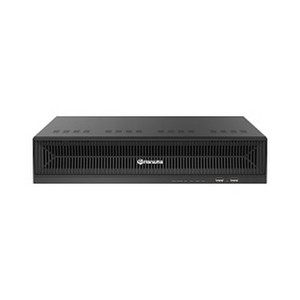
Hanwha BWT-P321W Small Form Factor Blaze Client Workstation
Compact client workstation purpose-built for Blaze security platform deployments in space-constrained server rooms and monitoring centers
- Small form factor Blaze client workstation
- 1U rack-mount footprint with dual-monitor output
- PoE 802.3af for unified rack power runs
Usually Ships in 2-3 Weeks Free shipping over $499$4,700.00 $3,054.99 Save $1,645.01 -
Save $2,268.01
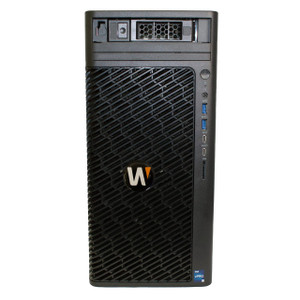
Hanwha BWT-P541W BLAZE Client Workstation
Compact client workstation purpose-built for multi-display security monitoring and command-center operations
- BLAZE client workstation with quad-monitor output
- Intel Core Ultra 5 12-core/14-thread efficiency processor
- Eliminates external docking stations with native multi-display
Usually Ships in 2-3 Weeks Free shipping over $499$6,480.00 $4,211.99 Save $2,268.01 -
Save $1,733.01
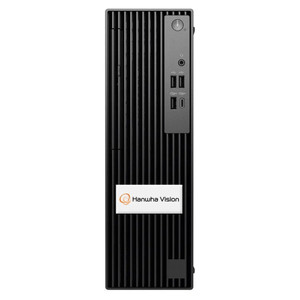
Hanwha Micro Form Factor Blaze Client Workstation - BWT-P721WM
- Micro form factor Blaze VMS client workstation
- Dedicated hardware eliminates IT desktop compatibility issues
- PoE 802.3af input for rack and control room deployment
Usually Ships in 2-3 Weeks Free shipping over $499$4,950.00 $3,216.99 Save $1,733.01 -
Save $1,278.01

Hanwha WWT-P-3204L Wisenet Wave Client Workstation
Small form factor client workstation purpose-built for Wisenet Wave video management systems
- Wisenet Wave client workstation with dual monitor output
- Factory-configured for Wisenet Wave native VMS client
- Each monitor receives dedicated video processing
Usually Ships in 2-3 Weeks Free shipping over $499$3,650.00 $2,371.99 Save $1,278.01 -
Save $1,278.01

Hanwha WWT-P-3204W Wisenet Wave Client Workstation
Compact client workstation designed to run Wisenet Wave video management software on a dual-monitor display layout
Usually Ships in 2-3 Weeks Free shipping over $499$3,650.00 $2,371.99 Save $1,278.01 -
Save $1,168.01
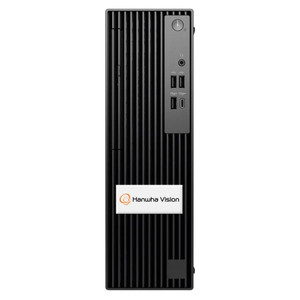
Hanwha WWT-P-3204W1 WAVE Client Workstation
Compact video workstation with dual 2K displays and Intel Core i3
- Intel 14th Gen Core i3 + Nvidia A400 GPU handles multi-camera streams
- Dual 2.5GbE + 1GbE ethernet with PoE++ or 360W power flexibility
- Tiny 5.89 lb mini-tower fits tight spaces; Windows 11 IoT + WAVE ready
In stock · Ships same business day Free shipping over $499$4,700.00 $3,531.99 Save $1,168.01 -
Save $1,533.01

Hanwha WWT-P-5404L WISENET Wave Client Workstation
Compact client workstation purpose-built for WISENET Wave ecosystem deployments, delivering quad-monitor display output and centralized video
- WISENET Wave client workstation with quad monitor output
- PoE 802.3af for unified rack power runs
- Simultaneous monitoring of multiple zones without switchers
Usually Ships in 2-3 Weeks Free shipping over $499$4,380.00 $2,846.99 Save $1,533.01 -
Save $1,099.01
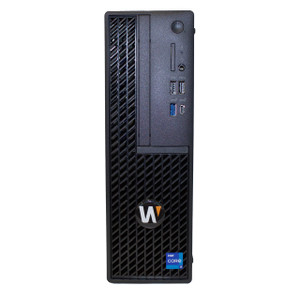
Hanwha WWT-P-5404W WAVE Client Workstation
Compact quad-monitor workstation with 14th-gen Core i5 for Wisenet WAVE
- 4× mini DisplayPort outputs support simultaneous quad-monitor video display
- 14th-generation Intel Core i5 processor handles multi-stream real-time processing
- 16GB DDR4 RAM and 256GB SSD for stable multi-feed surveillance operations
Usually Ships in 2-3 Weeks Free shipping over $499$4,380.00 $3,280.99 Save $1,099.01 -
Save $1,754.01

Hanwha WWT-P-5404W1 WAVE Client Workstation - 4 Monitor
Small-form-factor Wisenet WAVE client workstation built specifically for video monitoring duty
Usually Ships in 2-3 Weeks Free shipping over $499$5,010.00 $3,255.99 Save $1,754.01 -
Save $1,307.01

Hanwha WWT-P-5404W1 WAVE Client Workstation 1TB
Compact quad-monitor workstation with Core i5 & Quadro T1000 for surveillance ops
- 14th Gen Intel Core i5 + Nvidia Quadro T1000 GPU handles multi-stream H.265/H.264 decoding
- Four independent monitors via Mini DisplayPort for comprehensive real-time video coverage
- 16GB DDR4 + 1TB storage with Wisenet WAVE pre-installed for immediate deployment
Usually Ships in 2-3 Weeks Free shipping over $499$5,210.00 $3,902.99 Save $1,307.01 -
Save $2,153.01

Hanwha WWT-P-5405L WAVE Client Workstation
Compact quad-monitor workstation with Core Ultra 5 & A400 GPU for surveillance control rooms
- Intel Core Ultra 5 + 16GB RAM with NVIDIA A400 discrete GPU for real-time multi-camera video decoding
- Four simultaneous 1080p+ displays via quad miniature DisplayPort + HDMI outputs
- Dual network (1GbE + 2.5GbE) with 512GB NVMe SSD in 3.74"W compact tower form factor
Usually Ships in 2-3 Weeks Free shipping over $499$6,150.00 $3,996.99 Save $2,153.01 -
Save $2,268.01
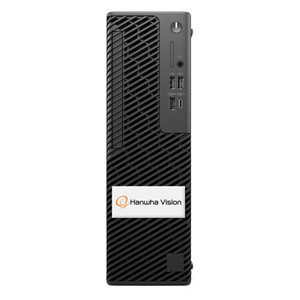
Hanwha WWT-P-5405W WAVE Client Workstation
Compact quad-monitor SOC workstation with Core Ultra 5 & Nvidia A400
- Four independent mini-DisplayPort outputs for wall-mounted multi-display surveillance setups
- Intel Core Ultra 5 with 16GB RAM handles multi-stream video without lag
- 512GB SSD and Windows 11 IoT Enterprise LTSC eliminate forced updates in 24/7 ops
In stock · Ships same business day Free shipping over $499$6,480.00 $4,211.99 Save $2,268.01 -
Save $1,369.01
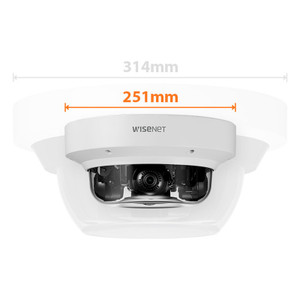
Hanwha WWT-P-7204ML Wisenet Wave Client Workstation
Micro form factor client workstation purpose-built for Wisenet Wave video management system control rooms
- Wisenet Wave client workstation with Intel Core i7 14th gen
- 16GB DDR4 memory for smooth multi-stream playback
- 256GB M.2 SSD in micro form factor client design
Usually Ships in 2-3 Weeks Free shipping over $499$3,910.00 $2,540.99 Save $1,369.01 -
Save $981.01
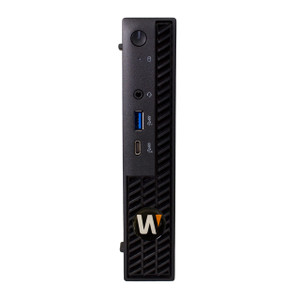
Hanwha WWT-P-7204MW WAVE Client Workstation
Micro workstation for Wisenet WAVE with 14th Gen i7 and dual-monitor output
- 14th Gen Intel Core i7, 16GB DDR4, 256GB SSD for real-time video playback
- VGA, HDMI, DisplayPort outputs support dual-monitor setups in tight spaces
- 1.4" × 7.0" × 7.2" form factor mounts behind displays or on VESA arms
Usually Ships in 2-3 Weeks Free shipping over $499$3,910.00 $2,928.99 Save $981.01 -
Save $1,547.01

Hanwha WWT-P-7205ML Micro WAVE Client Workstation
Micro WAVE client for dual-monitor control rooms, Intel Core Ultra 7
- Intel Core Ultra 7 with 16GB DDR5 for concurrent multi-camera monitoring
- Dual monitor support via 2x HDMI + DisplayPort for operator workstations
- 512GB M.2 SSD with Ubuntu 22.04 LTS, Wisenet WAVE pre-installed
Usually Ships in 2-3 Weeks Free shipping over $499$4,420.00 $2,872.99 Save $1,547.01 -
Save $1,230.01

Hanwha WWT-P-7205MW Micro WAVE Client Workstation
Compact Wisenet WAVE client with Core Ultra 7 and dual-monitor output
- Intel Core Ultra 7 + 16GB RAM handles multi-stream video decoding and real-time playback
- Pre-configured Wisenet WAVE VMS client software arrives ready to deploy immediately
- Dual HDMI + DisplayPort support connects two monitors for surveillance monitoring
In stock · Ships same business day Free shipping over $499$4,950.00 $3,719.99 Save $1,230.01 -
Save $835.51

PioneerPOS 15 2.9GHz 4GB RAM SSD Win 10 - HC4XJQ150031
15-inch commercial-grade touchscreen terminal designed for control-room monitoring, retail transaction verification, and on-site security
- 1920×1080 capacitive touchscreen enables precise VMS navigation without a separate mouse.
- Windows 10 Enterprise pre-licensed; runs Milestone, Genetec, and Axis Camera Station natively.
- Wi-Fi connectivity integrates directly with IP-based NVRs and ONVIF camera systems on-site.
Usually Ships in 2-3 Weeks Free shipping over $499$2,537.50 $1,701.99 Save $835.51 -
Save $1,564.41
PioneerPOS 15 29G 4GB 120SD W10ENT Base Msr - Q12-HC4FJQ-12
Compact 15-inch POS terminal engineered for retail counters, quick-service restaurants, and hospitality checkout environments
- Integrated MSR eliminates external card reader hardware, reducing cable clutter and failure points.
- 120GB SSD enables fast boot cycles and withstands vibration in high-traffic retail deployments.
- Windows 10 Enterprise delivers managed OS support and group policy control for enterprise POS rollouts.
Usually Ships in 2-3 Weeks Free shipping over $499$3,381.40 $1,816.99 Save $1,564.41 -
Save $0.26
PioneerPOS 15 Cyprus i5 8GB 120GB SSD Win10 Pro - NC8FCQ000B31
Compact, self-contained point-of-sale and authentication terminal designed for retail checkout, access control integration, and multi-factor
- Integrated MSR and biometric auth eliminates external readers, cutting deployment complexity.
- Intel i5 with 8GB DDR4 handles concurrent POS ops, access-log caching, and ONVIF streams.
- 120GB SSD supports Windows 10 Pro, security middleware, and up to 90 days of local logs.
Usually Ships in 2-3 Weeks Free shipping over $499$3,281.25 $3,280.99 Save $0.26 -
Save $0.84
PioneerPOS 15 Cyprus SL-II i3 4GB SSD W10 ENT - KC4XJQ000036
Compact 15-inch desktop system designed for retail point-of-sale terminals, incident-review workstations, and lightweight surveillance monitoring
- SSD eliminates mechanical spinup delay for fast incident lookups and app launches.
- Windows 10 Enterprise ensures native compatibility with Milestone, Genetec, and Axis VMS.
- Serial connectivity supports legacy POS peripherals without additional interface adapters.
Usually Ships in 2-3 Weeks Free shipping over $499$2,645.83 $2,644.99 Save $0.84 -
Save $0.09
PioneerPOS 15 Cyprus SL-II i5 8GB SSD - NC8XQQ000035
15-inch fixed touchscreen POS terminal designed for retail counters, quick-service restaurants, and hospitality venues requiring a compact
- Intel Core i5 with 8GB RAM handles concurrent POS workflows without lag.
- SSD storage eliminates mechanical failure risk across a 4–5 year deployment cycle.
- POSRdy7 ships pre-configured, cutting 20–30 hours of OS staging and driver work.
Usually Ships in 2-3 Weeks Free shipping over $499$3,052.08 $3,051.99 Save $0.09 -
Save $1,162.35
PioneerPOS 15 Cyprus SL2 - KC8FCQ000035
Compact point-of-sale terminal designed for small-to-medium retail and hospitality deployments
- i3-8100T quad-core at 3.1 GHz sustains POS throughput during peak transaction loads.
- 120GB SSD eliminates HDD latency, cutting boot and app-launch time in high-touch retail.
- Windows 10 Pro enables domain join, BitLocker, and payment card compliance out of box.
Usually Ships in 2-3 Weeks Free shipping over $499$3,528.34 $2,365.99 Save $1,162.35 -
Save $0.35
PioneerPOS 15 Cyprus Touchscreen i3 3GHz 4GB RAM - KC4XJ000031
Compact all-in-one touchscreen POS terminal designed for retail counters, quick-service restaurants, and hospitality venues where space and
- 15-inch capacitive touchscreen eliminates external monitor, reducing counter cabling overhead.
- Intel Core i3 3GHz handles concurrent POS transactions and payment gateway requests without lag.
- 4GB RAM supports stable multi-application POS stack including OS, software, and payment drivers.
Usually Ships in 2-3 Weeks Free shipping over $499$2,208.34 $2,207.99 Save $0.35 -

PioneerPOS 15 Inch MSR - 46B-R22000
Serial-interface magnetic stripe reader designed for point-of-sale environments where reliable card swipe is a baseline requirement
- Reads Tracks 1 and 2 for dual-track credential and payment card verification.
- Serial interface enables straightforward integration with legacy POS and access systems.
- Designed for 15–17 inch Stealth displays, simplifying peripheral-to-terminal fitment.
Usually Ships in 2-3 Weeks Free shipping over $499$118.99 -
Save $0.43
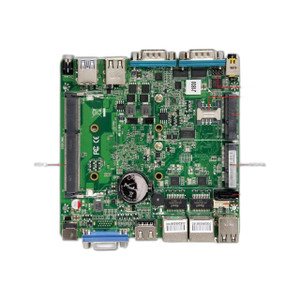
PioneerPOS 15 J1900 4GB 120SSD W10 Ent 3TKS - MAW-AC4FJQ-34
Compact 15-inch POS terminal designed for small-to-midsize retail environments, quick-service restaurants, and hospitality venues
- Fanless J1900 quad-core design eliminates noise and thermal load at counter installs.
- 120GB SSD enables sub-30-second boot and fast POS application load times.
- Windows 10 Enterprise license included; ready for domain join and GPO management.
Usually Ships in 2-3 Weeks Free shipping over $499$2,235.42 $2,234.99 Save $0.43 -
Save $0.02
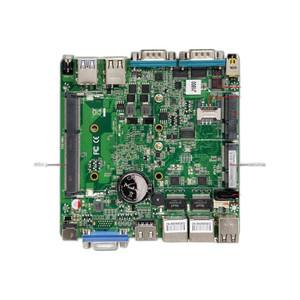
PioneerPOS 15 PCAP Cyprus J1900 4GB 120SSD W10 - MAW-AC4FKF-32
15-inch point-of-sale terminal built on Intel Celeron J1900 quad-core processing, designed for retail, hospitality, and quick-service restaurant
- 15-inch PCAP multi-touch (10-point) supports gloved operation in high-traffic deployments.
- Intel Celeron J1900 quad-core at ~10W TDP eliminates active cooling overhead in tight enclosures.
- 120GB SSD with Windows 10 LTSC delivers fast boot and stable long-term POS software operation.
Usually Ships in 2-3 Weeks Free shipping over $499$2,117.01 $2,116.99 Save $0.02 -
Save $1,056.35

PioneerPOS 15 S-line II i3 8GB 120SSD W10 PRO - KC8FCQ050036
15-inch all-in-one POS terminal designed for retail and quick-service hospitality environments
- 120GB SSD cuts boot time to under 30 seconds, reducing checkout downtime.
- Windows 10 Pro enables domain join, Group Policy, and VPN for enterprise IT.
- 802.11ac dual-band Wi-Fi supports offline transaction buffering at the terminal.
Usually Ships in 2-3 Weeks Free shipping over $499$3,208.34 $2,151.99 Save $1,056.35 -
Save $0.64
PioneerPOS 15" 2.9GHz 4GB 64SSD W10 Enterprise - HC4XJQ07003Z
15-inch wall-mounted enterprise terminal built for surveillance control rooms, access control stations, and command-center environments where a fixed
- 2.9GHz CPU and 4GB RAM sustain concurrent VMS clients and access control dashboards.
- 64GB SSD cuts application boot time and accelerates local security database queries.
- Windows 10 Enterprise includes BitLocker, Group Policy, and domain-join for managed deployments.
Usually Ships in 2-3 Weeks Free shipping over $499$2,485.63 $2,484.99 Save $0.64 -
Save $0.43
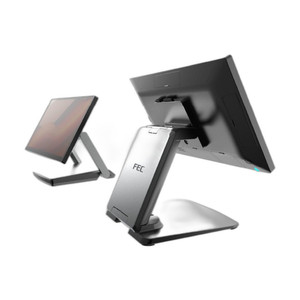
PioneerPOS 15" 4G W10LTSC - MAW-HC4XKQ-Z4
15-inch wall-mounted point-of-sale terminal designed for retail counters, quick-service restaurants, and hospitality venues requiring a compact
- Windows 10 LTSC delivers security-patch-only stability for long-term POS deployments.
- Integrated Wi-Fi connectivity reduces cabling requirements for wall-mount counter installs.
- 2.9GHz processor handles real-time transactions and scanning without throttling at peak load.
Usually Ships in 2-3 Weeks Free shipping over $499$2,380.42 $2,379.99 Save $0.43