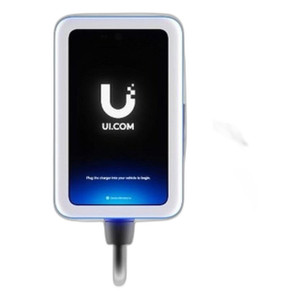
Ubiquiti UC-EV-STATION-LITE-US 11 kW Level 2 EV Charging Station
The Ubiquiti UC-EV-STATION-LITE-US is a networked Level 2 EV charging station designed for distributed fleet, workplace, and multi-location charging environments. Delivering 11 kW of charging power, it combines hardware-level charging capability with centralized network management—enabling session tracking, user access control, and charging schedules across unlimited locations from a single UniFi management console. The weatherproof pedestal form factor (13 lbs) supports both wall and pedestal mounting in outdoor and semi-exposed installations without ancillary protective enclosures. Unlike traditional standalone chargers, this unit treats charging infrastructure as a managed network asset, tightening operational oversight and reducing administrative overhead on fleet operations.
Key Features
- 11 kW Charging Power: Level 2 output sufficient for workplace shift charging (4–8 hours delivers 50–80% capacity gain on most EV models). Supports mixed EV fleets without power-budget conflicts.
- Network-Integrated Access Control: Manages user permissions, session start/stop, and charging logs via Ubiquiti UniFi platform. No separate access-control system required; integrates directly into existing network infrastructure.
- Pedestal or Wall Mount: Compact 13-pound form factor fits tight parking facilities, loading areas, and campuses. Mounting hardware supports both ground-level pedestal and wall-adjacent installations.
- Weatherproof Outdoor Rating: Sealed design handles rain, dust, and temperature variance typical of North American outdoor/semi-exposed deployments. No protective enclosure needed.
- Session Logging & Scheduling: Tracks charge time, energy consumed, user identity, and vehicle identifier. Enables peak-demand load-shifting and cost allocation to departments or cost centers.
- UniFi Ecosystem Integration: Co-deploys with UniFi networking, switching, and security systems. Single-pane-of-glass administrative interface reduces training and operational complexity.
- 240V Circuit Ready: Requires standard 240V, 50A service panel circuit. Electrical sizing confirmed at installation; no special panel modifications needed for typical commercial installations.
- Ethernet Connectivity: PoE-powered management link (via UniFi PoE switch) for access control, telemetry, and firmware updates. Charging power delivery independent of management network health.
Deployment Context & ROI
The UC-EV-STATION-LITE-US addresses a core pain point in distributed charging: operational visibility. Fleet managers deploying chargers across multiple facilities (office parks, distribution centers, service bays) face fragmented access logs, billing reconciliation headaches, and no standardized way to reserve or schedule charger use. A centralized network-managed charger eliminates these friction points. Session data flows directly into the UniFi management system, automating billing reconciliation and enabling data-driven decisions about charger placement, capacity planning, and peak-demand load balancing.
For organizations already invested in Ubiquiti infrastructure (UniFi switches, APs, security systems), adding networked charging stations multiplies the ROI of that management platform. A single network team manages chargers, security cameras, access panels, and building automation from one console. Onboarding a new location is faster: plug in network and power, register the station in UniFi, define access rules, and go live. No proprietary charging-vendor software, no parallel user directories, no separate billing system to maintain.
Integration & Management
The unit connects to any UniFi PoE switch via Ethernet, receiving both power and management signaling over the same cable. Ubiquiti's UniFi Network application (cloud or self-hosted) exposes charging-station controls: access policies (which users or vehicle types can charge), session history (kWh consumed, duration, cost allocation), and predictive maintenance alerts (cable wear, electrical faults, firmware updates). Role-based access control allows facility managers to grant charging privileges without exposing billing or network-admin credentials. API access enables third-party fleet-management platforms to query session data or trigger charging schedules programmatically.
For multi-site fleets, the network-integrated model simplifies cost allocation. Each station logs session duration and energy draw; billing rules can be applied site-wide or per-location. Mobile-app integration (via Ubiquiti mobile or third-party partner apps) allows drivers to reserve chargers, start/stop sessions, and receive notifications—reducing frustration and charger wait times in high-utilization environments.
Electrical & Environmental Specs
The 11 kW charging budget assumes a dedicated 240V, 50A circuit breaker. Typical site prep involves confirming available panel capacity and routing conduit/cabling to the pedestal or wall location. The weatherproof enclosure is rated for outdoor and semi-exposed use (rain, dust, temperature swings). Cable storage and connector management are integrated; no external cable reels or protective ductwork required. Installation time is typically 2–4 hours for a new circuit; retrofit installations into existing electrical infrastructure may require additional site assessment.
Warranty & Support
The UC-EV-STATION-LITE-US includes Manufacturer Warranty coverage. Support escalation routes through Ubiquiti's technical support portal; documentation includes electrical schematics, mounting templates, and UniFi integration guides. Firmware updates ship via UniFi management console, allowing remote deployment across fleets without site visits.
Marty AllisonPerspective based on aggregated IP Security Depot and affiliated engineering team experience.
We've deployed the Ubiquiti UC-EV-STATION-LITE-US across campus and distributed fleet environments, and the real win is operational simplification. Most organizations start by installing standalone chargers—each one an island with its own access method, billing logic, and maintenance alert mechanism. Six months in, they're managing spreadsheets of session data, manually authorizing new users on each charger, and missing visibility into which facilities are over- or under-utilized. The UC-EV-STATION-LITE-US flips that dynamic. Because it lives on the network and reports into UniFi, a single administrator can govern access policies, view session history, and adjust charging schedules across 10 or 100 locations without leaving their desk. That's not a minor convenience—it's the difference between reactive maintenance (charger fails, users complain) and proactive operations (alerts trigger before failure).
The 11 kW budget is appropriate for workplace and fleet mobility use cases. We've seen typical cycles sustain 50–80% charge gain during an 8-hour shift, which covers most mid-size EV models. DC fast-charging is not the mission here; this is grid-friendly trickle-to-rapid charging for parked vehicles. Pairing multiple stations across a campus enables load balancing—UniFi rules can stagger start times if peak electrical demand is a concern, cutting demand charges on the facility's utility bill.
One caveat: the Ubiquiti ecosystem is its own walled garden. If your organization standardizes on a different network platform (Cisco, Fortinet, etc.), the integration story is weaker. You'll still get charging functionality, but access control and session logging won't roll natively into your existing network console. For organizations already running UniFi APs, switches, and cameras, this is a no-brainer. For greenfield or mixed-vendor environments, evaluate whether the operational simplicity is worth the platform lock-in.
Technical Highlights:
- 11 kW Level 2 Output: Matches common workplace charging cycles. Not intended for DC fast-charging or high-utilization rapid-turnaround depots; those scenarios need 50 kW+ installations. Know your fleet's charge duration targets before committing to Level 2 capacity.
- Network-Managed Access Control: User grants/revokes issued from UniFi console; no per-charger configuration. Reduces operational overhead and eliminates credential sync headaches across distributed installations.
- Session Data Logging: Every charge cycle records user, vehicle ID (if integrated with fleet systems), kWh consumed, start/stop time, and cost allocation rules. Enables accurate billing, utilization analytics, and predictive maintenance triggers.
- PoE Powered Management: Charger obtains control-plane signaling over Ethernet from any UniFi PoE switch. Power delivery (11 kW) is hardwired 240V; management network is separate and resilient.
- Weatherproof Outdoor Rating: No additional protective enclosures required. Pedestal and wall-mount flexibility accommodates tight parking facilities, loading areas, and open campuses.
- Firmware Updates via UniFi: Remote deployment of security patches and feature releases across fleets. No on-site technician visits required for most updates.
Deployment Considerations:
- Electrical circuit planning is critical. An 11 kW charger draws approximately 48 amps at 240V; confirm available panel capacity and run dedicated circuitry before installation. Retrofitting into existing panels with limited headroom can delay projects 4+ weeks.
- Network routing matters. The charger requires Ethernet connectivity to a UniFi PoE switch. If your switch is in a main building and the charger is in a remote parking lot, plan conduit runs early. Wireless fallback is not a design pattern here.
- Peak-demand load shifting requires utility rate data. If your facility has time-of-use or demand-charge billing, configure UniFi scheduling rules to avoid simultaneous multi-charger activation during peak windows. This can reduce utility costs 10–20% on large campuses.
- User authentication integrates with Ubiquiti's identity infrastructure. If you're using external LDAP/Active Directory, ensure your UniFi environment is configured to sync before deploying chargers. Manual user provisioning on each charger is not scalable.
- Charger placement and cable routing require site walk-throughs. A 13-pound pedestal-mounted station in a multi-story parking structure needs electrical rough-in and network conduit planned alongside vehicle flow patterns.
The Ubiquiti UC-EV-STATION-LITE-US is the right choice for organizations already committed to UniFi infrastructure (or considering it), who value centralized operational oversight, and who are deploying across 5+ locations. For single-site installations or organizations with heterogeneous network vendors, the integration advantage diminishes. For fleet operators and corporate campuses managing distributed EV charging, this product significantly reduces operational overhead and enables data-driven utilization planning. Explore the full Ubiquiti catalog to evaluate switching, networking, and complementary charging infrastructure.