
Showing Results for Detector Bases & Accessories
-
Save $118.21

Potter AE-8 8 Card Expansion Enclosure
8-slot expansion enclosure for Potter access control systems
- Adds 8 card slots to Potter access control systems without full panel replacement.
- Rack-mount form factor (16" × 17" × 3") fits standard equipment room installations.
- Hot-swappable card architecture minimizes downtime during upgrades or maintenance.
Usually Ships in 2-3 Weeks Free shipping over $499$328.20 $209.99 Save $118.21 -
Save $230.31

Potter AE-14 14 Card Expansion Enclosure
14-slot expansion enclosure for modular Potter security systems
- Holds up to 14 expansion cards in one 19" rack-mount enclosure, consolidating capacity.
- Rack-mount form factor (19" × 27 3/8" × 4 5/8") fits standard commercial panel installations.
- Modular card slots let technicians add or replace modules without full system replacement.
Usually Ships in 2-3 Weeks Free shipping over $499$639.30 $408.99 Save $230.31 -
Save $88.01
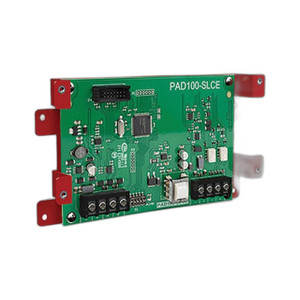
Potter AE-2 Accessory Expansion Enclosure
Modular expansion enclosure for Potter multi-door access systems
- Adds up to 2 stacker-bracket expansion cards without replacing the main control board.
- UUKL Listed, satisfying code requirements for smoke control and fire-rated environments.
- Compact 9¾" × 8" × 2½" steel enclosure mounts flush to wall or cabinet via #8 screws.
Usually Ships in 2-3 Weeks Free shipping over $499$240.00 $151.99 Save $88.01 -
Save $114.61

Potter CA-6075 Class A Expander for PFC-6075
Class A expander module for Potter PFC-6075 control panels
- Class A (Style 4) loop provides redundant communication paths for enhanced circuit reliability.
- Verified interoperability with PFC-6075 panels simplifies installation and staged expansion.
- UUKL Listed for Smoke Control and backed by a 5-year manufacturer warranty.
Usually Ships in 2-3 Weeks Free shipping over $499$323.60 $208.99 Save $114.61 -
Save $294.66

Potter CA-6500 Class A Expander
Class A expander for six NAC circuits plus P-Link and SLC
- Six Class A NAC circuits provide bidirectional fault detection, eliminating single-point failures.
- UUKL listing confirms compliance for smoke control in life-safety code-governed installations.
- 60 mA standby draw minimizes battery load, extending UPS runtime across distributed panel builds.
Usually Ships in 2-3 Weeks Free shipping over $499$821.65 $526.99 Save $294.66 -
Save $371.46

Potter FCB-1000 Fire Communications Bridge
Fire alarm to voice system bridge for emergency coordination
- Bridges fire alarm panels to emergency voice systems for coordinated evacuation.
- UUKL Listed for Smoke Control, meeting life safety compliance requirements.
- Rack-mount form factor simplifies integration into existing infrastructure.
Usually Ships in 2-3 Weeks Free shipping over $499$1,029.45 $657.99 Save $371.46 -
Save $514.01

Potter FIB-1000 Fiber Interface Bridge
Fiber optic bridge converts electrical signals for extended-range security
- Converts electrical signals to fiber optic, eliminating EMI on long copper runs.
- Bidirectional signal conversion maintains integrity across electrical-to-optical boundary.
- Rack-mountable; fits panel, accessory cabinet, or PSN-1000/E Power Supply enclosure.
Usually Ships in 2-3 Weeks Free shipping over $499$1,426.00 $911.99 Save $514.01 -
Save $142.81
Potter MC-1000 Multi-Connect Expander Module
Modular expander adds reader and door capacity to Potter access systems
- Adds reader and door capacity to Potter access systems without replacing the primary controller.
- Supports proximity, smart card, and biometric readers within a single expander module.
- Mounts in panel, accessory cabinet, or PSN-1000/E Power Supply; rated 0°C–49°C.
Usually Ships in 2-3 Weeks Free shipping over $499$396.80 $253.99 Save $142.81 -
Save $81.51
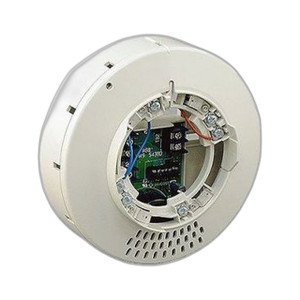
Potter PAD100-LFSB Addressable Sounder Base
Addressable low-frequency sounder base for Potter fire alarm systems
- Addressable operation enables per-device control and status reporting on Potter alarm networks.
- Low-frequency sounder output delivers audible notification suited for commercial and institutional spaces.
- Compact 2.75 in profile supports ceiling or wall mounting to simplify installation placement.
Usually Ships in 2-3 Weeks Free shipping over $499$229.50 $147.99 Save $81.51 -
Save $48.51

Potter PAD100-SB Addressable Sounder Base
Addressable sounder base for individual device control on fire alarm loops
- Addressable loop architecture enables individual sounder control and device-level monitoring.
- Integrates directly into addressable fire alarm loops, eliminating separate zone control relays.
- Backed by a 5-year manufacturer warranty, reducing long-term maintenance risk on installed loops.
Usually Ships in 2-3 Weeks Free shipping over $499$138.50 $89.99 Save $48.51 -
Save $283.06

Potter PAD100-SLCE Addressable Loop Expander
Addressable loop expander extends device capacity without panel replacement
- Expands addressable loop device capacity without replacing or reprogramming the panel.
- Operates across 0°C–49°C, suitable for mechanical rooms and industrial environments.
- Mounts in existing panel or accessory cabinet via included stacker bracket for fast install.
Usually Ships in 2-3 Weeks Free shipping over $499$791.05 $507.99 Save $283.06 -
Save $228.41

Potter RLY-5 Fire Alarm Relay Expander
Five configurable relays for fire alarm panel expansion without system upgrade
- Adds 5 configurable relay outputs at 24 VDC/3 A or 125 VAC/3 A without a panel upgrade.
- Scales to 31 RLY-5 modules per panel, with p-Link runs up to 6,500 feet.
- UUKL Listed for Smoke Control; no firmware changes required for retrofit integration.
Usually Ships in 2-3 Weeks Free shipping over $499$643.40 $414.99 Save $228.41 -
Save $285.01
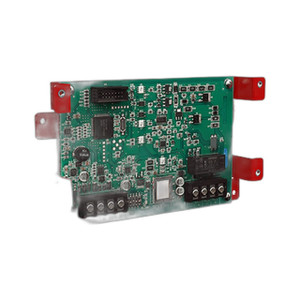
Potter SLCE-127 SLC Loop Expander
Expand SLC loop capacity without replacing your fire alarm panel
- Extends SLC addressable capacity so existing panels handle more detectors and modules.
- Transparent node architecture preserves full per-device addressing and diagnostic reporting.
- Mounts in-panel, accessory cabinet, or PSN-1000/E Power Supply for flexible deployment.
Usually Ships in 2-3 Weeks Free shipping over $499$789.00 $503.99 Save $285.01 -
Save $0.96
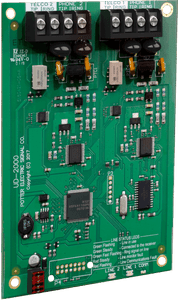
Potter UD-2000 Digital Alarm Communicator
Digital alarm communicator with redundant paths and local event buffering
- Redundant communication paths eliminate external gateways for mission-critical failover.
- Local event buffering queues alarm events during outages, preventing loss of alarm records.
- Compact rack-mount form factor (4"W × 6"H × 1-5/8"D) fits tight IDF and control rooms.
Usually Ships in 2-3 Weeks Free shipping over $499$186.95 $185.99 Save $0.96 -
Save $72.67

System Sensor 4WITAR-B Photoelectric Smoke Detector
4-Wire photoelectric smoke detector for supervised fire alarm loops
- Photoelectric sensing reliably detects slow-burning fires in commercial environments.
- 4-wire supervised loop topology enables real-time feedback and continuous system monitoring.
- Operates at 24 VDC; mounts to standard 3½-inch octagonal back box on wall or ceiling.
Usually Ships in 2-3 Weeks Free shipping over $499$172.66 $99.99 Save $72.67 -
Save $0.93
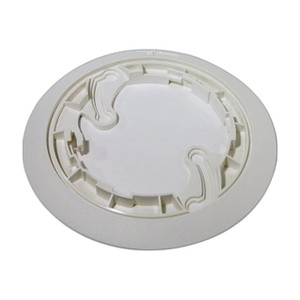
System Sensor A77-AB2 Retrofit Adapter Bracket for i3 Series
TCP/IP retrofit adapter bracket for System Sensor i3 Series fire panels
- Designed for i3 Series panels, ensuring mechanical and electrical compatibility out of the box.
- Rated for 35VDC operation, matching standard fire alarm power architectures without extra regulation.
- Mounts to a 3½-inch octagonal back box; fits wall, ceiling, or rack deployments.
Usually Ships in 2-3 Weeks Free shipping over $499$12.92 $11.99 Save $0.93 -
Save $0.24

System Sensor B114LP 120VAC Low-Profile Plug-In Detector Base
Low-profile 120VAC plug-in base with TCP/IP networking for confined spaces
- Runs on 120VAC building power, eliminating separate low-voltage supply infrastructure.
- TCP/IP connectivity enables direct network integration without proprietary polling loops.
- Low-profile form mounts on 4-inch square/octagon box (1.5-inch min depth) for tight spaces.
Usually Ships in 2-3 Weeks Free shipping over $499$243.23 $242.99 Save $0.24 -
Save $62.52

System Sensor B114LPBT Low-Profile Detector Base
Low-profile 24VAC/DC plug-in base with TCP/IP networking
- Accepts 400 Series detectors (1400, 1412B, 1424) with no field wiring modifications.
- Dual-voltage 24VAC/DC operation integrates with standard fire alarm power supplies.
- Twist-on bracket with SEMS screw terminations enables tool-minimal ceiling/wall install.
Usually Ships in 2-3 Weeks Free shipping over $499$176.51 $113.99 Save $62.52 -
Save $42.01
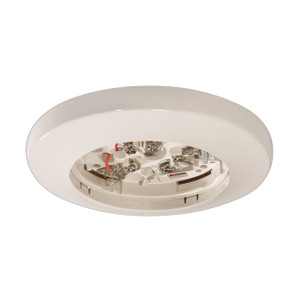
System Sensor B116LP Low-Profile Detector Base
2-wire low-profile detector base, 24VDC, plug-in System Sensor modules
- Plug-in head design lets you swap detector modules without rewiring the base.
- Rated 24VDC for direct integration with conventional 2-wire fire alarm control panels.
- Tool-free removable cover and insect screen simplify field cleaning to cut nuisance alarms.
Usually Ships in 2-3 Weeks Free shipping over $499$115.00 $72.99 Save $42.01 -
Save $0.46
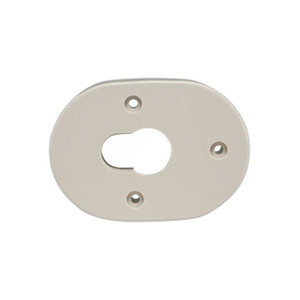
System Sensor BEAMMMK Beam Detector Multi-Mount Kit
Multi-position mounting kit for System Sensor TCP/IP beam detectors
- Supports wall, ceiling, and structural column mounting for BEAM1224 series detectors.
- Operates across -30 to 55°C, suitable for warehouses, garages, and loading docks.
- Enables precise transmitter/reflector alignment without special tools during installation.
Usually Ships in 2-3 Weeks Free shipping over $499$152.45 $151.99 Save $0.46 -
Save $0.22

System Sensor BEAMSMK Beam Detector Surface-Mount Kit
Surface-mount kit for System Sensor beam detectors on 32VDC networks
- Secures BEAM1224 series detectors on walls or ceilings without special tools.
- Supports 15–32 VDC operation across commercial, warehouse, and industrial sites.
- Enables beam detector alignment across optical paths from 16 ft. to 328 ft.
Usually Ships in 2-3 Weeks Free shipping over $499$84.21 $83.99 Save $0.22 -
Save $0.98

System Sensor CO-PLATE CO Detector Replacement Plate
TCP/IP CO detector replacement plate for networked fire safety systems
- Replaces CO1224T, CO1224TR, and CO1224A faceplates without full device re-certification.
- Mounts to a standard single-gang back box and runs on the existing 24VDC supply.
- Maintains UL 2075 (US) and CSA 6.19-01 (Canada) compliance after plate swap.
Usually Ships in 2-3 Weeks Free shipping over $499$48.97 $47.99 Save $0.98 -
Save $0.24

System Sensor DECAL-W White Letter Decal Kit for Red Devices
White letter decals for System Sensor red security devices
- Labels System Sensor red SpectrAlert Advance devices without tools or modifications.
- Adhesive backing works on both indoor and outdoor device surfaces after simple prep.
- Compatible exclusively with System Sensor red device line — verify model before ordering.
Usually Ships in 2-3 Weeks Free shipping over $499$98.23 $97.99 Save $0.24 -
Save $0.36

System Sensor DECAL-WC White Letter Decal Kit
White letter decal kit for System Sensor red ceiling devices
- Labels red SpectrAlert Advance ceiling strobes and horn-strobes without affecting strobe output.
- Rated for indoor and outdoor use across a wide temperature range of −35°F to 151°F.
- Tool-free application to device lens or trim ring; full adhesion achieved within 24 hours.
Usually Ships in 2-3 Weeks Free shipping over $499$147.35 $146.99 Save $0.36 -
Save $241.97

System Sensor DH400OE-1 Outdoor Duct Detector
Sealed outdoor duct detector enclosure for rooftop HVAC smoke detection
- Weatherproof sealed housing blocks rain, snow, dust, and UV for outdoor HVAC installs.
- Compact 14.38 × 5 × 2.5 in footprint fits wall, ceiling, or rack mounting on rooftop ducts.
- Operates at 29 VDC with no gateway hardware needed for standard fire alarm integration.
Usually Ships in 2-3 Weeks Free shipping over $499$645.96 $403.99 Save $241.97 -
Save $6.64

System Sensor DST1 InnovairFlex Sampling Tube - 1 Foot Duct
Duct sampling tube for InnovairFlex fire detection up to 1 foot
- Samples duct airflow from 100–4,000 FPM, covering low-velocity returns to high-velocity supply runs.
- Tool-free front or rear installation via patented quick-connect; no threaded fittings required.
- Operates at 29VDC and integrates directly into 4-wire photoelectric fire alarm circuits.
Usually Ships in 2-3 Weeks Free shipping over $499$18.63 $11.99 Save $6.64 -
Save $25.40

System Sensor DST10 InnovairFlex Sampling Tube - 8 to 12 Foot
Aspirating smoke sampling tube for 8–12 ft ductwork runs with TCP/IP
- Covers 8–12 ft duct spans, fitting medium-run HVAC zones without custom hardware.
- TCP/IP communication integrates directly into networked InnovairFlex detection systems.
- Compact 14.38 × 5 × 2.5 in rectangular form installs in tight ductwork with minimal clearance.
Usually Ships in 2-3 Weeks Free shipping over $499$73.39 $47.99 Save $25.40 -
Save $8.53
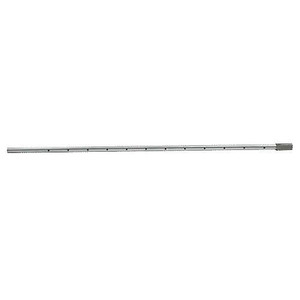
System Sensor DST3 Duct - 2 to 4 Foot
Duct sampling tube for 2–4 ft runs, TCP/IP integrated, 29VDC
- Covers 2–4 ft duct runs at 29VDC, eliminating extra detector heads per zone.
- Supports air velocities 100–4,000 ft/min, matching standard commercial HVAC ranges.
- Tool-free front or back install via ¾-in conduit knockout cuts deployment time.
Usually Ships in 2-3 Weeks Free shipping over $499$29.52 $20.99 Save $8.53 -
Save $10.64
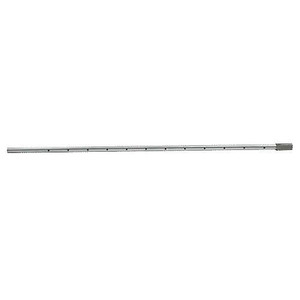
System Sensor DST5 InnovairFlex Sampling Tube - 4 to 8 Foot
4-to-8-foot duct sampling tube for networked HVAC fire detection
- Adjusts from 4 to 8 feet to cover variable duct widths without replacing hardware.
- Tool-free snap-in mount to D4120 housing cuts installation time in tight duct access.
- Supports air velocities from 100–4,000 FPM across –4°F to 158°F operating range.
Usually Ships in 2-3 Weeks Free shipping over $499$35.63 $24.99 Save $10.64 -
Save $4.49

System Sensor ETX InnovairFlex Exhaust Tube 12-Inch
12-inch flexible exhaust tube for System Sensor ETX air sampling
- Flexible 12-inch tube routes exhaust air where rigid piping is impractical.
- Rated for –4°F to 158°F and 0–95% RH, supporting harsh HVAC environments.
- Mounts to ¾-inch conduit knockout on InnovairFlex D4120 housings, no tools needed.
Usually Ships in 2-3 Weeks Free shipping over $499$14.48 $9.99 Save $4.49 -
Save $0.74

System Sensor MP120K 120VAC Adapter Mounting Plate
120VAC mounting plate with TCP/IP for indoor/outdoor fire systems
- Terminates 120VAC mains directly, eliminating external transformers in AC-ready facilities.
- TCP/IP support enables networked monitoring and BMS integration for remote alarm verification.
- Rated for indoor and outdoor deployment, reducing the need to stock separate SKUs per environment.
Usually Ships in 2-3 Weeks Free shipping over $499$62.73 $61.99 Save $0.74 -
Save $12.58
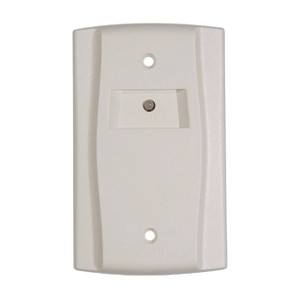
System Sensor RA100Z Remote Annunciator for Duct Detectors
TCP/IP remote annunciator for System Sensor duct detection systems
- TCP/IP connectivity eliminates dedicated alarm wiring runs to remote monitoring stations.
- Runs on 29VDC, drawing directly from existing panel auxiliary outputs—no converter needed.
- Compact 14.38×5×2.5 in. body supports wall, ceiling, or rack mounting in tight spaces.
Usually Ships in 2-3 Weeks Free shipping over $499$41.57 $28.99 Save $12.58 -
Save $0.59
System Sensor RFP Retrofit Plate for SpectrAlert Advance Red
TCP/IP retrofit plate for SpectrAlert Advance Red legacy upgrades
- Mounts to wall or ceiling, supporting both indoor and outdoor SpectrAlert Advance units.
- Operates at 35VDC, enabling direct integration with existing hardwired notification circuits.
- Compatible with the full SpectrAlert Advance line: horns, strobes, horn strobes, and chimes.
Usually Ships in 2-3 Weeks Free shipping over $499$131.58 $130.99 Save $0.59 -
Save $28.66

System Sensor RTS151 Remote Test Station
Remote fire alarm test station with TCP/IP for networked facilities
- TCP/IP connectivity enables remote testing and diagnostics from any authorized network terminal.
- 29VDC operation integrates directly with standard fire alarm power supplies—no auxiliary UPS needed.
- At 2.5 lbs and 2.5" deep, mounts in cabinets, wall panels, or rack nodes without dedicated space.
Usually Ships in 2-3 Weeks Free shipping over $499$91.65 $62.99 Save $28.66 -
Save $44.37
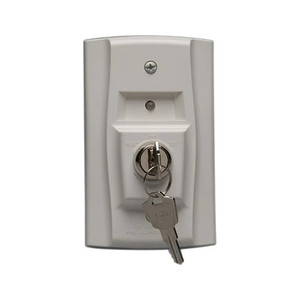
System Sensor RTS151KEY Remote Test Station with Key
TCP/IP remote test station with keyed access for networked fire alarms
- TCP/IP interface enables remote test initiation from any authorized network workstation.
- 29VDC operating voltage integrates directly into standard fire alarm control loops.
- Keyed access restricts test functions to authorized personnel, preventing false alarms.
Usually Ships in 2-3 Weeks Free shipping over $499$135.36 $90.99 Save $44.37 -
Save $69.18

System Sensor RTS2 Duct Detector Remote Test Station
Remote test station for System Sensor duct detectors, 29VDC operation
- 29VDC operation integrates directly into existing fire alarm panel wiring—no added PSU.
- Multi-signaling compatibility ensures reliable communication with current-generation FACP panels.
- Compact 14.38×5×2.5 in, 2.5 lb form factor mounts on walls, ceilings, or in tight spaces.
Usually Ships in 2-3 Weeks Free shipping over $499$197.17 $127.99 Save $69.18