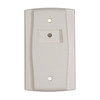
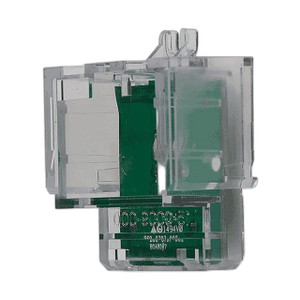
System Sensor RA100Z Remote Annunciator for Duct Detectors
Overview
The System Sensor RA100Z is a TCP/IP-enabled remote annunciator purpose-built to provide auxiliary alarm status display and system visibility for fire detection systems using System Sensor duct detectors. Deployed in control rooms, monitoring stations, or auxiliary locations, the RA100Z receives and displays duct detector alarm states across a networked architecture, allowing operators to monitor detection activity without requiring physical proximity to the main control panel. The unit operates on 29VDC — standard in fire alarm systems — making integration straightforward within existing installations.
Key Features
- TCP/IP Network Communication: Connects to System Sensor duct detection systems via standard Ethernet, eliminating the need for dedicated alarm wiring to remote display locations. Reduces installation labor and simplifies future relocation or reconfiguration of monitoring stations.
- 29VDC Power Requirement: Operates on the same voltage as most fire detection control panels, allowing the RA100Z to draw power from existing panel auxiliary outputs or a shared 29VDC supply. No separate power supply conversion needed for the annunciator itself.
- Compact Physical Form Factor: Measures 14.38 in. L × 5 in. W × 2.5 in. D and weighs 2.5 lbs, enabling flexible mounting in control room racks, wall cabinets, or console positions without requiring oversized enclosure space. The footprint is small enough for auxiliary display locations where real estate is constrained.
- Remote Alarm State Display: Provides real-time indication of duct detector alarm conditions at a secondary location independent of the main control panel. Critical in larger facilities or multi-floor installations where monitoring staff may not have constant visual access to the primary panel.
- System Sensor Ecosystem Integration: Works exclusively with System Sensor duct detection systems that support TCP/IP networking. Verify compatibility with your specific duct detector model and control panel firmware before procurement — the RA100Z requires a compatible network-enabled architecture.
- Standard Mounting Compatibility: Supports installation in equipment racks, wall-mounted cabinets, or desk-mounted console positions. Installation requires standard 29VDC supply wiring and Ethernet cabling to the compatible fire detection network.
Integration & Compatibility
The RA100Z integrates with System Sensor duct detector control systems that support TCP/IP communication. It does not function as a standalone alarm annunciator and requires a compatible System Sensor fire detection control panel and networked duct detector(s) to operate. Installation requires:
- A System Sensor control panel configured for TCP/IP networking
- A 29VDC power supply capable of supporting the annunciator load (coordinate wattage with System Sensor or your distributor)
- Standard Ethernet cabling and network infrastructure to connect the RA100Z to the compatible System Sensor system
- Verification that your duct detector model and firmware support remote TCP/IP annunciators
Consult the fire detection system planning guide for network architecture best practices. If you are deploying a new System Sensor fire detection installation, coordinate the RA100Z specification with your control panel purchase to ensure firmware compatibility at commissioning.
When to Choose a Different Approach
If your facility uses a non-System Sensor fire detection platform (e.g., Honeywell, Edwards, Tyco), the RA100Z will not integrate and you should evaluate remote annunciators from your primary system vendor. If your duct detection system does not support TCP/IP networking, a hardwired relay interface may be required instead — consult your System Sensor integrator to confirm whether firmware upgrades or hardware additions can enable network functionality.
Frequently Asked Questions
Q: Does the RA100Z work with non-System Sensor fire detection systems?
A: No. The RA100Z is designed exclusively for System Sensor duct detection systems with TCP/IP capability. It is not compatible with fire detection platforms from other manufacturers.
Q: What power supply does the RA100Z require?
A: The RA100Z operates on 29VDC. This is the standard fire alarm system voltage and can typically be sourced from an auxiliary output on the main System Sensor control panel or a dedicated 29VDC fire alarm power supply. Confirm available wattage capacity with your integrator.
Q: Can the RA100Z be mounted in a standard equipment rack?
A: Yes. The compact dimensions (14.38 in. L × 5 in. W × 2.5 in. D) permit mounting in wall cabinets, console positions, and standard 19-inch equipment racks. Ensure adequate space for power and Ethernet cable routing.
Q: Is the RA100Z network-dependent, or does it function if the Ethernet connection is lost?
A: The RA100Z communicates via TCP/IP and requires an active network connection to the System Sensor control panel. If the network link fails, the annunciator will not display alarm states. Deploy network redundancy (dual Ethernet, industrial switches) if the remote display is critical to your monitoring operation.
Q: What is the typical delivery and warranty?
A: Lead time and warranty terms depend on your distributor. Contact your System Sensor specialty distributor for current stock status, pricing, and Manufacturer Warranty terms.
Ted PerryPerspective based on aggregated IP Security Depot and affiliated engineering team experience.
The System Sensor RA100Z is a straightforward remote display unit for System Sensor TCP/IP duct detection systems. It fills a specific role: when your main control panel is in a secure cabinet or distant location, the RA100Z puts alarm state visibility in front of your monitoring operators without redundant wiring. The 29VDC power requirement and TCP/IP-only connectivity are non-negotiable constraints — this is not a universal annunciator, and compatibility must be confirmed before procurement.
Technical Highlights:
- TCP/IP Networking: Eliminates the need for separate alarm circuit wiring to remote display locations. One Ethernet run carries all state data, reducing installation complexity and future reconfiguration effort compared to hardwired relay annunciators.
- 29VDC Integration: Operates on fire alarm system standard voltage, allowing power integration with existing control panel auxiliary outputs. No voltage conversion or separate AC supply needed — simplifies one-device power budgeting.
- Compact Footprint: At 14.38 × 5 × 2.5 inches and 2.5 lbs, the RA100Z fits into space-constrained monitoring stations or console racks. Small enough that console real estate is not a limiting factor in most deployments.
Deployment Considerations:
- Network Dependency: The RA100Z is entirely network-dependent. Loss of Ethernet connectivity means loss of alarm display — confirm that your facility monitoring architecture includes network redundancy (industrial Ethernet switches, dual uplinks) if this remote annunciator is critical to life safety operations.
- System Sensor Exclusivity: This unit works only with System Sensor duct detection systems that support TCP/IP. Multi-vendor fire detection architectures or legacy hardwired System Sensor systems cannot use the RA100Z. Verify control panel firmware compatibility at specification time.
- No Local Power Buffering: The RA100Z does not include battery backup. If the 29VDC supply is interrupted, the annunciator goes dark. Coordinate with your power supply design to ensure the RA100Z is on a supervised, backed-up 29VDC branch if required by code.
Deploy the RA100Z in facilities where System Sensor duct detection is already standardized and your monitoring station requires remote visual confirmation of alarm state without on-site panel access. Multi-floor buildings, remote monitoring centers, and facilities with centralized control rooms are typical use cases — provided network infrastructure supports continuous Ethernet availability to the display location.