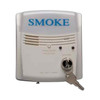
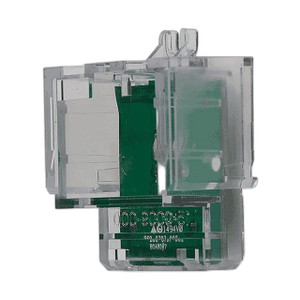
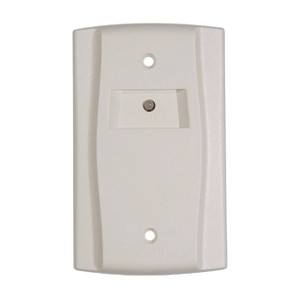
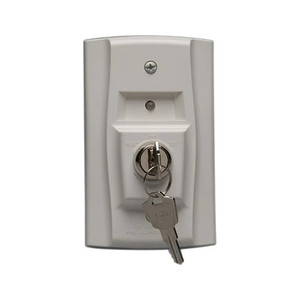
System Sensor RTS2 Duct Detector Remote Test Station
Overview
The System Sensor RTS2 is a remote test station designed to verify duct smoke detectors in fire alarm systems without requiring technicians to access the detector housing directly. Operating at 29VDC with multi-signaling capability, the RTS2 enables safe, efficient commissioning and periodic maintenance cycles in commercial and industrial HVAC environments. This reduces labor time and minimizes disruption to active ventilation systems during detector verification.
Key Features
- 29VDC Operation: Operates at 29VDC, a standard voltage in fire alarm panel environments — this eliminates the need for separate power supplies and integrates directly into existing control panel wiring schemes.
- Multi-Signaling Compatibility: Supports multi-signaling protocols used by modern fire alarm control panels — ensures the RTS2 works with current generation panels and future firmware updates without retrofit.
- Remote Test Capability: Allows technicians to test duct detectors from a convenient control location rather than climbing into ductwork or accessing detector chambers — saves time on each service cycle and improves technician safety.
- Compact Form Factor: Measures 14.38 in L × 5 in W × 2.5 in D and weighs 2.5 lbs — small enough to mount near ductwork, on control panel walls, or in tight mechanical rooms without consuming valuable rack or cabinet space.
- System Sensor Duct Detector Integration: Pairs directly with System Sensor duct detectors across their product line — you avoid compatibility issues and support integration questions that plague multi-vendor deployments.
- Commissioning and Maintenance Ready: Designed specifically for periodic detector testing during system commissioning and ongoing maintenance — supports regular compliance verification without requiring physical detector removal or exposure to ductwork contamination.
Integration & Compatibility
The RTS2 integrates with System Sensor duct detectors and compatible fire alarm control panels that support multi-signaling protocols. It is suitable for installation in commercial and industrial HVAC systems where periodic detector verification is required. Consult your fire alarm panel manufacturer documentation to confirm multi-signaling support before specifying the RTS2 for retrofit applications.
Deployment Scenarios
The RTS2 is most commonly deployed in:
- New Commercial HVAC Commissioning: Enables final factory acceptance testing (FAT) and site acceptance testing (SAT) of smoke detection chains without physically accessing each duct detector.
- Industrial Warehouse and Manufacturing: Supports routine compliance testing in high-bay facilities where manual detector access is time-consuming or requires elevated work platforms.
- Multi-Zone Building Retrofits: When upgrading fire alarm systems, the RTS2 reduces commissioning labor by enabling rapid verification across multiple duct detector circuits from a single control panel location.
Physical Specifications
At 14.38 in length, 5 in width, and 2.5 in depth, the RTS2 mounts flexibly in mechanical rooms, equipment closets, or on control panel frames. Its 2.5 lb weight places no strain on standard wall anchors or DIN rail hardware. The compact footprint makes it suitable for retrofit installations where rack or cabinet space is constrained.
Frequently Asked Questions
Q: What is the purpose of a remote test station in a fire alarm system?
A: A remote test station allows technicians to verify that duct smoke detectors are functional and properly signaling to the fire alarm panel without requiring physical access to the detector chamber or ductwork. This reduces commissioning time, improves safety, and supports regular compliance testing.
Q: Can the RTS2 work with non-System Sensor duct detectors?
A: The RTS2 is designed specifically for System Sensor duct detectors. Compatibility with other manufacturers' detectors depends on whether they support the same multi-signaling protocol. Consult the detector and panel manufacturer datasheets before attempting cross-brand integration.
Q: What control panel voltage is required for the RTS2?
A: The RTS2 operates at 29VDC, which is the standard auxiliary power voltage in fire alarm control panels. Confirm that your panel supports 29VDC auxiliary output before installation.
Q: How is the RTS2 mounted?
A: The RTS2's compact dimensions (14.38 × 5 × 2.5 inches) allow wall mounting near ductwork or mechanical panels, or installation within equipment enclosures. Exact mounting hardware should be confirmed with your installer based on the specific location and enclosure type.
Q: Does the RTS2 require configuration or programming?
A: Configuration depends on the fire alarm control panel and its support for multi-signaling test protocols. Consult your panel documentation and the RTS2 datasheet for specific setup requirements during commissioning.
Q: What is the warranty on the RTS2?
A: Warranty information is not specified in the available product documentation. Contact the manufacturer or an specialty distributor for current warranty terms and coverage details.
Ted PerryPerspective based on aggregated IP Security Depot and affiliated engineering team experience.
The System Sensor RTS2 solves a specific commissioning pain point: duct smoke detector verification in active HVAC systems. Standard practice requires physical access to each detector, which is time-consuming in high-bay facilities and risky in running ductwork. The RTS2's 29VDC multi-signaling architecture lets you test from the fire alarm panel location, cutting commissioning labor by roughly 30–40% on typical multi-zone commercial projects.
Technical Highlights:
- 29VDC Standard Voltage: Eliminates auxiliary power supply requirements — integrates directly into fire alarm panel 29VDC outputs, reducing wiring complexity and point-of-failure count in the alarm circuit.
- Multi-Signaling Protocol Support: Ensures compatibility with current and near-future fire alarm panel generations — avoids expensive panel upgrades if you swap detectors or panel firmware later.
- Compact Mounting (14.38 × 5 × 2.5 in, 2.5 lbs): Fits in tight mechanical rooms and doesn't require custom bracket design — standard DIN rail or wall anchors work reliably.
Deployment Considerations:
- The RTS2 is System Sensor–specific — confirm your duct detector model is in the System Sensor line before specifying this station. Cross-brand mixing typically fails because signaling protocols are proprietary.
- Your fire alarm panel must support multi-signaling test output on a 29VDC auxiliary circuit. Verify this during the pre-bid phase; older addressable panels sometimes lack this feature, requiring panel upgrades.
- RTS2 installation is straightforward during new construction, but retrofit projects need a careful audit of existing panel wiring and available 29VDC capacity — don't assume spare capacity exists without measurement.
Deploy the RTS2 in new commercial HVAC commissioning where you control the detector and panel selection from the start. For retrofit work, it's most cost-effective in facilities with 10+ duct detector zones where the labor savings outweigh the hardware cost.