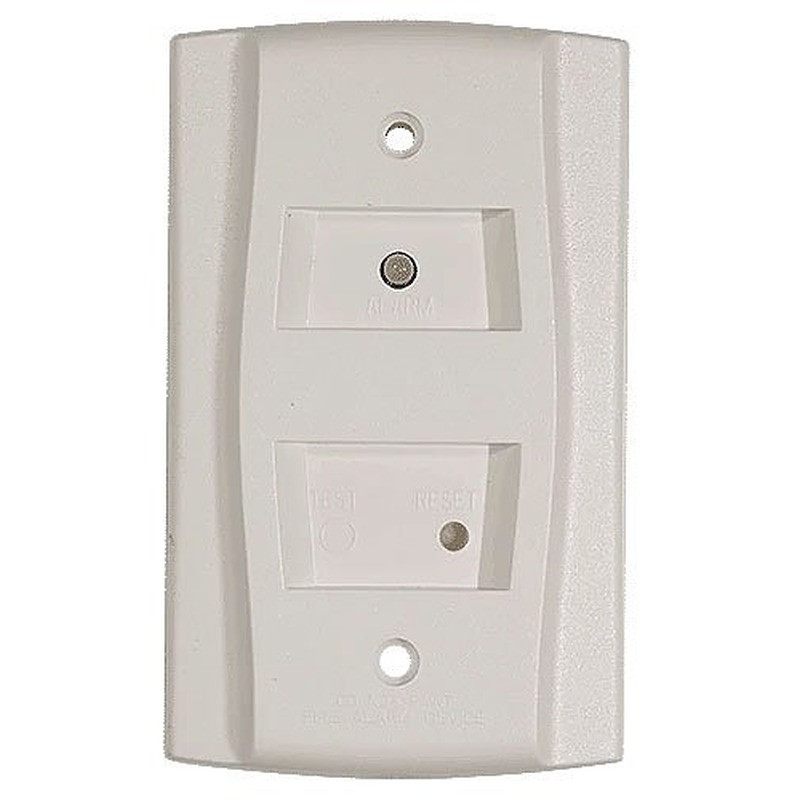
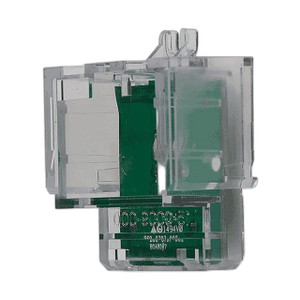
System Sensor RTS151KEY Remote Test Station with Key
The System Sensor RTS151KEY is a remote test station purpose-built for fire alarm system verification and maintenance in networked environments. It enables technicians to conduct remote diagnostics and functional tests on fire detection and signaling systems without traveling to the control panel or interrupting on-site operations. TCP/IP connectivity means you can initiate test sequences from multiple locations—a significant advantage in distributed facility management where centralizing compliance testing reduces travel costs and downtime.
Key Features
- TCP/IP Network Interface: Remote operation capability allows testing from any authorized workstation connected to the network. No on-site panel access required, reducing technician dispatch time and operational disruption.
- 29VDC Operating Voltage: Standard fire alarm system power level ensures straightforward integration into existing control loops without additional voltage conditioning or isolation hardware.
- Keyed Design: Restricts test function access to authorized personnel only. Physical key requirement prevents accidental or unauthorized system testing that could trigger false alarms.
- Compact Physical Footprint: Measures 14.38 inches length × 5 inches width × 2.5 inches depth and weighs 2.5 lbs, making it easy to position in control rooms, server closets, or equipment racks without significant spatial overhead.
- System Sensor Fire Alarm Integration: Compatible with System Sensor fire alarm control systems and networked fire safety platforms. Verify compatibility with your specific control panel revision before deployment.
Deployment Context
The RTS151KEY suits facilities requiring routine compliance testing—hospitals, data centers, warehouses, and multi-building campuses where periodic functional checks are mandatory under fire code. The remote capability also supports third-party monitoring services that need to validate system responsiveness without traveling to each site. The keyed access model is particularly valuable in environments with strict access controls or where panel tampering is a concern.
Integration & Compatibility
The test station integrates with System Sensor fire alarm control systems and compatible networked fire safety platforms via TCP/IP. Its 29VDC requirement aligns with standard fire alarm power budgets, simplifying wiring. Confirm your control panel model supports the RTS151KEY protocol before ordering—not all legacy fire alarm systems support remote testing interfaces. For integration planning, coordinate with your fire alarm contractor or fire alarm system documentation to verify network routing and firewall rules allow test station traffic.
Frequently Asked Questions
Q: Can I test the RTS151KEY remotely if my fire alarm panel is offline?
A: No. The RTS151KEY requires TCP/IP connectivity to the control panel and network infrastructure. If the panel or network is down, remote testing is not possible.
Q: Is a separate power supply required for the RTS151KEY?
A: The RTS151KEY operates at 29VDC, which is the standard control voltage provided by fire alarm systems. Power is delivered through the fire alarm panel's 24/28VDC output or a dedicated 29VDC supply circuit integrated into your control loop.
Q: Does the RTS151KEY work with non-System Sensor fire alarm panels?
A: The RTS151KEY is designed for System Sensor fire alarm control systems and compatible networked platforms. It is not compatible with panels from other manufacturers. Verify your control panel model with the manufacturer or system documentation before purchase.
Q: What certifications does the RTS151KEY carry?
A: Specific certifications (UL, IEC, local fire code approvals) are listed in the full technical datasheet. Confirm fire code compliance with your local authority having jurisdiction (AHJ) before installation.
Q: How is the key accessed if the test station is mounted inside a secure cabinet?
A: The keyed design assumes the test station is accessible to authorized personnel. If mounting in a locked cabinet, ensure the physical key can be stored securely nearby or coordinate key access with your facility security procedures.
Ted PerryPerspective based on aggregated and affiliated engineering team experience.
The System Sensor RTS151KEY is a network-attached compliance tool, not a general-purpose device. Its strength lies in reducing on-site visits for routine fire alarm validation in larger estates or operations with multiple distributed panels. The TCP/IP interface and keyed access are straightforward, but success depends entirely on network infrastructure and control panel compatibility.
Technical Highlights:
- 29VDC Operation: Eliminates need for separate conditioning or isolation—draws power from the standard fire alarm control loop, simplifying circuit design and reducing BOM complexity.
- Compact Dimensions (14.38" × 5" × 2.5", 2.5 lbs): Small enough to mount in DIN rail enclosures or retrofit into existing control room layouts without significant space reconfiguration.
- Keyed Access Control: Physical key requirement prevents unauthorized or accidental test initiation—critical in environments where false alarms trigger costly emergency response or disrupt sensitive operations.
Deployment Considerations:
- Network Dependency: Remote testing fails if TCP/IP connectivity to the control panel drops. This is not a fallback mechanism—it requires robust network design and monitoring of the path between test workstation and panel.
- System Sensor Only: Do not assume compatibility with other fire alarm brands. Verify your control panel supports the RTS151KEY protocol before committing to procurement.
Deploy the RTS151KEY in facilities with predictable compliance testing schedules and reliable network infrastructure—hospitals, data centers, and corporate campuses with IT oversight. In remote or under-resourced facilities where network uptime is uncertain, rely on traditional on-site panel testing to avoid compliance gaps.