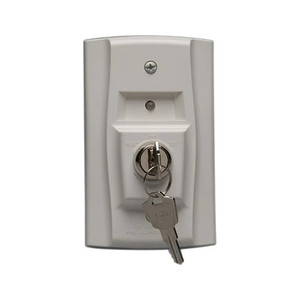
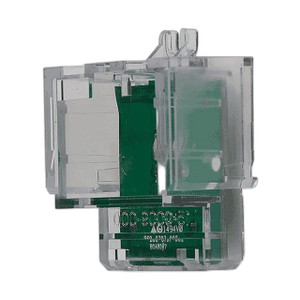
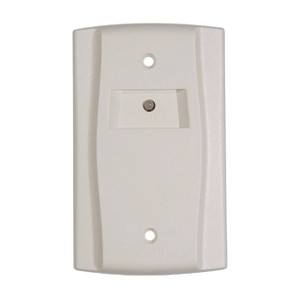
System Sensor RTS151 Remote Test Station
The System Sensor RTS151 is a remote test station purpose-built for fire alarm system monitoring and diagnostics in networked installations. It operates on 29VDC power and communicates via TCP/IP, making it suitable for facilities where remote access to testing functions is required without on-site personnel interaction. The compact form factor (14.38" × 5" × 2.5") fits standard control room installations or distributed network nodes.
Key Features
- 29VDC Operation: Integrates directly with standard fire alarm system power supplies, eliminating the need for separate conditioning or auxiliary UPS backup — a simplification that reduces installation cost and wiring complexity on larger systems.
- TCP/IP Connectivity: Network-based communication enables remote testing, status queries, and diagnostics from any authorized terminal on the facility network. This is critical in multi-building campuses or remote facilities where regular hands-on testing would require travel.
- Compact Design: At 2.5 lbs and 2.5 inches deep, the RTS151 mounts in tight spaces — control room cabinets, wall-mounted panels, or distributed repeater locations — without demanding dedicated rack real estate.
- Standard Fire Alarm Integration: Works within existing fire alarm system architectures where remote test access is mandated by code or operational procedure. Verify compatibility with your specific control panel before procurement — not all panels support remote test station protocols equally.
- Transparent Network Architecture: TCP/IP transport allows the RTS151 to coexist on facility networks alongside building management systems, access control, and other IP-based safety infrastructure without requiring dedicated cabling or isolated segments, though network segmentation and firewall rules should isolate fire safety traffic in production deployments.
Integration & Compatibility
The RTS151 is designed for integration with fire alarm systems requiring remote testing capabilities via TCP/IP. Network connectivity enables integration with building management systems and remote monitoring platforms. Before ordering, confirm your fire alarm control panel manufacturer and model explicitly support remote test station protocols — System Sensor panels have documented compatibility, but cross-brand integration may require gateway hardware or firmware updates. Network configuration should account for latency and failover paths if the RTS151 is relied upon for periodic compliance testing.
Deployment Considerations
This device is not a replacement for periodic hands-on fire alarm testing. Rather, it supplements manual testing by allowing authorized personnel to initiate diagnostics and status checks remotely, reducing the frequency of site visits and streamlining compliance documentation. Ensure your facility network has appropriate access controls and audit logging enabled when the RTS151 is exposed to any untrusted network segment. For single-building small to medium installations, a local test panel may be more cost-effective; the RTS151 justifies its presence in multi-node or geographically dispersed fire safety deployments.
Frequently Asked Questions
Q: Is the RTS151 suitable for testing all fire alarm system types?
A: The RTS151 is designed for System Sensor fire alarm control panels and compatible addressable systems. Verify your specific panel model supports remote test station protocols before purchase. Cross-brand compatibility is not guaranteed without additional gateway hardware.
Q: Can the RTS151 be monitored over the internet, or must it remain on the local facility network?
A: The RTS151 communicates via TCP/IP and can reach any network-accessible terminal. Internet exposure requires firewall rules, VPN, or secure gateway architecture — do not expose the RTS151 directly to the public internet without authentication and encryption controls in place.
Q: What power supply specifications are required?
A: The RTS151 operates on 29VDC and draws power from the fire alarm system's main power supply or dedicated 29VDC backup circuit. Confirm your power supply has available amperage capacity — typical fire alarm systems provide sufficient margin, but large multi-panel installations should verify with load calculations.
Q: Does the RTS151 require separate battery backup?
A: The RTS151 itself does not have internal battery backup. Its operation depends on continuity of the 29VDC supply. Battery backup for fire alarm systems is provided by the main control panel's UPS or supervised backup battery circuit, to which the RTS151 connects.
Q: What compliance or code requirements apply to remote fire alarm testing?
A: NFPA 72 (National Fire Alarm Code) permits remote testing where documented in the facility's fire alarm system design and maintenance plan. Verify your authority having jurisdiction (AHJ) and local fire marshal accept remote testing methods and intervals. The RTS151 supports compliance testing but does not eliminate the need for periodic full-system manual inspections.
Ted PerryPerspective based on aggregated IP Security Depot and affiliated engineering team experience.
The System Sensor RTS151 is a straightforward piece of network infrastructure for fire alarm systems — not flashy, but genuinely useful in distributed or multi-campus installations where on-site testing visits are costly or infrequent. The 29VDC power and TCP/IP transport keep integration burden low, and the compact footprint is a real advantage in cramped control rooms. The key limitation is dependency on your specific fire alarm panel's compatibility with remote test protocols.
Technical Highlights:
- 29VDC Direct Integration: Draws power from your existing fire alarm supply without requiring separate conditioning or UPS backup, reducing installation cost and eliminating a separate failure point.
- TCP/IP Transport: Enables remote diagnostics and test initiation across standard facility networks. This matters most in campuses, remote facilities, or multi-building operations where consolidating testing into a central security operations center cuts travel overhead significantly.
- Minimal Physical Footprint: 14.38" × 5" × 2.5" and only 2.5 lbs allows placement in tight spaces — cabinet shelves, wall-mounted DIN rails, or repeater closets — without demanding dedicated rack space or custom mounting solutions.
Deployment Considerations:
- Verify your fire alarm control panel explicitly supports remote test station protocols before purchasing. System Sensor panels have documented compatibility, but cross-brand systems may require gateway hardware or firmware patches, which can delay deployment.
- Network access to the RTS151 should be authenticated and logged. Do not expose it to untrusted network segments or the public internet without proper firewall rules and encryption. Fire alarm testing is a compliance function and a potential attack surface if unsecured.
- The RTS151 is not a substitute for hands-on testing during new system commissioning or major modifications. Its value lies in reducing the frequency of site visits for routine periodic tests — not eliminating the need for annual full-system inspections or code-mandated walkthroughs.
The RTS151 is the right choice for facilities with multi-panel fire alarm systems, geographically dispersed buildings, or compliance regimes that require frequent testing intervals. Small single-building installations may not justify the cost over a local manual test panel. Confirm your control panel compatibility and network architecture before committing.