
Showing Results for Sprinkler Monitoring
-
Save $4.85
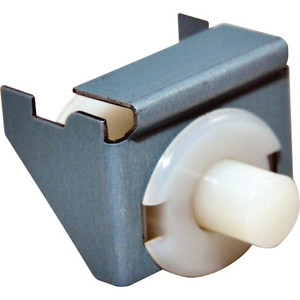
Altronix TS112 Plunger Tamper Switch
Mechanical plunger switch detects cabinet access with dry-contact relay output
- Dry-contact relay output integrates directly with any alarm panel or BMS input.
- Requires no power source, so cabinet intrusion alerts fire even when the network is down.
- Compact 1.22 × 1.19 × 1.05 mm footprint fits tight enclosure frames with included bracket.
In stock · Ships same business day Free shipping over $499$14.84 $9.99 Save $4.85 -
Save $3.01

DMP 3012 Tamper Switch
Hardwired tamper switch with TCP/IP alarm for cabinet & equipment protection
- Hardwired TCP/IP signaling delivers real-time tamper alerts directly to compatible DMP panels.
- Recessed mount design integrates cleanly into cabinet doors and equipment enclosure housings.
- Supervised wired connection eliminates battery dependency and wireless blind spots in detection.
Usually Ships in 2-3 Weeks Free shipping over $499$8.00 $4.99 Save $3.01 -
Save $1.01
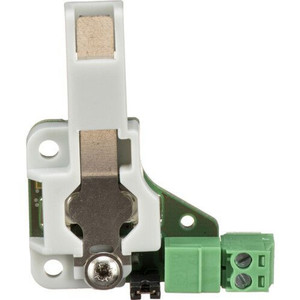
2N IP Verso Tamper Switch Module - 01260-001
Internal tamper detection for 2N IP Verso intercoms without external mounting
- Detects unauthorized opening with mechanical switch contact output to control panel
- Installs inside unit in designated location; no module slot or front-panel space required
- Integrates directly or through I/O Module (01257-001) and Wiegand Module (01259-001)
In stock · Ships same business day Free shipping over $499$49.00 $47.99 Save $1.01 -
Save $0.01

HES PBM-1 Tamper Switch Plate
Tamper detection switch plate for HES electronic locking systems
- Immediate alert signal to security system when door hardware is disturbed
- Integrates with HES locking solutions for access control installations
- Durable construction rated for demanding security environments and secured entries
Usually Ships in 2-3 Weeks Free shipping over $499$147.00 $146.99 Save $0.01 -
Save $0.01

HES RP-01 Remote Plate Narrow N/C Tamper Switch
N/C tamper switch remote plate for narrow-frame strike systems
- N/C tamper switch triggers state-change alert the moment the plate is disturbed.
- Integrated R/LED indicator gives installers instant visual status confirmation on-site.
- D-hole mount fits narrow frames, enabling remote sensor placement from primary hardware.
Usually Ships in 2-3 Weeks Free shipping over $499$52.00 $51.99 Save $0.01 -
Save $23.01
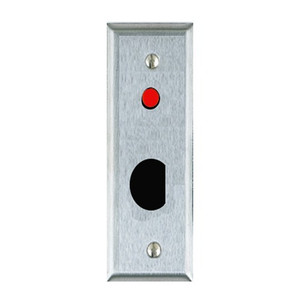
HES RP-01A Remote Narrow Red LED N/O Tamper Switch
Remote tamper switch with narrow red LED for distributed access control
- N/O contacts close on tamper event, compatible with any standard switch input card.
- Narrow red LED gives instant on-site tamper status without remote polling or queries.
- 12VDC input powers directly from existing access control auxiliaries; no special wiring.
Usually Ships in 2-3 Weeks Free shipping over $499$52.00 $28.99 Save $23.01 -
Save $0.01

HES RP-01SG Remote Plate Tamper Switch N/C
N/C tamper switch with R/LED indicator for door frames and strike plates
- Remote plate with N/C tamper switch for HES strikes
- Fail-safe tamper detection on standard strike plates
- 12VDC + R/LED status indicator for visual feedback
Usually Ships in 2-3 Weeks Free shipping over $499$52.00 $51.99 Save $0.01 -
Save $0.01
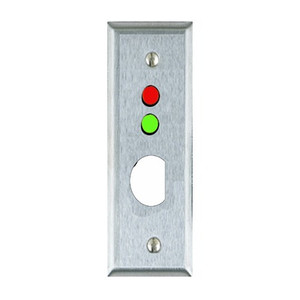
HES RP-03 Remote Plate Narrow R/G LED Tamper Switch
Remote plate tamper switch with red/green LED status for HES strikes
- N/C tamper switch triggers an alert the moment unauthorized access is attempted.
- Dual red/green LEDs give installers instant visual confirmation of door state.
- D hole mount and 24 VDC input simplify drop-in integration with HES strike wiring.
Usually Ships in 2-3 Weeks Free shipping over $499$45.00 $44.99 Save $0.01 -
Save $0.01

HES RP-03A Remote Plate Tamper Switch R/G LED
Remote status plate with dual-color LED and tamper detection for access control
- Dual red/green LED gives instant visual lock status confirmation at the door.
- N/O tamper switch integrates directly with control panels for real-time alerts.
- D-hole mount fits standard frames; runs on 12VDC access control power supplies.
Usually Ships in 2-3 Weeks Free shipping over $499$45.00 $44.99 Save $0.01 -
Save $0.01
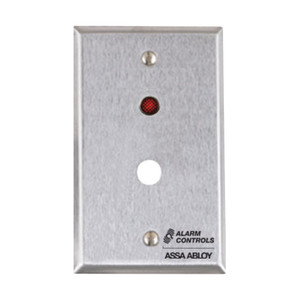
HES RP-03M Remote Plate Narrow N/C Tamper Switch
N/C tamper switch remote plate for HES strike systems with narrow profile
- Narrow-profile remote plate with N/C tamper switch
- Medico hole configuration for standard frame mount
- Compatible with HES electric strikes and lock systems
Usually Ships in 2-3 Weeks Free shipping over $499$45.00 $44.99 Save $0.01 -
Save $0.01
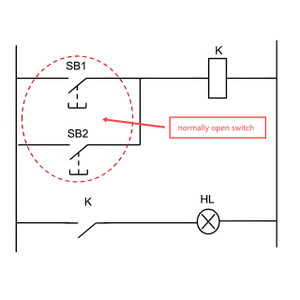
HES TB-1 Tamper Switch Normally Open Closed Circuit
Normally open tamper switch for closed-circuit alarm loop supervision
- Normally open configuration integrates directly into supervised closed-circuit alarm loops.
- Provides immediate tamper detection for enclosures, electric strikes, and lock cabinets.
- Lightweight at 0.1 lb; supports wall or rack mount for flexible installation placement.
Usually Ships in 2-3 Weeks Free shipping over $499$32.00 $31.99 Save $0.01 -
Save $13.51

Kantech KT-TAMPER Tamper Switch for Metal Cabinets
Wall-mounted tamper switch for Kantech access control cabinets
- Tamper switch for Kantech metal cabinet enclosures
- Detects unauthorized door opening or displacement
- Wall-mount design preserves cabinet interior space
Usually Ships in 2-3 Weeks Free shipping over $499$48.50 $34.99 Save $13.51 -
Save $14.51

Kantech P-TAMP Tamper Switch for P-Series Readers
Physical tamper detection switch for P-series access readers
- Tamper switch for P200, P225, P300, P325, P400 readers
- Closes contacts on enclosure breach for alarm logging
- Direct OEM fit — no external adapters required
Usually Ships in 2-3 Weeks Free shipping over $499$53.50 $38.99 Save $14.51 -
Save $0.01

Lifesafety Power RG-TAMPER-SWITCH-KIT Tamper Switch Kit
Tamper detection assembly for Lifesafety Power Gemini rack drawer systems
- Switch-and-bracket assembly enables physical tamper detection on Gemini rack drawers.
- Contact closure output integrates directly into supervised alarm inputs on security panels or BMS.
- Kit includes switch assembly and mounting bracket — installs with basic hand tools.
Usually Ships in 2-3 Weeks Free shipping over $499$58.00 $57.99 Save $0.01 -
Save $0.01
Lifesafety Power TAMPER-SWITCH Wall Mount
Tamper detection switch designed for integration into Lifesafety Power wall mount enclosures
- Micro switch assembly detects unauthorized enclosure access and triggers alarm contact closure.
- Integrates with compatible security panels via supervised tamper alarm contact for monitored sites.
- Ships with mounting hardware included for direct installation into LSP wall mount enclosures.
In stock · Ships same business day Free shipping over $499$12.00 $11.99 Save $0.01 -
Save $0.43
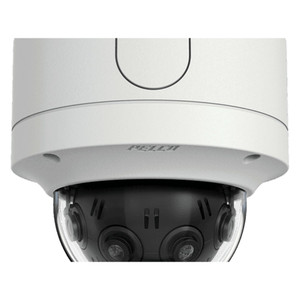
Pelco OHPVTA1 Housing Tamper Switch and Key Kit
Tamper alarm kit with keyed access control for Pelco housings
- Triggers VMS alarm instantly when housing opened without authorization
- Tamper-proof screws and keyed tool restrict access to authorized personnel
- NDAA Section 889 compliant for government and regulated installations
Usually Ships in 2-3 Weeks Free shipping over $499$36.42 $35.99 Save $0.43 -
Save $77.51

Potter Bleeder Valve for Fire Sprinkler System
Manual brass bleeder valve for wet and dry sprinkler systems
- Brass construction resists corrosion in wet environments for long service life.
- Standard pipe thread connections integrate with industry-standard riser and branch piping.
- Tool-free hand operation enables air elimination during fill, prime, and maintenance cycles.
Usually Ships in 2-3 Weeks Free shipping over $499$155.50 $77.99 Save $77.51 -
Save $159.26

Potter FSBS Flowswitch Bypass Switch
Bypass switch for flowswitch circuits in wet, dry, and pre-action systems
- Isolates flowswitch circuits for maintenance without shutting down the full system.
- Compatible with wet-pipe, dry-pipe, and pre-action sprinkler system architectures.
- Compact form factor supports panel-mount or remote installation in control enclosures.
Usually Ships in 2-3 Weeks Free shipping over $499$329.25 $169.99 Save $159.26 -
Save $1,177.01

Potter PAAR-B Monitored Automatic Air Release
Monitored automatic air release for fire suppression systems
- Integrated status feedback enables fault detection via standard FACP connections.
- Automatic air venting maintains suppression system pressure without manual intervention.
- Compact design supports equipment room and cabinet mounting in space-constrained installs.
Usually Ships in 2-3 Weeks Free shipping over $499$2,461.00 $1,283.99 Save $1,177.01 -
Save $220.76
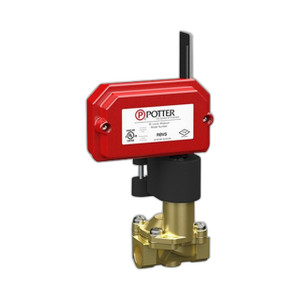
Potter Retrofit Ball Valve Supervisory Switch
Retrofit ball valve supervisory switch with mechanical alarm signaling
- Retrofit design installs on existing ball valves without valve removal or system downtime.
- Mechanical dry-contact switch operates independently of system power during outages.
- Standard alarm signaling contacts integrate directly with fire alarm control panels.
In stock · Ships same business day Free shipping over $499$457.75 $236.99 Save $220.76 -
Save $995.51

Potter SignaLink™ Bridge
Multi-door access bridge with local credential processing and offline operation
- Processes door unlock decisions locally, eliminating server round-trip latency.
- Accepts magnetic stripe, proximity, and smart card credentials—no reader lock-in.
- Relay-switched strike outputs support both 12 VDC and 24 VDC power supplies.
Usually Ships in 2-3 Weeks Free shipping over $499$1,981.50 $985.99 Save $995.51 -
Save $170.76
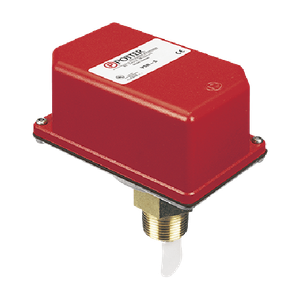
Potter VSR-S Small Pipe Waterflow Alarm Switch
Waterflow alarm switch for small-diameter fire suppression piping
- Dry contact output integrates directly with any fire alarm panel—no proprietary interface needed.
- IP54-rated enclosure withstands moisture and thermal cycling typical of suppression environments.
- Compact form supports pole or pendant mounting in tight riser closets without piping rework.
In stock · Ships same business day Free shipping over $499$349.75 $178.99 Save $170.76 -
Save $1,376.01

Potter Water Level Supervisory Switch
Float-operated water level switch for gravity and pressure tanks
- Mechanical float design eliminates calibration drift for reliable long-term level supervision.
- Rated IP54 and 125/250VAC at 2A, compatible with standard fire suppression control circuits.
- Operates from 40°F to 140°F, suitable for year-round indoor and outdoor tank installations.
Usually Ships in 2-3 Weeks Free shipping over $499$2,831.00 $1,454.99 Save $1,376.01