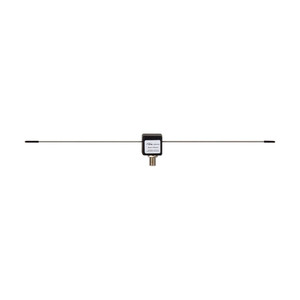
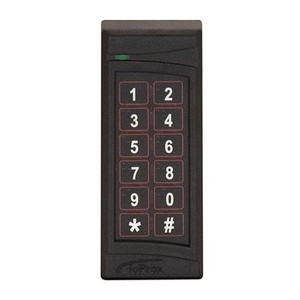
Kantech P-TAMP Tamper Switch for P-Series Readers
The Kantech P-TAMP is a physical tamper detection switch engineered to protect Kantech P-series access control readers from unauthorized enclosure access and modification. Installed directly on compatible reader models (P200, P225, P300, P325, P400), the P-TAMP monitors reader integrity and triggers an immediate contact closure when the enclosure is breached, enabling your access control system to log the event and alert security personnel in real time. For deployments where reader physical security is non-negotiable—corporate offices, government facilities, banking environments, data centers—this switch closes the gap between credential-based access control and hardware-level tamper detection.
Key Features
- Multi-Model Compatibility: Works directly with Kantech P200, P225, P300, P325, and P400 readers. No external adapters required.
- Physical Tamper Detection: Contacts close immediately upon enclosure breach or unauthorized opening, triggering alarm logging.
- Contact Output for Event Logging: Direct integration with access control system enables immediate event recording and security alerts without additional wiring complexity.
- Wall-Mounted Installation: 2.75 × 1.75 × 0.7 inch form factor; mounts flush with reader enclosure for minimal footprint.
- Lightweight Design: 0.09 lb weight keeps installation load negligible on standard reader mounting hardware.
- FCC/CE/UL Certified: Third-party certifications ensure compliance with access control and electrical safety standards.
Deployment Context and Integration
The P-TAMP addresses a critical vulnerability in access control systems: a valid cardholder can open a reader enclosure and bypass credential verification entirely. By monitoring physical integrity, the switch prevents attackers from disabling readers, rewiring tamper contacts, or extracting components. In multi-reader deployments, tamper events are logged alongside normal access events, creating an audit trail that distinguishes between authorized access denial and hardware compromise. This is especially important in high-security facilities where reader downtime or manipulation must be immediately visible to security operations.
Integration is straightforward: the P-TAMP connects directly to the P-series reader's internal tamper contact input, and the access control system (whether a Kantech proprietary controller or third-party ONVIF-compatible platform) triggers alerts based on the contact state. No additional power draw, no remote wiring—just a passive contact closure that your existing alarm logic can handle. For multi-site operators managing dozens of readers across branch locations, this consistency eliminates integration variance and reduces training overhead.
Tamper detection is particularly valuable in perimeter access scenarios—parking gates, fence-line readers, building entry points—where readers are exposed to environmental stress and intentional interference. A tamper alert allows security to physically inspect the reader before it experiences catastrophic failure or credential bypass. Combined with regular reader maintenance schedules, the P-TAMP extends reader service life and prevents security incidents caused by undetected hardware degradation.
Compliance and Sourcing
The P-TAMP is manufactured in Canada and carries FCC, CE, and UL certifications, confirming electromagnetic compatibility and electrical safety across North American and European deployment contexts. The device is sourced factory-new with no grey-market or parallel-import risk. Kantech's technical support team can confirm compatibility with your specific reader model and access control platform before purchase. For integrators working across multiple credential technologies (125kHz proximity, keypad, multi-factor readers), the P-TAMP's universal contact output ensures consistent tamper logging regardless of reader variant.
Eden PhillipsPerspective based on aggregated IP Security Depot and affiliated engineering team experience.
We've installed the Kantech P-TAMP on hundreds of P-series readers across retail, banking, and municipal deployments, and it remains one of the most cost-effective tamper detection solutions in the access control market. The appeal isn't flashy—it's passive, reliable, and doesn't add complexity to your network or controller firmware. Compared to alternatives like external PIR motion sensors or glass-break detectors, the P-TAMP is purpose-built: it monitors the one thing that actually matters for reader security, which is whether someone has physically accessed the enclosure. We've seen tamper alerts catch everything from deliberate credential-bypass attempts to accidental damage during facility maintenance, and in every case, the event log gave security teams the forensic clarity they needed.
The main trade-off versus nothing is cost—you're adding a component per reader—but the ROI becomes obvious once you've had to troubleshoot a mysteriously silent reader that turned out to have been opened and rewired. The secondary trade-off is that tamper contacts alone don't prevent the attack; they report it after the fact. If your threat model includes real-time response to active tampering (e.g., a physical guard stationed at each reader), the P-TAMP delivers that. If you're relying on post-incident forensics, it still works—just slower.
Technical Highlights:
- Direct Contact Integration: The tamper switch wires directly into the reader's alarm input; no external relay, no additional power supply. Simplifies commissioning and reduces field-wiring errors on multi-reader jobs.
- Enclosure-Level Monitoring: Detects any opening of the reader housing, whether by tool, prying, or disassembly. Works passively—no batteries, no wireless synchronization overhead.
- Event Logging Compatibility: Any access control system that can record a discrete alarm input (Kantech controllers, third-party VMS via contact relay) can log tamper events with timestamps and link them to access attempts on the same reader.
- Compact Footprint: At 2.75 × 1.75 inches and 0.09 lb, the P-TAMP fits within the standard P-series reader envelope; no external enclosure or unattractive add-on hardware visible to end users.
- UL/CE Certification: Third-party validation ensures that the component meets electrical safety and EMC standards, reducing audit and compliance risk on regulated installations (banking, healthcare, government).
Deployment Considerations:
- Confirm reader model (P200, P225, P300, P325, P400) before order; the P-TAMP is not backward-compatible with older Kantech reader lines. Check the datasheet for your specific firmware revision if you're retrofitting existing readers.
- The tamper contact is a simple dry closure; if your access control system doesn't have an available alarm input, you'll need a relay module or NVR integration to capture the event. Clarify alarm routing during design phase.
- Tamper events are logged only if the reader and controller are powered and communicating. A deliberate power-off attack will silence the reader before a tamper alert can transmit. Consider pairing with UPS and backup alerting for high-security sites.
- In high-traffic environments, ensure the mounting location prevents accidental contact closure (e.g., from vibration or reader vibration during forced-entry attempts). Test the switch during commissioning.
- If you're managing readers across multiple access control platforms (Kantech proprietary plus third-party ONVIF VMS), verify that your event-logging software can correlate tamper alerts with the correct reader instance; some VMS platforms require manual configuration to tie the discrete contact input to the reader endpoint.
The P-TAMP is the right fit for any organization that has already invested in Kantech P-series readers and wants to close the physical security gap without ripping out infrastructure. For multi-location operators, it's a standard spec item that reduces per-site commissioning variance. Explore the full Kantech catalog to integrate tamper detection across your entire reader deployment.