
How to Choose the Right Indoor IP Camera
A technical buyer's guide for security integrators, IT directors, loss-prevention managers, and facility designers specifying indoor surveillance for offices, retail, warehouses, healthcare, education, and hospitality. Covers sensor resolution, lens field of view, WDR for interior backlighting, PoE powering, audio recording compliance, and edge analytics that actually run reliably.
In This Guide
Indoor surveillance cameras run in controlled environments, but "controlled" is misleading. Interior lighting shifts from daylight through windows to fluorescent after hours to emergency strobes during incidents. Ceiling heights range from 8 feet in retail to 40 feet in distribution centers. HIPAA, PCI-DSS, and local audio-recording laws vary by jurisdiction. The camera specification that matters is the one that matches your actual lighting, ceiling height, coverage area, and compliance posture, not the resolution printed on the box.
Key Specifications Explained
Resolution and Pixel Density
Forensic identification requires 80 pixels per foot (PPF) across a subject's face. Recognition of a known person needs 40 PPF. Detection (knowing something happened) requires only 16 PPF. Size the camera resolution to the identification distance, then work backward. A 2MP camera with a 2.8mm lens covers a 20-foot-wide hallway at 80 PPF across the center zone. A 4MP camera at the same lens covers 30 feet. An 8MP (4K) dome with a 3.7mm lens covers a 45-foot retail aisle.
Higher resolution increases storage and bandwidth linearly at the same frame rate and compression. An 8MP camera at H.265 runs roughly 4-6 Mbps per stream; a 2MP camera runs 1.5-2 Mbps. Confirm your NVR and switching fabric can sustain the aggregate bandwidth before specifying 4K across the facility.
Lens Field of View and Mounting Height
Field of view (FoV) is controlled by focal length. A 2.8mm lens gives roughly 110 degrees horizontal, which suits hallways and small rooms at 8-10 foot ceilings. A 4mm lens gives 90 degrees for medium rooms, a 6mm lens gives 55 degrees for longer sight lines, and a 12mm lens narrows to 28 degrees for checkout lanes or long aisles.
Mounting height affects angle of incidence on faces. Cameras mounted above 14 feet looking down at a shallow angle produce top-of-head views that cannot identify anyone. For identification-critical positions (entrances, cash handling, pharmacy counters), mount at 8-10 feet. For general area coverage, 10-12 feet works. Use panoramic cameras for ceilings above 14 feet when you still need identification-grade pixel density on the floor.
Wide Dynamic Range for Interior Backlighting
Interior WDR issues are different from outdoor. Cameras facing storefront windows, reception desks, or conference rooms with exterior glass deal with 10,000+ lux outside and 200-500 lux inside simultaneously. True WDR at 120dB or better balances both zones. Digital WDR (sometimes called D-WDR or DWDR in datasheets) cannot handle this contrast level. Any camera aimed within 30 degrees of a window needs true WDR.
Check the datasheet for "True WDR" or "Multi-Exposure WDR" plus a dB rating. If the number is 100dB or lower, or if only "Digital WDR" is listed, expect silhouettes instead of identifiable faces during daylight hours.
Low-Light and IR Performance
Facilities with after-hours lighting reductions or 24/7 coverage need cameras that hold color below 1 lux or switch cleanly to infrared. Starlight-class sensors (Sony STARVIS, Hanwha Wisenet P, i-PRO ClearSight) deliver full-color at 0.005 lux, which covers typical emergency lighting levels without IR cut-in. Published "0.0005 lux" specs with F-numbers greater than F1.6 are usually theoretical minimums where the image is unusable.
IR range in indoor deployments is 10-30 feet. Most indoor domes ship with 10-20m IR, which is adequate for rooms up to 50 feet deep. For storage rooms, loading dock interiors, or corridors longer than 60 feet, specify cameras with 30m+ IR or add supplemental illuminators. Avoid positioning IR-on domes near glass; the reflection blinds the sensor.
Audio Recording and Two-Way Audio
Audio recording in the U.S. is regulated at the state level. Eleven states (including California, Florida, Illinois, Maryland, Pennsylvania, Washington) are two-party consent states where recording conversations requires disclosure. Most indoor cameras ship with a built-in microphone enabled by default. If your facility operates across multiple states, confirm the camera supports per-camera audio disable and that signage is posted.
Two-way audio (talk-down) is useful for retail loss prevention and remote facility access. Look for cameras with echo cancellation and a line-in jack for a separate microphone, not just the built-in. Line-level audio feeds to a compatible NVR or VMS with audio recording enabled on the channel.
Vandal Resistance and Form Factor
Indoor cameras below 10 feet need IK10 impact resistance for any area with public access (retail floors, school corridors, healthcare waiting rooms, government lobbies). IK08 suffices for back-of-house offices and areas restricted to staff. Dome cameras resist tampering better than bullet or turret cameras indoors because the housing is recessed and the lens has no protruding angle to grab.
For detention, psychiatric, and behavioral health facilities, specify anti-ligature mount-compatible cameras with no cable or bracket exposed below the ceiling. Some manufacturers offer flush-mount kits specifically for these environments.
Edge Analytics and Processor Class
Modern indoor cameras run analytics at the edge: person detection, vehicle classification, loitering, line crossing, occupancy counting, heat mapping, and demographic inference. Edge analytics reduce NVR server load and enable event-driven recording that cuts storage 40-70%. For analytics to run reliably, the camera needs a dedicated AI processor (Ambarella CV-series, Hailo, NXP i.MX series with NPU).
Cameras without a dedicated NPU can still advertise analytics, but performance degrades at night, during high motion, or when running multiple rules simultaneously. Verify the camera can run the specific analytic you need (e.g., retail heat mapping) with documented frame rate and accuracy numbers.
PoE Powering and Installation
Most indoor domes operate on 802.3af (Class 3, 15.4W) PoE, which a standard managed switch delivers at 100m over Cat5e. Cameras with built-in heaters for cold-storage interiors, PTZ motors, or integrated illuminators require 802.3at (30W). Multi-sensor cameras and high-power PTZ models need 802.3bt (60W). For remote installations beyond 100m, use a PoE midspan or Ethernet extender. Always confirm the switch total PoE budget covers peak draw across all connected cameras, not typical.
NDAA Compliance and Data Residency
NDAA Section 889 applies equally to indoor deployments. Federal agencies, federal contractors, and any facility with federal funding cannot use specific manufacturers' cameras. Compliance applies to the chipset, firmware, and cloud services. For healthcare, education, and government deployments, verify NDAA status across the whole bill of materials including recorder, VMS, and management platform. For cloud-managed deployments, confirm where video metadata and credentials are hosted, especially for multi-tenant and HIPAA-regulated facilities.
Featured Indoor IP Cameras
Top-selling indoor cameras in stock, selected by our technical team.
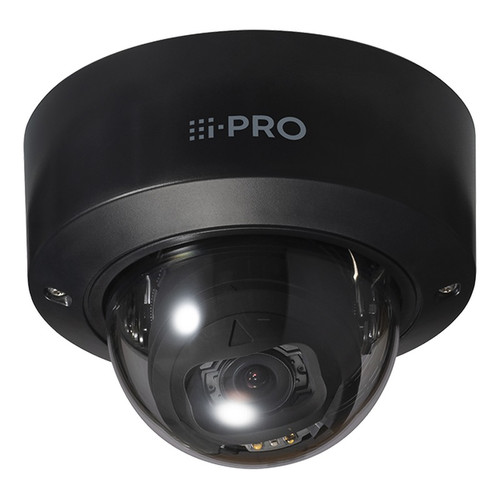
i-PRO WV-S22700-V2L1 4K Indoor Vandal Dome Camera
WV-S22700-V2L1
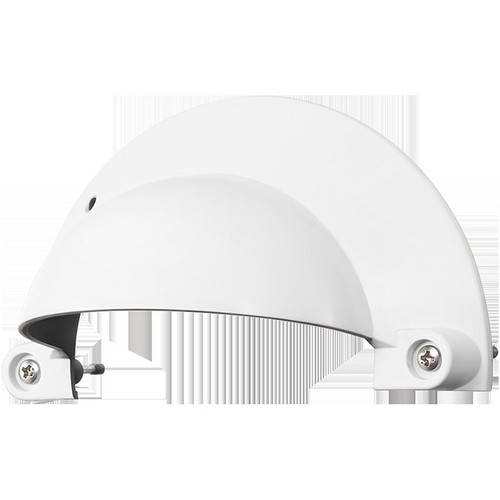
i-PRO WV-QSR100-W Sun Shade for Dome Camera
WV-QSR100-W
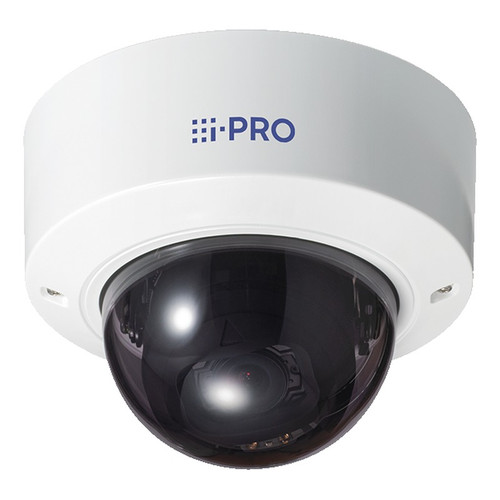
i-PRO WV-S22500-V3LG 5MP Vandal Resistant Indoor Dome IP Camera
WV-S22500-V3LG
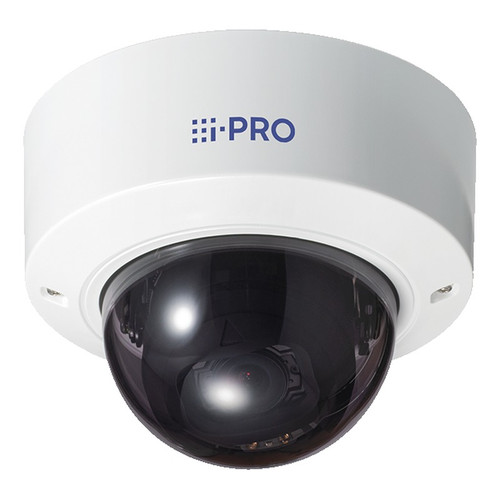
i-PRO WV-S22600-V2LG 6MP Vandal Resistant Indoor Dome IP Camera
WV-S22600-V2LG
Deployment Scenarios
Retail Store Floor
Retail floors need identification at checkout, area coverage across aisles, and heat mapping for merchandising analysis. Recommended: 4MP vandal dome at entrance (2.8mm lens, true WDR 120dB), 4MP domes down each aisle at 10-foot ceilings (2.8-12mm varifocal), and an 8MP panoramic per 2,500 sq ft for heat mapping. Use H.265+ smart codec and event-driven recording on standard indoor domes to keep storage manageable. Audio disabled for PCI-DSS and multi-state compliance.
Office and Conference Room
Corporate office coverage emphasizes reception identification, back-of-house badge-in areas, and server rooms. Recommended: 4MP indoor dome at reception with true WDR for the window behind, 2MP domes in corridors (2.8mm fixed), 4MP dome at server room door with tamper detection analytics, and PTZ cameras in larger lobbies with auto-tracking. Audio disabled by policy. Integrate with access control events to trigger recording at badge-in anomalies.
Warehouse and Distribution Center
Warehouses have 25-40 foot ceilings and 200+ foot aisles. A standard 2.8mm dome at 25 feet covers 40 feet of aisle at usable detection PPF, not identification. Recommended: 4MP or 8MP motorized varifocal (2.8-12mm) at each end of major aisles, multi-sensor cameras at aisle intersections, PTZ cameras at loading dock interiors with pre-set tours. Pair with a high-capacity NVR (32-64 channel) sized for 60-90 day retention.
Healthcare Waiting Area
Healthcare waiting rooms and pharmacy counters combine HIPAA-compliant signage, audio disable requirements, and 24/7 coverage. Recommended: 4MP IK10 vandal dome at registration desk (audio disabled at both the camera and VMS, posted signage), 4MP dome at pharmacy pickup with true WDR for the dispensing window, panoramic camera in the waiting area for people counting and wait-time analytics. Use anti-ligature mounts in psych/behavioral areas. Integrate with people counting analytics for throughput reporting.
School and Campus
K-12 and higher-ed deployments need identification at entrances, area coverage in corridors, and rapid incident review. Recommended: 4MP turret camera at every exterior-facing door (true WDR 130dB for backlighting), 2MP dome every 100 feet of corridor at 10-foot mounting, 4MP panoramic in the cafeteria, and PTZ cameras overlooking common gathering areas. Gunshot detection integration through supported VMS vendors. Audio typically disabled per state law; confirm local guidance.
Bank and Financial Services
Banks follow prescriptive camera specifications from the FDIC's regulations and insurer requirements: 80+ PPF across teller zones, continuous 30-day retention, redundant recording, IK10 vandal resistance on public-facing cameras, and tamper detection at ATMs. Recommended: 4MP or 6MP turret at each teller window (3.7mm fixed for consistent framing), 4MP dome above the entrance with license plate capable resolution if drive-up access exists, and dedicated ATM cameras with matched framing to recorded transaction metadata.
More Top-Selling Indoor Cameras
Additional in-stock options for indoor deployments.
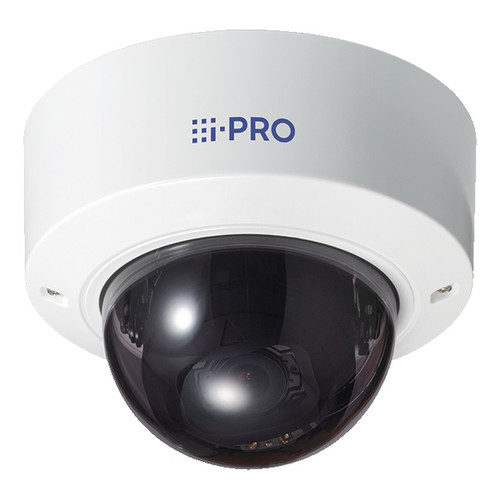
i-PRO WV-S22700-V2LG 4K Vandal Resistant Dome Camera
WV-S22700-V2LG
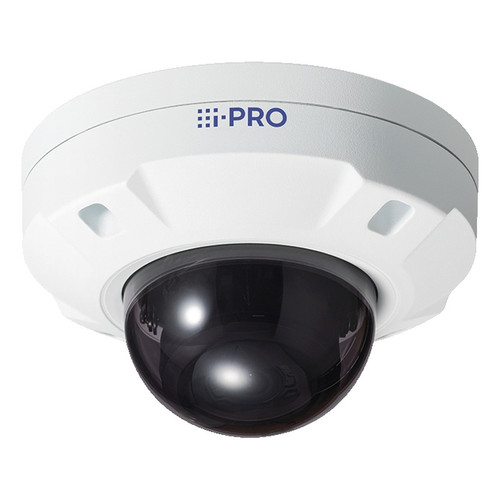
i-PRO WV-S25600-V2LG 6MP Vandal Resistant Dome
WV-S25600-V2LG
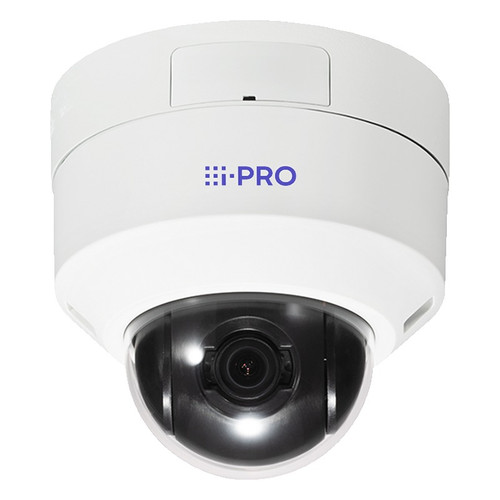
i-PRO WV-U61300-ZY 2MP AI PTZ Dome Indoor IP Camera
WV-U61300-ZY
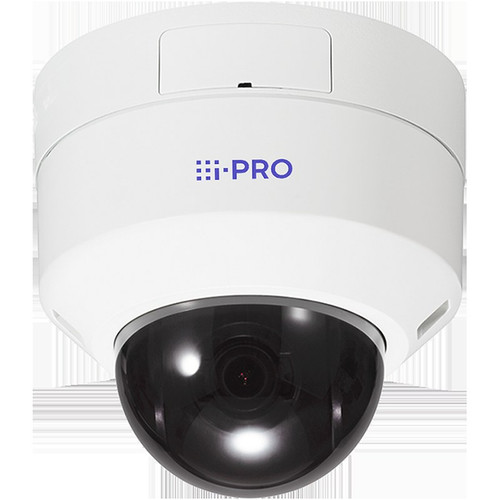
i-PRO WV-U61300-ZYG 2MP AI PTZ Dome Indoor IP Camera
WV-U61300-ZYG
Common Mistakes to Avoid
- Specifying 4K across the entire facility. A 4K dome at 2.8mm in an aisle that averages 15 feet of walking distance delivers 400 PPF at center. That is 5x what identification requires and 4x the bandwidth of a 4MP camera that would fully meet the spec. Match resolution to actual identification distance.
- Mounting identification-critical cameras too high. A camera mounted at 14 feet looking down at 40 degrees captures top-of-head views. Keep identification-critical cameras at 8-10 feet and use panoramic or multi-sensor models for higher mounts.
- Enabling audio without verifying state law. Default-on microphones in two-party consent states create legal liability. Disable audio at the camera and VMS, post signage where audio is recorded, and document the configuration in your policy.
- Skipping true WDR on reception and storefront cameras. Every indoor camera aimed within 30 degrees of a window faces backlighting that silhouettes faces during daylight. Digital WDR will not fix this. Specify True WDR at 120dB or higher for these positions.
- Under-powering the PoE switch. A 24-port switch rated at 370W total cannot run 24 cameras at 20W peak. Calculate worst-case draw (IR on, heater on, analytics running) with 20% headroom. Use our PoE Power Budget Calculator.
- Assuming edge analytics work on any camera. Only cameras with dedicated AI processors run analytics reliably across varied lighting. Cameras running analytics on the main ISP degrade at night and during high-motion events.
What to Ask Your Integrator
- What pixel density (PPF) is calculated for each identification zone in the coverage plan? Can you show the heat map at each camera position?
- Are any cameras within 30 degrees of windows, skylights, or doorways? What is the WDR specification for those positions specifically?
- Is the audio capture configuration documented per camera, and does it comply with state law for each facility location?
- What is the total PoE peak load per switch, and how much headroom exists?
- Are all components (cameras, NVR, VMS, cloud management) NDAA-compliant end-to-end?
- For healthcare and regulated facilities: where is video metadata stored, and is the cloud provider covered under a signed BAA?
- What is the failure-mode plan? If a camera goes offline, does the VMS alert, and how long until replacement?
- What analytics will actually run at night, and what is the documented accuracy rate for each (person detection, vehicle classification, loitering)?
Quick Comparison: Indoor Camera Tiers
| Specification | Budget Tier | Mid-Range | Premium |
|---|---|---|---|
| Resolution | 2MP (1080p) | 4MP | 8MP (4K) or 6MP |
| Lens | Fixed 2.8mm | Motorized varifocal 2.8-12mm | Motorized varifocal 3.9-9mm + AI |
| WDR | Digital WDR 60dB | True WDR 120dB | True WDR 140dB+ |
| Low-Light | Basic IR 10m | Starlight color + IR 20m | Color at 0.0005 lux + IR 30m |
| IK Rating | IK08 | IK10 | IK10+ with anti-ligature |
| Audio | None or 1-way | 2-way audio with echo cancel | Built-in mic array + analytics |
| Analytics | Basic motion | Person/vehicle classification | Full edge AI (face, occupancy, heatmap) |
| PoE Class | 802.3af (15W) | 802.3af (15W) | 802.3at (30W) for PTZ/panoramic |
| Typical Price Range | $120 - $280 | $280 - $650 | $650 - $1,800+ |
Frequently Asked Questions
What resolution do I need for indoor security cameras?
2MP is the floor for new installs, adequate for hallways and small rooms under 20 feet wide. 4MP handles lobbies, retail aisles, and classrooms up to 40 feet. 5MP to 8MP covers large open spaces like warehouses, gymnasiums, and retail showrooms. For wide-area coverage, 180-degree or 360-degree fisheye cameras at 6-12MP replace multiple fixed cameras with one ceiling-mount unit. Higher megapixel cameras let you digitally zoom into recorded video to read nametags or product labels that lower resolution would miss.
Do I need a dome, turret, or bullet camera indoors?
Dome cameras have a ceiling-recessed lens that discourages tampering and is the most common choice for retail, offices, and lobbies. Turret cameras (also called eyeball) have an exposed lens in a swivel mount, providing easier aiming and less IR reflection on clear domes, great for conference rooms and hallways. Bullet cameras mount horizontally and project visibly, serving as a visual deterrent in warehouses, back-of-house, and entry vestibules. All three are available in identical resolution and feature tiers.
How important is low-light performance for indoor cameras?
Very important in any space where lights may be dimmed or off. Look for cameras with large sensors (1/1.8-inch or 1/2.8-inch), wide apertures (f/1.2 to f/1.6), and Color at Night or Starlight+ technology. These cameras produce usable color video at 0.05 lux or lower. Budget cameras with small sensors and f/2.0 apertures fall back to black-and-white IR at low light, losing color detail that is often critical for identifying suspects or products. Low-light capable cameras cost roughly 30-60% more but dramatically improve overnight footage quality.
Should indoor cameras have audio?
Audio can be valuable in lobbies, drive-thru windows, and front desks for documenting conversations and alarm events. One-way audio (mic only) is legal in most US jurisdictions with proper signage. Two-way audio enables remote voice-down through a speaker, useful for telling intruders they are being recorded. Check your state's wiretapping laws (two-party consent states like California and Florida require posted notice). For retail and healthcare, also verify HIPAA, PCI, and recording laws before enabling audio recording.
What's the best camera for a conference room or classroom?
For spaces 15-30 feet wide, use a 4MP turret or dome with a 2.8mm fixed or 2.8-12mm varifocal lens for flexibility. For rooms 30-50 feet, consider a 4K camera or dual-lens multi-sensor to keep pixel density on target. Fisheye 360-degree cameras work well for circular or square rooms where a single ceiling-mount unit can capture everyone. For video conferencing integration, PTZ cameras with PoE, HDMI, and USB output are better than security cameras because they offer wider aperture and optimized color for human faces.
Can I use indoor cameras outdoors under an awning?
Only if the camera is rated for the temperature range and humidity. Most indoor-rated cameras are certified for 32-104F (0-40C) and 10-90% humidity, which is inadequate for outdoor use year-round even under cover. Indoor cameras lack IP ratings, so sideways-blown rain, condensation, insects, and dust will shorten their life to months instead of years. Always use IP66 outdoor-rated cameras for any exterior position, including covered porches, loading docks, and garage bays, even if they appear dry.
Ready to Choose Your Indoor Cameras?
Share your facility type, ceiling heights, identification-critical zones, and compliance requirements. We will recommend the right camera class, lens, and powering approach for each position.