
Showing Results for RFID Labels
-
Save $314.72

SATO SR15KLT-10260 RFID 4x2 Label Stock
4"×2" RFID label stock for SATO thermal printers, 4,800 labels per case
- Permanent acrylic adhesive with perforated dispensing for industrial durability
- Compatible with SATO CL4NX Plus and CL6NX Plus RFID-enabled printers
- Works with wax, wax-resin, and resin thermal transfer ribbons
Usually Ships in 2-3 Weeks Free shipping over $499$833.71 $518.99 Save $314.72 -
Save $139.36

SATO SR15KLT-10261 RFID 4x6 Label
RFID 4x6 thermal transfer labels for SATO CL4NX/CL6NX printers
- 1,600 labels per case (4 rolls × 400) with permanent acrylic adhesive
- RFID-ready facestock for barcode and asset tracking in one label
- 1.5" core, 5" OD with between-label perforation for clean dispensing
Usually Ships in 2-3 Weeks Free shipping over $499$371.35 $231.99 Save $139.36 -
Save $431.26
SATO SR15KT-10432 RFID 4x2 Label
RFID 4x2 thermal transfer labels, 4,800 per case for SATO printers
- 800 labels per roll on 1.5" core, 6 rolls per case for high-volume runs
- Permanent acrylic adhesive bonds reliably to industrial surfaces
- Compatible with SATO CL4NX Plus and CL6NX Plus series printers
Usually Ships in 2-3 Weeks Free shipping over $499$1,142.25 $710.99 Save $431.26 -
Save $180.91
SATO SR15KT-10433 RFID 4x6 Label
4x6 RFID thermal transfer label with embedded chip for asset tracking
- 1,800 labels per case (300 per roll × 6 rolls) with permanent acrylic adhesive
- Embedded RFID chip encoding compatible with SATO CL4NX Plus and CL6NX Plus
- Perforated between labels for clean tear-off dispensing in warehouse operations
Usually Ships in 2-3 Weeks Free shipping over $499$479.90 $298.99 Save $180.91 -
Save $640.57
SATO SR30KLT-10090 RFID 4x2 Label Roll
4" x 2" RFID labels with thermal transfer printing for supply chain tracking
- RFID 4" x 2" inlay labels — 2,000/roll, 8,000 per case
- Built for SATO CL4NX/CL6NX Plus RFID-equipped industrial printers
- Permanent acrylic adhesive + perforated for tear-off dispensing
Usually Ships in 2-3 Weeks Free shipping over $499$1,697.56 $1,056.99 Save $640.57 -
Save $534.80
SATO SR30KLT-10093 4x2 RFID Label
4x2 RFID labels with simultaneous barcode printing for asset tracking
- 8,000 labels per case on 4 rolls of 2,000 with 3" core spool
- Integrated RFID chip encoding + thermal transfer barcode in single pass
- Permanent acrylic adhesive; works with SATO CL4NX/CL6NX Plus printers
Usually Ships in 2-3 Weeks Free shipping over $499$1,416.79 $881.99 Save $534.80 -
Save $710.61
SATO SR30KT-10430 RFID 4x2 Label
RFID 4x2 label stock for SATO CL4NX/CL6NX printers, 8,000 per case
- Permanent acrylic adhesive with thermal transfer compatibility for wax, wax-resin, and resin ribbons
- 8,000 labels per case (4 rolls × 2,000) on 3" core for high-volume industrial operations
- Perforated between labels for efficient tear-off in asset tracking and shipping workflows
Usually Ships in 2-3 Weeks Free shipping over $499$1,883.60 $1,172.99 Save $710.61 -
Save $367.50
Sato SR30KT-10431 RFID 4x6 Thermal Transfer Label Stock
4x6 RFID thermal transfer labels with pre-integrated chip for dual barcode + RF capture
- 4,000 labels per case (4 rolls × 1,000); permanent acrylic adhesive bonds to cardboard, plastic, metal
- Pre-integrated RFID chipset auto-encodes with RF Analyze on CL4NX Plus, CL6NX Plus printers
- Single label eliminates separate encoding steps and redundant SKUs for barcode + RFID workflows
In stock · Ships same business day Free shipping over $499$973.49 $605.99 Save $367.50 -
Save $10.01
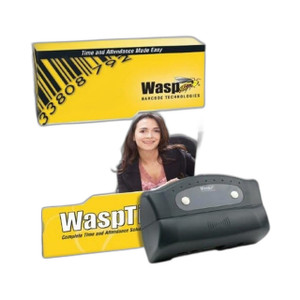
Wasp 633808550738 Wasptime RFID Badges Seq 1-50 - 50-Pack
50-badge RFID credential set (sequential numbering 1–50) designed for Wasptime time-tracking systems and compatible access control platforms
- 50 pre-numbered RFID badges (seq 1–50) eliminate manual encoding at enrollment.
- Native integration with Wasptime time-tracking software speeds workforce provisioning.
- Sequential IDs map directly to employee records, reducing credential misassignment risk.
Usually Ships in 2-3 Weeks Free shipping over $499$149.00 $138.99 Save $10.01 -
Save $10.01

Wasp 633808550745 Wasptime RFID Badges Seq 51-100 - 50-Pack
Pack of 50 pre-numbered RFID badges numbered 51 through 100, engineered for deployment with Wasptime time and attendance systems
- Pack of 50 factory-encoded badges (51–100) eliminates manual numbering at deployment.
- Sequential IDs tie each clock-in to a specific employee record, blocking buddy-punching.
- Passive RFID design requires no power or configuration before distribution to staff.
Usually Ships in 2-3 Weeks Free shipping over $499$149.00 $138.99 Save $10.01 -
Save $10.01

Wasp 633808550752 Wasptime RFID Badges Seq 101-150 - 50-Pack
50-badge RFID credential set numbered sequentially from 101 to 150, designed for integration with Wasptime attendance and time-clock systems
- 50 pre-numbered passive RFID badges (101–150) eliminate manual ID assignment at enrollment.
- Sequential numbering maps directly to Wasptime badge templates, reducing configuration conflicts.
- No power or wiring required; badges distribute immediately into existing Wasptime reader infrastructure.
Usually Ships in 2-3 Weeks Free shipping over $499$149.00 $138.99 Save $10.01 -
Save $10.01

Wasp 633808550769 Wasptime RFID Badges Seq 151-200 - 50-Pack
Pack of 50 sequential RFID badges (numbers 151–200) for Wasptime time and attendance systems
- Pack of 50 sequential RFID badges (IDs 151–200) simplifies bulk staff assignment.
- Sequential numbering aligns badge IDs directly with HR records and assignment logs.
- Compatible with Wasptime RFID reader terminals running current firmware versions.
Usually Ships in 2-3 Weeks Free shipping over $499$149.00 $138.99 Save $10.01 -
Save $10.01

Wasp 633808550776 Wasptime RFID Badges Seq 201-250 - 50-Pack
Pack of 50 pre-programmed RFID badges (numbered 201–250) designed for Wasptime time-tracking systems and integrated access-control environments
- Pack of 50 pre-programmed badges covers sequence 201–250 for scalable deployments.
- Sequential numbering streamlines badge assignment and inventory tracking in large sites.
- Drop-in credentials for Wasptime time-clock and access-control readers—no field programming needed.
Usually Ships in 2-3 Weeks Free shipping over $499$149.00 $138.99 Save $10.01 -
Save $10.01

Wasp 633808551087 Wasptime RFID Badges Seq 451-500
Pre-numbered RFID badge set (sequence 451–500) designed for integration with Wasptime time-and-attendance systems
- Pre-encoded sequence 451–500 eliminates field programming; enroll via admin console only.
- 50 consecutive RFID badges slot into progressive issuance workflows without numbering gaps.
- Compatible exclusively with Wasptime RFID readers; verify reader type before deployment.
Usually Ships in 2-3 Weeks Free shipping over $499$149.00 $138.99 Save $10.01