
Showing Results for Fire Alarm Panels
-
Save $208.50

Altronix ENTRADA2DMK IP Access FACP Adapters. Facilitates
IP adapter bridging fire alarm panels to access control networks
- Two relay outputs for FACP signaling and cross-system event coordination
- IP-based network protocol integration without replacing legacy panels
- Compact module fits panel-mount or rack installation in retrofit setups
Usually Ships in 2-3 Weeks Free shipping over $499$449.49 $240.99 Save $208.50 -
Save $1,009.71

Potter AFC-1000E
Multi-zone fire alarm panel with conventional and addressable detector support
- Supports both conventional and addressable detector networks for retrofit or new builds.
- Field-programmable zone configuration enables custom alarm verification and notification routing.
- AC/DC power inputs with battery backup ensure continuous operation during outages; NFPA 72 compliant.
Usually Ships in 2-3 Weeks Free shipping over $499$2,763.70 $1,753.99 Save $1,009.71 -
Save $101.61
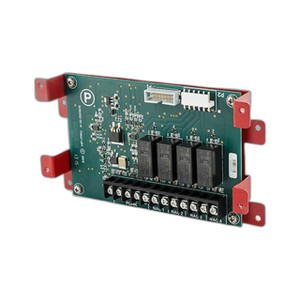
Potter CA-4064 Class A Expander for PFC-4064
Class A expander for Potter PFC-4064 fire alarm panels
- Class A supervised wiring ensures fault-tolerant operation if one circuit leg fails.
- Expands addressable device and zone capacity on PFC-4064 panels without panel replacement.
- Compact 4" × 6" × 1" form factor simplifies retrofit installs; backed by a 5-year warranty.
Usually Ships in 2-3 Weeks Free shipping over $499$283.60 $181.99 Save $101.61 -
Save $213.91

Potter IDC-6 Initiating Device Circuit Expander
IDC expander for Potter panels—add detector zones without replacing hardware
- Slots into Potter panel expansion bays to add IDC zones without replacing hardware.
- Mounts in panel, accessory cabinet, AE-2, AE-8, or AE-14 for flexible deployment.
- Rated for 32°–120°F operation, supporting smoke, heat, and pull-station circuits.
Usually Ships in 2-3 Weeks Free shipping over $499$580.90 $366.99 Save $213.91 -
Save $60.16
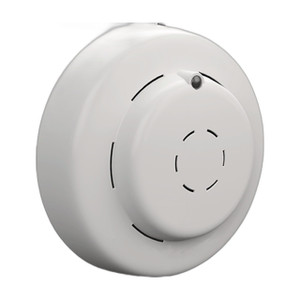
Potter PAD100-CD Carbon-Monoxide Detector
Hardwired CO detector for Potter control panels with supervised zone input
- Supervised zone input enables fault and tamper detection across multi-zone Potter panels.
- Addressable low-voltage wiring simplifies integration into existing commercial alarm infrastructure.
- Compact ceiling-mount form factor (36 mm, 92 g) fits HVAC returns and equipment rooms easily.
Usually Ships in 2-3 Weeks Free shipping over $499$171.15 $110.99 Save $60.16 -
Save $81.51
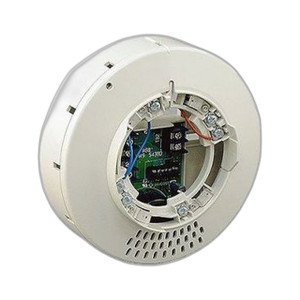
Potter PAD100-LFSB Addressable Sounder Base
Addressable low-frequency sounder base for Potter fire alarm systems
- Addressable operation enables per-device control and status reporting on Potter alarm networks.
- Low-frequency sounder output delivers audible notification suited for commercial and institutional spaces.
- Compact 2.75 in profile supports ceiling or wall mounting to simplify installation placement.
Usually Ships in 2-3 Weeks Free shipping over $499$229.50 $147.99 Save $81.51 -
Save $48.51

Potter PAD100-SB Addressable Sounder Base
Addressable sounder base for individual device control on fire alarm loops
- Addressable loop architecture enables individual sounder control and device-level monitoring.
- Integrates directly into addressable fire alarm loops, eliminating separate zone control relays.
- Backed by a 5-year manufacturer warranty, reducing long-term maintenance risk on installed loops.
Usually Ships in 2-3 Weeks Free shipping over $499$138.50 $89.99 Save $48.51 -
Save $122.56
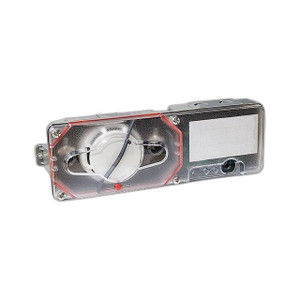
Potter PAD200-DUCT Analog Addressable Duct Detector
Analog addressable duct detector for HVAC smoke monitoring
- Analog addressable loop reports exact detector address and live smoke levels to the panel.
- UL 268 and UL 521 listed; UUKL listed for smoke control system integration.
- Operates on 24 VDC across 32°F–120°F ambient range for standard commercial HVAC installs.
Usually Ships in 2-3 Weeks Free shipping over $499$332.55 $209.99 Save $122.56 -
Save $182.01

Potter PAD200-DUCTR Analog Addressable Duct Detector
Analog addressable duct detector for HVAC smoke monitoring
- Analog addressable output streams continuous smoke-level data directly to the control panel.
- Eliminates auxiliary relay modules by integrating natively with addressable fire alarm wiring.
- UUKL Listed for Smoke Control; rated for ambient temps 32°F–120°F with a 5-year warranty.
Usually Ships in 2-3 Weeks Free shipping over $499$496.00 $313.99 Save $182.01 -
Save $98.86

Potter PAD200-PCD Smoke & Carbon Monoxide Detector
Dual smoke & CO detector combines two life-safety sensors in one unit
- Photoelectric smoke plus electrochemical CO sensing in one ceiling-mount unit.
- Meets NFPA 72 smoke and UL 2075 CO detection requirements from a single device.
- On-board test button verifies both sensors in the field without removing the unit.
Usually Ships in 2-3 Weeks Free shipping over $499$270.85 $171.99 Save $98.86 -
Save $131.76

Potter PAD200-PCHD Smoke / Heat / Carbon Monoxide Detector
Triple-threat detector for smoke, heat, and carbon monoxide in one unit
- Combines optical smoke, thermal heat, and electrochemical CO sensors in one unit.
- Reduces ceiling penetrations and device count per monitoring point at installation.
- UUKL Listed for Smoke Control; backed by a 5-year manufacturer warranty.
Usually Ships in 2-3 Weeks Free shipping over $499$369.75 $237.99 Save $131.76 -
Save $44.51
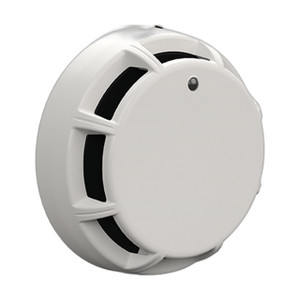
Potter PAD200-PD Photoelectric Smoke Sensor
Photoelectric smoke sensor for ceiling mount in commercial fire systems
- Photoelectric technology targets visible smoke particles for early smoldering fire detection.
- UUKL Listed for Smoke Control, supporting life safety compliance in commercial deployments.
- Ceiling-mount form factor at 1.35" height integrates cleanly into standard fire alarm infrastructure.
Usually Ships in 2-3 Weeks Free shipping over $499$126.50 $81.99 Save $44.51 -
Save $52.46

Potter PAD300-CD
Compact multi-reader access control panel for small to mid-size deployments
- Multi-reader support enables flexible access point configuration across small to mid-size sites.
- UUKL Listed for Smoke Control, confirming compliance for integrated life-safety deployments.
- Compact ceiling-mount form factor simplifies retrofit installs with a 1.22-unit height profile.
Usually Ships in 2-3 Weeks Free shipping over $499$148.45 $95.99 Save $52.46 -
Save $42.16
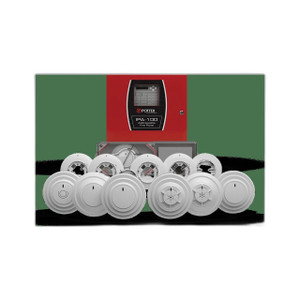
Potter PAD300-DD
Multi-door access control panel with 12V/24V strike outputs
- Controls electronic strike outputs at 12V or 24V for flexible door hardware compatibility.
- Supports battery backup input for fail-secure operation during power loss events.
- DIN rail or surface mount options simplify installation in varied enclosure types.
Usually Ships in 2-3 Weeks Free shipping over $499$120.15 $77.99 Save $42.16 -
Save $111.66
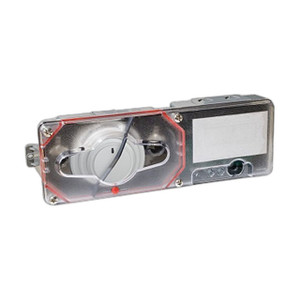
Potter PAD300-DUCT Duct-Mounted Smoke Detector
Photoelectric duct smoke detector for supply/return air plenums
- Photoelectric sensing catches smoldering fires in duct airstreams before smoke spreads.
- Integrates with conventional supervised alarm loops for broad panel compatibility.
- Compact 13.5" x 4.5" x 2.25" form factor fits standard commercial ductwork installations.
Usually Ships in 2-3 Weeks Free shipping over $499$300.65 $188.99 Save $111.66 -
Save $168.71

Potter PAD300-DUCTR
Networked multi-door access control with encrypted credential support
- Wiegand-compatible inputs support HID, Salto, Nedap, and other major reader platforms.
- Ethernet-networked architecture enables remote credential provisioning and access management.
- Encrypted credential transmission secures authentication data across all connected entry points.
Usually Ships in 2-3 Weeks Free shipping over $499$454.70 $285.99 Save $168.71 -
Save $34.86

Potter PAD300-HD
Networked access control panel with HD encryption for multi-door facilities
- HD encryption secures credential transmission across all networked door control points.
- Network-based communication enables remote policy updates without on-site panel access.
- Supports Wiegand and network protocols, compatible with standard strikes and readers.
Usually Ships in 2-3 Weeks Free shipping over $499$93.85 $58.99 Save $34.86 -
Save $33.91

Potter PAD300-IB
Multi-door access controller with encrypted credential handling
- Multi-door controller architecture supports distributed access management across facility zones.
- Encrypted credential transmission in transit reduces risk of cloning and unauthorized access.
- Network-ready connectivity enables remote monitoring and credential updates without on-site visits.
Usually Ships in 2-3 Weeks Free shipping over $499$96.90 $62.99 Save $33.91 -
Save $74.01

Potter PAD300-LFSB
Multi-door access control panel for proximity and magnetic stripe cards
- Centralizes multi-door credential verification for proximity and magnetic stripe cards.
- On-panel cardholder database sustains access decisions during network interruptions.
- Operates at 12V or 24V with rack mount for flexible panel room integration.
Usually Ships in 2-3 Weeks Free shipping over $499$203.00 $128.99 Save $74.01 -
Save $87.96

Potter PAD300-PCD
Multi-door access controller with modular expansion for mid-to-large installations
- Modular multi-door architecture scales with phased mid-to-large installations.
- Network-ready design supports centralized or distributed deployment without vendor lock-in.
- UUKL Listed for Smoke Control; backed by a 5-year manufacturer warranty.
Usually Ships in 2-3 Weeks Free shipping over $499$237.95 $149.99 Save $87.96 -
Save $39.71
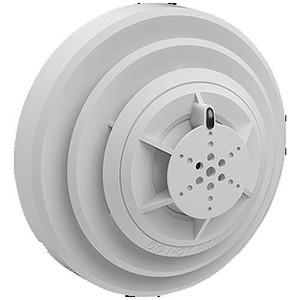
Potter PAD300-PHD
Photoelectric smoke/heat detector with selectable sensitivity for reliable dual-mode protection
- Four selectable sensitivity levels (1.1–3.5%/ft) reduce nuisance alarms in challenging environments.
- 300 µA operating current integrates with legacy 4-wire or loop-powered systems without added hardware.
- DIP switch addressing enables field replacement without recommissioning or programming tools.
Usually Ships in 2-3 Weeks Free shipping over $499$110.70 $70.99 Save $39.71 -
Save $39.71
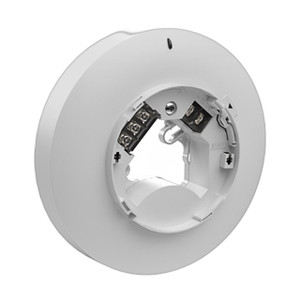
Potter PAD300-RB
Multi-door strike controller with 24VDC power distribution for access control
- Controls multiple electric door strikes from a single 24VDC distribution point.
- Supports fail-safe and fail-secure modes to meet diverse door hardware requirements.
- Rack-mount form factor simplifies panel-room integration in new or retrofit installs.
Usually Ships in 2-3 Weeks Free shipping over $499$110.70 $70.99 Save $39.71 -

Potter PFC-4410G3 Releasing Control Panel
7-zone fire suppression control panel with programmable cross-zoning logic
- Seven Class B initiating circuits and four output circuits cover small-to-medium suppression zones.
- AND/OR cross-zoning logic requires multi-detector agreement before triggering, reducing false agent release.
- UL 864-11, ULC S527-19, and NFPA 12/72/750 listings satisfy AHJ requirements across suppression types.
Usually Ships in 2-3 Weeks Free shipping over $499$1,127.99