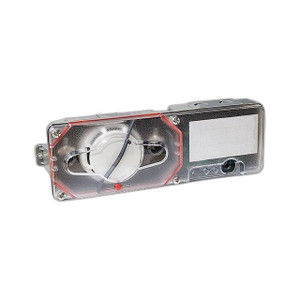
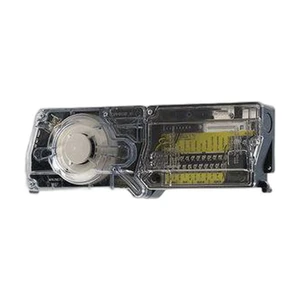
Potter PAD300-DUCT Duct-Mounted Smoke Detector
Overview
The Potter PAD300-DUCT is a photoelectric duct-mounted smoke detector engineered specifically for installation inside HVAC ductwork and air plenums. Unlike ceiling-mounted detectors that respond only after smoke reaches occupied spaces, the PAD300-DUCT detects smoke and combustion byproducts directly in the airstream — meaning you catch problems in supply or return ducts before they spread through a building. This is particularly valuable in large commercial and industrial facilities where smoke can travel significant distances through ductwork before becoming visible in occupied areas. The detector integrates with standard conventional fire alarm loops, so it works with Potter control panels and most third-party fire alarm systems without requiring addressable or networked infrastructure.
Key Features
- Photoelectric Sensing Technology: Responds effectively to smoldering fires and visible smoke — the types most commonly found in HVAC environments where materials may burn slowly or incompletely. This sensor type is less prone to nuisance alarms from dust compared to ionization detectors.
- Duct-Mounted Form Factor: Mounts directly inside ductwork in the main airstream, ensuring the detector intercepts smoke before it can bypass or dilute in the surrounding building. Positioning in active airflow is critical for reliable detection in high-velocity ducts.
- Conventional Alarm Loop Integration: Communicates via standard supervised alarm circuits, reducing panel complexity and wiring cost. No addressable modules, no complex configuration — just a simple two-wire supervised loop connection.
- HVAC Environment Hardening: Housing and sensing chamber are engineered to withstand the temperature swings, humidity, and airflow velocities present in active ductwork. This prevents premature degradation or false alarms caused by environmental stress.
- Code-Compliant Design: Meets fire safety standards requiring duct detection in commercial HVAC systems. Many jurisdictions mandate duct detectors in return air plenums and supply ducts serving large areas or multiple fire zones.
- Centralized Monitoring Readiness: Alarm signals integrate into building automation and remote notification systems through your fire alarm control panel, enabling 24/7 supervised response without local sirens.
Integration & Compatibility
The PAD300-DUCT is compatible with Potter fire alarm control panels and conventional fire alarm systems from other manufacturers that accept standard supervised detector inputs. Wiring is straightforward — two-wire supervised alarm loop connection with no special modules or software configuration required. Output signals provide alarm and trouble indication to the control panel, which then routes notifications to your monitoring center or building management system. The detector supports the supervised loop architecture typical of commercial fire alarm installations, meaning a break or short in the detector wiring will trigger a trouble condition at the panel rather than a masked failure.
Deployment Considerations
Before installation, verify that your ductwork dimensions accommodate the detector body and that airflow velocity is within design limits — excessive velocity can prevent proper airflow through the sensing chamber. Building codes typically specify placement of duct detectors in return air plenums serving multiple zones and in supply ducts where smoke might otherwise enter occupied spaces undetected. Coordinate detector locations with your fire alarm system designer and local AHJ to ensure compliance with adopted codes (NFPA 72 in most U.S. jurisdictions). Plan for periodic cleaning — dust and debris accumulation in HVAC systems can impair optical sensing, so schedule maintenance aligned with your HVAC filter change intervals.
Frequently Asked Questions
Q: Can the PAD300-DUCT be installed in both supply and return air ducts?
A: Yes. The detector is designed for both supply and return ductwork. Code requirements typically mandate return air duct detection; supply duct detection is often required in high-occupancy or critical-use buildings. Consult your local AHJ and NFPA 72 for applicable requirements in your jurisdiction.
Q: Does the PAD300-DUCT require a special control panel, or will it work with conventional fire alarm systems I already have?
A: The PAD300-DUCT integrates with standard conventional fire alarm loops. It works with Potter panels and third-party systems that accept conventional supervised detectors — no addressable modules or proprietary interfaces required.
Q: What is the maintenance requirement for the PAD300-DUCT?
A: Photoelectric detectors accumulate dust in HVAC environments, which can reduce sensitivity. Schedule cleaning and inspection at least annually or more frequently if your HVAC system has high dust loads. Some installations perform cleaning every 6 months in industrial settings.
Q: How does the PAD300-DUCT compare to ionization duct detectors?
A: Photoelectric sensors respond well to visible and smoldering smoke, while ionization detectors are more sensitive to flaming fires with smaller particulates. For HVAC duct detection, photoelectric is generally preferred because smoldering fires in ductwork are more common and because photoelectric detectors have lower nuisance alarm rates in dusty environments.
Q: Is the PAD300-DUCT compatible with wireless or addressable fire alarm systems?
A: The PAD300-DUCT is a conventional supervised detector. It is not a wireless transmitter and does not operate on addressable protocols. If your system uses addressable detectors, consult with your system designer about compatible alternatives or hybrid loop configurations.
Ted PerryPerspective based on aggregated IP Security Depot and affiliated engineering team experience.
The PAD300-DUCT closes a real coverage gap in commercial fire detection. In my experience evaluating duct detection strategies, the choice between photoelectric and ionization technology matters — photoelectric performs reliably in the smoldering fire scenarios most common in HVAC systems, and it exhibits fewer nuisance trips in dusty environments. The Potter PAD300-DUCT integrates cleanly into conventional fire alarm loops, which simplifies both the initial design phase and ongoing troubleshooting for integrators and facilities teams.
Technical Highlights:
- Photoelectric Sensing: Targets visible and smoldering smoke — the combustion signatures most likely to originate in or propagate through ductwork before reaching ceiling detectors in occupied spaces.
- Conventional Loop Architecture: Standard supervised two-wire connection eliminates the need for addressable modules or complex configuration, reducing BOM cost and integration time compared to addressable duct detectors.
- HVAC-Rated Construction: Housing withstands the temperature and humidity cycling typical of active ductwork, preventing premature sensor drift or environmental false alarms.
Deployment Considerations:
- Verify ductwork dimensions and airflow velocity before installation — excessive velocity can impair proper airflow through the sensing chamber, and inadequate space may make commissioning difficult.
- Plan for routine maintenance: dust and debris accumulation in HVAC systems degrade photoelectric sensor performance; annual or semi-annual cleaning is standard depending on the environment.
- Coordinate detector placement with your local fire marshal and AHJ — code requirements for duct detection vary by jurisdiction and occupancy class, and placement strategy directly impacts detection reliability.
The PAD300-DUCT is the right choice for conventional fire alarm systems serving commercial buildings, warehouses, and industrial facilities where HVAC-based smoke detection is mandated or strongly recommended. If your system already uses conventional loops and your facility code-requires duct detection, this detector integrates without panel replacement or addressable upgrades.