
RFID Reader Selection Guide
A technical selection guide for industrial RFID readers. Covers UHF, HF, and LF frequency bands, fixed and handheld form factors, read range and power class selection, antenna pairing, tag compatibility, and regional frequency regulations for U.S., EU, Asia-Pacific, and global deployments.
In This Guide
RFID is three distinct technologies sharing a name. Picking the wrong band is the most expensive mistake in the category because LF, HF, and UHF have different physics, different tag options, different read ranges, and different regulatory treatment. The frequency choice drives every downstream decision.
Frequency Bands: UHF vs HF vs LF
LF: 125-134 kHz
Low frequency. Short read range (typically 10 cm). Works well through water and metal because of long wavelength. Primary use cases: animal tagging (cattle, pets), factory floor tool tracking in metal-heavy environments, vehicle immobilizer systems, industrial access badges. Slower read rate than HF or UHF. Tags are inexpensive but low-capacity.
HF: 13.56 MHz
High frequency. Read range 10 cm to 1 m. Supports richer tag memory and faster data transfer than LF. Primary use cases: smart cards (access control, payment), library book tracking, pharmaceutical anti-counterfeiting, NFC mobile phone interactions. ISO 14443 and ISO 15693 are the dominant standards. NFC is a specific HF subset optimized for phone-to-tag interaction.
UHF: 860-960 MHz
Ultra high frequency. Read range 1 m to 12 m (fixed readers) or up to 30 m with high-gain antennas and line-of-sight. Primary use cases: warehouse inventory, retail loss prevention, asset tracking, supply chain, vehicle tolling. EPC Gen2 (ISO 18000-63) is the dominant standard. Passive UHF tags cost $0.05-$0.50 in volume. Active UHF tags (battery-powered, up to 100 m range) cost $5-$50.
For inventory, asset tracking, and warehouse applications, UHF is almost always the right choice. For access control and credential applications, HF is standard. For metal-heavy industrial tagging and livestock, LF is standard.
Fixed vs Handheld Readers
Fixed Reader (Stationary)
A stationary reader mounted at a chokepoint (loading dock, conveyor, doorway) with external antennas. Reads tags automatically as they pass. Primary use cases: receiving/shipping portals, conveyor reads in manufacturing, chokepoint asset tracking. Requires power (typically PoE or 24V DC) and network connectivity. Higher upfront cost ($1,000-$5,000) but captures data without human intervention. See fixed RFID readers.
Handheld Reader
A portable device with integrated antenna, barcode scanner, and often a touch screen and keypad. Primary use cases: inventory counting, cycle counting, mobile asset locating, field service ticketing. Runs on battery. Lower upfront cost ($1,500-$4,000 per unit) but requires an operator. The battery of handheld readers is the most common failure point — plan for spare batteries and a charging station. See handheld RFID readers.
Vehicle-Mounted / Forklift
Rugged reader mounted on a forklift or AGV, reading tags on pallets as they are handled. Reduces inventory labor by capturing reads at point of handling. Requires vibration-rated mounting and integration with the warehouse management system (WMS). Common in large distribution centers. Typically UHF, high-power, directional antenna.
Desktop Reader
A small reader connected to a PC via USB. Used for near-field HF applications like tagging inventory at receipt or encoding cards/badges. Short range (10-20 cm). Low cost ($200-$600). Common in pharmacy dispensing, library check-in, and card personalization stations.
Featured RFID Systems
Fixed readers, handheld readers, antennas, and printers for warehouse, retail, and industrial RFID deployments. Pair components by frequency band and WMS integration requirements.
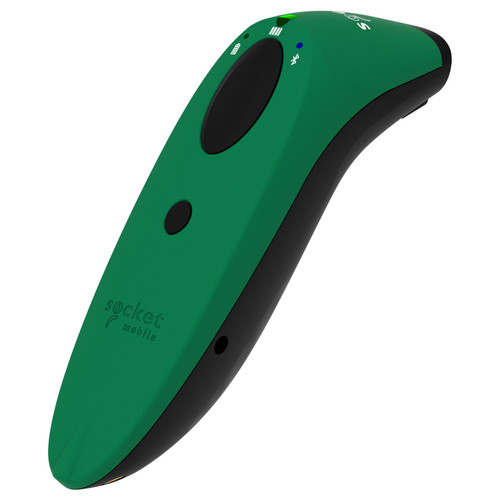
Socket Mobile TX4133-3374 1d/2d Nfc-rfid Scanner
TX4133-3374
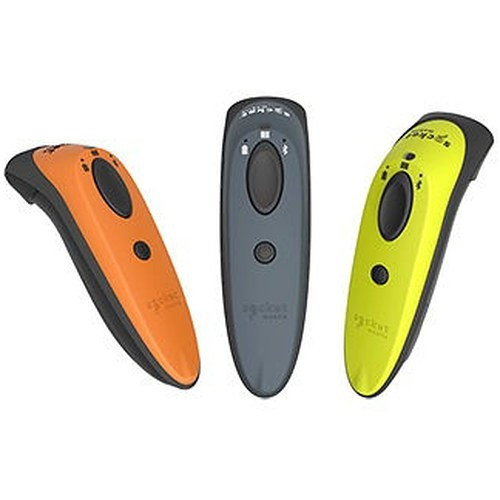
Socket Mobile TX4136-3377 1d/2d Nfc-rfid Scanner
TX4136-3377
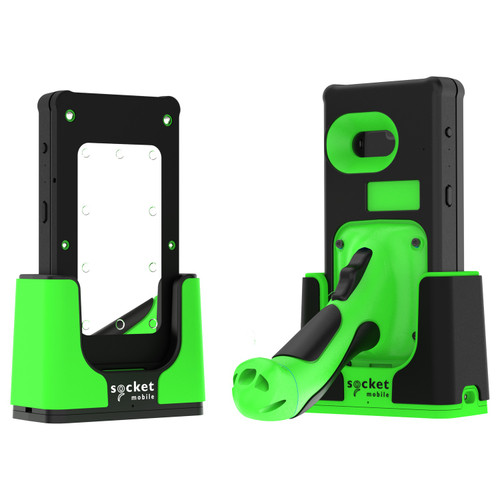
Socket Mobile TX4137-3378 DScan D751 NFC-RFID Scanner
TX4137-3378
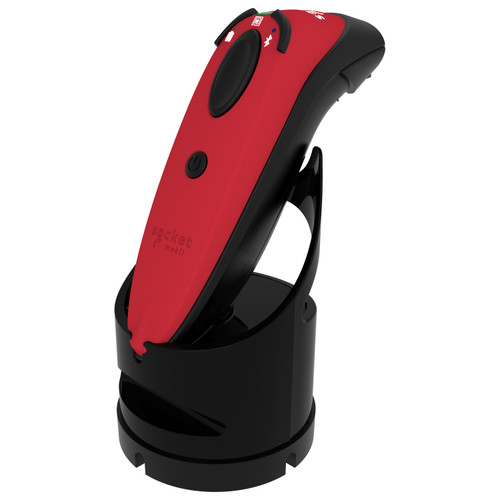
Socket Mobile TX4139-3380 NFC-RFID Scanner with Charging
TX4139-3380
Read Range & Power
Published Range vs Real Range
Manufacturer published range assumes an ideal environment — line-of-sight, no metal reflectors, no water absorption, and a freshly manufactured reference tag. Real-world range is typically 50-70% of published. A reader rated at 12 m typically delivers 6-8 m in a real warehouse. Benchmark in your actual environment before committing to an architecture.
Transmit Power (EIRP)
UHF readers are rated by effective isotropic radiated power (EIRP). U.S. FCC allows up to 4 W EIRP on standard UHF channels. EU ETSI limits are 2 W ERP (approximately 3.3 W EIRP). Asia-Pacific varies by country. A reader rated for 30 dBm (1 W) at the port pairs with a 6 dBi antenna for 36 dBm EIRP (4 W) — maxing U.S. limit. Over-specifying power does not improve range beyond the regulatory ceiling.
Antenna Gain & Polarization
Antenna gain adds to transmit power. A 6 dBi antenna roughly doubles the range of a 3 dBi antenna at the same reader power. Circular polarization reads tags in any orientation but with 3 dBi loss. Linear polarization reaches further but only for tags in a specific orientation. Use circular for dock doors and mixed-orientation pallets; linear for conveyor and fixed-orientation applications. See RFID antennas.
Multi-Antenna Fixed Readers
Most fixed UHF readers support 2, 4, or 8 antenna ports. A dock door typically uses 2-4 antennas to create an overlapping read zone that catches tags regardless of pallet position. More antennas enable larger read zones but require careful cable-loss planning. Use low-loss LMR-400 or equivalent cable for antenna runs over 3 m.
Regional Frequency Regulations
U.S. & North America
UHF: 902-928 MHz (915 MHz band). FCC Part 15 allows up to 4 W EIRP. Readers certified for U.S. market are tuned to this band. HF: 13.56 MHz worldwide. LF: 125-134 kHz worldwide.
European Union
UHF: 865-868 MHz (865.6-867.6 MHz usable). ETSI EN 302 208 allows up to 2 W ERP. Readers certified for EU are tuned to this band; U.S. readers are not legal in EU and vice versa. Verify regional certification at purchase, not after installation.
Asia-Pacific
Varies by country: Japan 916-920 MHz, China 920-925 MHz, Australia 918-926 MHz, India 865-867 MHz. Most modern UHF readers support multi-region firmware selectable at installation. For global deployments, specify a reader with regional firmware packs and plan per-country certification verification.
Featured Handheld Readers
Handheld RFID readers for inventory counting, cycle counts, mobile asset tracking, and field-service applications. Pair with WMS for bidirectional inventory updates.
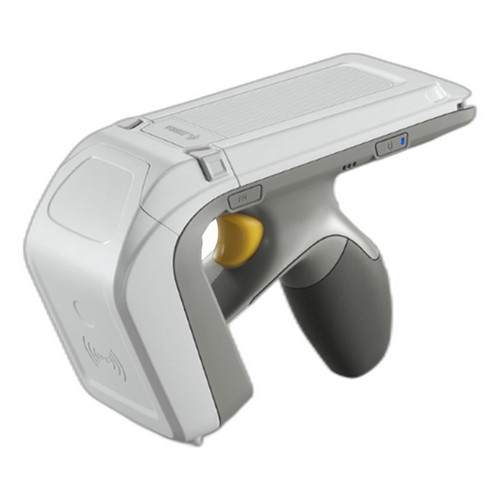
Zebra RFD4030-G00B700-US RFID Mobile Reader
RFD4030-G00B700-US
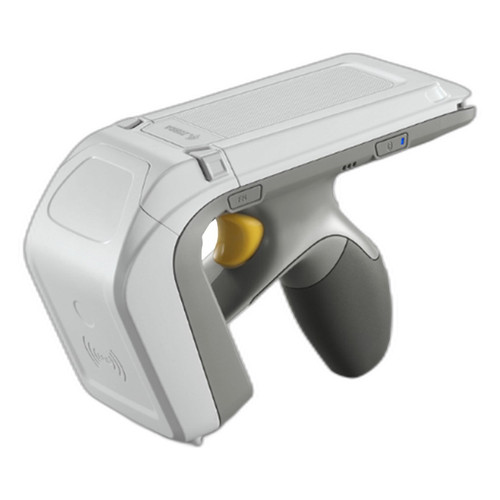
Zebra RFD9091-G30G700-US RFD90 Premium Plus Long Range RFID
RFD9091-G30G700-US
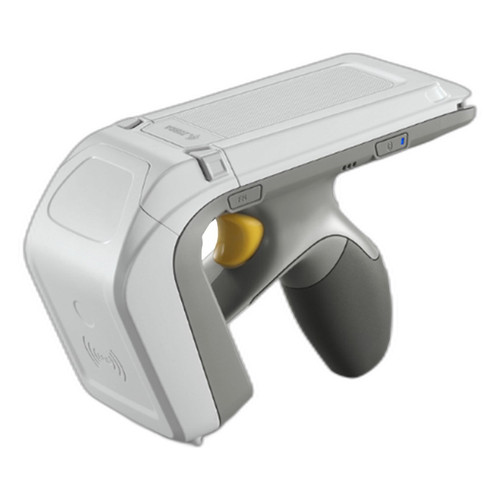
Zebra RFD4031-G10B700-US RFD40 Premium Plus Mobile Computer
RFD4031-G10B700-US
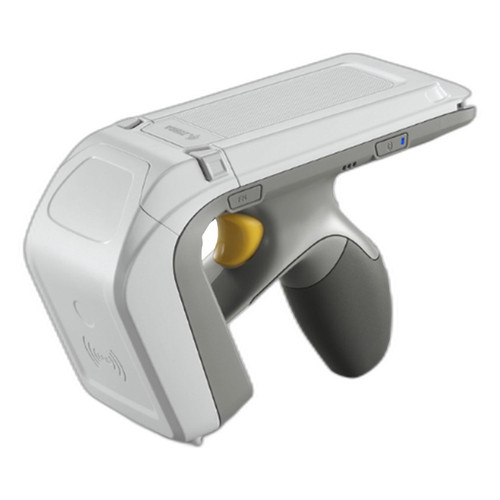
Zebra RFD4031-G00B700-US Premium RFID Mobile Reader
RFD4031-G00B700-US
Use Cases by Industry
Warehouse & Distribution
UHF fixed readers at dock doors and conveyor lines, handheld readers for cycle counts. Integration with WMS (SAP EWM, Manhattan, NetSuite) for real-time inventory updates. Typical ROI: 20-40% reduction in inventory labor, 50-80% reduction in cycle count time.
Retail Loss Prevention
UHF fixed readers at store entrances and POS, tag on every item. Reduces shrinkage by tracking tag movement, enables "smart shelves" for stock-level alerts. Typically integrated with existing EAS (electronic article surveillance) for unified alarm.
Manufacturing & Work-in-Progress
UHF tags on work-in-progress items, fixed readers at station transitions, handheld readers for audit. Enables real-time WIP tracking, bottleneck detection, and quality traceability. In metal-heavy environments, on-metal tags and strategically placed antennas are required.
Healthcare Asset & Pharmaceutical
HF tags for medication unit identification (anti-counterfeiting, dispensing traceability), UHF tags for mobile medical equipment tracking (IV pumps, telemetry units). Active tags for high-value equipment. Integration with hospital information systems for asset-availability dashboards.
Livestock & Agriculture
LF ear tags for cattle (ISO 11784/11785), HF tags for smaller animals. Handheld and fixed readers at race/chute points for weight recording, vaccination tracking, and compliance with USDA identification requirements.
Library & Document Management
HF tags on every book or document. Fixed readers at check-out/check-in stations and entrances, handheld readers for shelf inventory. Reduces manual check-in labor and enables automated misshelving detection.
Common Mistakes
- Specifying UHF where HF or LF is needed. UHF does not read reliably through water or attached to metal. Use LF for industrial tool/fixture tagging and HF for metal-adjacent smart cards.
- Assuming published read range applies to your environment. Real range is typically 50-70% of published. Benchmark before committing to antenna count and placement.
- Using non-metal tags on metal assets. Standard paper labels are near-zero-read on metal surfaces. Specify on-metal tags with a dielectric spacer.
- Ignoring regional certification. U.S. readers are illegal in EU installations and vice versa. Multi-region firmware readers solve this for global deployments but must be provisioned correctly at installation.
- Under-sizing antenna coverage at dock doors. One antenna at a dock door misses tags in the corners. Specify 2-4 antennas per door for reliable dock reads.
- Forgetting cable loss. RF cable over 3 m with generic cable introduces loss that reduces effective range. Specify low-loss cable for all runs.
- Skipping WMS integration testing. A reader that captures tags but does not push clean data to the WMS produces orphaned reads. Test end-to-end before go-live.
- Buying tags in bulk before confirming density compatibility. Some tags work only with specific reader chipsets. Confirm tag-reader compatibility with samples before bulk purchase.
Quick Comparison: Reader Classes
| Specification | Handheld UHF | Fixed UHF | Desktop HF |
|---|---|---|---|
| Read Range | 2-6 m | 6-12 m | 10-20 cm |
| Frequency | 860-960 MHz | 860-960 MHz | 13.56 MHz |
| Transmit Power | 1 W max | 4 W EIRP (US) | 200 mW |
| Antennas | Integrated | 2-8 external | Integrated |
| Interface | Wi-Fi, USB, Bluetooth | Ethernet, PoE | USB |
| Form Factor | Portable | Wall/pole mount | PC desktop |
| Typical Price | $1,500-$4,000 | $1,000-$5,000 | $200-$600 |
| Best For | Cycle count, field | Dock, conveyor | Encoding, near-field |
Ready to Specify an RFID System?
Share your application type, environment, tag volume, and integration target (WMS, ERP, custom). We will recommend a frequency band, reader class, antenna plan, and tag type matched to your read-accuracy and throughput requirements.