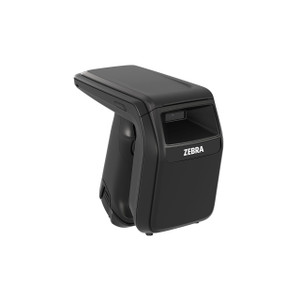
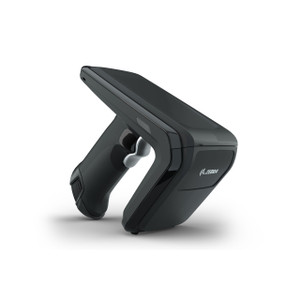
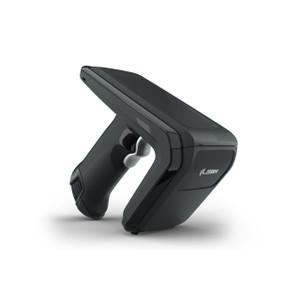
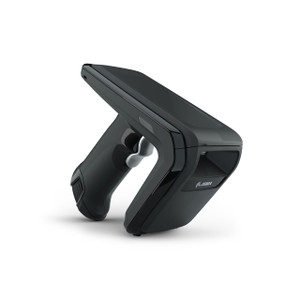
Zebra RFD4030-G00B700-US Standard-Range RFID Mobile Reader
Overview
The Zebra RFD4030-G00B700-US is a sled-form RFID mobile reader engineered for warehouse, logistics, and inventory management operations. This device delivers UHF RFID capture capability via USB-C eConnex connectivity, transforming enterprise smartphones and tablets into dedicated RFID terminals without requiring a built-in imager. The standard-range read performance suits mid-distance tag detection in high-volume distribution centers, receiving docks, and asset-tracking workflows where portability and real-time network connectivity are critical.
Key Features
- UHF RFID Standard-Range Capture: Mid-distance tag detection optimized for warehouse environments — reads RFID tags at distances suitable for typical picking, receiving, and replenishment operations without the bulk or cost of longer-range enterprise readers. Standard range keeps form factor compact and battery consumption reasonable across full-shift cycles.
- USB-C eConnex Interface: Rapid device pairing and bidirectional data flow via Zebra's eConnex connectivity standard. USB-C attachment directly to compatible mobile devices eliminates tethered scanner overhead and enables true one-handed RFID workflows during picking or cycle-count operations.
- 3160mAh Battery Pack: Delivers sustained runtime across extended inventory cycles without mid-shift recharging — a practical specification for operations running 8-10 hour picking shifts. Battery capacity is sized to balance operational runtime against handheld weight and fatigue during sustained use.
- Wi-Fi 802.11a/b/g/n/ac Support: Real-time connectivity to enterprise wireless infrastructure enables live inventory updates, immediate task dispatch, and synchronized WMS communication. Eliminates manual data batching and reduces reconciliation overhead at end-of-shift. Integrates with WPA2/WPA3 security standards and MDM (Mobile Device Management) solutions for enterprise-grade access control.
- 1.2m Drop Rating: Rugged construction tolerates accidental drops from waist height to concrete warehouse floors without failure — a meaningful durability metric for handheld equipment in active fulfillment operations. Reduces unplanned replacement costs and minimizes downtime from equipment damage.
- Sled Form Factor with Mobile Integration: Compact design attaches directly to compatible Zebra and third-party mobile devices, transforming existing enterprise smartphones or tablets into purpose-built RFID terminals. This approach eliminates the need for separate dedicated hardware while maintaining professional RFID read performance and integrating seamlessly with existing MDM workflows.
Integration and Compatibility
The RFD4030-G00B700-US (often searched as RFD4030 G00B700 US) operates as a peripheral device requiring compatible mobile software — iOS, Android, or Windows — to manage RFID session data, tag filtering, and inventory transaction logic. USB-C eConnex provides hardware-level integration with Zebra-certified mobile platforms and any third-party device supporting USB-C connectivity. Wi-Fi 802.11a/b/g/n/ac compatibility connects directly to existing enterprise wireless infrastructure. Integration with warehouse management systems (WMS) and inventory databases occurs via standard mobile application APIs and network protocols; specific integration paths depend on your deployed WMS platform and mobile software architecture.
When to Choose a Different Model
If your operation requires longer-range RFID reads (greater than standard-range performance), or if you need integrated imaging alongside RFID capture, evaluate higher-specification models within the Zebra mobile computer family that offer extended-range RFID or multi-sensor functionality. If your workflow demands a fully rugged dedicated handheld device rather than a mobile attachment, consider purpose-built enterprise RFID readers in the Zebra portfolio. Consult your warehouse automation architect to confirm standard-range performance meets your specific tag-distance and throughput requirements before deployment.
Frequently Asked Questions
Q: What mobile devices are compatible with the RFD4030-G00B700-US?
A: The reader pairs via USB-C eConnex with Zebra-certified mobile platforms and any third-party device supporting USB-C connectivity. Compatibility also depends on your deployed mobile software. Consult your mobile device management team or the device manufacturer to confirm specific device support.
Q: Does the RFD4030-G00B700-US require a separate power supply?
A: No. The reader is powered by its internal 3160mAh battery pack. Charging occurs via USB-C when docked or connected to a compatible power source.
Q: Can the RFD4030-G00B700-US integrate with our WMS?
A: Yes. Wi-Fi 802.11a/b/g/n/ac connectivity enables the reader to connect to your enterprise network, and mobile applications running on the paired device can communicate with your WMS via standard APIs and network protocols. Integration architecture depends on your WMS platform and mobile software implementation.
Q: What is the warranty on the RFD4030-G00B700-US?
A: Warranty terms are available from your authorized Zebra partner. Contact a pre-sales representative for specific coverage details and support options.
Q: Is the 1.2m drop rating suitable for warehouse concrete floors?
A: Yes. The 1.2m drop specification is rated for typical accidental drops from waist height to concrete surfaces, which is standard for warehouse deployment. For drops from greater heights or repeated impact scenarios, consult product ruggedness documentation or your integrator.
Q: Does the reader support WPA2/WPA3 security?
A: Yes. Wi-Fi connectivity supports WPA2/WPA3 security standards and integrates with MDM solutions for enterprise-grade network access control and device management.
Ted PerryPerspective based on aggregated IP Security Depot and affiliated engineering team experience.
The RFD4030-G00B700-US represents a practical pivot away from dedicated handheld RFID hardware in operations that already invest in enterprise mobile platforms. In warehouse deployments I've evaluated, this sled-based standard-range reader works well for operations that need RFID capability on existing mobile devices without the cost of dedicated hardware replacement or the weight penalty of all-in-one rugged readers. The 3160mAh battery and USB-C eConnex interface are the defining specifications here — they signal a shift toward peripheral architecture rather than monolithic device design.
Technical Highlights:
- 3160mAh Battery: Sized for full-shift operation (8–10 hours picking/receiving cycles) without mid-shift recharge. This matters because it translates to no equipment downtime for battery swaps during peak fulfillment windows — a real cost factor in high-velocity distribution centers.
- Wi-Fi 802.11a/b/g/n/ac with WPA2/WPA3: Real-time WMS synchronization eliminates end-of-shift data batching and reconciliation overhead. In cycle-count or receiving operations, live inventory updates reduce discrepancies and accelerate cycle-close procedures by hours, not minutes.
- USB-C eConnex Architecture: Direct attachment to compatible mobile devices removes the tethered scanner burden — a significant ergonomic win during 8-hour picking shifts. Operators don't fatigue from dangling cables, and device pairing is straightforward for your MDM team to provision.
- 1.2m Drop Rating: Warehouse-grade ruggedness for accidental drops from waist height. This specification is realistic for active fulfillment floors and reduces unplanned hardware replacement costs — a meaningful factor in TCO calculations.
Deployment Considerations:
- Standard-range RFID performance is the limiting spec here. If your operation routinely reads tags beyond mid-distance (e.g., loading docks with pallets stacked high), or if you require long-range asset tracking across large floor spaces, this reader won't meet your needs — confirm read distance requirements with your WMS architect before pilot deployment.
- The reader operates as a peripheral device, not a standalone terminal. Your mobile application and WMS integration layer must be designed to manage RFID session data, tag filtering, and transaction logic. If your current WMS lacks mobile RFID APIs, you'll need application development or middleware integration — a non-trivial project with integration partners.
- Pairing and provisioning depend on MDM maturity. If your organization runs loose or unmanaged mobile devices, the RFD4030-G00B700-US won't integrate cleanly — you'll need governance and MDM discipline to manage device-reader bindings, Wi-Fi credentials, and mobile application versions at scale.
Position this reader in receiving, cycle-count, and high-velocity picking operations where your workforce already runs enterprise mobile platforms and standard-range tag reads are sufficient. Skip this model if you need longer-range RFID, dedicated handheld durability, or greenfield RFID deployment without existing mobile infrastructure — evaluate purpose-built Zebra RFID terminals instead.