
Showing Results for Smoke Detectors
-
Save $0.96
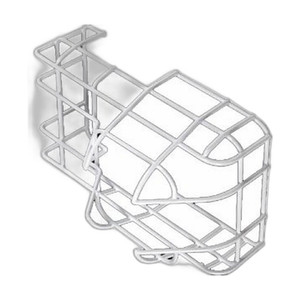
STI STI-9846 Smoke Detector Damage Stopper Controller
Damage stopper controller designed to protect smoke detection equipment from intentional or accidental interference in security-critical installations
- Protects smoke detector integrity against tampering in security-critical installations.
- Compatible with System Sensor beam units and reflective mirror assemblies.
- Mounts via four #10 x 1.5" screws; clamp hardware positions on side, top, or bottom.
Usually Ships in 2-3 Weeks Free shipping over $499$72.95 $71.99 Save $0.96 -

DMP 2W-BLX System Sensor Smoke Detector
N addressable single-point sensor module designed for integration with DMP XR Series control panels via the LX-Bus communication backbone
- Addressable LX-Bus module assigns a unique address per point on XR Series panels.
- Panel-powered via LX-Bus eliminates dedicated power runs to each sensor location.
- Single-point zone reporting delivers smoke and fire status directly to the control panel.
In stock · Ships same business day Free shipping over $499$63.99 -
Save $88.30
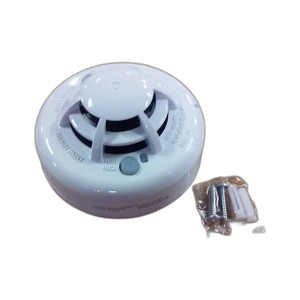
Qolsys QS5110-840 IQ Wireless Smoke Detector 345MHz
Wireless 345MHz smoke detector for Qolsys IQ panels, no hardwiring
- Wireless smoke detector on 345 MHz native to Qolsys IQ sensor net
- Battery-powered photoelectric smoke sensing - no AC pull needed
- Operates 40 to 100 degrees F for residential and light-commercial use
Usually Ships in 2-3 Weeks Free shipping over $499$164.29 $75.99 Save $88.30 -
Save $74.01

DMP 2WT-BLX System Sensor Smoke Detector
Wireless smoke detection for DMP systems without hardwiring
- Wireless communication eliminates conduit runs for faster deployment in occupied spaces.
- Integrates with DMP XR Series panels via LX-Bus as an addressable single-point module.
- Built-in fixed-temperature thermal detector triggers above 135°F for dual-mode detection.
Usually Ships in 2-3 Weeks Free shipping over $499$152.00 $77.99 Save $74.01 -
Save $111.44
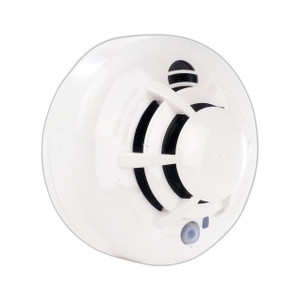
DSC PG9936 PowerG Wireless Photoelectric Smoke Detector
Wireless photoelectric smoke detector with PowerG encryption and 2 km range
- PG9936 PowerG photoelectric wireless smoke detector
- Reduces nuisance alarms vs ionization detectors
- 85 dB sounder with green/red LED indicators
In stock · Ships same business day Free shipping over $499$247.43 $135.99 Save $111.44 -

Honeywell ProSIX Wireless Smoke/Heat Detector - PROSIXSMOKEV
Wireless smoke and heat detector designed for integration with Honeywell's ProSIX wireless security platform
- Combines optical smoke and heat sensing in one wireless unit, reducing device count.
- Integrates natively with the ProSIX wireless platform for streamlined panel enrollment.
- Wireless design eliminates detector wiring runs, cutting installation time and conduit cost.
Usually Ships in 2-3 Weeks Free shipping over $499$65.99 -

Honeywell Wireless Smoke/Heat Detector - 5800SMOKEV
Wireless dual-sensor smoke and heat detector designed to integrate into Honeywell security and fire detection systems
- Dual photoelectric and thermal sensors cover smoke and heat in one wireless unit.
- 900 MHz 5800 protocol integrates with VISTA-15P through VISTA-250BPT panels.
- 2x AA batteries deliver 3–5 years of runtime, reducing maintenance intervals.
Usually Ships in 2-3 Weeks Free shipping over $499$105.99 -
Save $1,329.01

Potter Butterfly Valve Supervisory Switch
Butterfly valve supervisory switch for fire sprinkler systems with open/closed status signaling
- IP66-rated enclosure withstands washdowns and harsh facility environments.
- NEMA 1/3/4/4X/6/6P/9/13 ratings cover indoor and outdoor installation scenarios.
- Signals open/closed valve status to fire alarm panels, supporting NFPA 72 compliance.
Usually Ships in 2-3 Weeks Free shipping over $499$2,715.00 $1,385.99 Save $1,329.01 -
Save $53.11

Potter CO1224T Carbon Monoxide Detector
Supervised wall-mount CO detector with zone reporting for commercial systems
- Supervised loop architecture alerts the panel instantly if the detector fails or is removed.
- Zone-level CO reporting pinpoints the affected location, cutting response time in large facilities.
- Compact 5.1"×3.3"×1.3" wall/ceiling form factor suits retrofit and new commercial installations.
Usually Ships in 2-3 Weeks Free shipping over $499$149.10 $95.99 Save $53.11 -
Save $24.71

Potter CPS-24 Photoelectric Smoke Detector
Photoelectric in-duct smoke detector, 24VDC, low-profile 2" design
- Photoelectric light-scattering sensor reduces false alarms from duct dust and steam.
- Runs on 24VDC at 59μA standby, minimizing power-supply load across multi-detector runs.
- 2" low-profile housing fits tight plenum spaces; 2- or 4-wire base suits legacy or supervised panels.
In stock · Ships same business day Free shipping over $499$72.70 $47.99 Save $24.71 -
Save $412.01

Potter MPEX Series Manual Fire Alarm Station
Mechanical pull-lever station for conventional fire alarm panels, no power needed
- Mechanical pull-lever activation requires no power, network, or software to trigger.
- Hard-wired conventional circuit integrates directly into monitored alarm zones on standard panels.
- Compact 6.4" × 3.1" × 4.1" form factor fits standard backboxes in commercial and industrial installs.
In stock · Ships same business day Free shipping over $499$1,258.00 $845.99 Save $412.01 -
Save $1,316.51

Potter OSYSU-EX-O Outdoor Explosion Proof OS&Y
Explosion-proof OS&Y valve for hazardous outdoor fire suppression
- Explosion-proof design meets hazardous location codes for Class I and Class II sites.
- IP66-rated housing resists dust ingress and high-pressure water jets in outdoor installs.
- OS&Y configuration gives visual stem position confirmation without opening the valve body.
Usually Ships in 2-3 Weeks Free shipping over $499$2,702.50 $1,385.99 Save $1,316.51 -
Save $111.66
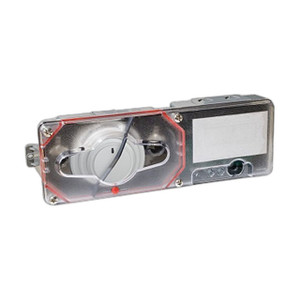
Potter PAD300-DUCT Duct-Mounted Smoke Detector
Photoelectric duct smoke detector for supply/return air plenums
- Photoelectric sensing catches smoldering fires in duct airstreams before smoke spreads.
- Integrates with conventional supervised alarm loops for broad panel compatibility.
- Compact 13.5" x 4.5" x 2.25" form factor fits standard commercial ductwork installations.
In stock · Ships same business day Free shipping over $499$300.65 $188.99 Save $111.66 -
Save $26.34

STI 50mm Spacer - STI-8201-SS
50mm stainless steel spacer engineered to support proper mounting clearance and frame alignment within STI Damage Stopper® protective assemblies for
- Stainless steel build resists corrosion in moisture and light salt-spray environments.
- Ensures flush frame seating in Damage Stopper II and Weather Stopper II assemblies.
- Aligns with standard 7mm masonry drill patterns for straightforward retrofit installs.
Usually Ships in 2-3 Weeks Free shipping over $499$69.33 $42.99 Save $26.34 -
Save $16.66
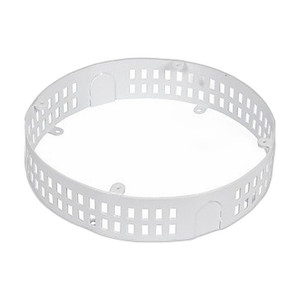
STI 50mm Spacer - STI-8201-W
50mm white coated spacer engineered to maintain proper standoff distance between smoke detectors and STI Damage Stopper protective devices during
- 50mm standoff depth preserves detector optics and prevents sensor interference at mount.
- White-coated finish resists corrosion and blends with standard commercial interior surfaces.
- Compatible with Stopper II and Weather Stopper II enclosures for surface or recessed installs.
In stock · Ships same business day Free shipping over $499$44.65 $27.99 Save $16.66 -
Save $0.59

STI 8230-W Smoke Detector Stopper
Protective housing for smoke detectors in high-traffic areas with integral conduit spacer
- 16-gauge cold-rolled steel cage with white polyester coat resists corrosion in wet areas.
- Perforated matrix maintains smoke detection sensitivity while blocking physical tampering.
- Four-point retrofit mount fits existing detectors with conduit spacer—no rewiring required.
Usually Ships in 2-3 Weeks Free shipping over $499$104.58 $103.99 Save $0.59 -
Save $14.31

STI Smoke Detector Damage Stopper® - Flush Mount - STI-8100-W
Flush-mount polycarbonate protective enclosure designed to shield smoke detectors from accidental or intentional damage in commercial and
- Flush-mount polycarbonate enclosure protects smoke detectors from physical damage.
- Slot openings prevent pencil-sized obstructions while preserving airflow and optics.
- White finish blends with standard ceilings; ships with tamper-resistant fasteners.
Usually Ships in 2-3 Weeks Free shipping over $499$37.30 $22.99 Save $14.31 -
Save $39.41

STI Smoke Detector Damage Stopper® Flush Mount - - STI-8200-SS
Flush-mount protective cage built from 18-gauge (1.2mm) stainless steel, designed to shield smoke detectors from vandalism and misuse without
- 18-gauge stainless steel construction resists corrosion in harsh or food-service environments.
- Perforated cage slots block pencil access, meeting correctional and healthcare tamper standards.
- 4-point flush mount installs over existing detectors using basic hand tools—no wiring required.
Usually Ships in 2-3 Weeks Free shipping over $499$103.40 $63.99 Save $39.41 -
Save $27.51

STI Smoke Detector Damage Stopper® Flush Mount - - STI-8200-W
Flush-mount protective cage constructed from 16-gauge white coated cold-rolled steel designed to shield smoke detectors from physical damage and
- 16-gauge cold-rolled steel cage resists physical damage and tampering in high-vandalism sites.
- Perforated matrix blocks pencil-sized intrusions while allowing full smoke reach to detector.
- Tool-free flush or surface mount over existing detectors; four-point fastening for quick access.
Usually Ships in 2-3 Weeks Free shipping over $499$70.50 $42.99 Save $27.51 -
Save $0.08

STI Smoke Detector Damage Stopper® with Conduit - STI-8130
Polycarbonate protective stopper designed to shield smoke detectors from physical impact during door frame assembly, lock, and strike installation
- Polycarbonate shell blocks impact from tools and hardware during frame installation.
- Clear construction allows detector status verification without removing the stopper.
- No detector or frame modification required; mounts as a protective overlay with tamper-resistant fasteners.
Usually Ships in 2-3 Weeks Free shipping over $499$44.07 $43.99 Save $0.08 -
Save $13.36

STI STI-8100 Smoke Detector Damage Stopper Flush Mount Strike
Flush mount strike protects door hardware in access control systems
- Flush mount design integrates seamlessly into standard door frames
- Clear protective housing maintains visibility of strike mechanism
- Tamper-resistant fasteners included for secure installation
In stock · Ships same business day Free shipping over $499$35.35 $21.99 Save $13.36 -
Save $14.31
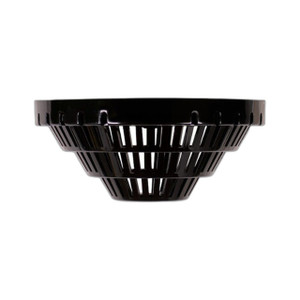
STI STI-8100-BK Smoke Detector Damage Stopper Flush Mount
Flush-mount smoke detector enclosure with TCP/IP monitoring for secure access environments
- TCP/IP-enabled remote monitoring integrates with building management and security systems
- Flush mount design fits standard smoke detector installations without surface protrusion
- Tamper-resistant fasteners included; simple installation and removal for maintenance access
Usually Ships in 2-3 Weeks Free shipping over $499$37.30 $22.99 Save $14.31 -
Save $0.51
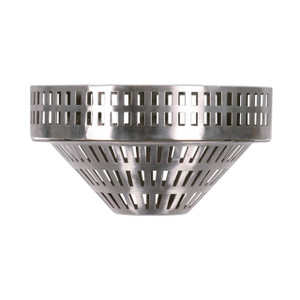
STI STI-8230-SS Smoke Detector - Conduit Spacer
Stainless steel smoke detector guard with integrated conduit spacer
- Stainless steel housing resists corrosion in kitchens, laundries, and humid spaces.
- Integrated conduit spacer eliminates separate hardware and reduces ceiling installation labor.
- Open guard geometry preserves detector airflow and optical path for reliable smoke response.
In stock · Ships same business day Free shipping over $499$164.50 $163.99 Save $0.51 -
Save $0.62

STI STI-9712 Steel Web Stopper
Patented steel web stopper shields photoelectric smoke detectors from tampering
- Patented steel web lock physically blocks detector removal and lens obstruction.
- Smoke entry and airflow remain unobstructed, preserving full detection sensitivity.
- Mounts to wall or ceiling at 4.62"×5.37"×3" with standard fasteners included.
In stock · Ships same business day Free shipping over $499$55.61 $54.99 Save $0.62 -
Save $0.63

STI STI-9713 Steel Web Stopper
Steel web protector for photoelectric smoke detectors in high-abuse areas
- 9-gauge steel web construction resists intentional damage in high-abuse environments.
- Rated -40° to 212°F with LLDPE coating; 304 SS variant supports washdown areas.
- Tool-free removal preserves routine detector maintenance without special procedures.
Usually Ships in 2-3 Weeks Free shipping over $499$47.62 $46.99 Save $0.63 -
Save $0.88
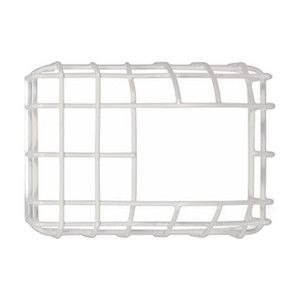
STI STI-9845 Smoke Detector Damage Stopper Controller
Smoke detector damage stopper controller that integrates protective functionality into access control and facility monitoring deployments
- Prevents tampering with smoke detectors in retail floors and access-controlled corridors.
- Compatible with System Sensor beam and detector units for integrated facility protection.
- Supports standard conduit routing and mechanical mounting for straightforward installation.
Usually Ships in 2-3 Weeks Free shipping over $499$40.87 $39.99 Save $0.88 -
Save $34.06

System Sensor 2151 Smoke Detector
Photoelectric smoke detector, 120VAC plug-in, low-profile ceiling mount
- Photoelectric sensing detects smoldering fires and visible smoke particles at 120VAC.
- Plug-in form factor mounts to standard 120VAC outlets, eliminating new hardwire runs.
- Low-profile 7.0 x 7.0 x 1.0 in. body fits tight retrofit spaces where hardwired units won't.
In stock · Ships same business day Free shipping over $499$106.05 $71.99 Save $34.06 -
Save $30.64

System Sensor 2W-B Photoelectric Smoke Detector 24VDC
24VDC photoelectric smoke detector with 2-wire supervised circuit
- 2-wire supervised circuit cuts cable runs and conduit costs on large floor plates.
- 24 VDC operation integrates directly into standard building fire alarm power buses.
- Photoelectric sensing targets smoldering fires, reducing false alarms in kitchens and mechanical rooms.
Usually Ships in 2-3 Weeks Free shipping over $499$86.63 $55.99 Save $30.64 -
Save $32.04

System Sensor 2WT-B Smoke Detector
Networked photoelectric smoke detector with TCP/IP and NFC credentials
- Stop-Drop 'N Lock head separates rough-in from trim-out, reducing install labor.
- Built-in drift compensation and smoothing algorithms cut nuisance alarms in dusty spaces.
- Mounts to 3½-inch octagonal, single-gang boxes, or drywall anchors on 35VDC systems.
Usually Ships in 2-3 Weeks Free shipping over $499$95.03 $62.99 Save $32.04 -
Save $35.31
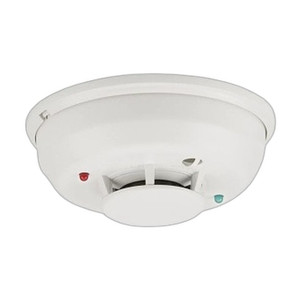
System Sensor 2WTA-B Photoelectric Smoke Detector
Dual smoke and heat detection on two-wire 35VDC loop
- Photoelectric and thermal sensing on a single 35VDC two-wire loop simplifies wiring.
- i3 drift compensation reduces false alarms in warehouses, offices, and mechanical rooms.
- Stop-Drop 'N Lock plug-in base enables fast field swap-outs without rewiring terminals.
Usually Ships in 2-3 Weeks Free shipping over $499$111.30 $75.99 Save $35.31 -
Save $41.91
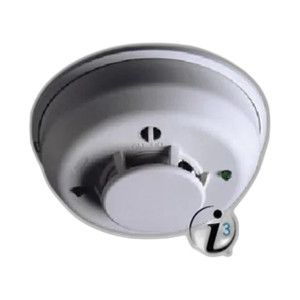
System Sensor 2WTR-B i3 Series Photoelectric Smoke Detector
Photoelectric smoke detector with TCP/IP networking and 35VDC operation
- Photoelectric sensing reduces nuisance alarms from dust and cooking smoke.
- TCP/IP communication integrates directly into existing Ethernet infrastructure.
- 35VDC operation simplifies retrofits; mounts to standard 3½-inch octagonal back box.
In stock · Ships same business day Free shipping over $499$123.90 $81.99 Save $41.91 -
Save $32.61

System Sensor 4W-B Photoelectric Smoke Detector
4-wire photoelectric smoke detector for hardwired fire alarm systems
- 4-wire circuit separates power and signal, reducing false alarms in electrically noisy spaces.
- 35VDC operation matches standard FACP output—no external power conversion or added components.
- Mounts to a 3½-inch octagonal back box; fits wall or ceiling in 0°C–49°C environments.
Usually Ships in 2-3 Weeks Free shipping over $499$96.60 $63.99 Save $32.61 -
Save $35.96
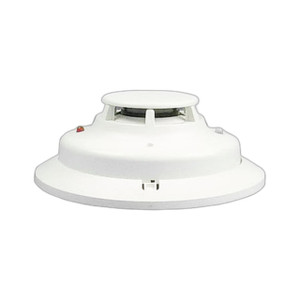
System Sensor 4WT-B Smoke Detector
4-wire addressable photoelectric smoke detector with NFC programming
- Addressable 4-wire architecture lets each detector carry a unique address, cutting zone wiring runs.
- 35VDC operation aligns with standard fire control panels, simplifying power distribution planning.
- Photoelectric sensing reduces false alarms in kitchens and parking structures vs. ionization types.
In stock · Ships same business day Free shipping over $499$103.95 $67.99 Save $35.96 -
Save $39.86

System Sensor 4WTA-B 4-Wire Photoelectric Smoke Detector
4-wire hardwired photoelectric smoke detector for 24 VDC fire systems
- Runs on 24 VDC panel supply — no added converters or external power sources required.
- NFC 13.56 MHz enables secure on-device commissioning without network or cloud access.
- Mounts to a 3½-inch octagonal back box on wall or ceiling; 5.3 in. diameter footprint.
Usually Ships in 2-3 Weeks Free shipping over $499$122.85 $82.99 Save $39.86 -
Save $52.86

System Sensor 4WTAR-B Smoke Detector
4-wire addressable photoelectric smoke detector for monitored fire systems
- 4-wire addressable protocol enables point ID and real-time status on compatible panels.
- Photoelectric detection reliably identifies smoldering fires and obscuration-based smoke.
- NFC 13.56 MHz credential support allows field configuration and testing without tools.
In stock · Ships same business day Free shipping over $499$143.85 $90.99 Save $52.86 -
Save $42.21

System Sensor 4WTR-B Photoelectric Smoke Detector
4-wire addressable photoelectric smoke detector for networked fire systems
- Addressable 4-wire loop gives the control panel exact detector-level alarm location.
- Photoelectric light-scattering detects smoldering smoke early on 24VDC loop power.
- NFC 13.56 MHz enables credential-based configuration without removing the detector.
In stock · Ships same business day Free shipping over $499$130.20 $87.99 Save $42.21