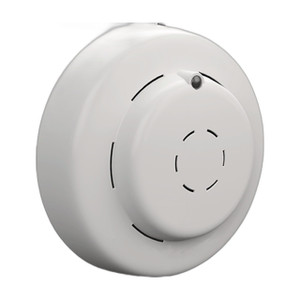
Potter CO1224T Carbon Monoxide Detector
The Potter CO1224T is a supervised carbon monoxide detector engineered for integration into commercial fire and life safety control systems. Unlike standalone consumer detectors, the CO1224T reports detection events and operational status back to a central control panel, enabling facility managers to log CO incidents, integrate them into automated response procedures, and confirm the detector is operational — critical requirements in regulated commercial environments like warehouses, data centers, parking structures, and industrial facilities.
Overview
The CO1224T delivers wall-mounted CO monitoring in a compact form factor designed for retrofit and new commercial installations. The detector operates on a supervised loop architecture common in fire alarm and building management systems — meaning the control panel continuously verifies the detector is powered and functional. If the detector is removed, wired incorrectly, or fails, the panel reports a trouble signal, preventing a silent gap in coverage. This supervised design is the primary differentiator from plug-in consumer detectors and is mandated in most commercial codes for life safety integration.
Key Features
- Supervised operation: Control panel confirms detector status in real time, eliminating blind spots in CO coverage. You'll know immediately if a detector is unplugged or failed.
- Zone-level reporting: The detector identifies its specific location when CO is detected, so you know exactly which area of your facility triggered the alarm — essential for large buildings where generic "alarm" isn't actionable.
- Audible and visual alarm indication: Built-in sounder and light alert occupants at the detector location while the control panel logs the event and triggers any integrated notification systems (email, SMS, horn/strobe relay).
- Wall-mountable installation: Designed for flush or semi-flush wall mounting near return air pathways, exhaust vents, or other code-specified locations. Mounting brackets and templates simplify installation in retrofit scenarios.
- Low-battery indication: The detector signals low battery status both visually (LED) and via the supervised loop, alerting maintenance before the battery dies and leaves the detector inoperative. No surprise failures mid-monitoring season.
- Dust-sealed sensing chamber: The CO sensor is protected from dust and debris common in industrial and warehouse environments, reducing false alarms and sensor degradation from particles.
- Reset capability: After a CO event, the detector can be reset locally or remotely through the control panel, restoring normal operation without removing the unit. Supports testing and post-alarm operation.
- Compatible with Potter and third-party panels: Integrates into supervised loops on Potter, Honeywell, Edwards, and other major fire control systems — verify loop compatibility with your panel's wiring guide.
Integration and Compatibility
The CO1224T connects to a supervised detection loop on your control panel using standard two-wire wiring. The detector draws minimal loop current and requires proper end-of-line resistor termination per your panel manufacturer's installation manual. Zone-level identification is set via the panel's programming — the CO1224T itself is passive and reports its alarm state back to the loop. If you're integrating multiple detectors or expanding an existing system, coordinate loop capacity and resistor values with your panel's specifications. For building automation or remote monitoring, the control panel itself handles integration with BACnet, Modbus, or cloud platforms — the CO1224T is a simple binary sensor to the panel's perspective.
Installation Considerations
Placement is critical: CO detectors must be located near potential CO sources (loading docks, vehicle exhaust areas, generator rooms) or in return air pathways per NFPA 720 and local fire codes. Wall mounting typically places the detector 4–6 feet above floor level. During commissioning, verify audible alarm output is heard clearly throughout the protected area, test the low-battery indicator, and conduct a functional test per the manufacturer's guidelines to confirm the control panel receives and logs the alarm signal. If the facility relies on this detector for code compliance, document the installation location and test results in your life safety maintenance log.
Frequently Asked Questions
Q: Is the Potter CO1224T suitable for HVAC return air monitoring?
A: Yes. The dust-sealed sensing chamber and supervised design make it appropriate for return air pathway installation, which is a common requirement in commercial codes for detecting CO in recirculated air before it reaches occupied spaces.
Q: What happens if the CO1224T detects carbon monoxide?
A: The detector sounds a local alarm (audible + visual), and simultaneously signals the control panel via the supervised loop. The panel logs the event, identifies the zone, and can trigger integrated notifications (relay outputs to horns, strobe lights, email, SMS, or building management platforms) depending on how you've programmed it.
Q: Can I use the CO1224T in an outdoor parking structure?
A: The CO1224T is designed for wall-mount installation in indoor commercial spaces. Outdoor or highly exposed locations require verification against local codes and environmental conditions. Consult the manufacturer or a life safety engineer if outdoor mounting is required.
Q: Do I need a separate power supply for the CO1224T?
A: No. The detector draws loop power from the control panel's supervised loop, eliminating the need for a dedicated 12VDC or AC supply. This simplifies installation and reduces wiring complexity in retrofit projects.
Q: How often should the CO1224T be tested?
A: NFPA 720 and local fire codes typically require monthly or quarterly functional tests. The detector includes a reset mechanism and supports test mode via the control panel. Document all tests in your maintenance log to demonstrate code compliance to inspectors.
Ted PerryPerspective based on aggregated IP Security Depot and affiliated engineering team experience.
The Potter CO1224T is a straightforward supervised carbon monoxide detector built for integration into commercial fire and life safety systems. I've deployed this detector in retrofit scenarios where adding dedicated CO monitoring was required without substantial control panel rewiring. The CO1224T fits into existing supervised loops with minimal disruption — a real advantage when you're adding life safety coverage to an older facility.
Technical Highlights:
- Supervised loop integration: The control panel continuously monitors the detector's operational status. If it's unplugged, disconnected, or fails, you see a trouble signal immediately — no blind spots in coverage.
- Zone-level reporting: When CO is detected, the panel doesn't just say "alarm" — it tells you exactly which detector triggered. In a multi-floor warehouse or parking structure, that specificity is the difference between a targeted evacuation and a building-wide guess.
- Dust-sealed sensing chamber: Industrial and warehouse environments have dust, diesel fumes, and particulates. The sealed chamber resists sensor fouling, meaning fewer nuisance resets and more reliable long-term performance.
- Low-battery signaling via the loop: Battery failures don't silently kill the detector. The control panel alerts you before the battery drops, so you schedule replacement during normal maintenance windows, not emergency service calls.
Deployment Considerations:
- Loop termination is critical: The CO1224T requires proper end-of-line resistor configuration on the supervised loop. If it's misconfigured, the panel won't recognize the detector as "normal" or may trigger false troubles. Verify your panel's wiring guide and have a second technician cross-check before commissioning.
- Placement and code compliance: CO detectors must be positioned near sources (vehicle exhaust, generator rooms) or in return air pathways per NFPA 720. Placement decisions are driven by code, not convenience. If you're unsure about the location, consult a life safety engineer — inspector findings on incorrect placement can delay occupancy or trigger recurring violations.
- Testing is non-negotiable: Monthly or quarterly functional tests are mandated by fire codes. Document every test in writing. A detector you've never tested is a detector you don't actually trust, and an auditor will flag it immediately.
Deploy the CO1224T in commercial buildings, warehouses, parking structures, and industrial facilities where CO monitoring is mandated by code and integration with a central fire/life safety panel is the standard. The supervised architecture and zone-level reporting make it the right choice for facilities where "detector went off somewhere" isn't an acceptable answer.