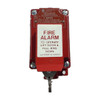
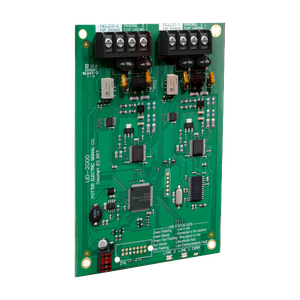
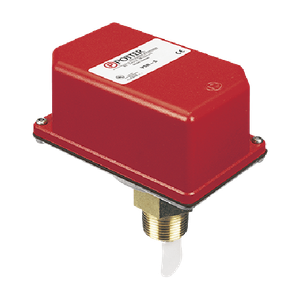
Potter MPEX Series Manual Fire Alarm Station
Overview
The Potter MPEX manual fire alarm station provides straightforward, mechanical activation for conventional fire alarm systems across commercial, educational, industrial, and institutional facilities. The MPEX delivers consistent pull-station operation without electronic failure modes — occupants pull the lever, the station triggers the alarm circuit, and the control panel receives the signal. This mechanical simplicity means the station functions reliably during power loss, network outages, or equipment failures that might disable powered devices. For facility managers deploying fire safety infrastructure, the MPEX represents a foundational, field-proven approach to manual alarm initiation.
Key Features
- Manual pull-lever activation: Mechanical operation ensures the station triggers regardless of electrical grid or network status — critical for life safety systems where redundancy and simplicity matter more than features.
- Conventional fire alarm panel integration: The MPEX wires directly into monitored alarm zones on standard fire alarm control panels via hard-wired connections. No network infrastructure, IP addressing, or software configuration required — installation and troubleshooting are straightforward for integrators familiar with conventional systems.
- Durable construction for high-traffic environments: Pull stations in schools, warehouses, office buildings, and industrial facilities see frequent casual contact and testing. The MPEX mechanical design tolerates repeated activation cycles without wear-related failure, reducing replacement costs over the station's operational life.
- Fast-response activation logic: When the lever is pulled, the station immediately breaks or completes its circuit contact, signaling the alarm panel with minimal delay. This speed is essential during emergencies when occupants need confidence that pulling the handle produces instant results.
- Accessible design meeting standard installation requirements: Height, reach, and clarity of the station's location support occupants of varying mobility during evacuation. Compliance with building code placement rules — near exits, in stairwells, visible from high-occupancy areas — ensures accessibility when it matters.
- Minimal maintenance requirements: Unlike powered devices with batteries, electronic sensors, or network dependencies, the MPEX requires only visual inspection and periodic manual testing. Troubleshooting and replacement procedures are simple, reducing technician overhead compared to networked or addressable systems.
Integration and Compatibility
The MPEX integrates with conventional fire alarm systems through standard hard-wired connections terminated at monitored input zones on the control panel. Each station operates independently — pulling one lever at one location signals the panel while other stations remain unaffected. This architecture scales to multi-story or multi-building campuses by running additional circuit runs to the main panel or auxiliary repeater panels. The station does not require network connectivity, IP address assignment, or software licensing, avoiding the infrastructure and support costs associated with networked pull stations. For facilities already operating conventional fire alarm panels, the MPEX installation follows familiar wiring practices and does not require panel firmware updates or compatibility testing with third-party software.
Installation Considerations
Placement follows life safety codes and occupancy-specific guidelines — typically at accessible heights (approximately 42–48 inches from floor) in main corridors, near primary exits, in stairwells, and in large occupancy spaces where the nearest station is never more than a code-specified walking distance. The lever must be clearly visible and unobstructed. The MPEX requires no electrical power beyond the monitored alarm circuit itself, eliminating the need for dedicated 120V outlets or PoE infrastructure. Mounting uses standard brackets and fasteners suitable for drywall, concrete, or metal studs. Integrators should coordinate placement with the facility manager, local fire marshal, and building code officials to ensure compliance with applicable standards before final installation.
Regulatory and Code Compliance
Potter's MPEX Series is engineered to meet fire alarm equipment standards and life safety code requirements. Facilities integrating the MPEX should verify compliance with local fire marshal approvals, Life Safety Code (NFPA 101) provisions, fire alarm system standards (NFPA 72), and applicable building codes for the specific occupancy class. Compliance requirements vary by jurisdiction and facility type — a school, warehouse, hospital, or manufacturing plant may have different pull-station placement and redundancy mandates. Early consultation with the authority having jurisdiction (AHJ) or a code-specialist integrator prevents costly rework after installation.
Frequently Asked Questions
Q: Does the Potter MPEX work with addressable fire alarm systems?
A: The MPEX is designed for conventional fire alarm panel integration via hard-wired connections to monitored alarm zones. Addressable systems require devices that report location data over a communications loop. If your facility uses an addressable panel, confirm with the panel manufacturer whether the MPEX can be integrated through an analog input module or whether an addressable pull station is required.
Q: What happens if the fire alarm panel loses power?
A: The MPEX is a passive mechanical device — pulling the lever closes or opens a dry contact in the station. If the panel loses power and has no battery backup, the panel itself cannot process the signal. However, the MPEX continues to function mechanically. Fire alarm panels are required by code to include battery backup (typically 24–48 hours), so the system should remain operational during brief outages. Verify your panel's backup power design with your integrator or panel documentation.
Q: Can I use the MPEX in outdoor or wet environments?
A: The MPEX is designed for interior use. For outdoor or high-moisture environments (loading docks, washdown areas), specify a weatherproof or IP-rated pull station variant. Consult with your supplier or integrator about outdoor-rated models in the Potter fire alarm line.
Q: How often should the pull station be tested?
A: Fire alarm systems, including pull stations, should be tested quarterly or annually per NFPA 72 and local code requirements. Testing involves pulling the lever to confirm the panel receives the signal and the alarm sounds. A qualified technician or the facility manager (if trained) can perform this test. Document all tests in your fire safety maintenance log.
Q: Is the MPEX compliant with the Life Safety Code?
A: The MPEX is engineered to meet fire alarm equipment standards. Compliance with the Life Safety Code depends on proper placement, quantity, and integration within your overall fire alarm system design. Work with a code-specialist integrator or fire alarm contractor to ensure your deployment meets NFPA 101 and local fire code requirements for your occupancy class.
Q: What if the lever gets stuck or breaks?
A: The MPEX uses durable mechanical linkages rated for high-cycle use. If a lever becomes difficult to pull or breaks, replace the station immediately — a non-functional pull station is a code violation and a life safety gap. Replacement is straightforward: disconnect the old wiring, remove the mounting bracket, install the new station, and reconnect the circuit at the panel.
Ted PerryPerspective based on aggregated IP Security Depot and affiliated engineering team experience.
The Potter MPEX Series pull station represents the architectural foundation of conventional fire alarm deployments. In system design work, the MPEX's mechanical simplicity is its strength — it eliminates electronic dependencies that plague powered or networked pull stations, making it the right choice for critical-path life safety where occupants need absolute confidence that pulling the lever triggers the alarm, no exceptions. The MPEX removes doubt.
Technical Highlights:
- Dry-contact activation via mechanical lever: No electronics means no failure modes tied to battery depletion, capacitor aging, or firmware bugs. The station works during power loss, network outages, or after sitting idle for months without maintenance — a critical advantage in low-occupancy or seasonal facilities.
- Hard-wired integration to conventional panels: Each MPEX connects to a single monitored alarm zone input on the control panel. This 1:1 wiring relationship keeps installation and troubleshooting transparent — integrators and facility staff understand the signal path without vendor software or technical support calls.
- Durable mechanical linkages rated for high-cycle testing: Pull stations in schools and commercial buildings see dozens of test activations per year. The MPEX's mechanical design tolerates repeated pulling without wear-related failure, extending service life and lowering replacement cycles compared to electronic alternatives.
Deployment Considerations:
- Placement must follow life safety code rules for distance, height, and visibility — coordinate with the authority having jurisdiction (AHJ) early. Non-compliant placement voids system certification and creates liability.
- The MPEX reports activation status to the panel only — it does not indicate panel status, alarm acknowledgment, or system faults. Integrators must ensure the fire alarm panel includes separate supervisory devices (heat detectors, pull station tamper switches) if those inputs are required by code.
The MPEX is the right pull station for conventional fire alarm systems in schools, warehouses, office buildings, and industrial facilities where code compliance, mechanical reliability, and simplicity of installation outweigh the feature set of networked alternatives. If your facility is already running a conventional panel and needs baseline pull-station coverage, the MPEX delivers without overengineering or integration complexity.