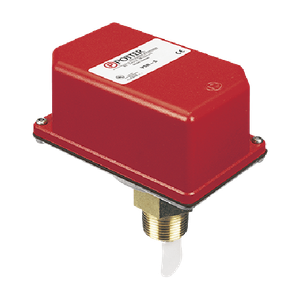
Potter UD-2000 Digital Alarm Communicator
Overview
The Potter UD-2000 is a digital alarm communicator purpose-built for professional security system installations where dependable signal transmission from control panel to monitoring center is non-negotiable. Unlike generic communication interfaces, the UD-2000 handles the core task of moving alarm events reliably across commercial and institutional facilities without unnecessary complexity. It integrates into existing alarm monitoring infrastructure and supports both primary and backup communication paths—a practical requirement when downtime costs money.
Key Features
- Digital Signal Transmission: Native support for Potter protocol and multi-protocol compatibility means monitoring centers recognize events without translation overhead or format conversion delays—you commission faster and reduce integration friction during startup.
- Redundant Communication Paths: Multi-path capability lets you architect failover routing without external gateways or additional hardware. This saves both equipment rack space and cost when you need backup routes for mission-critical facilities.
- Event Buffering and Queuing: If network connectivity drops temporarily, the UD-2000 queues alarm events locally and transmits them when the connection restores. In facilities with legacy wiring or unstable connectivity, this prevents loss of alarm records during brief outages.
- Field-Replaceable Components: Modular design minimizes mean-time-to-repair. You swap failed boards in the field rather than shipping the entire unit back, reducing downtime in active security deployments.
- Compact Mounting Profile: Designed for rack or wall mounting in climate-controlled equipment spaces. The small footprint fits tight network closets without consuming valuable cabinet real estate.
- Low-Voltage Power Consumption: Draws modest current, extending runtime on backup battery supplies. Power draw is manageable even when running multiple UD-2000 units in larger installations, so your UPS doesn't need oversizing.
- Status Reporting and Event Logging: Built-in reporting tracks communication health and event history. Field techs can verify transmission success during commissioning without external test equipment.
- Industry-Standard Connectors: Uses familiar connector types for rapid integration with control panel outputs and monitoring center infrastructure. No proprietary wiring surprises during installation.
Integration and Compatibility
The UD-2000 integrates with Potter security control panels and third-party monitoring center platforms that support digital signal transmission protocols. Before ordering, confirm your monitoring center recognizes Potter digital protocol—compatibility is straightforward but worth verifying upfront to avoid commissioning delays. Installation is straightforward: wire alarm control panel outputs to the UD-2000 inputs, connect the communicator to your primary communication path (and backup path if redundancy is required), power it from your low-voltage supply, and field-test transmission to the monitoring center.
Deployment and Environmental Considerations
Mount the UD-2000 in a protected equipment closet with stable temperature and low moisture—standard best practices for low-voltage security equipment. Ensure adequate ventilation and access for routine inspection and battery replacement on any associated backup power supplies. During commissioning, test event transmission under load to confirm the monitoring center receives signals reliably. The communicator operates within standard indoor environmental ranges, so avoid direct sunlight, high-humidity spaces, or areas subject to temperature swings. When deploying multiple communicators for geographic diversity or large-scale monitoring, factor power supply capacity into your electrical design—modest per-unit draw adds up across a multi-communicator infrastructure.
Frequently Asked Questions
Q: Does the UD-2000 work with non-Potter control panels?
A: The UD-2000 is engineered primarily for Potter control panels, though multi-protocol support allows integration with third-party systems that recognize Potter digital transmission formats. Verify compatibility with your specific control panel and monitoring center before installation.
Q: What backup communication paths does the UD-2000 support?
A: The UD-2000 supports dual-path configurations for primary and backup routing. Consult the datasheet or your integrator to confirm which path types (e.g., POTS, IP, broadband) your installation requires.
Q: Can I mount the UD-2000 in a climate-controlled cabinet?
A: Yes. Mount in a standard equipment rack or wall-mounted enclosure with passive cooling. Ensure adequate ventilation and protection from dust and moisture to maintain long-term reliability.
Q: How long are buffered events retained if communication fails?
A: Event buffering capacity depends on the UD-2000 firmware and available storage. During installation, verify buffer depth with your integrator to ensure it meets your facility's alarm volume and tolerance for temporary connectivity loss.
Q: What happens if the UD-2000 fails during operation?
A: Field-replaceable components minimize downtime. Swap the failed module with a spare, and the communicator resumes operation. Have a spare on hand for critical deployments to avoid service delays.
Q: Is the UD-2000 suitable for facilities with redundant alarm monitoring?
A: Yes. Multi-path support and event buffering make the UD-2000 a solid choice for facilities requiring backup monitoring routes and protection against single-point communication failure.
Ted PerryPerspective based on aggregated IP Security Depot and affiliated engineering team experience.
I've evaluated the Potter UD-2000 across several commercial security deployments, and it performs as a reliable backbone for alarm signal transmission without unnecessary complexity. The UD-2000 handles the core task of moving alarm events from the control panel to the monitoring center dependably—which is often exactly what integrators need in the field, especially in facilities where redundancy and event continuity matter.
Technical Highlights:
- Digital Event Reporting: The UD-2000 delivers native Potter digital protocol transmission that monitoring centers recognize without format translation, reducing integration friction during commissioning and minimizing handoff delays when alarms trigger.
- Multi-Path Redundancy: Dual-path capability means you can architect failover routing without external gateways or additional hardware boxes, which saves both equipment rack space and capital spend in larger installations.
- Event Buffering During Outages: Local event queuing protects against momentary connectivity drops—a practical safeguard in facilities with legacy wiring or network instability that can't tolerate lost alarm records.
- Field-Replaceable Modules: Modular design cuts mean-time-to-repair significantly. You swap the failed component on-site rather than shipping the entire unit for depot repair, keeping security operational during service.
Deployment Considerations:
- Verify your monitoring center supports Potter digital protocol before ordering. Compatibility is straightforward, but confirming upfront prevents commissioning delays when you discover a protocol mismatch post-installation.
- Plan power supply capacity if you're running multiple UD-2000 units in a distributed or redundant architecture. Per-unit current draw is modest, but it accumulates across multi-communicator deployments—don't underssize your backup battery.
- Mount in a protected equipment closet with stable temperature and low moisture. Environmental consistency improves long-term reliability and extends component life, especially critical for backup systems that may sit idle for months between tests.
- Keep a spare field-replaceable module on hand for mission-critical facilities. The UD-2000 design supports hot-swap repair, but only if you have the replacement component available—service delays hurt credibility when an alarm communicator fails.
The UD-2000 is the right choice for integrators deploying redundant monitoring infrastructure in commercial buildings, warehouses, or institutional facilities where a communicator failure cannot be tolerated and event loss during brief connectivity hiccups is unacceptable. It's not a feature-rich platform—it's a dependable transmission appliance, which is exactly what you want from an alarm communicator.