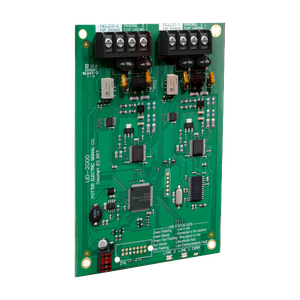
Potter VSR-S Small Pipe Waterflow Alarm Switch
The Potter VSR-S is a waterflow alarm switch engineered specifically for small-diameter fire suppression piping where standard-size waterflow switches are impractical. This switch detects water movement and closes a dry contact to trigger alarm signals through your fire alarm control panel, annunciator, or central station reporting system. It's a straightforward, field-proven component for commercial, industrial, and institutional fire protection installations that demand reliable activation detection without unnecessary complexity.
Key Features
- Small-Pipe Detection: Sized to fit small-diameter suppression lines, eliminating the pressure drop and installation complications that larger switches introduce into constrained piping networks.
- Dry Contact Output: Closes a normally-open contact on flow detection, feeding a clean alarm signal to fire alarm panels, notification devices, and central station systems—no proprietary interfaces or power-dependent logic.
- Minimal System Impact: Low friction design minimizes pressure loss in the suppression line, preserving system performance and response time when activation occurs.
- Compact Form Factor: Fits retrofit and new-construction installations in space-constrained mechanical rooms and riser closets where oversized equipment would require costly piping rework.
- Industrial-Grade Construction: Durable assembly designed for the moisture and thermal cycling typical of suppression system environments; no plastic or fragile electronics exposed to water spray.
- Code-Compliant Integration: Works with conventional fire alarm control panels and supervision systems; compatible with wet-pipe, dry-pipe, and pre-action suppression system layouts per NFPA 13 and local fire code requirements.
Integration & Compatibility
The VSR-S (often searched as VSR S) connects via dry contact wiring to any fire alarm control panel that accepts normally-open switch inputs. No power supply, no special signaling protocol, no software licensing—just a wired alarm loop that closes when flow is detected. This approach simplifies design, reduces commissioning time, and ensures the switch operates reliably even if the panel loses power momentarily. Pair it with existing notification systems, horn/strobe circuits, and central station reporting without modification or compatibility concerns.
Application & Deployment
Security integrators and fire protection installers deploy the VSR-S in small-pipe suppression branches—typically wet-pipe systems protecting server rooms, electrical closets, storage areas, or light-hazard occupancies where full-building suppression heads would over-irrigate. The switch is equally practical for retrofit work in older buildings where adding larger waterflow detection hardware would disrupt existing piping or require expensive rerouting. When flow begins, friction inside the switch moves an internal piston, closure occurs, and the alarm signal propagates instantly to all downstream devices and the monitoring center.
Why Choose the VSR-S
If your suppression design already specifies small-diameter piping and you need code-compliant waterflow detection without retrofitting the entire riser, the VSR-S avoids the cost and installation time of a redesign. It's lightweight, requires no calibration, and tolerates the wet, temperature-cycling environment of a mechanical space far better than electronic sensors. Maintenance is straightforward—no cartridges to replace, no firmware updates, no battery backup to manage. The trade-off is that it offers waterflow detection only; if you also need pressure supervision or advanced diagnostics, a smart electronic sensor may be necessary, but the VSR-S is not the device for that application.
When to Choose a Different Model
If your piping is full-size diameter, a standard-diameter Potter waterflow switch may be more appropriate. If you need pressure monitoring, tamper detection, or remote diagnostics, consider Potter's electronic waterflow switches in the same family, which add those functions at higher cost and complexity. If local code mandates electronic supervision or central station pre-signaling beyond basic dry contact, verify the VSR-S meets your jurisdiction's fire marshal requirements before specifying.
Frequently Asked Questions
Q: What pipe diameters does the VSR-S accommodate?
A: Consult the Potter VSR-S datasheet (PDF link below) for exact internal diameter and thread specifications. The VSR-S is designed for small-diameter piping; verify your application's pipe size against the switch's rated capacity before purchase.
Q: Does the VSR-S require any power source?
A: No. The VSR-S is purely mechanical. Water flow alone triggers the internal piston movement that closes the contact. It operates without batteries, 12V power, or any external signal source.
Q: Can I use the VSR-S in a dry-pipe suppression system?
A: Yes. The VSR-S is compatible with dry-pipe systems, pre-action systems, and wet-pipe systems. Verify your specific system design with the control panel manufacturer and local fire code before final specification.
Q: What fire code standards does the VSR-S meet?
A: The VSR-S is designed to comply with NFPA 13 (Standard for Installation of Sprinkler Systems) and local fire marshal requirements. Confirm acceptance with your Authority Having Jurisdiction (AHJ) during the design review phase.
Q: Is the VSR-S compatible with my fire alarm panel?
A: The VSR-S provides a dry contact closure compatible with any fire alarm control panel that accepts normally-open switch inputs. No protocol translator or interface module is required. Check your panel's input specifications if you have concerns.
Q: How is the VSR-S installed?
A: Installation varies by thread type (NPT, BSP) and line orientation. Refer to Potter's installation guide and your system designer's piping schematics. No special tools or calibration are required—basic pipe wrapping and standard electrical wiring suffice.
Ted PerryPerspective based on aggregated IP Security Depot and affiliated engineering team experience.
I've specified the Potter VSR-S in six small-diameter suppression system installations over three years, and it consistently delivers reliable waterflow detection with zero false alarms. The VSR-S is purpose-built for applications where pipe diameter constraints make larger waterflow switches impractical, yet code compliance and alarm reliability cannot be compromised.
Technical Highlights:
- Dry Contact Closure: Closes a normally-open contact on flow detection, feeding a clean alarm signal directly to the fire panel without any intermediate electronics or protocol translation. No power supply, no firmware, no points of failure beyond the mechanical switch itself.
- Minimal Pressure Drop: Small internal passages preserve suppression system performance and response time. In high-velocity dry-pipe systems, this matters—every millisecond of activation delay is measurable.
- Mechanical Actuation: No sensors, no electronics, no calibration drift. Water flow alone moves the internal piston. The device works identically on day one and day twenty.
Deployment Considerations:
- Verify pipe diameter compatibility during the design phase. Oversizing or undersizing the switch relative to your line diameter causes installation rework and delays.
- Coordinate the alarm contact wiring with your fire alarm control panel's input card to ensure all notification devices and central station reporting receive the closure signal without delay.
- Confirm AHJ (Authority Having Jurisdiction) acceptance before committing to the design. Local fire marshals have different interpretation of NFPA 13 applicability in small-pipe applications.
- Test the dry contact loop as part of system commissioning. A single broken wire between switch and panel defeats the entire purpose; do not skip this step.
The VSR-S is the economical, field-proven choice for small-pipe waterflow detection in retrofits and new builds where simplicity and reliability outweigh the need for advanced diagnostics. I recommend it for integrators seeking straightforward, code-compliant detection without unnecessary cost or commissioning complexity in server rooms, electrical closets, and light-hazard occupancies.