
Showing Results for Modems
-
Save $116.93
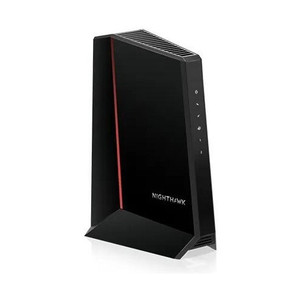
NETGEAR CM2500-100NAS 2PT DOCSIS 3.1 High Split Cable
2-port DOCSIS 3.1 high split coaxial cable designed for premium cable modem installations where you need reliable upstream and downstream channel
- DOCSIS 3.1 high split design supports up to 17 aggregated channels simultaneously.
- Dual-port configuration enables flexible upstream/downstream channel separation at install.
- Optimized for DOCSIS 3.1 infrastructure; verify ISP high split support before deployment.
In stock · Ships same business day Free shipping over $499$387.92 $270.99 Save $116.93 -
Save $0.42
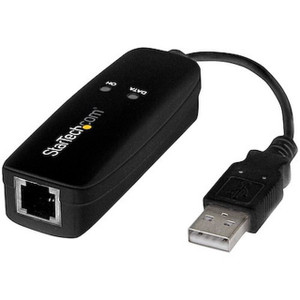
StarTech USB 2.0 FAX Modem Adds Data Voice FAX - USB56KEMH2
In stock · Ships same business day Free shipping over $499$58.41 $57.99 Save $0.42 -
Save $14.31

B+B SmartWorx 232/422/485 Fiber Modem W/st - BB-FOSTC
In stock · Ships same business day Free shipping over $499$194.30 $179.99 Save $14.31 -
Save $235.85

NETGEAR MH7150-100PAS NIGHTHAWK M7 5G Mobile Hotspot
5G-enabled mobile hotspot engineered for field personnel, warehouse operations, and remote site connectivity
- 5G-capable throughput supports video streaming and cloud uploads at remote or field sites.
- Dual-band Wi-Fi (2.4 GHz / 5 GHz) partitions device traffic to maintain predictable throughput.
- 4.1 / 4.6 dBi antenna gain improves reception through metal racking and concrete structures.
In stock · Ships same business day Free shipping over $499$775.84 $539.99 Save $235.85 -
Save $0.98
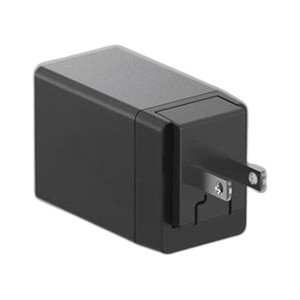
NETGEAR MHPADPT-10000S PD 27W Type-C Power Adapter
27W USB Power Delivery Type-C adapter purpose-built to supply power to NETGEAR Insight Managed Switch (MHS) series devices in network closets, server
- Delivers 27W via USB-C to power NETGEAR MHS series switches reliably.
- Industrial-grade operating temp supports non-climate-controlled deployments.
- Wall and ceiling mount options simplify installation in space-constrained cabinets.
In stock · Ships same business day Free shipping over $499$18.97 $17.99 Save $0.98 -
Save $88.34

NETGEAR Ultra-high Speed Cable Modem - CM1000-100NAS
N ultra-high speed cable modem designed for commercial and enterprise network deployments requiring reliable, high-bandwidth connectivity
- DOCSIS 3.1 support delivers gigabit-class bandwidth for high-demand network deployments.
- Single Gigabit Ethernet (RJ45) port connects directly to routers, switches, or NVRs.
- Rated for 24/7 continuous operation, suitable for always-on enterprise installations.
In stock · Ships same business day Free shipping over $499$310.33 $221.99 Save $88.34 -
Save $139.51

NETGEAR 1PT Docsis 3.1 High Split 2.5G CBL - CM3000-100NAS
Single-port DOCSIS 3.1 cable modem with High Split architecture and 2.5G Ethernet output
- DOCSIS 3.1 High Split architecture supports higher upstream spectrum for camera upload streams.
- 2.5GBASE-T Ethernet port delivers faster backhaul without requiring 10G switch infrastructure.
- Single coaxial input simplifies head-end cable runs; compatible with standard RG-6 or RG-11.
In stock · Ships same business day Free shipping over $499$465.50 $325.99 Save $139.51 -
Save $62.01

Cradlepoint LTE Advanced PRO (1200MBPS) Modem - BA-MC400-1200M-B
In stock · Ships same business day Free shipping over $499$580.00 $517.99 Save $62.01 -
Save $15.01
B+B SmartWorx 9 PIN 232 Fiber Optic Modem - BB-9PFLST
In stock · Ships same business day Free shipping over $499$204.00 $188.99 Save $15.01 -
Save $182.00
D-link DWM-314-GP 5G POE Modem With 4 LAN Ports Dual SIM Slots
In stock · Ships same business day Free shipping over $499$675.99 $493.99 Save $182.00 -
Save $0.20

NETGEAR CM700-100NAS Cable
DOCSIS 3.0 cable modem engineered to bridge cable ISP service directly to Ethernet infrastructure — a fit for remote surveillance sites, backup
- DOCSIS 3.0 modem-only design bridges coaxial ISP drop directly to RJ-45 infrastructure.
- Gigabit Ethernet output supports switches, routers, NVRs, and IP camera management systems.
- Runs on 12V DC; deploys in network closets or enclosures without router overhead.
Usually Ships in 2-3 Weeks Free shipping over $499$186.19 $185.99 Save $0.20 -
Save $11.79

Netgear MHBTR10-10000S
96-port 10 Gigabit Ethernet switch designed for high-speed network aggregation in distributed security and surveillance deployments
- 96 ports at true 10G line rate eliminate oversubscription across dense camera deployments.
- PoE++ (802.3bt) delivers up to 90W per port, powering cameras and APs over a single cable.
- Unmanaged architecture requires zero configuration, reducing commissioning time at remote sites.
Usually Ships in 2-3 Weeks Free shipping over $499$38.78 $26.99 Save $11.79 -
Save $116.93

Netgear Nighthawk Multi-gig Speed Cable Modem - CM1200-100NAS
Cable modem built for Xfinity subscribers who need multi-gigabit-capable WAN throughput
- DOCSIS 3.1 delivers up to 10 Gbps downstream for high-channel NVR deployments.
- Xfinity-certified standalone modem integrates via RJ-45 with any managed switch or router.
- Bridge or gateway mode supports flexible WAN backbone design for security networks.
Usually Ships in 2-3 Weeks Free shipping over $499$387.92 $270.99 Save $116.93 -
Save $218.45

Chatsworth RIM 1000 Internal Modem 0ININ (0 Mm) W X - 60104-001
Usually Ships in 2-3 Weeks Free shipping over $499$757.44 $538.99 Save $218.45 -
Save $62.01
Cradlepoint LTE Advanced PRO (1200MBPS) Modem - BB-MC400-1200M-B
Usually Ships in 2-3 Weeks Free shipping over $499$580.00 $517.99 Save $62.01