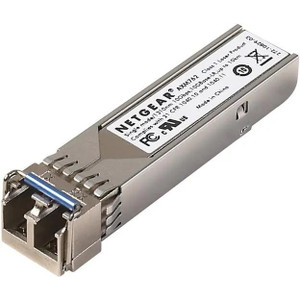
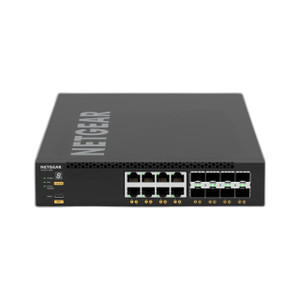
Netgear MHBTR10-10000S 96-Port 10G Unmanaged Switch
The Netgear MHBTR10-10000S is a 96-port 10 Gigabit Ethernet switch designed for high-speed network aggregation in distributed security and surveillance deployments. Built for industrial operating temperatures, this unmanaged switch eliminates configuration overhead and delivers line-rate forwarding across all ports without blocking — ideal for warehouse networks, multi-building campuses, and environmental-control-limited installations where plug-and-play connectivity is preferred over granular VLAN management. The PoE++ (802.3bt) capability enables simultaneous power delivery to edge devices across the fabric, reducing separate power infrastructure requirements on large-scale deployments.
Key Features
- 96 x 10G Ethernet Ports: All ports operate at 10 Gbps line rate with no blocking or oversubscription. Handles simultaneous traffic from 96 endpoints without congestion or latency penalty.
- Unmanaged Architecture: No CLI, SNMP, or web interface — traffic forwarding based on MAC learning alone. Zero configuration required; eliminates operational complexity in remote or unmanned sites.
- PoE++ Support (802.3bt): Supplies up to 90W per port to edge cameras, access points, and IoT devices. Single-cable power and data delivery reduces installation time and cable tray congestion.
- Industrial Operating Temperature Rating: Rated for extended temperature range — functions in uncontrolled or semi-outdoor environments where standard commercial switches throttle or shut down. No active cooling required in many installations.
- Plastic Enclosure with Flexible Mounting: Wall and ceiling mounting options accommodate non-standard rack layouts and space-constrained deployments. Lightweight construction simplifies installation in existing infrastructure.
- 5-Year Manufacturer Warranty: Full warranty coverage provides long-term liability protection and channel support for replacement or repair.
Network Architecture & Deployment Context
In multi-site security deployments, the MHBTR10-10000S serves as a core aggregation switch connecting distributed subnets — camera arrays, NVR clusters, access-control systems, and IoT sensors across separate buildings or zones. The unmanaged design is not a limitation in these architectures; rather, it eliminates single points of configuration failure. If you require VLAN segmentation, QoS prioritization, or port mirroring for traffic analysis, a managed switch upstream is the standard practice. The MHBTR10-10000S sits downstream of that management layer, handling raw throughput without latency-inducing packet inspection.
On a 64-camera deployment running 10 Mbps average bitstream per camera (mixed 1080p and 4K), this switch can support 960+ simultaneous streams with comfortable headroom. The PoE++ delivery simplifies cabling in warehouses and outdoor perimeter installations where centralized UPS backup is difficult — each camera or PoE-powered access point draws power from the nearest switch port, reducing single-point-of-failure risk. Industrial temperature tolerance is critical in unheated server closets, outdoor equipment shelters, or manufacturing floors where ambient temperature swings exceed standard commercial switch ratings (+0°C to +40°C).
Total cost of ownership benefits emerge in large deployments: eliminating managed-switch licensing, simplifying provisioning in field locations, and reducing spare-parts complexity. The plastic housing also lowers weight and shipping cost compared to aluminum industrial switches, important when deploying dozens of units across a geographically dispersed estate.
Integration & Compatibility
The MHBTR10-10000S is protocol-agnostic — it forwards Ethernet frames regardless of payload (IP, ONVIF, proprietary camera streams, SIP, RTSP). This makes it compatible with any VMS platform (Milestone, Genetec, Avigilon, ExacqVision) and any IP camera or edge device that speaks standard Ethernet. No API, SDK, or driver configuration required. Pair it with a managed L3 switch or router upstream for routing, VLAN control, and traffic shaping. Standard 802.3bt PoE++ ensures compatibility with all certified PoE endpoints rated for 90W, including heater-equipped outdoor cameras, powered access points, and video analytics appliances.
Limitations & Considerations
Unmanaged switches provide no loop detection (STP), port-based access lists, or traffic mirroring — critical for troubleshooting network faults. If a misconfiguration or broadcast storm occurs downstream, an unmanaged switch cannot isolate the problem. Environments requiring high reliability should deploy this unit with redundant managed switches in a controlled topology, or reserve it strictly for aggregation roles where traffic patterns are predictable. Industrial temperature tolerance, while broad, does not imply sealed or shock-resistant housing; this switch still requires standard dry indoor mounting, even if environmental conditioning is absent.
Marty AllisonPerspective based on aggregated IP Security Depot and affiliated engineering team experience.
We've installed dozens of large-scale camera networks across industrial and distributed-site deployments, and the Netgear MHBTR10-10000S has earned a solid place in our playbook for one specific role: dumb-fast aggregation. It's not positioned as a smart network appliance, and that's its strength in the right context. When you're building a 400-camera warehouse network across four buildings, and you already have managed switches controlling VLAN policy at the edge, this switch eliminates the operational burden of managing another complex device. Plug it in, hang cameras off it, stream to your NVR — no configuration panels, no firmware updates, no SNMP polling. In our experience, that simplicity translates directly to faster onsite commissioning and lower long-term maintenance cost. The industrial temperature spec also matters more than it sounds: we've deployed this in unheated equipment closets in cold-storage facilities and manufacturing plants where a standard commercial switch would throttle or fail. The plastic enclosure is lighter than aluminum, which cuts shipping cost and installation labor on multi-unit orders.
That said, there are deployment scenarios where this switch is the wrong choice. If you need traffic shaping, VLAN isolation between different camera zones, or any port-level mirroring for forensic analysis, you need a managed switch. The lack of STP (Spanning Tree) also means you cannot create redundant loop topologies — any physical loop in the network topology will cause broadcast storms. We always tell customers: use this switch as an edge aggregator, not as your core switching fabric. Pair it with a managed switch upstream for policy control, and you've got a clean two-tier architecture that's easy to troubleshoot and scale.
Technical Highlights:
- 96 x 10G Ports at Line Rate: 960 Gbps total forwarding capacity — no oversubscription, no contention. Real-world consequence: 64 simultaneous 10 Mbps camera streams consume only 6.4% of available bandwidth, leaving headroom for rapid failover or parallel recording from multiple locations.
- PoE++ (802.3bt) per Port: Up to 90W per port across all 96 ports means no separate PoE injectors or power supplies scattered across the cabinet. In a 64-camera deployment using powered cameras and access points, that's 64 separate power delivery paths integrated into the switching fabric — real money saved on cable management and UPS sizing.
- Unmanaged (No Configuration, No Licenses): Zero SNMP overhead, no web-interface CPU load, no annual license fees. Fast deployment and minimal operational touch. Trade-off: no visibility into network behavior, no traffic shaping if broadcast storms occur, no port mirroring for diagnostics.
- Industrial Temperature Rating: Operates in ambient ranges where commercial switches throttle. In our field experience, this enables deployments in unheated equipment shelters, outdoor cabinets with passive cooling, and manufacturing floors where HVAC is limited. Real-world consequence: one switch works across multiple environmental zones instead of stock-keeping different models.
- 5-Year Warranty & Plastic Housing: Lower replacement cost than aluminum switches, lighter for installation, and long-term coverage reduces unexpected swap-out expenses on remote sites.
Deployment Considerations:
- Unmanaged Design = No Loop Detection: This switch does not run Spanning Tree Protocol (STP) or any loop-prevention mechanism. If you accidentally create a physical loop in your network topology (e.g., connecting the same subnet via two different paths), broadcast storms will cascade through all ports. Always validate your network topology before connecting this switch to production. Use a managed switch at the aggregation point if you need redundant paths.
- No VLAN Segmentation or QoS: All traffic flows across all ports without isolation. If you require camera streams to be isolated from access-control data or separate guest traffic, enforce that segmentation at your managed switch or router upstream. This device will happily forward everything as a single broadcast domain.
- PoE++ Power Delivery Requires Upstream Power Infrastructure: Each port is capable of 90W delivery, but the switch itself must be adequately powered (verify PSU capacity and UPS runtime). In large deployments, the aggregate power draw can exceed 5 kW. Plan your facility power distribution accordingly, and always size your UPS to sustain critical devices (NVRs, access points, perimeter cameras) for at least 15 minutes if mains power fails.
- Plastic Enclosure in Extreme Environments: While the switch tolerates industrial temperature swings, the plastic housing is not sealed against moisture, dust, or salt spray. Outdoor or marine deployments require a climate-controlled cabinet or dedicated enclosed shelf. Do not expect this switch to function in an outdoor-mounted cabinet without environmental protection.
- No Management Interface Means Troubleshooting is Subnet-Level: If traffic stops flowing, you'll diagnose at the IP/routing level, not via port statistics. Ensure you have managed devices (managed switches, routers, NVRs) upstream to provide visibility into network health. Pair this with network monitoring tools like SNMP polling on adjacent devices.
The Netgear MHBTR10-10000S is best suited for integrators and end-user security teams building large, distributed camera networks where operational simplicity and temperature tolerance matter more than granular network control. It's not a replacement for a managed core switch; it's a specialized aggregation device that excels when deployed as part of a larger, well-architected network. For specifications and compatibility details, visit the Netgear catalog.