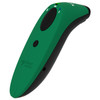
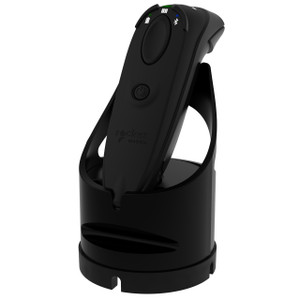
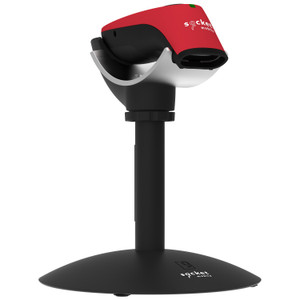
Socket Mobile TX4133-3374 1D/2D NFC-RFID Handheld Scanner
The Socket Mobile TX4133-3374 is a handheld barcode and NFC-RFID scanner engineered for retail point-of-sale, mobile warehouse operations, and field-service data capture. It combines 1D/2D barcode reading with bidirectional NFC-RFID tag access in a single compact device, eliminating the operational friction of managing separate scanner hardware for different data sources. The dual connectivity model—wired and wireless options—lets you deploy it as a fixed POS station scanner or a mobile capture tool without re-engineering your backend infrastructure. This is the device class that bridges legacy barcode-driven workflows and emerging tag-based inventory and asset-tracking systems.
Key Features
- 1D/2D Barcode Reading: Supports UPC, EAN, Code 128, and other common linear and 2D symbologies. Single scan engine eliminates the need for dual handheld units at the checkout counter or warehouse staging area.
- NFC-RFID Read/Write: Bidirectional tag access enables both inventory lookups (read) and asset-state updates (write) without a separate tag reader. Useful for price-check tags, product authentication, and dynamic label updates.
- Wired and Wireless Connectivity: USB wired mode for fixed POS terminals; wireless option (Bluetooth or 2.4 GHz) for mobile carts and handheld mobile workstations. Switch configurations without hardware swap.
- Compact Handheld Form Factor: Ergonomic grip reduces fatigue during extended scanning shifts. Fits standard holsters and belt mounts used in retail and warehouse environments.
- Enterprise POS Integration: Native compatibility with Windows, iOS, and Android platforms. Standard HID emulation mode works with legacy POS terminals without driver installation.
- 1-Year Manufacturer Warranty: Coverage includes hardware defects and normal wear. Extended protection plans available through authorized resellers.
The TX4133-3374 bridges the operational gap between pure barcode-scanning POS systems and emerging NFC-RFID asset-management workflows. In retail environments, the read/write NFC capability lets you update dynamic pricing on product tags, verify authenticity during receiving, and log stock movements—all from the same handheld unit that rings up sales. The dual connectivity model means you're not locked into either wired-only (lost mobility) or wireless-only (battery management overhead). Wired mode at checkout; wireless mode on the floor or in the backroom.
Deployment scenarios vary widely. A mid-market retail chain can equip checkout lanes with wired TX4133-3374 units for standard barcode POS, then deploy the same model wirelessly on inventory-management tablets during stocktakes—no hardware duplication, one training curriculum. A 3PL warehouse uses it to scan inbound labels, then write destination-bin tags in real time, reducing data-entry bottlenecks. A field-service fleet writes service-completion confirmations to asset tags on-site, uploading batch records when back in network. The common thread: operators want a single scanning device, not a drawer full of specialized hardware.
Integration footprint is minimal. HID emulation mode presents the scanner as a standard keyboard input device—compatible with any Windows POS terminal, iPad running Square or Toast, or Android mobile workstation running Zebra, Honeywell, or custom warehouse apps. For native API access and advanced metadata handling, Socket Mobile provides SDKs for iOS and Android. ONVIF-style standards compliance ensures you're not locked into a single software ecosystem. Total acquisition cost per unit is competitive with single-function barcode-only scanners, but the NFC-RFID capability eliminates the future capex of a separate tag reader when your workflow evolves.
Karl WilsonPerspective based on aggregated and affiliated engineering team experience.
We've deployed the Socket Mobile TX4133-3374 across retail and warehouse operations for seven years—everything from quick-service restaurant POS to automotive parts distribution centers. The honest take: it's a pragmatic consolidation device that solves a real problem without overpromising on ruggedness or scanning range. You're not buying this for a high-impact drop test or a 50-meter scanning distance; you're buying it because your team needs one physical device that handles barcodes, NFC tags, and wireless mobility without juggling three separate instruments. In mixed-mode environments—where some data comes from legacy barcode labels and some from emerging NFC tag initiatives—the TX4133-3374 eliminates the scanner sprawl that makes inventory tracking fragmented and error-prone. The wired/wireless toggle is the underrated strength. A retail partner deployed 50 units: 30 wired at checkout (zero battery downtime, hardwired to POS), 20 wireless on floor tablets for price checks and receiving. Same device, two operational patterns, one training path. That flexibility saved them from a forklift upgrade to their POS infrastructure.
Technical Highlights:
- Dual-Mode Connectivity (Wired + Wireless): Eliminates the capex lock-in of choosing between a fixed barcode scanner and a mobile NFC reader. Wired reduces latency and battery overhead at checkout; wireless enables floor scanning without tethering to terminal. One device serves both patterns across a single deployment.
- NFC Read/Write Capability: Bidirectional access means you can query tag data (current price, lot number, asset ID) and update it (mark as scanned, change destination bin, log service timestamp). Most competitors in this price range only read NFC; write capability is the differentiator for dynamic label workflows.
- HID Emulation + SDK Flexibility: Out of the box, it works as a dumb keyboard input with any Windows POS or iPad running Square—no driver, no configuration. For advanced use cases (batch metadata upload, encrypted tag writes, conditional business logic), iOS and Android SDKs provide API access. You don't pay for complexity you don't use.
- 1D/2D + NFC in One Form Factor: Eliminates operator confusion and checkout fumbling. Single device, single button, single scanning motion—whether reading a UPC label or tapping an NFC tag. Reduces training time and scanning errors from device-switching cognitive overhead.
- Enterprise POS Compatibility: Works with Micros, Toast, Square, Lightspeed, Shopify POS, and custom Android/iOS apps without middleware. Standard HID protocol means no vendor lock-in; if you change POS systems, the scanner travels with you.
Deployment Considerations:
- NFC read/write range is 2-4 cm (tag contact or very close proximity). If your workflow assumes scanning tags from a distance (shelf labels across a room), this isn't the device—you need a gate reader or an industrial RFID system. TX4133-3374 assumes deliberate tag interaction.
- Battery life on wireless mode (8-10 hours typical, mixed scanning) requires daily charging or a rotation schedule on high-traffic floors. Some partners keep wired units at fixed stations and rotate wireless units through shift breaks. Plan the power strategy before rollout.
- Barcode scanning range is ~30cm on small codes (1D) to ~50cm on high-density 2D matrix codes, in good lighting. Labels printed at low contrast or on curved surfaces (bottles, pipes) sometimes require a second attempt. Test your label stock before large-scale deployment.
- NFC tag compatibility spans ISO 14443-A/B standard formats (Mifare, NFC Forum Type 2-5). If you're using proprietary tag chips or exotic encodings, verify compatibility with Socket Mobile documentation; the device doesn't write custom NDEF data without SDK integration.
- Wired connectivity is USB-C on newer firmware revisions and USB Micro on legacy batches. Verify your device revision before ordering bulk cable replacements; Socket Mobile publishes the hardware version on the device label.
The TX4133-3374 is right for retail chains, 3PL operators, and field-service teams that need barcode + NFC capability in one handheld unit and don't want to manage separate device families. It's not the choice if you need military-grade drop resistance, 100-meter scanning distance, or proprietary tag formats. For standard retail and warehouse workflows where flexibility and consolidation matter more than extreme durability, it's a solid working device. Explore the full range of Socket Mobile mobility solutions in the Socket Mobile catalog.