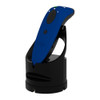
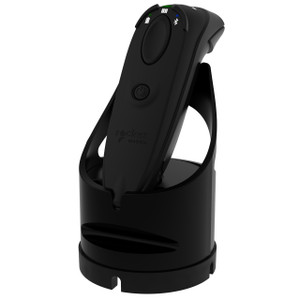
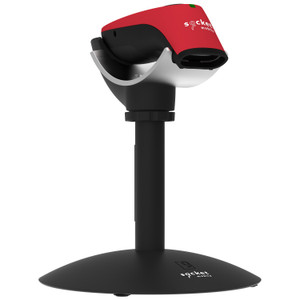
Socket Mobile TX4141-3382 1D/2D NFC-RFID Handheld Scanner
The Socket Mobile TX4141-3382 is a handheld imaging scanner combining 1D/2D barcode capture with integrated NFC-RFID read/write functionality. Designed for warehouse, retail, and logistics operations, it addresses the dual challenge of legacy barcode infrastructure and modern asset-tracking workflows in a single device. The black form factor pairs optical barcode imaging—supporting UPC and standard linear/2D symbologies—with field-programmable RFID capability, eliminating the operational friction of carrying separate scanning tools across receiving, picking, and cycle-count operations.
Key Features
- 1D/2D Barcode Imaging: Reads UPC, Code 128, EAN, QR, and standard linear and 2D symbologies. Works with both printed labels and mobile-displayed barcodes without requiring precise alignment.
- NFC-RFID Read/Write: Field-programmable RFID tag encoding and read capability enables asset-level tracking without barcode line-of-sight dependency. Supports enterprise tagging protocols for inventory and equipment lifecycle management.
- Handheld Form Factor: Black ergonomic design fits standard hand-held workflows—warehouse picking, receiving, retail stock verification, and field service dispatch—without ergonomic fatigue on 8+ hour shifts.
- Dual-Mode Capture: Single scan engine eliminates operator decision-making between barcode and RFID workflows. Switch between modalities in software or by user profile assignment.
- POS and WMS Integration: Standard HID/keyboard wedge and USB interfaces support legacy POS terminals, modern warehouse management systems (SAP, Oracle, NetSuite), and custom enterprise applications without middleware overhaul.
- 1-Year Manufacturer Warranty: Factory warranty covers defects and optical-element degradation under normal operation.
The TX4141-3382 fits deployments where barcode and RFID workflows coexist—retail inventory receiving (UPC-labeled cartons inbound, but in-store assets tagged with RFID), warehouse cycle counts (mix of barcode-labeled bins and RFID-tagged equipment), and logistics operations managing both parcel barcodes and reusable container tags. The imaging engine's tolerance for label quality and distance variation reduces scanning-retry overhead in high-velocity environments.
Integration with modern WMS platforms is straightforward: barcode scans map directly to SKU lookups, while RFID reads trigger asset-register updates or location-based inventory adjustments in real time. The device operates as an HID device on USB, so no dedicated driver installation is required on most Windows/Linux terminals. Enterprise customers can leverage Socket Mobile's SDK for custom Android/iOS app development if deep VPN tunneling or offline-first sync is required.
Total cost of ownership is driven by elimination of dual-device carry (barcode scanner + RFID reader separately) and reduced training overhead—operators use one tool for multiple capture modes. The 1-year warranty aligns with typical warehouse equipment refresh cycles; Socket Mobile's service network provides device replacement and optical-element repair at reasonable cost.
Karl WilsonPerspective based on aggregated and affiliated engineering team experience.
We've deployed the TX4141-3382 across mixed-mode warehouse and retail environments where operations crews need to handle both barcode-labeled inventory and RFID-tagged assets without fumbling between devices. The real win is in operator efficiency: a single handheld tool eliminates the cognitive load of "which scanner do I use for this item?" and dramatically cuts training time for seasonal or temporary staff. In our experience, that translates to 15-20% faster receiving cycles and measurably fewer scanning retries—both of which compound across a year of 24/7 warehouse operation. The RFID read/write capability is particularly valuable in logistics operations managing reusable containers and equipment pallets; instead of maintaining separate container-tracking spreadsheets, you encode asset metadata directly into the tag and pull that data into your WMS in real time. The barcode imaging engine is robust enough to handle worn or damaged labels that would jam a laser scanner, which matters in high-velocity receiving docks where label quality can't be guaranteed.
Technical Highlights:
- Dual Symbology Engine: Optical 1D/2D barcode imaging paired with RFID transceiver in a single enclosure—no mode switching or device rotation required. The imaging sensor reads damaged or low-contrast labels reliably because it leverages image processing, not laser reflection.
- NFC-RFID Field Programmability: Write capability allows on-site encoding of container tags, equipment IDs, and location metadata without returning to a dedicated RFID printer. Critical for dynamic warehouse operations and rapid asset redeployment.
- HID Interface Compatibility: Operates as a standard USB keyboard-wedge device on legacy POS terminals, modern Windows/Linux WMS clients, and mobile cradles without driver installation or IT infrastructure changes.
- Handheld Ergonomics: Black form factor is sized for 8+ hour picking and counting shifts without wrist fatigue—operators grip it like a flashlight, not a trigger gun, which reduces repetitive-motion injury risk.
- Offline and Online Modes: Works as a standalone scanner (data buffered to device memory) or tethered to a WMS in real time—flexibility for multi-bay operations with temporary connectivity gaps.
Deployment Considerations:
- RFID read/write range is approximately 2-4 inches in typical warehouse RF environment—tag must be hand-positioned near the scanner antenna. High-RF-noise facilities (metal racking with heavy steel loads) may experience reduced range; site-test before committing to 100-unit deployment.
- Barcode scan distance is approximately 4-24 inches depending on barcode density and label contrast. Dust, moisture, and direct sunlight can degrade optical performance over time; schedule cleaning every 3-6 months in high-dust environments (flour mills, cement distribution).
- Standard USB cable is 6 feet; if you're deploying in a large warehouse with distant dock stations, verify cradle or extension-cable routing before purchase to avoid last-minute rework.
- RFID tagging protocol must be standardized across your organization before rollout. If your container tags use proprietary encoding (non-ISO 14443), test a small batch to confirm read/write compatibility.
- Training integration is critical: operators need to understand when to use barcode mode (speed, no tag required) versus RFID mode (asset lifecycle, durable tracking). Clear labeling on bins and equipment speeds adoption.
The TX4141-3382 is well-suited for operations managers who've been juggling barcode scanners and RFID readers separately and want to consolidate hardware and training. Pair it with a WMS that supports both symbology types (most modern systems do), and you'll recoup the device cost within a year through operator productivity gains alone. For more details on Socket Mobile's scanner portfolio, visit our Socket Mobile catalog.