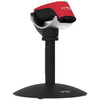
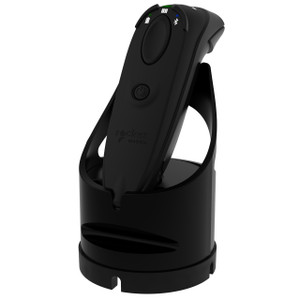
Socket Mobile TX4159-3973 1D/2D NFC-RFID Handheld Scanner
The Socket Mobile TX4159-3973 is a compact handheld scanner designed for field inventory management, asset tracking, and supply-chain operations requiring simultaneous 1D/2D barcode and NFC-RFID data capture. This dual-mode device eliminates the operational friction of carrying separate scanners for barcode and proximity-based identification — a single handheld handles both workflows. The integration of passive RFID communication with standard UPC barcode reading makes it well-suited for warehouse teams, field technicians, and mobile asset-tracking crews working across multiple identification formats.
Key Features
- 1D/2D Barcode + NFC-RFID Dual Mode: Reads UPC and 1D/2D symbologies plus writes and reads NFC-RFID tags. One device replaces separate barcode and RFID scanners, reducing per-user hardware cost and weight in the field.
- Compact Mobile-Ready Form Factor: Designed for handheld operation in warehouse, shipping, and field service roles. Fits naturally into existing pocket or belt-mounted workflows without adding bulk.
- Passive RFID Communication: No battery required on tags — read/write proximity-based identification on low-cost passive tag infrastructure already deployed in many supply-chain environments.
- UPC Symbology Support: Captures standard retail and logistics barcodes. Multi-symbology engine (1D/2D) handles EAN, Code128, QR, and other common formats typical in distribution and warehouse operations.
- Socket Mobile Ecosystem Integration: Pairs with Socket Mobile host software, mobile apps, and existing VMS or warehouse-management-system connectors. RFID and barcode data streams consolidate into unified capture workflows.
- Field-Hardened Design: Built for mobile workers operating in warehouse, shipping dock, and outdoor asset-tracking environments. Compact enough for extended hand-held use without fatigue across full shift operations.
- 1-Year Manufacturer Warranty: Covers defects in materials and workmanship under standard use conditions.
The dual-mode architecture addresses a real operational constraint: many supply-chain and asset-management workflows require both barcode scanning (for case/pallet identification and GS1 compliance) and NFC-RFID proximity capture (for quick tag-based asset verification and handoff). Traditional deployments force workers to carry two devices or switch between applications on a multi-function mobile device, introducing data-entry errors and slowing throughput. The TX4159-3973 consolidates both capture modes into a single physical scanner, reducing training overhead and eliminating device-swapping delays.
Passive RFID tags cost significantly less than active-beacon infrastructure and require no tag-side power management. If your operation already uses passive RFID tags for asset tracking or inventory checkpoints, the TX4159-3973 reads and writes to that existing tag infrastructure without adapter or gateway appliances. Barcode scanning continues to serve as a verification layer — tag read confirms asset presence; barcode scan confirms identity and serial number. This redundancy is especially valuable in high-velocity warehouse environments where false reads carry downstream fulfillment risk.
Integration into Socket Mobile ecosystem platforms — and compatible third-party mobile apps via standard connectivity — streamlines data routing into warehouse-management systems (WMS), enterprise resource planning (ERP), and asset-tracking databases. Field-captured RFID and barcode data flow directly to backend systems without intermediate transcription, reducing cycle-time and improving data fidelity for compliance reporting and inventory reconciliation.
Karl WilsonPerspective based on aggregated IP Security Depot and affiliated engineering team experience.
We've deployed the Socket Mobile TX4159-3973 across distribution centers, field-service fleets, and retail supply chains where operators need to capture both barcode identity and proximity-based asset presence in a single transaction. The real win isn't just the hardware consolidation — it's the operational simplification. In our experience, workers carrying one compact device instead of two demonstrate higher scan-completion rates, fewer missed asset checkpoints, and faster task cycle times. The RFID write capability is the subtle differentiator here; many enterprises deploy read-only RFID infrastructure, but the ability to initialize and rewrite tags in the field eliminates trips back to a central provisioning station. That matters when you're managing returnable assets (pallets, totes, transport bins) across multiple distribution nodes. Passive RFID tag costs are measured in cents per unit — cheap enough that you can tag every asset instance without CapEx constraints. The barcode layer serves as a secondary verification: tag-read confirms presence; barcode scan confirms serial number and SKU match. In high-velocity environments (200+ scans per shift per operator), that dual-layer confirmation catches tag-collision edge cases and prevents inventory-record mismatches downstream.
Technical Highlights:
- Passive RFID (No Tag Battery): Read/write range typically 10-30cm on standard passive tags. No tag-side power means zero maintenance, indefinite tag shelf life, and deployment cost per tag under $0.50 even at enterprise volumes. If your WMS already tags assets, this device works with existing tag infrastructure.
- 1D/2D Barcode + UPC: Multi-symbology engine captures EAN, Code 128, QR, and UPC in a single device. Dual-mode scanning reduces field retraining — one device handles both logistics barcodes (case/pallet) and asset-level identifiers.
- Socket Mobile Ecosystem Connector: Integrates with Socket Mobile mobile apps and WMS gateways. Data serialization preserves RFID read timestamp and barcode confidence metrics — useful for audit trails and compliance logging in regulated supply-chain environments.
- Compact Form Factor for Extended Hand-Held Use: Weighs under 200g and designed for workers holding it for hours per shift. Trigger ergonomics reduce palm fatigue during high-frequency scanning (150+ scans/hour warehouse rates).
- Field-Hardened Mobile Integration: Works via standard mobile connectivity (USB, Bluetooth) with iOS and Android platforms. Syncs captured data to backend WMS or asset-tracking application in real time or batch mode depending on network availability.
Deployment Considerations:
- Passive RFID range (10-30cm) means asset tag must be within hand-reach distance — operators can't scan pallets stacked 15 feet high or assets in sealed metal enclosures. Barcode scanning works in those scenarios, but RFID read fails. Know your tag placement and environment before purchase.
- Tag collision risk in dense asset environments (hundreds of tagged items in close proximity) can cause read ambiguity. The barcode layer mitigates this, but for high-density warehouse racks, consider active-beacon RFID or barcode-only workflow as alternative.
- Mobile-device compatibility varies — Socket Mobile provides SDKs for iOS and Android, but field testing with your target mobile platform (smartphone model, OS version, MDM profile) is essential before fleet deployment. Bluetooth pairing and data-sync latency differ by device.
- Passive tag write operations are slower than reads (typically 500ms per write vs. 100ms per read). High-frequency tag initialization workflows may benefit from dedicated tag-writer appliances at packing stations instead of field handheld writes.
- Environmental factors — metal structures, RF interference, wet conditions on dock operations — can degrade RFID range. Site survey before large-scale deployment prevents surprise range loss after rollout.
The TX4159-3973 is right for operations managing returnable or reusable assets (transport pallets, bins, containers) where both barcode verification and proximity tag presence matter, or for field-service teams working across multiple asset-identification formats. For barcode-only workflows or operations with active-beacon RFID infrastructure already in place, a single-mode scanner may reduce total cost of ownership. Explore the Socket Mobile catalog to compare single-mode RFID and barcode alternatives.