Potter PFC-4410G3 Releasing Control Panel
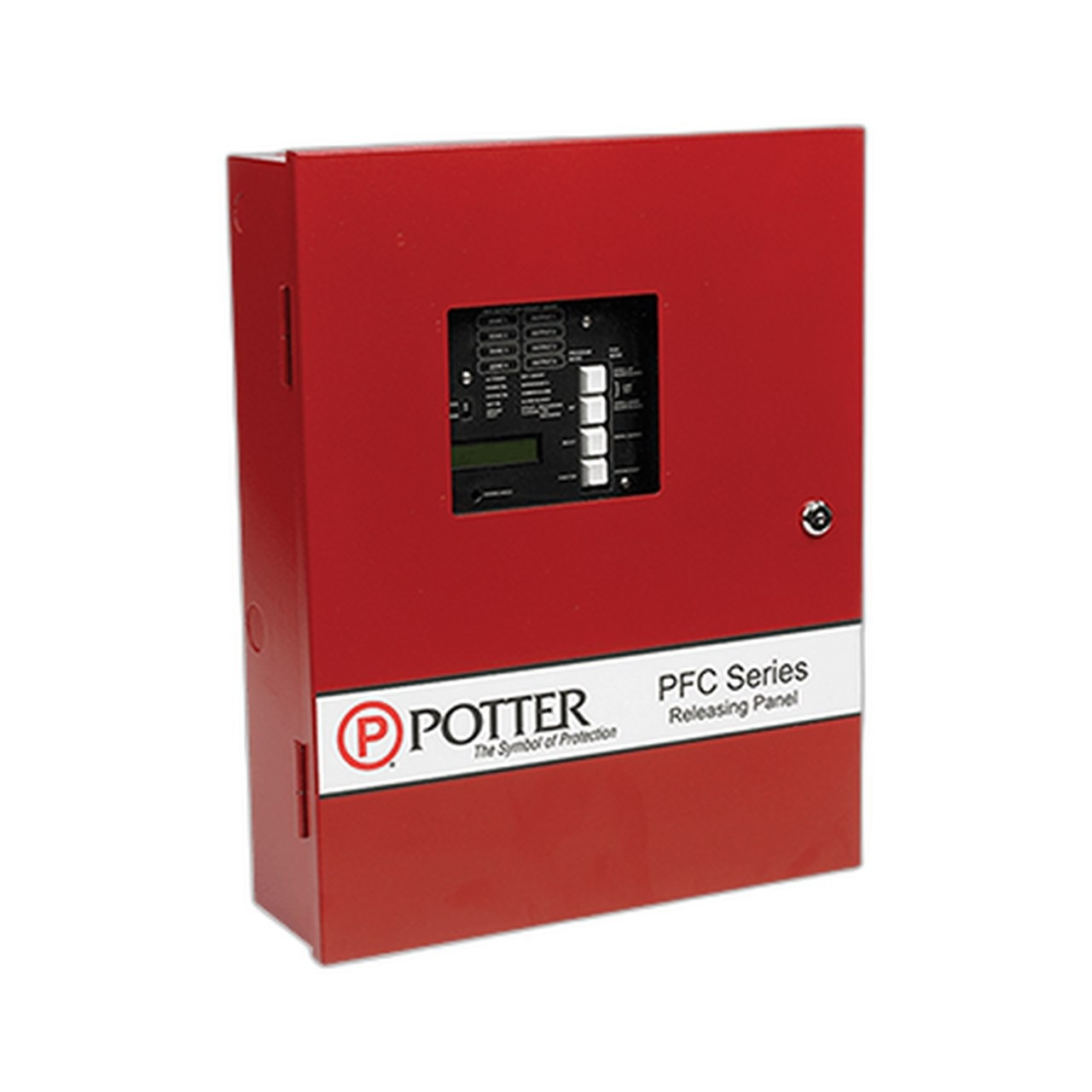
The Potter PFC-4410G3 is a compact, microprocessor-controlled releasing panel designed to manage multi-hazard suppression and alarm logic in commercial fire suppression and security environments. It delivers straightforward zone management without unnecessary complexity, making it a practical choice for integrators deploying special-hazard systems in facilities like data centers, clean rooms, server farms, and manufacturing spaces where gaseous or dry-powder suppression is required.
Key Features
- Seven Programmable Class B Initiating Circuits: Supports up to 7 independent detection zones wired as Class B (end-of-line supervised), reducing wiring labor compared to Class A installations while maintaining supervised loop integrity. Ideal for small-to-medium footprint facilities.
- Four Class B Output Circuits: Controls up to 4 independent release or solenoid valve circuits. Programmable cross-zoning with AND/OR logic lets you set precise activation sequences—for example, requiring both heat and smoke detection before triggering suppression, reducing nuisance discharge.
- Programmable Cross-Zoning Logic: AND/OR capability allows you to build protection logic that matches your facility's suppression strategy. Example: trigger suppression only when two separate hazard detectors agree, minimizing false releases that waste agent and disrupt operations.
- 4x20 LCD Display with 37 System Status LEDs: Real-time visual feedback on zone status, circuit faults, and supervision. The 37 dedicated LEDs eliminate guesswork during walk-tests and troubleshooting, saving technician time on-site.
- 4000-Event History Buffer: Logs every activation, trouble condition, and manual override. Essential for post-incident review, compliance audits, and identifying patterns that might point to detector misalignment or environmental drift.
- Integrated Battery Meter: Monitors backup battery health directly on the panel without external testing equipment. Flags degraded batteries before they fail, reducing unplanned downtime during an alarm.
- Menu-Driven On-Board Programming: No external laptop or proprietary software required. Configure zones, output logic, and timers directly via the panel's keypad. Simplifies commissioning and field adjustments on smaller deployments.
- Supervised Microprocessor Architecture: Detects processor faults and reports them immediately. Prevents silent failures that could leave your suppression system inoperative.
- Releasing Circuits Protected from False Activation: Built-in anti-nuisance logic prevents spurious signals from triggering agent discharge. A critical safeguard in environments where premature suppression would cause product damage or safety hazards.
- Walktest Mode with Automatic Time-out: Test detector responsiveness without arming live suppression circuits. Automatic reset prevents accidental lock-out after testing.
- Operating Voltage 120–240 VAC, 12A Maximum: Accepts standard North American three-phase or single-phase mains. The 12A draw is manageable on most facility power panels without requiring dedicated wiring upgrades.
Certifications & Compliance
The PFC-4410G3 carries UL 864-11 (standard for control units for fire alarm systems) and ULC S527-19 (Canadian equivalent), plus approvals under NFPA 12, 12A, 13, 15, 16, 17, 17A, 72, and 750. These certifications confirm the panel meets fire code requirements for gaseous suppression (CO₂, FM-200, etc.), foam systems, dry-powder agents, and integrated fire-alarm signaling. Verify your jurisdiction's adopted codes—some regions mandate specific NFPA standards or local amendments.
Integration & Compatibility
The PFC-4410G3 interfaces with Class B initiating devices (smoke, heat, flame detectors) and Class B addressable or conventional loop expansion modules such as the Potter IDC-6 (6-zone expansion card, part number 3992362). Its output circuits drive solenoid valves, alarm horns, strobes, and external signaling devices rated for low-voltage Class 2 or Class 3 circuits per NFPA 72. Consult the panel's detailed wiring diagram to confirm compatibility with your specific detection and suppression hardware before design lockdown.
Physical & Environmental
The panel mounts in a 4x20 inch (height × width) enclosure with a full dead front, locking removable door, and 18 AWG cold-rolled steel construction. Designed for indoor wall mounting in protected environments—typical for mechanical rooms, control centers, or server buildings. Not rated for outdoor, wet, or corrosive exposures.
Frequently Asked Questions
Q: What's the difference between Class A and Class B wiring on the PFC-4410G3?
A: Class B circuits are loop-wired from the panel to the last device, then terminated at the panel—simpler, fewer wires, lower labor cost. Class A requires parallel runs back to the panel, doubling wire runs but surviving a single open-circuit fault. The PFC-4410G3 supports Class B initiating and output circuits. For critical suppression zones, Class A may be required by code; check your local authority and NFPA 72 Annex D.
Q: Can I expand the PFC-4410G3 to handle more than 7 zones?
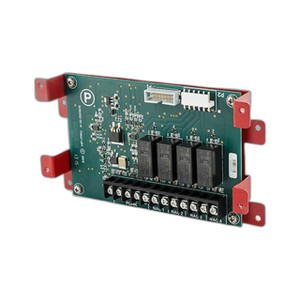
A: Yes. Potter offers the IDC-6 expansion module (part 3992362), which adds 6 initiating zones. You can add multiple IDC-6 cards to expand capacity. Each expansion card connects to the panel's addressable loop, allowing you to grow the system without replacing the main control unit.
Q: Does the PFC-4410G3 support two-way voice or text notifications?
A: No. The PFC-4410G3 is a logic and release controller, not a communicator. It outputs alarm, trouble, and supervisory signals that connect to separate fire alarm communicators (dialer, cellular modem, IP gateway) or a monitored fire alarm control panel. Plan for an external signaling device if remote dispatch or notifications are required.
Q: What backup power does the panel require?
A: The PFC-4410G3 requires a separate 24 VDC backup battery (not included) to maintain releasing function during a mains outage. Typical installations use a commercial 24 VDC battery backup supply or UPS. The integrated battery meter shown on the panel lets you confirm battery health without external multimeters.
Q: Is the PFC-4410G3 suitable for outdoor suppression systems?
A: No. The panel is rated for indoor, protected environments only. Outdoor suppression systems require NEMA 4X or equivalent stainless-steel enclosures and weatherproof detector wiring. Consider installing the panel indoors and running long detector runs to outdoor hazard zones.
Q: What is the 4000-event history used for?
A: The buffer logs every zone activation, supervisory fault, output trigger, and manual intervention. After an incident or routine inspection, you review the log to verify correct sequence, detect false alarms, and confirm detector sensitivity. Audits and insurance claims often require event logs as proof of system function.
Ted PerryPerspective based on aggregated IP Security Depot and affiliated engineering team experience.
The Potter PFC-4410G3 is a straightforward, no-frills releasing panel that does one job well: manage multi-hazard suppression logic with hard-wired reliability. If you're integrating a gaseous or dry-powder suppression system into a data center, server farm, or clean manufacturing environment, the PFC-4410G3's programmable AND/OR cross-zoning delivers the flexibility to prevent nuisance discharge without overengineering the solution.
Technical Highlights:
- 7 Programmable Initiating Circuits + 4 Output Circuits: Covers small-to-medium hazard zones without expansion. Add the IDC-6 module to scale beyond 7 zones. Typical deployment: 3–5 detection zones controlling 2–3 suppression agent valves.
- 4000-Event History: Logs every activation and fault. Auditors and insurers expect this record. In a real incident, the log proves your system functioned correctly and in what sequence—essential for post-incident liability review.
- Supervised Microprocessor + Battery Meter: Catches processor hangs and battery degradation before they silence your suppression. No mysteries on commissioning day.
- Menu-Driven Field Programming: No laptop, no vendor lock-in on config tools. Commission and adjust logic on-site. Saves time and reduces call-back risk on small installations.
Deployment Considerations:
- The PFC-4410G3 (often searched as PFC 4410G3) is a pure logic and release controller—it does not handle remote notifications or two-way voice. You must pair it with a separate fire alarm communicator or control panel if dispatch or cellular/IP alerting is required.
- Class B wiring reduces cost and labor but is vulnerable to a single break. If your jurisdiction or insurance requires Class A (redundant loops), the PFC-4410G3 still supports Class A—just double your wire runs. Confirm code-compliance before design freeze.
- The panel requires 24 VDC backup battery power, not included. Budget for a commercial UPS or dedicated 24 VDC supply with charger. The integrated battery meter helps, but you still need quarterly load testing to confirm hold-up time meets code.
- Expansion beyond 7 zones is possible via the IDC-6 module, but beyond 12–15 zones you may want to consider a larger Potter panel or hybrid approach with a central fire alarm control panel. This panel scales better for single-building or single-hazard scenarios.
The PFC-4410G3 fits cleanest in a small-to-medium data center, server room, or manufacturing facility with 2–4 hazard zones and straightforward suppression logic. Install it indoors, wire it to UL/ULC-listed detectors and solenoid valves, and connect the alarm outputs to your building's monitored fire panel or external communicator. It's a no-surprise, code-compliant workhorse for integrators who value simplicity and hard reliability over feature bloat.