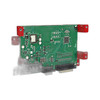
Potter MC-1000 Multi-Connect Expander Module
Overview
The Potter MC-1000 is a modular expansion controller designed to extend access control capacity beyond a primary system's native reader and door limits. If your facility has outgrown the base controller but replacement isn't feasible, the MC-1000 lets you add reader inputs and door control outputs incrementally—preserving your existing infrastructure investment while scaling the system to handle more doors and diverse credential types. It integrates into Potter access control platforms and supports field installation, making it practical for retrofit and phased rollouts.
Key Features
- Modular Expansion Architecture: Extends reader input and door control capacity without replacing the primary controller. Useful when your initial design underestimated growth or when budget constraints require phased deployment—add capacity incrementally rather than all at once.
- Multi-Reader Support: Accommodates multiple credential reader types (proximity, smart card, biometric) within a single expander, so you aren't locked into one reader family across all new doors.
- Potter Ecosystem Compatibility: The MC-1000 integrates directly with Potter access control systems, maintaining centralized credential verification and audit logging through the primary controller while distributing reader connectivity across building zones.
- Flexible Reader and Door Assignment: Configure reader-to-door mappings and credential verification rules without altering the base system, reducing design complexity during configuration.
- Field-Installable Expansion: Designed for on-site installation by qualified integrators—no factory reshipment or system downtime required to add capacity.
- Standard Access Control Communication: Operates within established access control communication frameworks, simplifying troubleshooting and reducing vendor lock-in risk on protocol-level decisions.
Integration and System Architecture
The MC-1000 connects to your primary access control controller, functioning as a satellite expansion module. Credential verification and audit logging remain centralized in the primary system, but reader connectivity fans out through the expander to cover additional doors or zones. This distributed architecture is common in larger facilities where running all readers back to a single controller location would require prohibitive cable runs or cross-building infrastructure.
Because the MC-1000 maintains the same communication protocol as the primary controller, integrators can configure reader assignments and door access rules from the existing management interface—no separate software or parallel management ecosystem. This also simplifies future audits and troubleshooting, since all activity flows through one logical system.
Scaling and Deployment Considerations
The MC-1000 works well when the primary controller reaches capacity before a facility completes its access control rollout. Rather than replace the entire system—a disruptive and expensive alternative—the expander extends door and reader coverage incrementally. This approach is especially common in warehouse automation, multi-tenant buildings, and campus environments where security requirements grow unevenly across zones or phases.
Confirm primary controller compatibility and available expansion ports before ordering—not all Potter controllers support the same expansion module interface. During deployment, document reader zone assignments and door mappings to simplify future audit, maintenance, and credential rule updates. Verify wiring distance limits from the primary controller to the MC-1000 and ensure all expander-connected readers meet communication protocol requirements specific to your Potter platform.
Frequently Asked Questions
Q: Is the MC-1000 compatible with my existing Potter access control system?
A: The MC-1000 integrates with Potter access control ecosystems, but compatibility depends on your specific primary controller model and available expansion ports. Verify controller model and firmware version against Potter documentation before ordering.
Q: Can I mix different reader types on the MC-1000?
A: Yes. The MC-1000 supports multi-reader architecture, allowing you to integrate proximity, smart card, biometric, and other standard credential reader types within a single expander—provided the primary controller's credential verification engine supports the reader technologies you deploy.
Q: Do I need a separate power supply for the MC-1000?
A: Power and communication requirements depend on your specific Potter system configuration. Consult Potter system documentation or your integrator to confirm power delivery method and wiring specifications.
Q: What happens to credential verification if the primary controller goes offline?
A: Because credential verification is centralized in the primary controller, the expander readers will not function if the primary system loses power or network connectivity. Plan UPS and network redundancy accordingly.
Q: Can I install the MC-1000 myself?
A: The MC-1000 is field-installable by qualified integrators. Installation involves wiring to the primary controller and configuring reader-to-door assignments. Consult Potter documentation or engage a certified integrator if you are unfamiliar with access control wiring and configuration.
Q: How many readers and doors can the MC-1000 support?
A: Exact reader and door capacity depends on your primary controller model and the specific MC-1000 configuration. Check the Potter MC-1000 datasheet or contact your integrator for capacity specifications.
Ted PerryPerspective based on aggregated IP Security Depot and affiliated engineering team experience.
From a systems design perspective, the Potter MC-1000 solves a deployment problem that typically surfaces mid-project: your primary controller reaches capacity before you've finished wiring all doors. Rather than rip-and-replace the entire system—a costly and time-consuming disruption—the MC-1000 lets you extend reader and door coverage incrementally. This preserves your infrastructure investment and keeps project timelines realistic, especially valuable in retrofit scenarios where phased rollout is a business requirement, not just a technical preference.
Technical Highlights:
- Modular Expansion: Adds reader input and door control capacity without requiring primary controller replacement. Useful when growth was underestimated or budget constraints demand phased deployment.
- Multi-Reader Architecture: Accommodates diverse credential reader types (proximity, smart card, biometric) within a single expander module, avoiding vendor lock-in on reader families across newly added doors.
- Centralized Verification: Credential verification and audit logging remain centralized in the primary controller, simplifying troubleshooting and ensuring a single source of truth for access events and rule changes.
Deployment Considerations:
- Verify primary controller model and available expansion ports before ordering—not all Potter controllers support the same expansion interface.
- Plan reader cable runs and communication protocol requirements carefully; wiring distance from primary to MC-1000 must be confirmed against Potter specifications.
- Document reader zone assignments and door mappings during configuration to simplify future maintenance, credential rule updates, and compliance audits.
The MC-1000 is a good fit for warehouse automation facilities, multi-tenant buildings, and campus deployments where access control requirements grow unevenly across zones or phases. It's particularly valuable when budget or project timeline constraints prevent a full system replacement. Confirm wiring logistics and primary controller compatibility before installation to avoid costly rework.