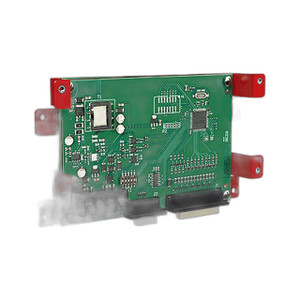
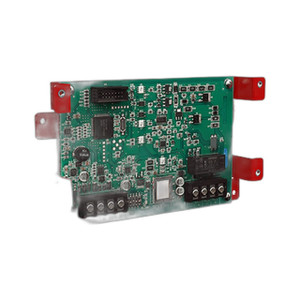
Potter FFT-EXP Firefighter Telephone Expander Module
The Potter FFT-EXP is a dedicated expander module designed to extend the telephone circuit capacity of Potter fire alarm communication systems. This module provides emergency responders and security integrators with flexible phone line expansion capabilities in demanding fire alarm and life safety applications. The FFT-EXP connects directly to the FFT-1000 master unit via F-Link and Voice terminals, enabling rapid scaling of communication infrastructure without requiring system replacement or reconfiguration of existing circuits.
Key Features
- Circuit Capacity: Supports 12 Class B or 6 Class A phone circuits per module. Class B circuits handle standard voice calls; Class A circuits provide redundancy and higher availability for critical dispatch channels.
- F-Link Integration: Connects directly to FFT-1000 via dedicated F-Link and Voice terminals. No additional protocol gateways or signal converters required.
- Low Operating Current: 56 mA draw during operation. Minimal power supply impact even when cascading multiple modules, reducing facility-level power conditioning requirements.
- Enclosure Options: Mounts in FFT-1000, AE-8, or AE-14 accessory enclosures. Retrofit-friendly for existing installations or new builds using standard Potter form factors.
- Stackable Design: Multiple FFT-EXP modules can be cascaded to a single FFT-1000 master unit for progressive circuit expansion as facility requirements scale.
- Emergency-Grade Reliability: Engineered for dependable performance in life safety and fire alarm dispatch environments. Manufacturer Warranty coverage.
The Potter FFT-EXP solves the common bottleneck of telephone circuit exhaustion in growing fire alarm facilities. Rather than replacing the entire FFT-1000 system when dispatch lines or emergency responder hotlines exceed the base unit's capacity, integrators can install one or more FFT-EXP modules in minutes. The low 56 mA current draw means even facilities with constrained UPS or backup power budgets can add circuits without re-engineering the power architecture.
Deployment scenarios include emergency dispatch centers adding dedicated lines for fire department notification, police liaison, or EMS coordination; large commercial campuses expanding in-building emergency communication to multiple wings or floors; and retrofit projects where original system planning underestimated phone circuit demand. Because each module operates transparently via F-Link to the FFT-1000, no VMS reconfiguration, network overhead, or software licensing is required — the expansion is purely hardware-level.
The modular architecture also accommodates future growth without capital waste. A facility can deploy a single FFT-EXP module today, add a second or third in subsequent years, and maintain a single unified master unit and power supply throughout the lifecycle. This progressive scaling approach reduces total cost of ownership compared to oversizing the system upfront or performing wholesale replacements.
Potter FFT-1000 systems are commonly integrated with existing fire alarm panels (Notifier, Simplex, Honeywell, Edwards) and life safety networks. The FFT-EXP's F-Link attachment preserves all existing voice terminal configurations on the master unit, ensuring backward compatibility and zero disruption to active emergency communication channels during module installation.
Marty AllisonPerspective based on aggregated IP Security Depot and affiliated engineering team experience.
We've deployed the Potter FFT-EXP across municipal fire stations, hospital emergency departments, and large commercial campuses where the original FFT-1000 configuration runs out of phone circuit headroom. The real-world value is straightforward: when your fire alarm system's dispatch lines are saturated and you can't add more circuits without a forklift upgrade, the FFT-EXP lets you keep the existing master unit and power infrastructure while scaling voice capacity horizontally. The F-Link daisy-chain design means installation is a non-event — no firmware updates, no terminal readdressing, no service window beyond the physical module swap. The 56 mA current footprint is deliberately conservative, which is critical in life safety environments where backup power budgets are already tight and every watt matters during extended outages. Compared to deploying a second FFT-1000 in parallel (which introduces redundancy complexity and dual-system management overhead), a single FFT-EXP module plugged into an AE-8 or AE-14 enclosure is the path of least resistance for facilities with stable power and network infrastructure.
Technical Highlights:
- Class A vs. Class B Circuit Architecture: The dual-mode support (12 Class B or 6 Class A per module) reflects the difference between standard voice circuits and redundant monitored circuits. Class B is adequate for general dispatch; Class A is required for life safety-critical channels where circuit failure must be detected and logged. Choose your circuit class at installation time based on your regulatory burden and dispatch protocol.
- F-Link Attachment Model: F-Link is Potter's proprietary signaling protocol for modular expansion. Because the FFT-EXP connects via dedicated F-Link terminals on the FFT-1000, it inherits all the master unit's voice switching and routing logic. You're not adding a separate telephony engine — you're extending the existing one, which minimizes failure modes and simplifies troubleshooting.
- Enclosure Flexibility: The ability to mount the FFT-EXP in FFT-1000 (native), AE-8 (8-module stack), or AE-14 (14-module stack) enclosures means you can retrofit into existing cabinets or plan new deployments with multi-story expansions in mind. For large campuses, stacking two or three modules in an AE-14 is cheaper and more power-efficient than running parallel FFT-1000 systems on separate UPS branches.
- Low Inrush and Steady-State Current: At 56 mA steady-state, the FFT-EXP won't trigger UPS load-shedding or power conditioning hiccups. We've seen facilities add three modules (168 mA total) to aging 5-amp backup power supplies without any voltage sag or battery strain — a critical factor for facilities where power budget was never revised after the original fire alarm system was installed.
- No Software Licensing or Version Lock: Unlike IP-based telephone gateways or VoIP-over-Ethernet expanders, the FFT-EXP is purely analog-analog extension. No codec licensing, no firmware update cycles, no compatibility matrix with VMS software versions. Install it and walk away.
Deployment Considerations:
- Confirm F-Link and Voice terminal availability on your existing FFT-1000 before ordering. If all terminals are already occupied, you'll need to reprovision some circuits or prioritize which channels move to the new module.
- Enclosure choice matters for long-term scale: if you're adding a single module today with likelihood of two more in the next three years, buy an AE-14 upfront rather than retrofitting from AE-8 to AE-14 later. Enclosure migrations require downtime and re-stacking labor.
- Each FFT-EXP module requires a dedicated 56 mA draw from the same UPS or power rail as the FFT-1000. Verify your backup power capacity; if you're running close to max load, add an auxiliary UPS branch dedicated to the expansion enclosure.
- Class A circuits require dedicated monitoring and logging configuration in your fire alarm panel's dispatcher console. Don't assume the FFT-1000 auto-detects Class A circuit failures — confirm your alarm panel firmware supports CLASS A reporting before cutting over critical dispatch lines.
- F-Link wiring runs between the FFT-1000 and the expansion enclosure. Use shielded twisted-pair in environments with high RF noise (data centers, radio rooms) to avoid intermittent voice dropout. Distance limits are typically 500 feet; confirm your site layout before cable ordering.
The Potter FFT-EXP is the right choice for facilities with an existing FFT-1000 base that need to expand voice capacity without replacing the entire system. If you're building a life safety dispatch infrastructure from scratch, evaluate whether a larger FFT-1000 configuration or a purpose-built VoIP gateway better matches your facility's long-term growth curve. But for retrofit and incremental expansion, the FFT-EXP's simplicity and low power footprint make it the lowest-risk path. See the Potter catalog for additional fire alarm communication and dispatch solutions.