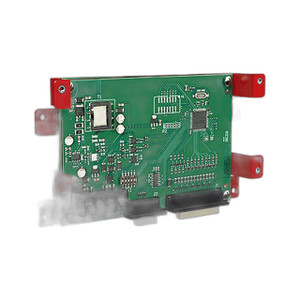
Potter SLCE-127 SLC Loop Expander
Overview
The Potter SLCE-127 is a dedicated loop expander engineered to scale SLC (Signaling Line Circuit) fire alarm infrastructure beyond standard control panel capacity. If your base panel's addressable device limit is approaching exhaustion, the SLCE-127 functions as a transparent network node within the SLC topology, letting you add more detectors, modules, and notification appliances without panel replacement. This is the practical tool for large campuses, multi-building complexes, and facilities with distributed detection zones that would otherwise require a second control panel.
The SLCE-127 maintains full two-way communication between the control panel and every addressable device connected through it. Critically, devices plugged into the expander retain their individual addresses and diagnostic reporting — the panel sees them as if they were hardwired directly to the main loop. No special configuration logic. No firmware updates. The expander is transparent to the system.
Key Features
- Loop Capacity Extension: Expands addressable device count beyond native panel limits — essential when adding smoke detectors, heat detectors, pull stations, or strobes to an already-saturated SLC loop.
- Transparent Node Architecture: Devices connected through the SLCE-127 report back to the panel with full address and status visibility — no loss of diagnostic data or functional addressability.
- Two-Way Communication: Maintains bidirectional polling between control panel and all attached modules and detectors, preserving real-time status and command transmission.
- Modular, Compact Form Factor: Fits into control rooms, remote equipment cabinets, or distributed network hubs without demanding dedicated infrastructure or special housing.
- Multi-Zone Segmentation: Enables architects to design segmented loop topologies across complex facilities — hospitals, manufacturing plants, educational campuses — maintaining operational isolation while centralizing management.
- Redundant Loop Support: Can be deployed in redundant loop configurations (loop A / loop B) for mission-critical applications requiring fault tolerance; if one loop fails, the other maintains full coverage.
- Potter Panel Compatibility: Works with Potter fire alarm control panels and third-party systems implementing standard SLC protocols — no proprietary firmware or special licensing required.
- Installation Flexibility: Supports both hardwired and networked topologies depending on facility design and electrical layout.
Integration & Compatibility
The SLCE-127 (often searched as SLCE 127) integrates seamlessly with Potter control panels and compatible fire alarm systems that support standard SLC communication. The device requires no special configuration beyond standard device addressing procedures — the panel automatically includes the expander in its polling cycles and reporting logic. Diagnostic events, alarm signals, and supervisory status flow through the expander as if it were not there. All addressable devices maintain their unique addresses and can be individually tested or reset from the panel's control interface.
When planning deployment, account for the physical location of the SLCE-127 relative to your device distribution. Placing it near a cluster of remote detectors or notification appliances reduces loop wire runs and voltage drop on long circuits. For redundant configurations, mirror the SLCE-127 architecture on both loop A and loop B to guarantee coverage in case of single-loop failure.
Typical Applications
- Large commercial buildings with multiple tenants or zones requiring segmented fire detection networks.
- Healthcare facilities expanding detection coverage across additional wings, floors, or patient care areas.
- Industrial campuses and manufacturing plants with distributed fire safety zones across multiple buildings.
- Educational institutions deploying comprehensive fire detection and notification networks.
- Mixed-use facilities (retail, office, warehouse) where loop segmentation isolates zones for operational or functional reasons.
- System upgrades where panel capacity is exhausted but control panel replacement is not feasible or cost-justified.
Frequently Asked Questions
Q: Does the SLCE-127 require special configuration or firmware updates to work with my Potter panel?
A: No. The SLCE-127 is transparent to panel logic. Install it, assign device addresses as you normally would, and the panel automatically incorporates it into polling cycles. No firmware upgrades or special licensing required.
Q: Can I use the SLCE-127 in a redundant loop configuration?
A: Yes. Deploy the SLCE-127 on both loop A and loop B. If one loop fails, the other maintains full coverage across all devices connected to the redundant expander.
Q: How many addressable devices can I add through a single SLCE-127?
A: The number depends on your control panel's total addressable capacity and the native loop limit. The expander itself does not impose a secondary limit — it simply extends the panel's native capacity. Consult your panel documentation for absolute maximum addressable device count.
Q: What happens if the SLCE-127 fails or loses power?
A: Devices connected through the failed expander will not report status or alarm conditions. In mission-critical applications, redundant loop deployment ensures that a second SLCE-127 on loop B covers all zones. For non-redundant setups, plan wire routing to minimize the risk of single-point failure.
Q: Is the SLCE-127 compatible with third-party fire alarm panels?
A: Yes, if the third-party panel supports standard SLC protocols. Verify compatibility with the panel manufacturer before installation. Potter expanders are designed to integrate transparently with any SLC-compliant system.
Q: Where should I physically locate the SLCE-127 within my facility?
A: Place it near the cluster of remote detectors it will serve to minimize loop wire runs and voltage drop. For distributed facilities, multiple SLCE-127 units can segment zones across different buildings or areas. Environmental stability (temperature, humidity) is important — keep it in a conditioned cabinet or control room if possible.
Ted PerryPerspective based on aggregated IP Security Depot and affiliated engineering team experience.
I've specified the Potter SLCE-127 on multiple large campus deployments where the base panel loop capacity would have been exhausted early in the project. The SLCE-127 solved the scaling problem without forcing a control panel replacement — a real cost and timeline advantage when you're phasing in detectors or adding zones incrementally.
Technical Highlights:
- Transparent Node Operation: Devices connected through the SLCE-127 report back with full addressability — the control panel polls and manages them exactly as if they were hardwired to the main loop. No loss of diagnostic data or functional isolation.
- Redundancy-Capable Architecture: Deploy mirror SLCE-127 units on loop A and loop B. If one loop fails, all devices on the redundant expander remain online via the secondary loop — critical for mission-critical healthcare and high-occupancy facilities.
- Native SLC Protocol Support: Works with Potter panels and any third-party system using standard SLC communication — no firmware patches, no licensing, no special configuration beyond standard device addressing.
Deployment Considerations:
- Plan physical placement near device clusters to minimize loop wire runs and voltage drop on long circuits.
- In redundant configurations, verify that both loop A and loop B wiring is properly balanced and that the SLCE-127 is installed on both loops to guarantee no single-point failure.
- Monitor loop loading: as you add devices through the expander, verify that cumulative current draw doesn't exceed the panel's supervised loop capacity — consult your panel spec sheet.
The SLCE-127 is the right choice when you need to extend capacity without replacing infrastructure. On large multi-building campuses or healthcare networks where addressable zones span multiple floors or wings, it gives you flexibility to grow detection coverage incrementally while keeping panel hardware in place.