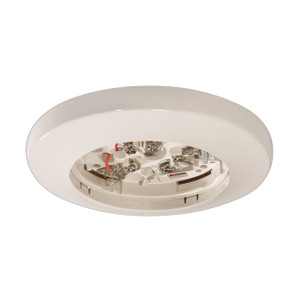
System Sensor B114LP 120VAC Low-Profile Plug-In Detector Base
The B114LP is a low-profile plug-in detector base engineered for fire detection and alarm systems where mounting space is constrained. Operating at 120VAC, this base provides a slim form factor that integrates seamlessly into ceiling grids, soffits, and other confined mounting environments common in commercial, institutional, and industrial buildings. The TCP/IP communication protocol enables the base to connect directly to networked fire alarm management systems, allowing centralized monitoring and reporting across multiple sites without requiring separate gateway hardware.
Key Features
- Low-Profile Design: Compact mounting footprint fits discrete installation in drop ceilings and tight spaces where standard bases would protrude excessively or require architectural modification.
- 120VAC Power: Operates on standard building power rather than 24VDC, eliminating the need for separate low-voltage power supplies in facilities already equipped with AC distribution to detector mounting points.
- TCP/IP Communication: Direct Ethernet connectivity simplifies network integration and removes dependence on proprietary polling loops or serial backbones—particularly valuable in larger deployments where IP-addressable fire system components streamline device management and firmware updates.
- Plug-In Module Architecture: Accepts standard System Sensor detector modules, providing flexibility to swap detection types (photoelectric, ionization, or multi-sensor heads) without replacing the base structure.
- Network-Based Monitoring: TCP/IP protocol support means the base integrates with modern building management systems and third-party fire alarm software, enabling centralized dashboard reporting and event logging across multi-building campuses.
- Commercial & Industrial Ratings: Designed and rated for deployment in office buildings, warehouses, manufacturing facilities, healthcare institutions, and other environments where reliable fire detection and integrated reporting are regulatory or operational requirements.
Integration & Compatibility
The B114LP base accommodates System Sensor's line of plug-in detector modules. Its TCP/IP interface allows integration with networked fire alarm management platforms and building automation systems that support standard Ethernet communication. If your fire system currently uses 24VDC powered bases or legacy serial-based polling, migration to the B114LP requires network infrastructure planning—ensure your facility's Ethernet backbone reaches planned mounting locations and that your fire alarm control panel or management software supports TCP/IP device nodes.
Consult the fire detection equipment guide to evaluate whether a networked detector base suits your architecture, or review network planning resources if you're evaluating power and cabling requirements for IP-based fire system expansion.
Frequently Asked Questions
Q: What detector modules are compatible with the B114LP?
A: The B114LP accepts standard System Sensor plug-in detector modules. Consult the product documentation or your System Sensor distributor to confirm compatibility with your specific detector model.
Q: Can the B114LP replace an existing 24VDC base?
A: The B114LP operates on 120VAC only and uses TCP/IP networking instead of traditional 24VDC loops. Replacement requires AC power availability at the mounting location and a networked fire alarm control system or management platform that supports TCP/IP device nodes.
Q: Does the B114LP require a separate gateway or interface card?
A: No. The B114LP communicates directly via TCP/IP, eliminating the need for gateway modules or proprietary polling cards—a significant advantage in systems where direct Ethernet connectivity to the fire panel or network management appliance is available.
Q: What is the typical power draw of the B114LP?
A: Specific power consumption is detailed in the B114LP datasheet. Contact your distributor or System Sensor technical support for exact wattage to ensure your AC branch circuit design accounts for detector base loads.
Q: Is the B114LP suitable for retrofit installations?
A: Yes, if 120VAC power and Ethernet cabling can be routed to mounting locations. Retrofit feasibility depends on your facility's electrical and network infrastructure. Low-profile design minimizes ceiling impact compared to standard bases.
Q: What certifications or standards apply to the B114LP?
A: Fire detection equipment certifications vary by region and installation code. Verify UL, ULC, or other applicable standards compliance with your authority having jurisdiction and System Sensor documentation.
Ted PerryPerspective based on aggregated IP Security Depot and affiliated engineering team experience.
The B114LP is a pragmatic choice if you're moving from legacy 24VDC detection loops to networked fire alarm infrastructure. The 120VAC plus TCP/IP combination eliminates a layer of hardware—no polling cards, no serial gateways—and that matters when you're commissioning across 50 or 100 mounting points. The low-profile footprint is real: standard bases won't fit in modern suspended ceilings without visible obstruction or costly soffit work.
Technical Highlights:
- 120VAC Operation: Draws power directly from building AC distribution, reducing the need for dedicated 24VDC power supplies and associated transformer load calculations on your fire system UPS.
- TCP/IP Networking: Direct Ethernet communication means each base registers as a network node; you avoid proprietary polling overhead and gain the ability to integrate with third-party fire management software and building automation dashboards.
- Plug-in Module Flexibility: Standard detector cartridges swap in without base replacement, simplifying spares inventory and allowing mixed photoelectric/ionization detection on a single building network.
Deployment Considerations:
- AC Power Routing: You need 120VAC at every mounting location. In retrofit work, that often means pulling new circuits or tapping existing ceiling-mounted junction boxes—budget electrical labor accordingly.
- Network Backbone: TCP/IP requires Ethernet cabling (or managed wireless, less common in fire systems) routed to each base. If your facility's IT network doesn't reach detector locations, you'll need dedicated fire system Ethernet runs—a cost difference from simple loop wiring.
- Code Compliance Verification: Fire detection bases must comply with UL, ULC, or regional standards. Confirm the B114LP is listed for your jurisdiction and application type before finalizing design.
Position the B114LP in new commercial builds or major fire system overhauls where Ethernet infrastructure is either already in place or budgeted as part of the modernization. Avoid it if your facility has zero network reach to ceiling voids or if your fire control panel lacks TCP/IP input modules—those limitations make the base unsellable in retrofit scenarios.