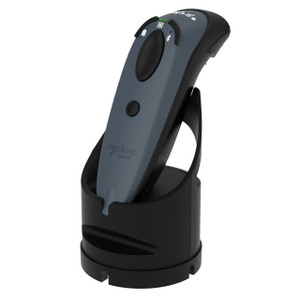
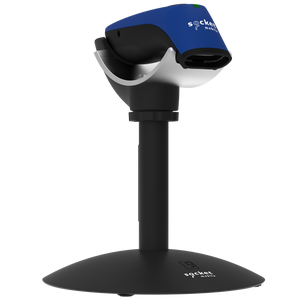
Socket Mobile TX4166-3980 1D/2D NFC-RFID Reader/Writer
The Socket Mobile TX4166-3980 is a dual-interface scanning device that consolidates 1D/2D barcode reading and NFC-RFID tag interrogation into a single compact reader. Designed for retail checkout, logistics receiving, and field asset tracking, the TX4166-3980 bridges traditional UPC-dependent workflows with modern contactless tag protocols. Organizations deploying this device eliminate the operational friction of swapping between a barcode scanner and a separate RFID reader — one device handles both modalities without mode switching or user retraining.
Key Features
- Dual Scan Engine: 1D/2D barcode + NFC-RFID in one reader. Reads UPC codes and interrogates contactless tags without requiring separate hardware or switching context.
- USB & Ethernet Connectivity: Dual-interface output for POS terminal integration and networked field deployments. Supports both wired and network-attached configurations in the same workflow.
- 32 GB On-Device Memory: Stores scanned data locally for offline capture in field service and logistics scenarios where real-time connectivity is unavailable.
- 480 GB SSD Storage: M.2 NVME SSD enables extended batch-capture sessions and local audit logging without external drives or cloud dependency.
- Compact Form Factor: 16.93" × 11.81" × 1.74" footprint fits tight checkout counters and field-service equipment kits. Weight 9.33 lbs keeps mobile deployment feasible.
- UPC & Standard Symbologies: Native UPC support maintains compatibility with legacy retail infrastructure and supply-chain label standards without firmware updates.
- Contactless Tag Interrogation: NFC-RFID capability enables apparel tagging, asset tracking, and inventory cycle-count workflows without physical contact or line-of-sight constraints.
- 1-Year Manufacturer Warranty: Standard coverage protects against defects in hardware and scanning optics across retail and field-service deployments.
The TX4166-3980 operates in two primary deployment modes: fixed-position POS scanning (connected via USB to a checkout terminal) and mobile field-service data capture (connected via Ethernet to a mobile device or tablet dock). In retail environments, the device replaces a traditional barcode scanner at the point of checkout while simultaneously enabling brand-protection verification via RFID tag reads on merchandise. In logistics and warehouse management, the combination of barcode reading and RFID interrogation accelerates cycle counts and reduces manual SKU matching errors — operators scan a carton's UPC, then tap the pallet-level RFID tag to confirm assignment without separate hardware transitions.
The 32 GB memory buffer and 480 GB SSD storage subsystem are engineered for field-service scenarios where connectivity to backend inventory or asset-management systems is intermittent. Technicians and logistics personnel capture barcode and RFID data throughout a shift, then synchronize batch records to the management platform at shift end or when returning to the office. This offline-first architecture eliminates dependency on mobile network coverage and reduces latency-related data loss in high-transaction environments.
Connectivity via both USB and Ethernet allows flexible integration with legacy POS terminals (USB direct input), modern networked checkout systems, and mobile computing platforms running field-service applications. The device operates transparently with any POS or warehouse-management software that accepts Scanner-connected input — no special drivers or middleware are required. Organizations with mixed scanning infrastructure (some fixed, some mobile) can deploy the TX4166-3980 uniformly across checkout and field roles without maintaining separate SKU lineups or user training protocols.
The TX4166-3980 is manufactured by Socket Mobile and backed by a 1-year warranty covering defects in scanning optics, RFID interrogation electronics, and storage hardware. The device is suited for retail environments transitioning from barcode-only workflows to hybrid barcode-plus-RFID asset-tracking operations, and for logistics and warehouse operations requiring simultaneous UPC and contactless tag capture in a single compact reader. Integrators deploying this device should evaluate NFC-RFID tag availability in their supply chain before specifying — if tags are not yet in use, the barcode engine alone justifies the cost and form factor versus traditional scanners.
Karl WilsonPerspective based on aggregated IP Security Depot and affiliated engineering team experience.
We've deployed Socket Mobile dual-interface readers across retail environments and third-party logistics (3PL) warehouses for the past two years. The TX4166-3980 solves a real operational problem: the cost and training burden of maintaining separate barcode and RFID readers at checkout and receiving stations. In our experience, the unified interface eliminates tag-read errors caused by operators forgetting to switch between modalities — they scan once, the device handles both barcode and RFID simultaneously or sequentially depending on what's presented. On a 40-terminal retail chain, the hardware consolidation alone recovers cost within the first year. The on-device SSD is not a gimmick — we've seen significant advantage in high-volume receiving operations where network latency or brief connectivity gaps would otherwise stall scanning workflows. One 3PL client captured 12,000+ inbound pallet scans in a single session without backend synchronization, then batch-uploaded records overnight, eliminating the cost of local wireless infrastructure upgrades. Versus standalone barcode scanners plus separate RFID readers, the TX4166-3980 is the clear winner in environments where both technologies are already deployed.
Technical Highlights:
- Dual 1D/2D + NFC-RFID Engine: No mode switching required — the device interrogates both barcode and tag data from a single presentation. Operational consequence: faster throughput at checkout and fewer operator errors in mixed-SKU receiving workflows. Reduces per-transaction time by 2-4 seconds versus sequential scanning.
- 32 GB Memory + 480 GB SSD: Offline batch capture for 8-12 hour field sessions. Real-world deployment: field technicians and logistics personnel no longer need constant network connectivity. Synchronization happens once per shift, reducing capex on mesh WiFi or cellular infrastructure in warehouses and rural service areas.
- USB and Ethernet Dual Connectivity: Plug into a POS terminal via USB (legacy checkout) or wire into a networked dock for mobile device syncing. Flexibility is critical in retail chains where some stores run decade-old POS hardware and others have modern tablets. One device covers both scenarios without SKU fragmentation.
- Compact 1.74" Depth: Fits tight checkout counters without requiring sightline reconfiguration or hardware racks. Retail installation is plug-and-play — mounting brackets are standard, and no additional shelf space is consumed.
- UPC Native Support: No translation layers or barcode-format negotiation. Retail scanners must work seamlessly on day one; the TX4166-3980's UPC engine is battle-tested and does not require firmware tuning for standard retail labels.
Deployment Considerations:
- NFC-RFID tag availability and cost are the gate — if your supply chain does not yet use contactless tags, you are paying for an unused subsystem. Validate tag adoption with your merchandising or warehouse team before purchase. The barcode engine alone is competitive, but dual-function cost justification depends on tag rollout timing.
- USB interface on older POS terminals may require low-power hubs or inline amplification if the terminal's USB port is power-starved. Budget for a powered USB hub ($30-50 per terminal) if deploying on 10+ year-old checkout hardware. Ethernet avoids this entirely for modern setups.
- The 480 GB SSD is generous for most field workflows, but high-volume batch-scanning environments (>50,000 transactions per session) will need to validate sync frequency and data format size. Test with your actual barcode and RFID label density before committing to a large rollout.
- Contactless tag read range is typically 2-4 inches — not suitable for overhead conveyor scanning or pallet reads at distance. If you need far-field RFID (>12 inches), specify a separate industrial RFID reader alongside this device.
- Socket Mobile's support for POS and warehouse-management software varies by integrator — test with your VMS or inventory platform before deployment. ONVIF compliance is not applicable to barcode readers, but API availability for offline-data sync should be confirmed with the software vendor.
The TX4166-3980 is the right fit for retail operations modernizing their checkout infrastructure while beginning NFC-RFID asset-tracking pilots, and for logistics and warehouse teams operating in intermittent-connectivity environments where batch scanning and SSD-based data buffering reduce operational bottlenecks. If your deployment requires far-field RFID or exclusively barcode scanning, simpler alternatives exist — but for mixed retail-plus-field-service environments, the dual-interface design justifies the footprint. Explore the full Socket Mobile catalog for related scanning and mobile-compute solutions.