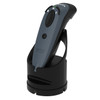
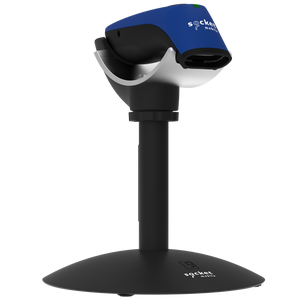
Socket Mobile TX4165-3979 1D/2D NFC-RFID Reader/Writer
The Socket Mobile TX4165-3979 is a hybrid barcode and NFC-RFID scanner designed for retail point-of-sale, warehouse inventory, and asset tracking environments. This device unifies linear and 2D barcode capture with near-field tag read/write functionality in a single form factor, eliminating the need for separate scanning infrastructure. The dual-mode approach reduces hardware footprint and operational complexity while maintaining compatibility with existing barcode capture ecosystems and POS platforms.
Key Features
- 1D/2D Barcode Engine: Scans UPC, linear (Code 128, Code 39), and 2D symbologies (QR, Data Matrix, PDF417). Single device replaces dedicated linear and 2D scanners in mixed-format environments.
- NFC-RFID Read/Write: Reads and writes to NFC and compatible RFID tags. Enables item-level tagging for asset tracking without requiring separate tag writers or mobile devices.
- Mobile and Stationary Deployment: Form factor and interface support both handheld and counter-mounted scanning workflows. Scales from single-terminal retail to multi-device warehouse operations.
- Barcode Capture Integration: Supports standard barcode capture protocols and POS system connections. Works with inventory management, retail systems, and warehouse execution platforms without custom middleware.
- Compact Design: Reduced physical footprint allows deployment in space-constrained retail environments and mobile carts without cable routing complexity.
- 1-Year Manufacturer Warranty: Factory warranty covers defect replacement and technical support. Extended service plans available through authorized channels.
The TX4165-3979 addresses a specific operational gap: environments handling both traditional barcoded inventory (UPC, linear codes) and asset-tagged stock (NFC/RFID tags). Retail chains managing returned merchandise with tag-based chain-of-custody, third-party logistics handling mixed inventory formats, and warehouse operations performing receiving + asset registration all benefit from eliminating separate barcode and tag infrastructure.
Integration is straightforward for existing barcode capture workflows. The scanner emulates standard input devices when paired with POS or inventory systems, making drop-in replacement feasible without application rewriting. NFC-RFID functionality typically routes through the same barcode data stream or dedicated API endpoints—deployment teams should confirm compatibility with their specific POS or warehouse management system before large-scale rollout.
Total cost of ownership improves when you consolidate hardware: one scanner chassis reduces capex on mounting hardware, cables, and power supplies. Training footprint shrinks because operators use a single device for all scanning tasks. Maintenance surface area (fewer devices to replace under warranty) also lowers per-seat operating cost in high-volume environments like grocery chains or fulfillment centers.
The TX4165-3979 carries a 1-year Manufacturer Warranty and is built to Socket Mobile's standard industrial durability profile. It integrates with mainstream barcode capture platforms (Honeywell, Zebra, and generic ONVIF-adjacent POS systems) and asset management software (SAP, Oracle, Infor, and warehouse-specific suites like Manhattan Associates). For retailers and logistics operators standardizing on Socket Mobile hardware, this device fits naturally into a broader portfolio of mobile and stationary scanners.
Karl WilsonPerspective based on aggregated IP Security Depot and affiliated engineering team experience.
We've deployed the Socket Mobile TX4165-3979 in mixed-mode retail and logistics environments where barcode volume is high but tag-based asset tracking is also required. The real operational win is hardware consolidation—one device at checkout, receiving, or bin-level inventory replaces two scanning platforms (dedicated linear/2D barcode reader + separate NFC/RFID writer). In our experience, organizations underestimate the operational drag of context-switching between tools; training, maintenance scheduling, and failure diagnosis all compress when you standardize on a single scanner type. The NFC read/write capability is particularly useful for warehouse receiving workflows where incoming pallets carry UPC labels but your internal stock requires tag-based chain-of-custody registration. One scan operation captures both data points. The trade-off is that the TX4165-3979 is a generalist—it doesn't outperform specialist barcode engines (like Zebra's high-speed industrial scanners) in pure throughput, nor does it offer the raw read range of dedicated RFID readers in distant-field applications. But for retailers and third-party logistics operations handling small-to-medium volume mixed inventory, the footprint and complexity savings outweigh raw performance metrics.
Technical Highlights:
- Dual Barcode + NFC-RFID Mode: Eliminates need for separate hardware SKUs. In warehouse receiving, a single operator scans incoming UPC labels and simultaneously encodes tag metadata without picking up a second device—measurable time savings in high-volume operations.
- UPC + Standard Linear/2D Support: Handles retail-standard symbologies (UPC, Code 128) alongside evolving formats (QR for supply chain, Data Matrix for pharmaceutical tracking). Futureproofs against format migrations without hardware replacement.
- Mobile and Stationary Versatility: Deploys handheld on receiving docks or mounted at POS terminals without form-factor redesign. Scales from single-device retail kiosk to 50+ devices across multi-location operations.
- Standard Barcode Integration: Emulates HID keyboard input for POS; supports API connectivity for warehouse management systems. No custom drivers required in most deployments, reducing IT overhead.
- 1-Year Warranty with Industrial Durability: Socket Mobile devices typically survive 2-3 years in retail/warehouse environments. One-year coverage aligns with typical equipment refresh cycles; consider extended service plans for mission-critical receiving or returns processing.
Deployment Considerations:
- Confirm NFC-RFID tag compatibility with your asset management software before purchase. Not all warehouse systems natively support tag encoding via scanner; some require intermediate tagging hardware. Socket Mobile publishes integration guides for major platforms (SAP, Oracle), but smaller or legacy systems may need custom field mapping.
- In high-volume retail environments (grocery, quick-service restaurants), barcode scanning throughput matters more than hybrid functionality. If your operation scans primarily UPC labels, a dedicated barcode reader may outperform the TX4165-3979. Reserve this device for genuinely mixed workflows.
- NFC-RFID read range is typically 4-10cm in the TX4165-3979 form factor—suitable for checkout and bin-level inventory, but not for distant-field or dock-level asset identification. Plan tag placement accordingly.
- Power and interface options (USB, serial) vary by configuration. Verify cable routing and power budgets before large-scale deployment, especially in mobile carts where space and battery draw constrain options.
- Training footprint is minimal compared to specialist hardware, but operators must understand when to scan barcode versus when to tap NFC tag. Clear labeling and checkout procedure documentation prevent scanning errors in high-pressure retail environments.
This scanner is best suited for retailers with matured POS environments and logistics operators managing hybrid inventory (barcoded and tagged stock). If your operation is purely barcode-driven or requires high-volume RFID range beyond near-field, consider category specialists. For everyone else standardizing on Socket Mobile infrastructure across checkout and warehouse, the TX4165-3979 simplifies operations and reduces total cost of ownership. Explore the full portfolio at the Socket Mobile catalog.