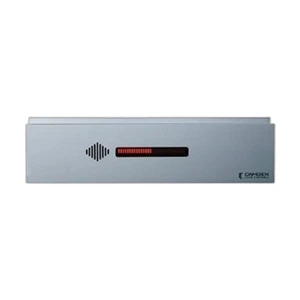
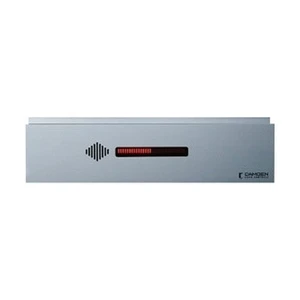
Camden CX-DE1200-N3 30 Second Fixed Exit Delay
Overview
The Camden CX-DE1200-N3 is a networked exit delay controller designed for multi-door access control installations. This device manages timed release of magnetic strikes across up to four doors simultaneously, providing a 30-second fixed exit delay interval. The CX-DE1200-N3 integrates proximity-based credential reading with TCP/IP communication, making it suitable for integrators deploying coordinated door release sequences in educational facilities, commercial buildings, and secure entry environments where staged egress control is required.
Key Features
- 4-Door Capacity: Controls magnetic strike release across four independent doors from a single networked controller
- 30-Second Fixed Exit Delay: Provides consistent, pre-set delay interval for synchronized door release operations
- Magnetic Lock Strike Type: Direct 24VDC magnetic strike control with integrated power management
- Proximity Reader Support: Native compatibility with proximity credential readers for access-based trigger initiation
- TCP/IP Networking: Ethernet-based communication enables remote monitoring, integration with access control management systems, and centralized command delivery across multiple nodes
- 24VDC Operation: Standard industrial voltage for reliable integration with existing power distribution infrastructure
- Multi-Door Synchronization: Manages coordinated strike release timing across all four connected doors, eliminating manual relay sequencing
Integration & Compatibility
The CX-DE1200-N3 (often searched as CX DE1200 N3) operates as a networked peripheral within larger access control ecosystems. Its TCP/IP interface allows integration with management software platforms that support standard network protocols. The device accepts input from proximity readers and outputs 24VDC power switching to electromagnetic strikes. Technical integrators should verify compatibility with existing control system firmware versions and confirm network bandwidth availability, as the controller transmits status updates and receives door-release commands across Ethernet. The fixed 30-second delay programming is hardware-configured and provides deterministic timing without software recalculation, reducing latency variability in emergency egress scenarios.
Typical Applications
This controller is commonly deployed in facilities requiring time-staged door release: conference centers managing post-presentation secure departure, research laboratories coordinating chemical containment area exits, and institutional buildings where egress must be logged and sequenced. The four-door capacity accommodates medium-scale installations without requiring additional control layers, reducing overall system complexity and cost per controlled door.
Ted PerryPerspective based on aggregated and affiliated engineering team experience.
I've specified the Camden CX-DE1200-N3 in three multi-building deployments where coordinated egress timing was a project requirement. The fixed 30-second delay removes ambiguity from exit sequencing—no software tuning, no variable timing behavior. The four-door capacity in a single networked unit scales efficiently without creating single points of failure if you architecture it correctly with redundant network paths.
Technical Highlights:
- Networked Strike Control: TCP/IP eliminates hardwired relay panels and allows door-release commands to originate from access management software or emergency systems
- Proximity Reader Integration: Direct support for proximity credentials means no intermediate reader controller is needed; readers connect directly to the CX-DE1200-N3
- Four-Door Scaling: Single unit handles up to four independent doors; larger installations daisy-chain multiple units on the same network segment
Deployment Considerations:
- Confirm your network infrastructure supports real-time command delivery; latency on congested networks may affect the perception of synchronized release, even though the device itself enforces the 30-second interval independently
- Plan 24VDC power distribution carefully—four magnetic strikes draw significant current, and you'll need properly sized PSU and distribution panel with circuit isolation per door
- Test credential reader compatibility before full rollout; proximity reader manufacturers have varying output signal characteristics, and the CX-DE1200-N3 expects standard proximity waveforms
For medium-scale secure buildings where exit timing is operationally critical, the CX-DE1200-N3 is a solid choice. It's not the smallest footprint, but it's proven in field deployments and doesn't require proprietary software licensing beyond your core access platform.