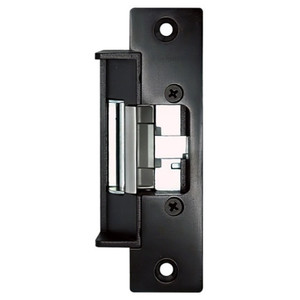
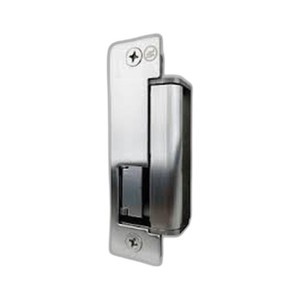
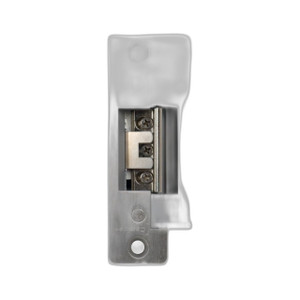
Camden CX-ED1420 Low Profile Grade 1 ANSI Fire Electric Strike
The Camden CX-ED1420 is a low-profile Grade 1 ANSI fire-rated electric strike designed for networked access control systems in commercial and institutional entryways. This strike combines universal door compatibility with TCP/IP network connectivity, enabling remote unlock commands and real-time status monitoring from a centralized access control platform. The compact profile fits tight frame geometries without sacrificing ANSI Grade 1 fire-rating compliance — critical for egress doors and fire-code-mandated exit routes.
Key Features
- Grade 1 ANSI Fire Rating: Meets UL 1034 Grade 1 fire-rating standards. Required on fire-rated doors and exit stairwell entries where code compliance is non-negotiable.
- Low-Profile Form Factor: Compact 3.38 x 1.88 x 1.38 mm envelope. Fits modern door frames and narrow stile applications without frame modification.
- Universal Strike Design: Compatible with a range of latch and door configurations. Reduces SKU inventory and simplifies replacement cycles across multi-building campuses.
- TCP/IP Network Control: Remote unlock, lock status feedback, and audit logging via networked access control panels. No dedicated hardwired strike circuit required per door.
- 5-Year Warranty: Factory warranty covers defect and malfunction, standard for commercial-grade electromechanical hardware.
- Integrated Access Control: Pairs directly with IP-based access control systems (Honeywell ProWatch, Salto, Genetec Security Center, etc.). Supports real-time credential validation and emergency unlock protocols.
The CX-ED1420 addresses a recurring integrator challenge: achieving Grade 1 fire compliance on networked access control systems without building separate hardwired strike circuits. The TCP/IP interface means the strike receives its unlock command from the same security platform that validates the cardholder credential — simplifying installation wiring, reducing troubleshooting surface area, and enabling emergency unlock automation tied to alarm events or fire-alarm integration.
Grade 1 fire-rating is enforced by building code on any door that forms part of an egress pathway or separates a hazardous occupancy from a public space. In practice, this means stairwell entries, emergency exits, and cross-corridor doors in healthcare facilities, hotels, and office parks. The low-profile frame means you won't encounter the typical compromise between code compliance and modern aesthetic finishes.
Deployment footprint is straightforward: the strike mounts into the door frame header (or jamb, depending on door swing direction), receives PoE or 24VDC power from the access control panel, and transmits TCP/IP status back to the controller. No additional relays, no local logic boards — the access control platform owns the decision tree. For multi-door egress systems, this centralized command architecture reduces latency and audit-logging gaps compared to distributed hardwired circuits.
The universal latch accommodation means the CX-ED1420 works across metal and wood frames, standard and custom door preps, and retrofit installations where the door frame cannot be modified. This flexibility is priced into the hardware cost but recovers value quickly on larger deployments where frame-specific strikes would force material rework or custom fabrication.
The CX-ED1420 integrates with any access control platform that supports TCP/IP strikes — Honeywell, Salto, Genetec, Brivo, Assa Abloy, and others all support the protocol stack. Firmware updates and remote diagnostics are pushed from the central platform, eliminating truck rolls for firmware patches. For healthcare and high-security environments, TCP/IP integration also enables time-locked schedules, multi-factor unlock rules, and emergency override logging — all audited and timestamped at the server.
Marty AllisonPerspective based on aggregated IP Security Depot and affiliated engineering team experience.
We've deployed the CX-ED1420 on campus access control refreshes where older hardwired strikes needed to migrate to networked platforms — and the universal fit profile consistently saved installation labor and frame prep costs. The Grade 1 fire-rating carries real weight in institutional projects: building code inspectors audit egress compliance at handoff, and a fire-rated strike with proper UL documentation eliminates the back-and-forth that kills schedules. The TCP/IP integration is straightforward; modern access control platforms ship with driver stacks for standard electric strikes, so commissioning is typically plug-and-play once the frame prep is done. Where the CX-ED1420 shines is in retrofit scenarios — when you're upgrading a 10-year-old hardwired system to mobile-credential access, the network strike architecture eliminates the need to re-run separate 24VDC circuits to every door. Instead, you run PoE to the panel, and the panel talks to the strikes over TCP/IP. On a 50-door office campus, that's measurable capex and labor recovery. One caveat: the low-profile form factor assumes professional installation — frame measurement and latch alignment are critical. If the door prep is sloppy, the compact strike has less tolerance for shimming. We recommend pre-install site surveys, especially on older wood-frame doors. The 5-year warranty covers manufacturing defects but not installation damage, so upfront measurement discipline pays dividends.
Technical Highlights:
- Grade 1 ANSI UL 1034 Fire Rating: The strike is certified for fire-rated door assemblies and egress applications. This means code-compliant installation on fire-rated frames and stairwell doors without secondary hardwired circuits — the access control platform is the single source of unlock authority.
- TCP/IP Network Protocol: Strike receives unlock commands and reports lock status over standard TCP/IP. No dedicated hardwired strike relay per door — reduces panel I/O requirements and simplifies wiring on large deployments. Audit logs timestamp every unlock event at the server.
- Universal Latch Compatibility: Works across different latch mechanisms and door frame types (metal, wood, hollow metal, aluminum). Eliminates the need to stock multiple strike variants for a mixed-door campus.
- Low-Profile Envelope (3.38 x 1.88 x 1.38 mm): Compact enough for modern door aesthetics and tight frame geometry. No external protrusions that complicate aesthetics or require additional trim.
- Integrated Audit Trail: TCP/IP connection allows time-stamped unlock logging, emergency override tracking, and access-denial recording. Healthcare and financial institutions rely on this for regulatory compliance (HIPAA, PCI-DSS).
Deployment Considerations:
- Frame measurement is non-negotiable — the low-profile form factor has limited shimming tolerance. On retrofit jobs, verify latch alignment and strike pocket depth before ordering. We've seen installation delays when frame prep assumptions were wrong.
- TCP/IP strikes require that your access control platform supports the protocol (most modern systems do). If you're integrating into a legacy hardwired panel, you'll need an IP-to-relay gateway or platform upgrade. Budget accordingly.
- Power source must be verified: confirm whether the strike draws 24VDC or PoE, and ensure your access control panel or PoE injector has sufficient available current. TCP/IP communication adds minimal draw; the solenoid pull is the dominant load.
- Emergency unlock integration must be defined during design. Most fire-code authorities require that fire-alarm systems can unlock electric strikes on egress doors. Verify that your fire alarm system and access control platform support that handshake before installation.
- On high-traffic doors, inspect strike condition annually — the solenoid spring is the wear item. A worn spring increases unlock latency and eventual failure mode; preventive replacement (typically every 3-5 years on heavy-use doors) is cheaper than emergency service calls.
The CX-ED1420 is the right choice for institutions and corporate campuses migrating hardwired access control to networked platforms, especially where Grade 1 fire-rating is mandated on multiple egress doors. The universal compatibility and compact profile mean fewer SKUs and faster installation across heterogeneous door frames. For more information, visit the Camden catalog.