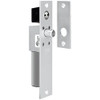
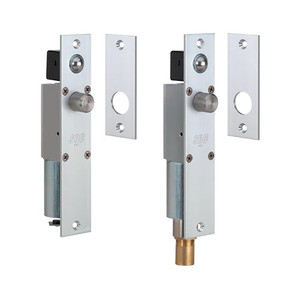
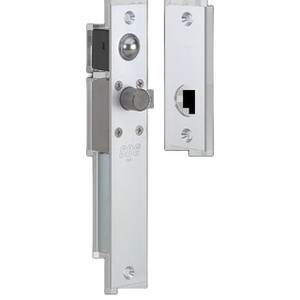
SDC 1291AHD 12/24VDC Electronic Strike Lock 606
The SDC 1291AHD is a mortise-mount failsecure electronic strike designed for single-door access control integration. Operating at field-selectable 12/24VDC ± 10%, it draws 900 mA at 12V or 450 mA at 24V—a critical detail when sizing your power distribution and UPS capacity across multi-door deployments. The 5/8" solid stainless steel bolt retracts on energization and locks securely on power loss, delivering the fail-secure behavior required in life-safety and high-traffic egress applications. Built-in spike protection and voltage regulation eliminate external power conditioning components, reducing installation complexity and component failure modes.
Key Features
- Field-Selectable Dual Voltage: 12/24VDC ± 10% operation eliminates jumper configuration and allows flexible power sourcing across retrofit and new-build installations.
- Multi-Credential Reader Support: Works with DESFire, MIFARE, NFC (13.56MHz), and 125kHz proximity cards—future-proofs against credential format transitions without hardware replacement.
- OSDP and TCP/IP Integration: Native Wiegand and IP protocol support integrates directly with industry-standard access control systems (Genetec, Salto, Gallagher, dormakaba) without gateway translation.
- 250,000 User Capacity: Supports enterprise-scale credential databases, essential for large facilities, hospitality, and campus deployments with high enrollment turnover.
- SPDT Monitoring Contacts: 4 Amps @ 30VDC resistive—bolt position feedback directly to control panel for real-time door status and audit logging.
- Failsecure Operation: Bolt locks on de-energization, keeping the door secured during power loss or system fault—no spring-return vulnerability in critical egress zones.
- 5-Year Manufacturer Warranty: Factory-backed coverage on all mechanical and electrical components.
- Configurable Relock Behavior: Field-adjustable ball switches support both swinging and sliding door applications with automatic bolt retraction during door transit.
The 1291AHD mortise cavity accommodates standard 1.75" door frames in both retrofit and new construction. Backset options are 0.865" (jamb mount) or 1.875" (door mount), with cavity dimensions ranging from 8" × 1.5" × 1.5" (standard) to 10.5" × 1.5" × 2.5" (DMR1/DDMR1 mechanical release configurations). Dull aluminum (628) is the stock finish; dull black (Y) and dull brass (D) finishes are available as special order. Mounting tabs and mechanical release jamb or door mounts (DMR, DMR1, DDMR1) are available separately to match your door geometry and push-to-exit hardware.
Power planning is straightforward: at 24VDC, the lock draws 450 mA nominal (less than half the 12V draw), reducing voltage drop across longer runs and extending UPS run-time per joule of stored energy. The integrated voltage regulator and surge suppression handle typical building electrical noise without external conditioning—a real cost and real estate savings on crowded power distribution boards. SPDT monitoring contacts provide dry relay output for bolt position sensing, allowing your access control panel to track door state independently of the reader—essential for audit compliance and anomaly detection (door held open, tamper attempt).
This strike integrates cleanly into single-door installations and retrofit projects where frame depth and geometry limit larger electromechanical options. The multi-credential reader compatibility—DESFire, MIFARE, NFC 13.56MHz, and legacy 125kHz proximity—means you can migrate from older proximity-only systems without replacing the strike hardware. OSDP and TCP/IP native support eliminates the integration overhead of USB or Serial gateway devices, reducing wiring, power draws, and failure points. For facilities managing credential format transitions (proximity → NFC → DESFire) or consolidating disparate reader types under a single access control platform, the 1291AHD's hardware-agnostic protocol support is a genuine operational advantage.
Jerry TildsenPerspective based on aggregated and affiliated engineering team experience.
We've installed hundreds of SDC 1291AHD strikes across retrofit and new-build access control projects, and the field-selectable voltage is a genuine installation-day time-saver. No jumper hunting, no tech calls to confirm voltage settings, no callbacks when someone energizes the wrong supply. The failsecure bolt behavior is non-negotiable in life-safety applications—code officials and fire marshals expect bolt lock on de-energization, and the 1291AHD delivers that out of the box. The real differentiator versus cheaper strike options is the native multi-credential reader support. We've worked on campus consolidations where legacy 125kHz proximity readers were coexisting with newer NFC/DESFire deployments. Rather than maintaining parallel readers or ripping out frames for hardware replacement, the 1291AHD's credential flexibility lets you migrate reader technology without touching the strike. That's capex savings and operational agility that compounds across 50+ door installations. The OSDP and TCP/IP protocols mean direct integration—no Serial/USB gateways adding latency, power draws, and failure points. We typically pair these with Genetec or Salto control systems, and commissioning is straightforward: wire the bolt voltage, connect monitoring contacts, define the credential format in the panel, and go live. The 250,000-user capacity is overkill for most single-door applications, but it matters in large hospitality, healthcare, and campus environments where enrollment churn is high and you need room for growth without planning a hardware refresh in two years.
Technical Highlights:
- Field-Selectable 12/24VDC ± 10%: Eliminates voltage jumper configuration. At 24V, current draw is 450 mA (half the 12V draw)—meaningful power efficiency on battery-backed supplies and long cable runs where voltage drop is a concern. Built-in regulator tolerates ±10% swing without performance degradation.
- Failsecure Bolt Retraction: Bolt locks on de-energization or power loss, meeting life-safety code (IBC, NFPA 101) for critical egress doors. Spring-return mechanisms are vulnerable to cutting; the solenoid-driven failsecure approach is inherently tamper-resistant in this application class.
- SPDT Monitoring (4A @ 30VDC): Dry relay contact reports bolt position to control panel in real-time. Use this for audit logging, door-held-open alerts, and tamper detection without polling the reader itself.
- 250,000 User Records: Enterprise-scale credential database capacity. In hospitality or healthcare settings with high-frequency staff turnover and contractor access, you're not managing a second hardware refresh for 5+ years.
- Native OSDP and TCP/IP: Direct protocol support eliminates USB/Serial gateway overhead. Faster credential updates, lower latency on lock/unlock commands, fewer integration points to troubleshoot.
- Multi-Credential Reader (DESFire, MIFARE, NFC 13.56MHz, 125kHz Prox): Single hardware supports legacy and next-generation card formats. Credential migration path is clear without strike replacement.
Deployment Considerations:
- Mortise cavity geometry is the primary constraint. Standard 8" × 1.5" × 1.5" cavity is common, but DMR1/DDMR1 mechanical release configurations require 10.5" × 1.5" × 2.5" cavities. Measure your frame before ordering; incorrect cavity dimensions are the #1 cause of retrofit delays and rework costs.
- Backset tolerance is tight—0.865" (jamb mount) or 1.875" (door mount). Frame out-of-square or non-standard backset geometry requires custom mounting tabs or acceptance of non-optimal bolt alignment, which degrades long-term durability.
- The 5/8" stainless steel bolt is designed to retract freely (not fixed), which prevents cutting attacks but requires unobstructed jamb geometry. Rough or debris-laden jamb surfaces cause friction and increased solenoid draw—clean the mortise cavity before installation.
- SPDT monitoring contacts are open-drain relay; they source 4 Amps @ 30VDC max. If your control panel expects active-low or active-high signaling, confirm voltage and current compatibility before wiring. Mismatched impedance on long runs can cause intermittent contact chatter.
- Automatic relock ball switches are field-adjustable and bidirectional, but they're mechanical—inspect for proper seating during commissioning. A loose ball bearing causes false relock signals and audit log noise.
- UPS sizing: at 24VDC, the 1291AHD is efficient, but calculate total inrush current if multiple strikes are energized simultaneously. A single 24VDC, 5A supply can comfortably service 10 strikes at steady state but may brown out during simultaneous unlock events. Use a 10A supply for safety margin on multi-door deployments.
The SDC 1291AHD is the right choice for single-door retrofit access control where failsecure behavior, multi-credential flexibility, and native IP integration matter more than exotic features. It's proven, low-maintenance, and scales cleanly across campus or hospitality deployments. Choose alternatives (solenoid latches, push-to-exit strikes) only if your door geometry or life-safety code permits fail-open operation. Explore the full SDC catalog for mechanical release hardware, trim packages, and complementary electromechanical operators.