

Cannabis Facility Security Camera Systems
Cannabis surveillance is regulated surveillance. State cannabis control boards set minimum camera coverage, recording retention, resolution, and evidence-preservation rules that ordinary retail security systems are not designed to meet. This page explains what regulators actually require, which camera and recording specifications align to those requirements, and how to lay out coverage for cultivation, processing, retail, vault, and transport zones so every licensed area is captured with defensible evidence.
On This Page
State Compliance Requirements
Every licensed cannabis facility operates under a state-specific set of video surveillance rules. The rules differ in detail, but the pattern is consistent across the regulated states: a defined camera coverage scope, a minimum recording resolution, a minimum recording frame rate, a minimum retention period, and prescriptive requirements for event preservation, time stamping, and secure storage. A dispensary in California faces different minimums than one in Massachusetts or Ohio, but all three will reject a system that fails to record at the minimum resolution, drops below the minimum frame rate during high traffic, or purges footage before the retention window closes.
Minimum Retention
Most regulated states require 30 to 90 days of continuous recording. California (MAUCRSA) sets 90 days. Colorado sets 40 days. Massachusetts sets 90 days. Ohio sets 45 days for medical programs. Several states, including Washington and Oregon, reserve authority to demand specific retained footage for a longer period when a law enforcement action is pending. Size storage for the longest plausible retention your regulator can ever require, not the published minimum. See the Retention Modeling & Storage Guide for storage calculations.
Minimum Resolution & Frame Rate
The published baseline in most states is 1280x720 (720p) at 15 frames per second, but in practice that is the floor, not the target. Regulators inspect footage by asking whether a person can be identified at a POS terminal, a license plate can be read at a loading dock, and product movement can be traced in a cultivation room. 1080p is a safer minimum for POS terminals, entrance zones, and vaults. 4MP to 8MP is common for wide-view cultivation rooms and extraction suites where frame-to-frame product handling must be visible.
Mandatory Coverage Zones
Virtually all states require continuous coverage of: all building ingress and egress points (including emergency exits), every POS or transaction point, every entrance to a limited-access area, every cultivation and processing room, every vault or safe used for finished product, every loading dock where inventory is received or shipped, and every parking lot and exterior approach. Transport vehicles are regulated separately in most states and typically require in-vehicle recording. See our mobile and vehicle IP cameras for transport coverage.
Evidence Preservation & Export
Footage must be exportable in a format your regulator and local law enforcement can play back. Proprietary NVR formats without a standard playback path (e.g., MP4, AVI with standard codec) fail this test. Confirm your VMS platform exports to a universally playable format with a preserved, visible timestamp. Any export must preserve camera identifier, source address, and original timestamp, because regulator audits and investigations depend on chain-of-custody metadata.
Tamper Resistance & Secure Storage
Recording equipment typically cannot sit in the same open-access area as staff or customers. Most states require NVRs or servers in a locked room with access logs. Many require redundancy (dual drives, RAID, or cloud replication) so a single drive failure does not create a compliance gap. Confirm your recorder supports RAID 5 or RAID 6 and has a battery-backed cache. Plan for UPS on the recorder, the network switch, and the internet gateway — a power event during operating hours that drops recording for 30 minutes is a reportable incident in many jurisdictions.
Time Synchronization
Every camera and every recorder must show the correct, synchronized time in recorded footage. Regulators reject systems where two cameras show different times for the same event. Use NTP across all cameras and the recorder. Audit time drift quarterly. Display the time stamp on-screen in every recorded frame; do not rely solely on embedded metadata that a regulator cannot read from a raw export.
Deployment Zones & Coverage
Cannabis facilities are zoned by regulated function. Every zone has a different imaging priority, camera form factor, and typical failure mode. Under-specifying a camera in the wrong zone is the most common way a licensed facility ends up rebuilding its system after the first audit.
Entrance & Vestibule
The vestibule is the ID-check zone. Every face entering must be identifiable. Specify a 4MP or higher camera with a 2.8mm to 4mm lens and true WDR (120dB+) to handle the extreme backlighting from glass doors during daylight. A turret camera mounted 8 to 9 feet above the interior door, angled down at the face level of someone presenting ID, delivers the cleanest forensic capture. Avoid fixed 6mm or longer lenses here: they create a narrow cone that misses side movement in the vestibule.
POS Retail Floor
Every transaction must be captured with clear visibility of the product, the payment tender, and the customer's face. Specify a 4MP camera directly above each POS terminal with a 3.6mm to 6mm lens. Additional ceiling cameras covering the retail floor at a 4MP resolution provide movement context. Pair with people counting IP cameras at entrances for traffic analytics — note that people counting and compliance recording should be on separate camera streams to avoid analytics competing with recording frame rate.
Vault & Safe Room
The vault is the highest-risk zone. Every entry, every product handoff, and every cash pickup must be visible. Specify redundant camera coverage — two cameras at complementary angles on every door, plus interior cameras that cover the safe itself. Use vandal dome cameras (IK10) inside the vault; tamper-resistant housings matter here because audit trails depend on the vault camera never being obstructed. 4MP minimum.
Cultivation Rooms
Cultivation rooms present two problems most non-cannabis cameras fail at: high humidity and saturated broad-spectrum or red-dominant grow lighting. Specify cameras with an IP66 or IP67 rating even for interior use, and confirm the manufacturer's environmental spec includes humidity above 80%. Grow lights saturate red channels in CMOS sensors; cameras with strong auto white-balance and a wide dynamic range recover the image. 8MP wide-view cameras cover entire rows from a corner mount. Consider corner IP cameras for room-wide coverage without creating wall-mount clearance issues in a growing environment.
Extraction & Processing
Extraction suites handle volatile solvents (butane, propane, ethanol) in Class I Division 1 or Division 2 classified areas. Standard cameras are not code-compliant inside the extraction room. Specify explosion-proof or intrinsically safe housings rated for the classified zone. Mount cameras outside the immediate extraction vessel zone and use IP67 cameras for the surrounding rooms. Product-movement coverage is the primary compliance concern — every gram of product entering, being processed, and leaving must be visible. See industrial IP cameras for rated options.
Loading Dock & Receiving
Loading docks are where transport drivers, staff, and inventory interact outside the building envelope. Specify at least two cameras per bay: one wide-view capturing the dock floor and driver, one narrow-view capturing the vehicle license plate as it approaches and departs. Use LPR cameras for plate capture — ordinary 4MP cameras do not reliably capture plates at speed or in mixed lighting. True WDR at 140dB+ handles the open-bay contrast problem.
Exterior Perimeter & Parking
Perimeter cameras detect approach and capture license plates of every vehicle in the lot. Specify outdoor bullet cameras with 4MP resolution, IP67/IK10 ratings, and IR range of 100 feet or more. For larger parking areas, pair with thermal cameras for detection past the IR range. In colder climates, specify cameras with integrated heaters to prevent dome fogging and ice buildup.
Transport Vehicles
Transport regulations vary by state, but the consistent requirement is in-vehicle recording covering the driver, the passenger cab, and the cargo area. Specify mobile and vehicle IP cameras rated for vibration and temperature extremes. Recording is typically local to the vehicle (solid-state mobile NVR) with optional cellular upload for real-time monitoring. Confirm the mobile NVR retains the same minimum retention as the facility recorder.
Featured Outdoor & Perimeter Cameras
Outdoor cameras for entry points, loading docks, parking lots, and perimeter positions. IP67 and IK10 rated for environmental resistance; IR range and true WDR matched to real-world cannabis facility lighting.
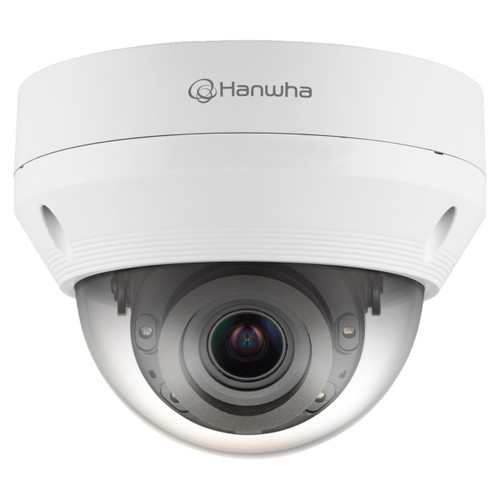
Hanwha QNV-8080R 5MP Vandal-Resistant Dome Camera
QNV-8080R
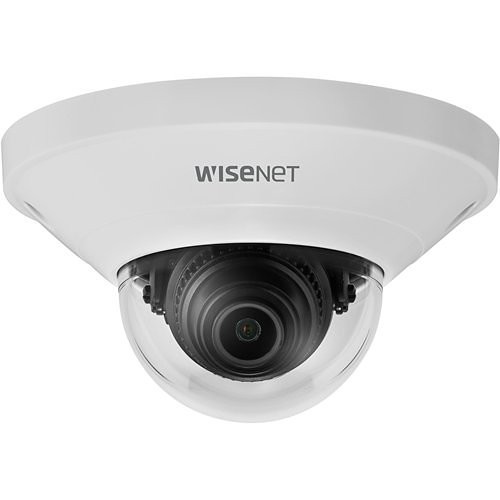
Hanwha QND-8011 5MP Mini Dome IP Camera
QND-8011
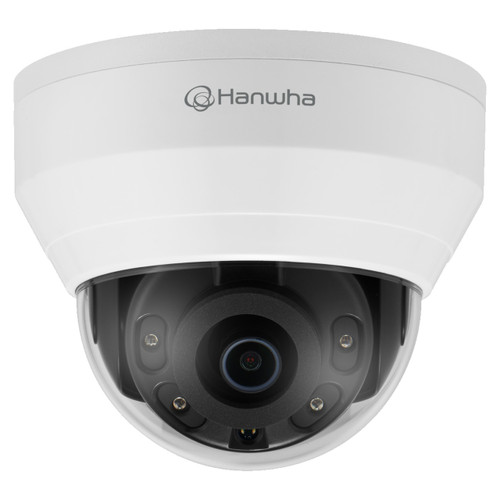
Hanwha QND-8010R 5MP Vandal-Resistant Dome Camera
QND-8010R
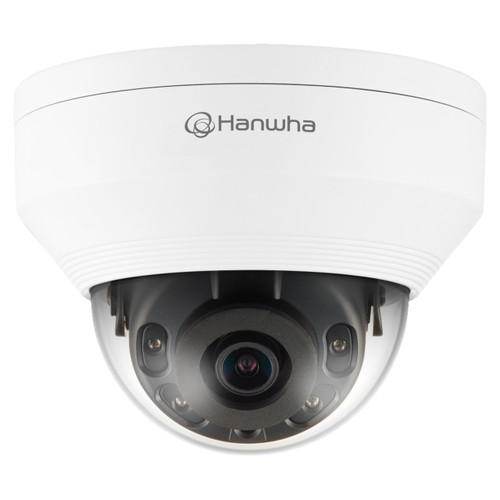
Hanwha QNV-8010R 5MP Vandal-Resistant Dome Camera
QNV-8010R
Camera Specifications That Actually Matter
Resolution vs Pixel Density
Megapixel count is meaningless without a matching lens. For POS identification at 8-10 feet, a 4MP camera with a 3.6mm lens delivers roughly 80+ pixels per foot — enough for face identification under normal conditions. For a 12-foot wide cultivation row, an 8MP camera with a 2.8mm lens delivers the same pixel density across the row while halving the camera count per room. Calculate required pixels per foot at the target zone, then choose the camera and lens combination that delivers it. Full lens geometry is covered in the Lens Coverage Geometry Guide.
True WDR for Mixed Lighting
Every cannabis entrance, POS terminal, and loading dock sees extreme contrast. Cameras without true WDR (multi-exposure sensor techniques, 120dB+) produce silhouettes instead of faces during backlit scenes. Digital WDR — the budget alternative — cannot match this and fails forensic review. Specify true WDR on every camera that faces a door, window, or dock opening.
H.265 with Smart Codec
H.265 reduces bandwidth and storage by roughly 50% versus H.264 at equivalent quality. Smart codec extensions (Axis Zipstream, Hanwha WiseStream, Hikvision H.265+) further reduce storage by 30-50%. For a 40-camera dispensary at 90-day retention, the codec choice determines whether your storage system is 20 TB or 60 TB. Confirm your NVR or VMS fully decodes the specific smart codec before specifying it — incompatibility silently reverts cameras to standard H.264 rates.
PoE Class & Heater Budget
Standard 802.3af delivers 15.4W — enough for most indoor cameras without heaters. Outdoor cameras with integrated heaters or long-range IR arrays often need 802.3at (30W). PTZ cameras with wiper and heater accessories need 802.3bt (60W). Plan switch capacity against peak camera draw, not typical draw, and reserve 20% headroom. Use the PoE Power Budget Calculator before ordering switches.
Audio & Two-Way Communication
Most states prohibit audio recording without notice and consent, but two-way audio for talk-down or staff-assist purposes is generally permitted in non-public areas. If specifying cameras with audio, confirm your recording policy aligns with state wiretap law — recording audio in customer-facing areas without visible notice creates legal exposure that exceeds the value of the audio evidence. For intercom use at secure entry points, see intercom and paging systems.
Analytics at the Edge
Person detection, line crossing, loitering, and object-left analytics run on-camera with modern edge AI chips (NPU/VPU). Edge analytics reduce VMS processing load and enable event-driven search of retained footage — critical when regulators or law enforcement request specific events from a 90-day archive. Verify the VMS platform accepts the camera's metadata stream; non-compatible pairings reduce analytics to motion detection.
Featured Indoor & POS Cameras
Indoor cameras sized for POS terminals, retail floor coverage, vaults, and cultivation rooms. 4MP baseline with true WDR, H.265, and compatible edge analytics.
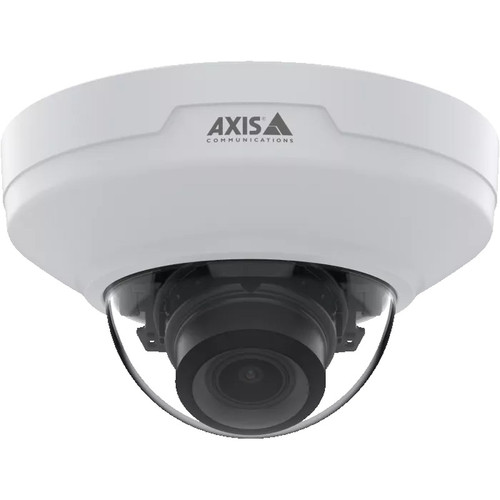
Axis M4216-V 4MP Varifocal Indoor Dome Camera
02112-001
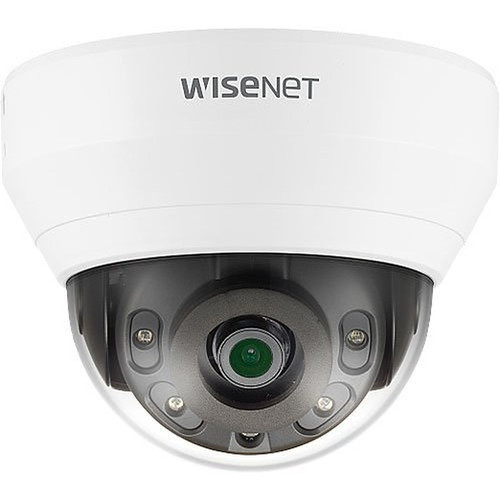
Hanwha QND-6012R1 2MP Indoor IR Dome Camera
QND-6012R1
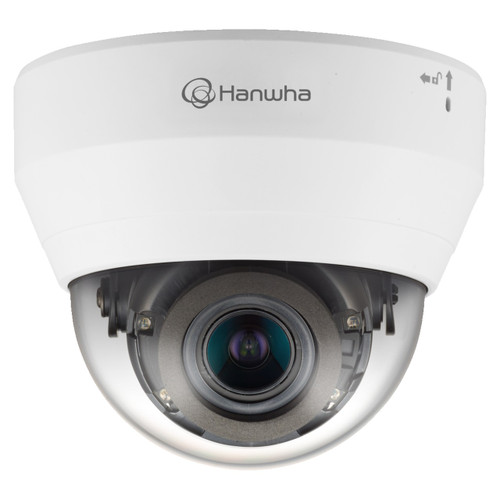
Hanwha QND-6082R1 2MP Varifocal IR Dome Camera
QND-6082R1
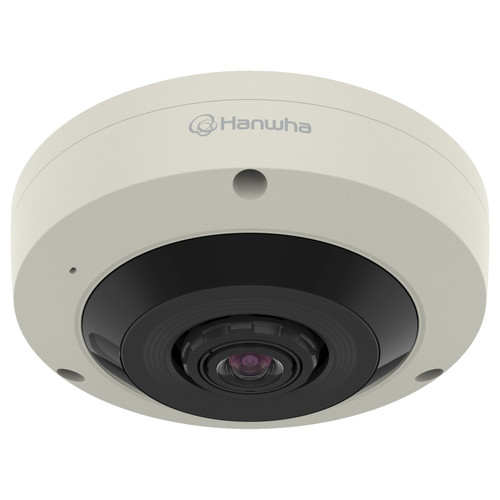
Hanwha XNF-8010R 6MP 360° Panoramic Fisheye Camera
XNF-8010R
Retention & Recording Architecture
A 30-camera dispensary recording 24/7 at 4MP and 15 fps with H.265+ produces roughly 1.8 to 2.4 TB per day across all cameras. At 90 days of retention, that is 160 to 220 TB of usable storage, before RAID overhead and growth headroom. Plan storage as a system property, not a camera property.
NVR vs VMS Server
An NVR appliance is simpler to deploy and typically adequate for single-site dispensaries up to 32 cameras. A VMS server on Windows or Linux scales past 64 cameras, supports multi-site aggregation, and integrates with seed-to-sale software. For multi-location operators, the VMS path is almost always the correct choice because retention audits happen across the full portfolio. See the VMS Software Buying Guide for platform comparison.
RAID & Drive Selection
Specify RAID 5 or RAID 6 for facilities with more than 16 cameras. RAID 6 adds a second parity drive and tolerates two simultaneous drive failures — a reasonable cost for a facility with 60+ TB of compliance-mandatory footage. Use surveillance-rated hard drives (WD Purple, Seagate SkyHawk) rated for 24/7 continuous write workloads. Consumer drives fail within 12-18 months in this duty cycle.
Redundancy & Failover
The compliance question is not "do cameras fail" but "how long is the gap when they do?" Specify dual-recorder failover for facilities that cannot afford any recording gap. Some VMS platforms record to both a local edge storage unit (on the camera's SD card or an edge recorder) and the central server, giving you recovery if the network drops. Cloud replication adds off-site redundancy but does not replace local recording for regulatory retention.
UPS & Power Resilience
A 15-minute power event during operating hours creates a regulator-reportable gap in many jurisdictions. Specify UPS on the recorder, the PoE switch, and the gateway router at a minimum. Size for 60 minutes of runtime at full load. Pair with automatic generator cut-in for facilities in lightning- or storm-prone regions. Confirm UPS alarm integration feeds into your VMS alerts so staff knows when recording is at risk.
Use the Video Retention & Storage Calculator to size storage against your camera count, resolution, frame rate, and state retention requirement. Results translate directly to drive bay counts and RAID capacity targets.
Featured LPR & Access Cameras
License plate recognition cameras for loading docks, transport vehicle entry points, and employee parking verification.
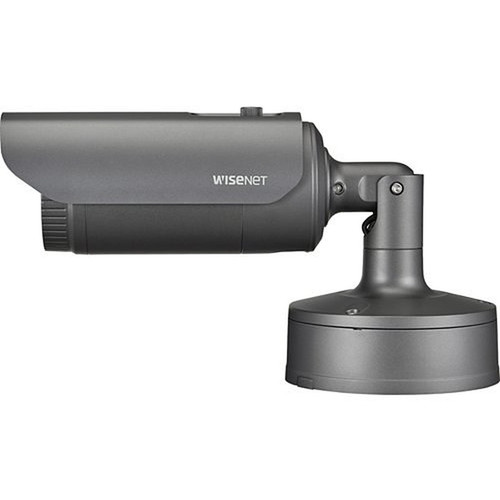
Hanwha XNO-6120R/LPR 2MP Outdoor LPR Bullet Camera
XNO-6120R/LPR
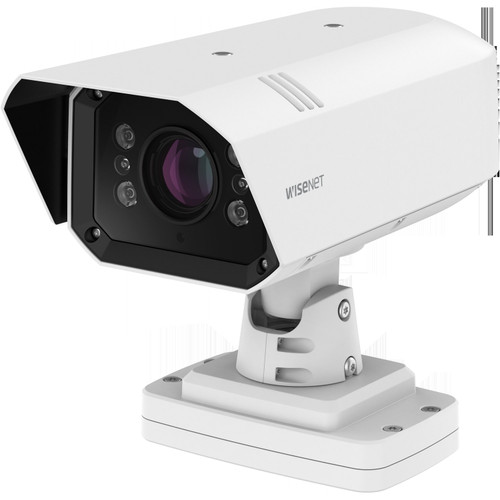
Hanwha TNO-7180RLP 3MP High-Speed LPR IP Camera
TNO-7180RLP
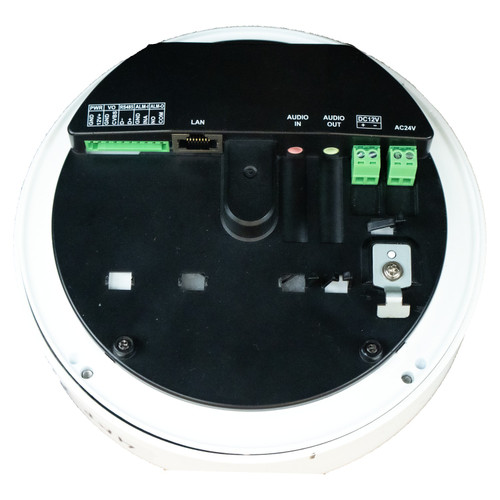
Speco O4DM 4MP Dome Camera 2.8-12mm Varifocal LPR
O4DM
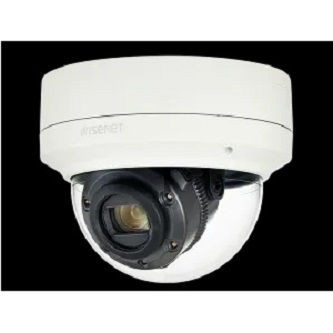
Hanwha XNV-6120R/LPR 2MP LPR PTZ Dome Camera
XNV-6120R/LPR
Access Control & Seed-to-Sale Integration
Video alone does not satisfy cannabis compliance. Every entrance to a limited-access area must be controlled, logged, and cross-referenced to video of the event. Integrators who treat the camera system and the access control system as separate silos produce systems that regulators find inadequate during audits.
Door-to-Camera Linkage
Every limited-access door needs a camera covering the approach side (exterior face) and an interior camera covering the threshold. The access control system logs credential ID, timestamp, and door ID; the VMS logs video of the same event. Regulators typically request both in tandem during an audit. Pair door events with bookmarked video clips in the VMS for audit-ready export.
Credential Classes
Cannabis operations typically distinguish at minimum four credential classes: owner/licensee, management, employee, vendor/contractor. Visitors receive a time-limited credential (badge pass or mobile pass) that logs entry and exit with escort assignment. Match camera coverage to credential transition points — where a vendor drops escort status at a threshold, you need a camera on both sides. See the Access Control System Buying Guide for platform selection.
Seed-to-Sale Audit Trail
State traceability systems (Metrc, BioTrack, Leaf Data) track product by tag through every transfer. Your video system should record every custody transfer — receiving, processing hand-off, packaging, vault storage, retail sale — at a camera position where the tag is readable. Regulators cross-reference traceability events against video for discrepancy investigations. Align camera placement to the physical workflow, not the architectural layout.
Panic & Duress Integration
Silent panic buttons at POS and vault positions should trigger video bookmark and, in most cases, external notification. Confirm your intrusion system integrates with the VMS — a panic trigger without a corresponding video mark forces after-the-fact scrubbing through hours of footage during an active event.
Featured Access Control Products
Electronic locks, controllers, and credential readers for limited-access door coverage, vault entries, and controlled receiving doors.
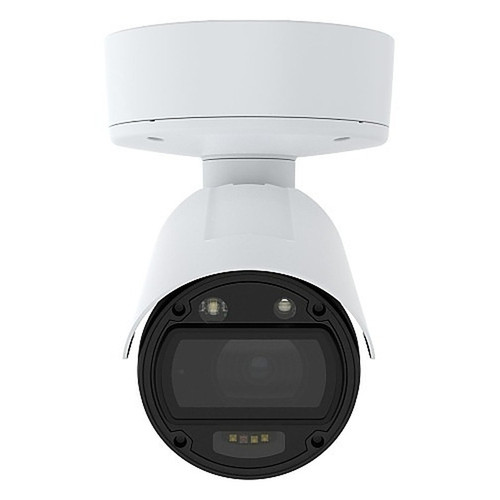
Axis 03089-001 QR Code Access Control Reader
03089-001
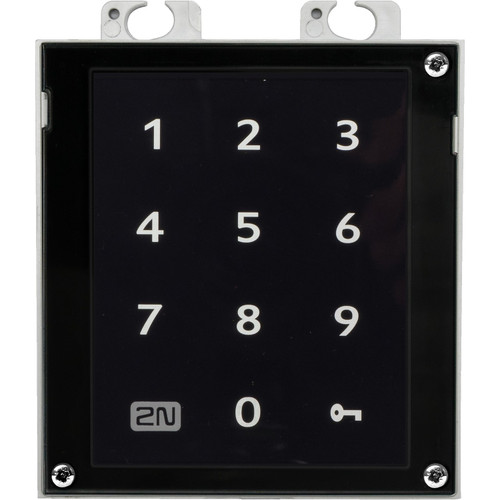
2N 02262-001 AU 2.0 Touch Keypad
02262-001
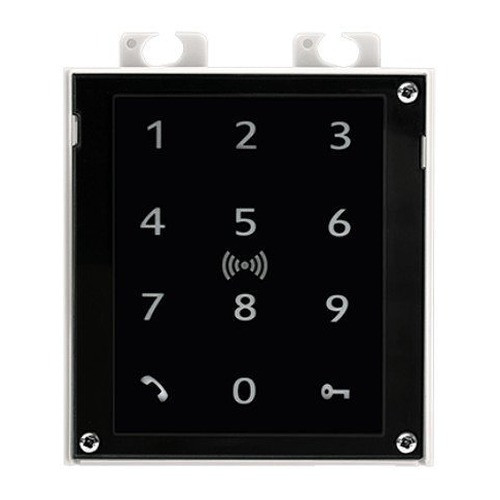
Axis 02443-001 IP VERSO Reader with Keyboard
02443-001
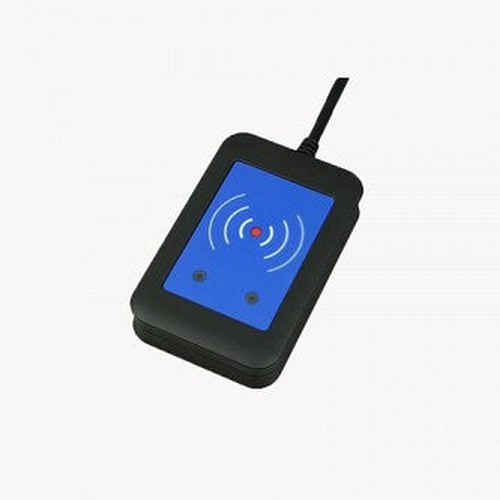
2N 02444-001 IP VERSO Reader Intercom
02444-001
Common Mistakes in Cannabis Deployments
- Using consumer-grade recorders. A consumer NVR with 4 TB of storage cannot hold 90 days of 20 cameras at 4MP. Size storage against the state retention requirement plus a 30% growth margin.
- Skipping true WDR on entrance cameras. Every glass-door entrance creates a backlighting problem. Cameras without true WDR produce silhouettes of customers walking in, which regulators reject as identification-grade footage.
- Mounting cameras too high above POS. A camera at 10 feet angled straight down captures the top of someone's head, not their face. Mount POS cameras at 8 feet and angle toward the customer's face at the counter.
- Ignoring cultivation humidity specs. Standard IP66 cameras fail in cultivation rooms at 80%+ humidity within 6-12 months. Verify the manufacturer's humidity rating, and specify IP67 with anti-condensation coating for grow rooms.
- Using NTP incorrectly or not at all. Two cameras showing different times for the same event kill evidence value. Lock every camera and the recorder to the same NTP server, and audit drift quarterly.
- Recording to a single drive. A single drive failure during a pending investigation can trigger regulator action. Specify RAID 5 at minimum for any facility with more than 16 cameras.
- Treating transport as an afterthought. Transport vehicle recording is a separate compliance track from facility recording. Plan mobile NVR deployments alongside the facility system, not after.
- Assuming cloud replaces local retention. Cloud replication adds off-site redundancy but does not replace on-premises recording for state retention compliance in most jurisdictions. Verify before specifying.
Ready to Design Your Cannabis Facility System?
Share your state, license type, square footage, and zone count. We will recommend a camera layout, storage architecture, and access control plan aligned to your state's compliance requirements.
Related Buyer's Guides for Cannabis Facilities
Decision guides for licensed cannabis cultivation, processing, and retail deployments. Compliance-focused camera and NVR specifications with audit-ready workflows.
Cannabis Security Cameras: Compliance Pillar
Compliance requirements by license type and state — cultivation, processing, retail dispensary.
Best Security Cameras for Cannabis Facilities
Product picks for continuous-recording reliability, retention, and audit-export integration.
Cannabis Surveillance Compliance Checklist
26-item quarterly checklist for audit readiness and compliance discipline.
Cannabis Dispensary Camera Placement Guide
State-compliance-driven placement for POS, vault, sales floor, and entry positions.
Cannabis Video Retention and Storage Sizing
NVR storage calculation for 90 to 365 day retention windows.
No Bots, Just Experts
Free pre-sales support for every customer — product questions, BOM quotes, compatibility checks, price confirmation — typically answered within one business day. Paid services available like full system design, remote installation, and more. Engineering design time is $175/hour — qty 1 = 1 hour. Scope the hours with us first, then purchase that quantity. Hardware buyers get up to one hour ($175) credited back on their order.