
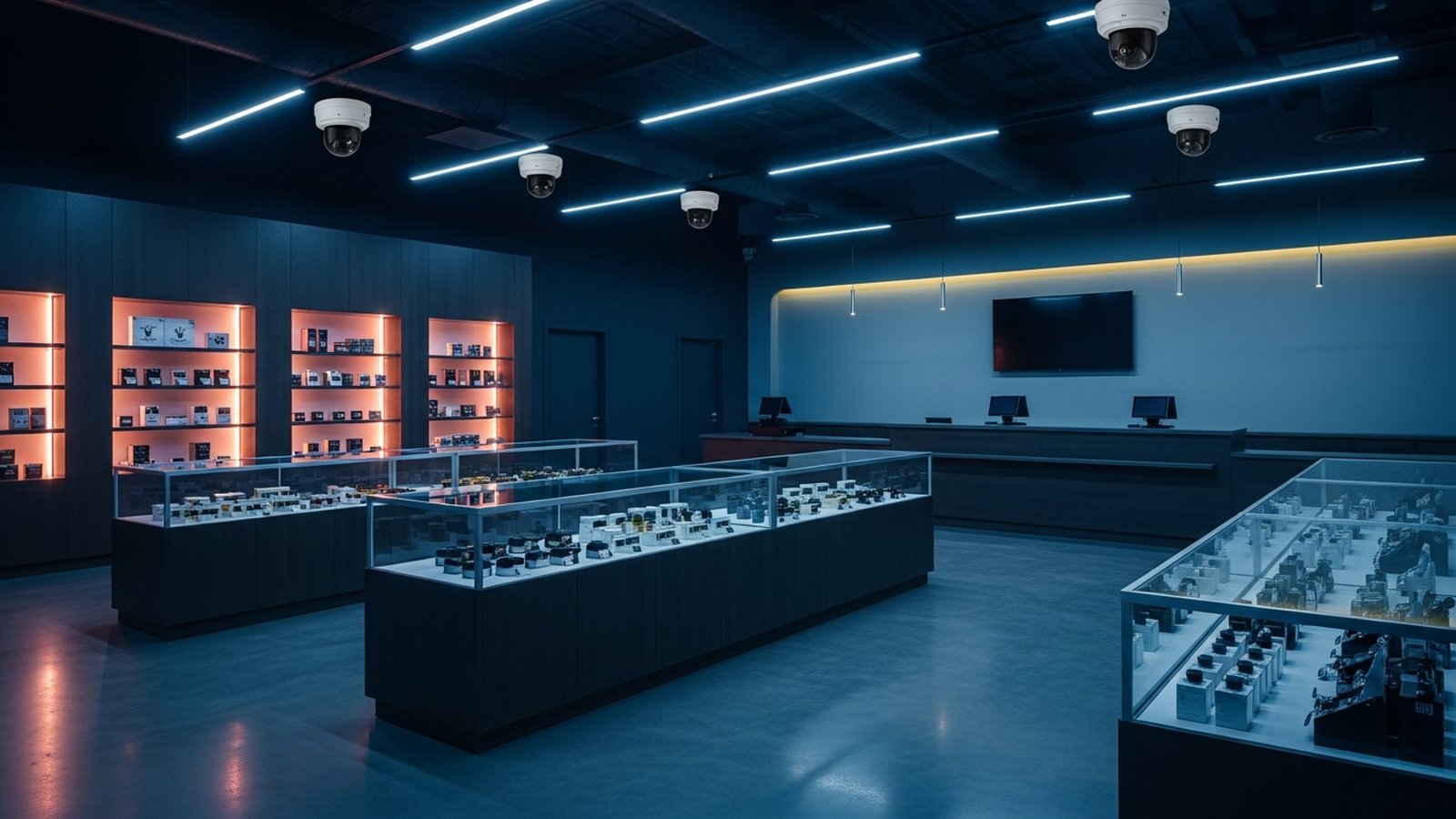
Cannabis Security Cameras: A Compliance Guide for Licensed Operators
Cannabis surveillance is not a camera buying decision — it is a compliance discipline. State license conditions prescribe which rooms need coverage, how long footage must be retained, what resolution is acceptable, who can access the recordings, and how audit exports are produced. A camera failure during an audit can trigger license-review proceedings that take a facility offline for weeks. This guide walks through the compliance requirements by license type and state, the camera and NVR specifications that satisfy them, and the operational workflows that keep a cannabis facility audit-ready every day.
Bottom Line
Every licensed cannabis facility needs: continuous 24/7 recording across every operational room, 90 to 365 days of retention depending on state, a documented audit-export workflow, and a camera count sized for the specific square footage and license type. For most cultivation and processing facilities, a Hanwha PRN-series NVR with 32 or 64 channels of 4K cameras running H.265+ hits the compliance requirements at a reasonable capital cost. Retail dispensaries typically run 16 to 32 cameras on a mid-range NVR with faster export and investigator-friendly playback.
Our team specifies cannabis surveillance systems across multiple licensed jurisdictions. The recommendations below are tuned to state-compliance requirements, not theoretical best-practice.
Best For
- Licensed cannabis cultivators, processors, and retail operators
- Cannabis security directors responsible for audit compliance
- Facility managers at new-build cultivation or dispensary projects
- Multi-state operators standardizing surveillance across license jurisdictions
- Cannabis business owners responding to a compliance deficiency finding
Not For
- Unlicensed or informal cannabis operations (compliance guidance does not apply)
- Non-cannabis commercial or industrial deployments (see warehouse or office guides)
- Personal or residential cannabis cultivation (different regulatory framework)
In This Guide
Compliance Requirements by License Type
Cannabis surveillance requirements differ significantly by license type. Understanding which set applies to your facility is the first step.
Cultivation (indoor, outdoor, mixed). The largest coverage footprint. Every grow room, mother room, clone area, drying room, trim area, and processing zone needs camera coverage. Perimeter exterior, entry doors, and any rooms where plants or product transit must also be covered. Most states require camera coverage so comprehensive that there are no blind spots on the facility floor plan. Typical cultivation camera count: 40 to 150+ depending on square footage.
Processing and extraction. All processing rooms, extraction equipment, post-extraction handling, packaging, and labeling. Chemical and mechanical extraction rooms often have additional requirements (explosion-rated camera housings in some jurisdictions, specific fire-code compliance). Typical processing camera count: 20 to 60.
Retail dispensary. Sales floor, register/POS, product display cases, vault/safe, back-of-house storage, employee-only areas, and all entry and exit points. Customer-facing positions also require coverage. Typical dispensary camera count: 16 to 32.
Testing laboratory. All sample intake, testing, and storage areas. Lower camera count than cultivation or processing; typical 10 to 25.
Distributor/transporter. Loading, vault, transport vehicle staging, and transit documentation. Some states require GPS-linked surveillance during transport. Typical 15 to 40.
Retention Windows by State (2026)
State retention requirements vary widely. The ranges below reflect typical state programs as of 2026 — always verify against your specific state regulations before finalizing a system spec:
| State (Representative) | Retention Minimum | Typical Operator Practice |
|---|---|---|
| California | 90 days | 120-180 days |
| Colorado | 40 days (MED) | 90 days |
| Massachusetts | 90 days | 120-180 days |
| Nevada | 30-45 days | 90 days |
| Oregon | 90 days | 120 days |
| New York | 60-90 days | 120 days |
| Michigan | 30 days (MRA) | 60-90 days |
| Washington | 45 days | 90 days |
| Illinois | 90 days | 120-180 days |
| Arizona | 90 days | 120 days |
| Canada (Health Canada) | 1 year | 1 year |
The "typical operator practice" column reflects what we see deployed in the field, not the legal minimum. Most operators retain longer than the state minimum as a buffer against audit disputes and investigation requests. A 90-day state minimum with 120-day operator practice is common, with the NVR sized to 150 days to handle seasonal volume spikes.
Multi-state operators typically standardize on the strictest retention window across their license portfolio — if one state requires 180 days, the multi-state standard becomes 180 days across all locations. This simplifies operations and audit-response workflows.
No Bots, Just Experts
No bots, just experts. Free pre-sales support for every customer — product questions, BOM quotes, compatibility checks, price confirmation — typically answered within one business day. Paid services available like full system design, remote installation, and more. Got a BOM ready? Free project-pricing quote with volume discount on qualifying orders. Need the BOM designed first? Engineering time is $175/hour — we scope the hours with you before purchase, then deliver the designed BOM. Hardware buyers get up to one hour ($175) credited back against their order as a thank-you.
Coverage Mandates: What Must Be Covered
Most state cannabis programs use similar coverage language, typically some variation of:
In practice, this means every operational room needs coverage with no blind spots that a person or product could traverse without appearing on camera. The "no blind spots" requirement is the deployment challenge — first-draft camera layouts almost always leave gaps that would fail an audit walkthrough.
Specific high-priority positions:
Vault or safe area: Minimum of 2 cameras from different angles. Both the entry door and the vault interior must have coverage. Retention for vault footage often exceeds the general retention window.
POS / register (retail): Coverage of the register drawer, the customer face, and the product being transferred. This is the single highest-value investigation position in a dispensary; most operators use 4K or AI-enabled cameras here.
Entry and exit doors: Every door that opens to the exterior or to a limited-access area. Cameras should capture both the interior side (who is leaving) and the exterior side (who is entering).
Transport staging and loading dock: All product movement in and out of the facility. Typically multiple cameras covering the dock, the vehicle staging area, and the interior transfer path.
Grow rooms and cultivation areas: Every room with plants, with cameras positioned so the entire room floor is visible with no blind spots behind equipment or between rows.
Processing and extraction: Every processing station, with cameras positioned to capture the handling and weighing of product at each stage.
Trim and packaging: Every workstation with camera visibility to the product handling.
Retention and Storage Sizing
Cannabis surveillance storage scales fast due to continuous 24/7 recording across high camera counts. Sizing calculation:
Per-camera storage per day: 4MP at 15 fps with H.265+ continuous recording generates 10 to 14 GB per camera per day. H.264 is roughly 1.6x that. Dropping to 720p for low-priority positions can reduce to 4 to 6 GB per day per camera, but compliance requirements may prevent this.
90-day retention example: 32 cameras at 12 GB/day = 384 GB/day = 34.6 TB for 90 days. Add 33 percent RAID 6 overhead: ~46 TB of active storage. A Hanwha PRN-3200B4 with 104TB expansion handles this easily.
180-day retention example: 64 cameras at 12 GB/day = 768 GB/day = 138.2 TB for 180 days. Add RAID overhead: ~184 TB. This requires a multi-NVR deployment or a high-capacity Hanwha PRN-6400DB4 with 160TB option plus archival.
Redundancy: RAID 5 is the minimum acceptable redundancy level for cannabis surveillance. RAID 6 is our default recommendation. Single-drive failures should never cost you footage; regulatory audits do not accept "the drive failed" as an excuse for missing retention.
Off-site backup: Not required by most state programs but strongly recommended. On-premise theft of the NVR during a break-in is the primary risk; cloud-backed archival of incident footage is cheap insurance.
Audit Exports and Access Controls
Audit readiness is as important as the recording itself. State inspectors, local police with warrants, and attorneys responding to subpoenas all request specific date-range footage from specific cameras. The VMS workflow to produce these exports must be fast, documented, and defensible.
Export workflow: A documented standard operating procedure for how exports are produced. Who receives requests, how identity is verified (for tenant or attorney requests), how the date range is specified, how the export is produced (what VMS action), how the export is delivered (USB, secure cloud link, in-person copy), and how the export is logged in an audit log.
Access controls: Role-based access with user accounts for every individual who touches the VMS. Shared accounts are not acceptable. Every login, playback session, and export should be logged with timestamp and user identity.
Time synchronization: Every camera and the NVR should be synchronized to a validated time source (NTP). State audits sometimes check timestamps on exported footage against seed-to-sale records; a time discrepancy can trigger investigation.
Watermarking and integrity: Exported clips should include integrity metadata (hash, exporter identity, original camera and timestamp). Most modern VMS platforms support this natively; verify that your platform does before specifying.
Recommended Cannabis Facility Camera Systems
Hardware picks for cannabis cultivation, processing, and retail dispensary. All NDAA-agnostic (cannabis compliance is state-driven, not federal); focus on continuous-recording reliability, retention capacity, and audit-ready export capabilities.
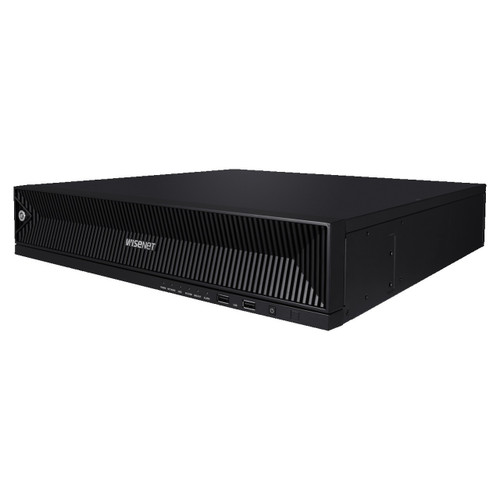
Hanwha
Hanwha PRN-3200B2 32CH 8K 400Mbps H.265 AI NVR
PRN-3200B2
Hanwha 32-channel 8K AI NVR with H.265 continuous recording and RAID 6. Right-sized for 30-40 camera cultivation or processing facilities; supports 90-180 day retention with storage expansion.
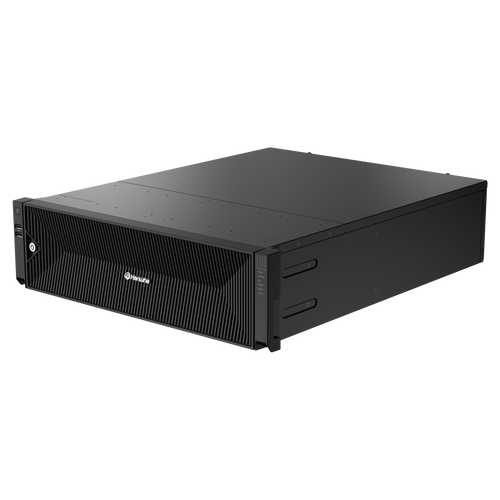
Hanwha
Hanwha XRN-3220B4 32-Channel 8K Network Video Recorder
XRN-3220B4
Hanwha 32-channel 8K NVR for multi-room cultivation facilities. Scale with multiple units for 60+ camera deployments.
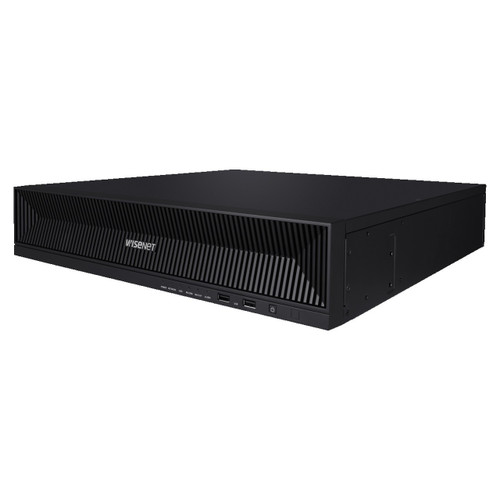
Hanwha
Hanwha XRN-1620B2 16-Channel 4K NVR
XRN-1620B2
Hanwha 16-channel 4K NVR sized for retail dispensary deployments of 12 to 16 cameras. RAID expansion, strong VMS for audit-ready exports.
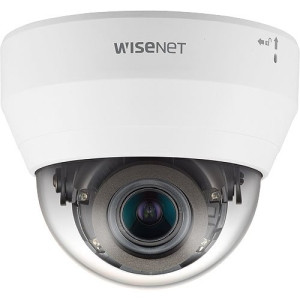
Hanwha
Hanwha QND-7082R 4MP Indoor IR Dome Camera
QND-7082R
4MP indoor IR dome for grow rooms, processing areas, and dispensary interior positions. Reliable continuous-recording performance at commercial-reasonable price.
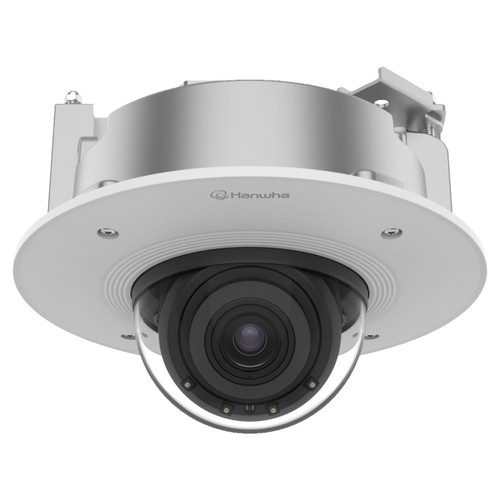
Hanwha
Hanwha PND-A9081RF 4K Indoor AI IR Dome IP Camera
PND-A9081RF
4K AI indoor dome for dispensary register/POS position. Facial-detail capture of customer and product handling. Edge AI supports counting and exception monitoring.
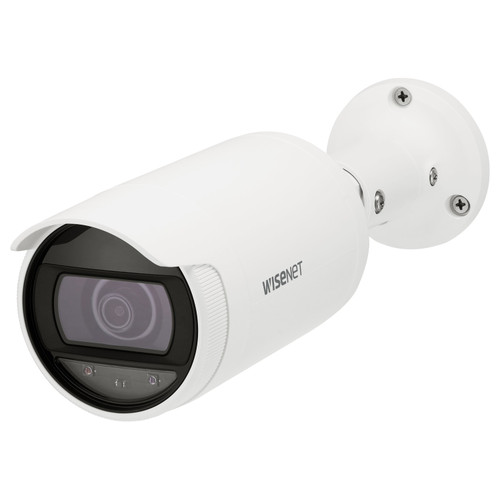
Hanwha
Hanwha ANO-L7012R 4MP Wide-Angle Low Light Outdoor Bullet IP Camera
ANO-L7012R
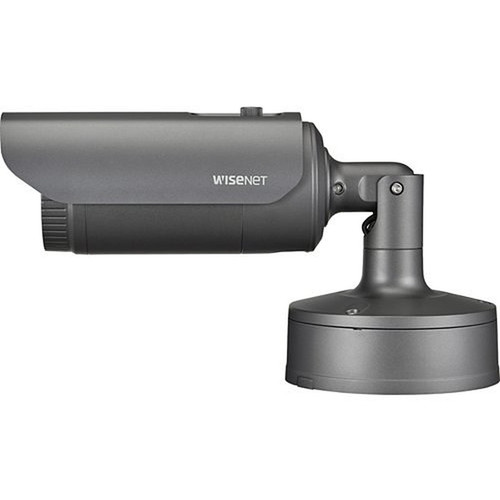
Outdoor bullet for facility perimeter, loading dock, and exterior entries. Low-light capable for after-hours continuous recording.
Also Consider: Large Capacity, Vault Upgrade, LPR
Upgrades for specific cannabis-facility positions where the defaults need more.
PRN-6400DB4
Hanwha 64-channel 8K NVR with 160TB option for large cultivation or multi-room processing. Handles 180+ day retention on high camera counts.
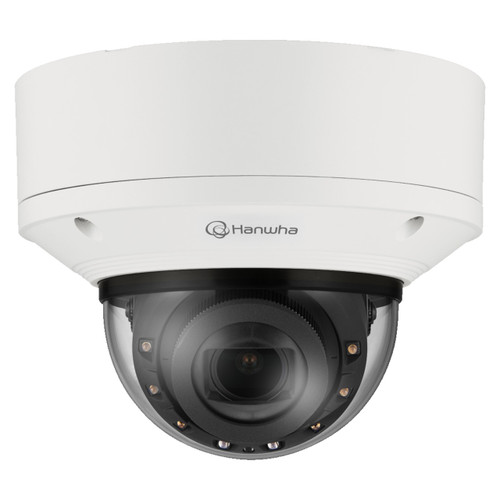
Hanwha
Hanwha XND-9083RV 8MP 4K IR Vandal-Resistant Dome
XND-9083RV
Hanwha 4K vandal-rated dome for vault and safe-room positions. Higher resolution for detailed product and handling documentation in the highest-value positions.
Hanwha
Hanwha XNO-6120R/LPR 2MP License Plate Recognition Camera
XNO-6120R/LPR
LPR camera at facility vehicle entry for transport tracking. Some states require GPS-linked surveillance during transport; LPR at the gate complements vehicle-mounted systems.
Frequently Asked Questions
What cannabis license types have the strictest surveillance requirements?
Cultivation (all tiers) and processing have the most extensive coverage and retention requirements. Every room with plants or product, every entry and exit, no blind spots, and 90-180 day retention are typical. Retail dispensaries have fewer total cameras but strict POS and vault coverage. Testing labs and transporters have moderate requirements.
What is the minimum retention period for cannabis surveillance?
State-dependent. Most US states require 30 to 90 days minimum; Canada requires 1 year. Operators typically retain 50-100 percent longer than the minimum as buffer against audit disputes. Multi-state operators standardize on the strictest window across their portfolio.
Can I use standard commercial cameras for cannabis?
Yes, with careful selection. Most state programs do not prescribe specific brands; they prescribe coverage and retention requirements. Hanwha, Axis, i-PRO, and Bosch commercial cameras all work if configured for continuous recording and adequate retention. Avoid consumer-grade cameras — they fail during continuous operation.
How much does a cannabis camera system cost?
Retail dispensary (16-32 cameras): $25,000-$60,000 installed. Processing facility (20-60 cameras): $40,000-$150,000. Cultivation facility (40-150+ cameras): $80,000-$400,000+. Multi-site operators benefit from standardized systems and can reduce per-site cost by 10-20 percent.
Do cannabis cameras need to be NDAA-compliant?
Usually not — NDAA Section 889 is federal procurement law, and cannabis is a state-licensed activity. However, Hikvision and Dahua cameras are still common in cannabis deployments despite not being federally compliant. Some operators specify NDAA-compliant brands anyway for supply-chain and cybersecurity reasons.
What happens if a camera fails during a state audit?
Varies by state and severity. Minor lapses (one camera offline for a few hours) typically result in a warning or corrective-action requirement. Major lapses (multiple cameras offline, missing retention) can trigger license-review proceedings, fines, or suspension. Keep spare cameras on-site and monitor system health continuously.
How do I produce audit exports quickly?
Set up the VMS export workflow during commissioning. Most modern VMS platforms (Hanwha WAVE, Milestone, Genetec) support bookmark-and-export in under 5 minutes per incident. Train multiple staff so exports are not dependent on one person. Document the SOP for chain-of-custody.
Can the owner view cameras remotely from home?
Yes via VMS mobile apps with role-based access. Owners typically have full access; managers have facility-wide access; staff have limited access (no export capability). Role-based access also satisfies most state requirements for access-control documentation.
No Bots, Just Experts
No bots, just experts. Free pre-sales support for every customer — product questions, BOM quotes, compatibility checks, price confirmation — typically answered within one business day. Paid services available like full system design, remote installation, and more. Got a BOM ready? Free project-pricing quote with volume discount on qualifying orders. Need the BOM designed first? Engineering time is $175/hour — we scope the hours with you before purchase, then deliver the designed BOM. Hardware buyers get up to one hour ($175) credited back against their order as a thank-you.