
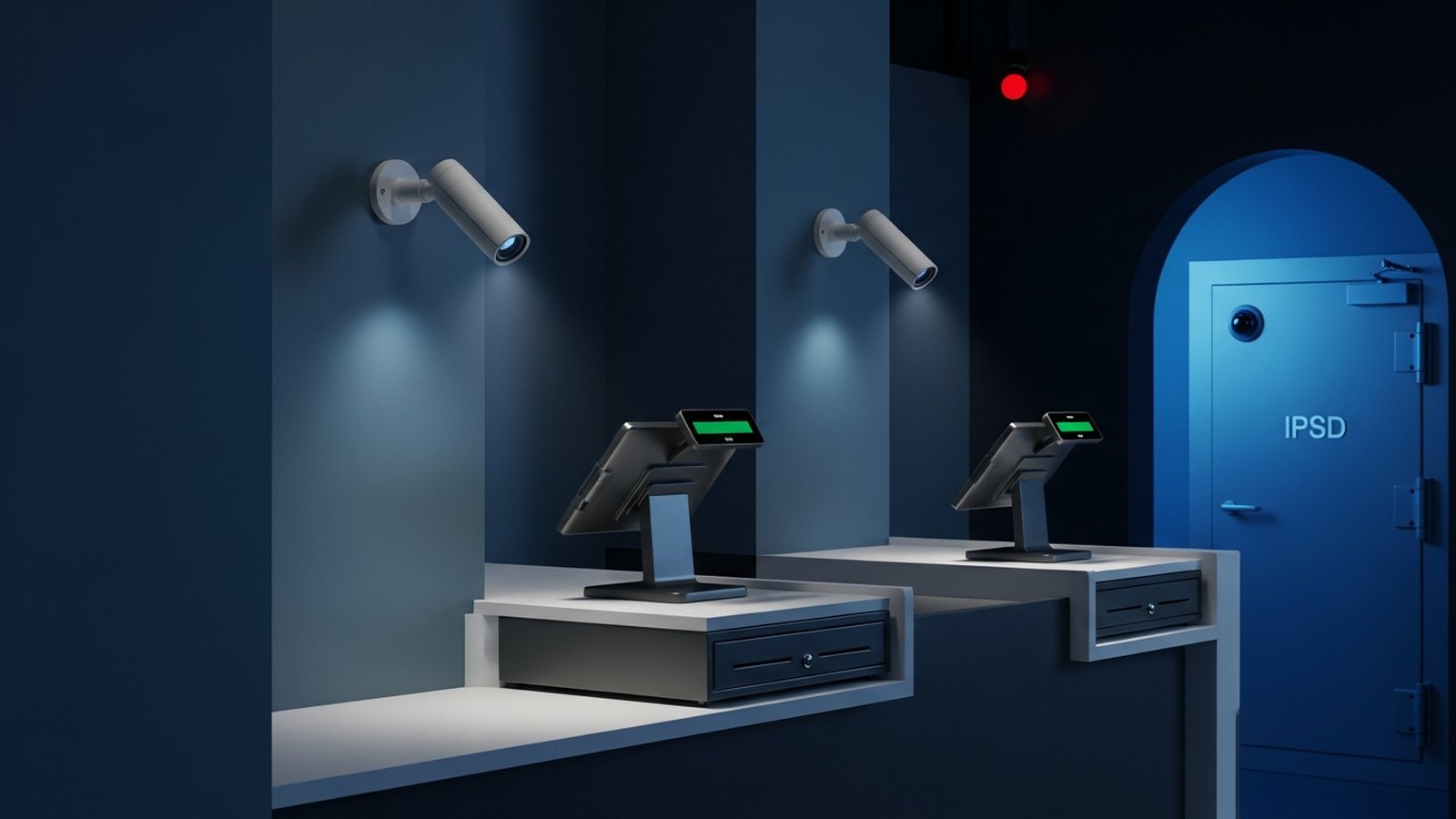
Cannabis Dispensary Camera Placement Guide
Cannabis dispensary camera placement is prescribed more than most retail categories — state programs require specific coverage at specific positions, with no blind spots and with retention that can be produced on demand for audits. This guide walks through the placement rules for a compliant dispensary, with mount heights, angles, and the positions that inspectors specifically check.
Bottom Line
Dispensary placement follows strict rules: POS register with a clear view of the drawer, customer face, and product transfer; 2 cameras on the vault from different angles; every entry and exit with interior and exterior coverage; sales floor with no blind spots; employee-only areas covered. Every state program verifies these positions during audits.
Our team has deployed dispensary surveillance across multiple states. The placement rules below reflect what passes state inspection.
Best For
- Licensed dispensary operators planning a new build or expansion
- Security directors specifying camera placement for compliance review
- Multi-location operators standardizing placement across stores
- Dispensary managers responding to an audit finding
Not For
- Unlicensed or informal cannabis operations
- Non-cannabis retail (see retail placement guides)
- Cultivation or processing — see the cultivation-specific guides
In This Guide
POS and Register Placement
The POS register is the single highest-value camera position in a dispensary. Placement rules:
Camera per register: One dedicated camera per register position. A single wide-view camera covering multiple registers is not sufficient; each register needs its own angle.
Angle: Position camera to capture three things in a single frame: the register drawer (with cash and product visible), the customer face (at a usable identification angle), and the product being transferred. Typical mount: 8 to 10 feet on the wall or ceiling opposite the register, angled 30 degrees off the customer-facing axis.
Resolution: 4MP minimum; 4K or 8MP recommended for positions where product detail matters. The PND-A9081RF 4K AI dome is a common premium choice here.
Frame rate: 15 to 30 fps. Higher frame rates capture faster transfer motions; lower frame rates conserve storage. Match to state program requirements if specified.
Continuous recording: Register cameras must record continuously, not motion-triggered. Every register transaction is a potential compliance event.
Vault and Safe Room Placement
Vault placement is prescribed in most state programs. Rules:
Minimum 2 cameras from different angles. One wide-view of the vault interior, one focused on the safe door or primary storage position.
Entry door coverage: One camera in the hallway leading to the vault, covering who is approaching the vault.
Interior mount: 8 to 10 feet, positioned so the entire room floor is visible with no blind spots. In smaller vaults, a single 360-degree fisheye at the ceiling center satisfies coverage in one unit.
Retention: Vault footage retention often exceeds the general facility retention. Check state-specific rules; common vault-retention requirement is 1 year even when general retention is 90 days.
Resolution: 4K at the safe-door position; 4MP for wider vault coverage.
Sales Floor and Product Display
Coverage: Every square foot of the sales floor visible from at least one camera. Walk the floor plan and verify coverage; any blind spot is an audit finding.
Typical count: 3 to 8 cameras depending on store size. One camera at each entrance, one to two wide-view cameras covering the retail floor, one per product-display case, one at the employee side of the counter.
Product display cases: One camera per case covering the case interior and the customer side. For self-service display cases, continuous recording is typically required.
Sample or consultation rooms: One camera per room covering the entire room. Budtender consultation areas are not exempt from coverage in most state programs.
Waiting or ID-check area: One camera covering the ID-check station and the path from entry to counter.
Entries, Employee-Only Areas, and Storage
Every entry and exit door: Interior camera covering who is leaving; exterior camera covering who is entering. The exterior camera should capture faces of anyone approaching the door.
Employee-only back-of-house: Employee entry door, break room entry, restroom hallway (not restroom interiors), employee locker area entry. Continuous coverage of product movement paths.
Product storage and packaging: Every storage area with cannabis product, including temporary storage, back-stock, and display-case restocking areas.
Trash and disposal: One camera covering the disposal area where cannabis waste is handled. Most state programs require specific waste-handling procedures with video documentation.
Delivery receiving: One camera covering the receiving area for incoming inventory. Continuous coverage required during deliveries.
Common Dispensary Placement Mistakes
One wide camera covering multiple registers. Fails state coverage requirements. One dedicated camera per register.
Missing the customer-face angle at POS. The camera captures the register and the budtender but not the customer. Re-angle the camera so the customer face is in the frame.
No vault entry coverage. The vault interior is covered but the hallway leading to the vault is not. Add a hallway camera.
Product display case blind spots. Cameras positioned so part of the case interior is not visible. Verify with the floor plan and reposition.
Retention-too-short spec. Budget NVR with 30-day retention in a 90-day state. Upgrade storage during the initial deployment, not as a retrofit.
Motion-triggered recording on operational cameras. Continuous recording is required. Verify all operational cameras are in continuous mode, not motion.
Missing waste disposal coverage. Cannabis waste handling is a prescribed procedure in most state programs. Cover the waste area.
Shared staff accounts in VMS. Every person with VMS access needs a named account. Shared accounts fail audit.
Recommended Cameras by Dispensary Position
Cameras matched to dispensary placement scenarios. Premium 4K at POS and vault; standard 4MP for sales floor; budget for employee areas; fisheye for large spaces; right-sized NVR.
Hanwha
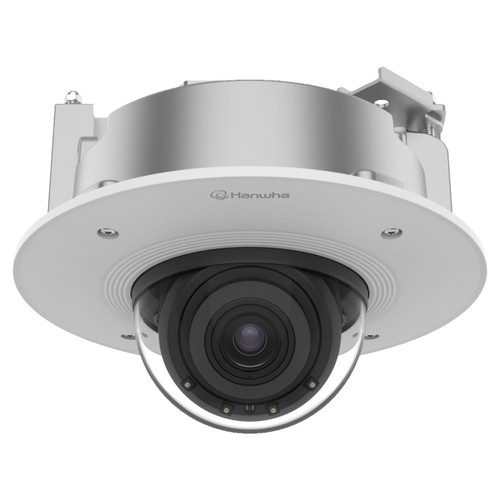
Hanwha PND-A9081RF 4K Indoor AI IR Dome IP Camera
PND-A9081RF
Hanwha 4K AI dome. Facial-detail capture at POS register positions; edge AI supports exception monitoring.
Hanwha
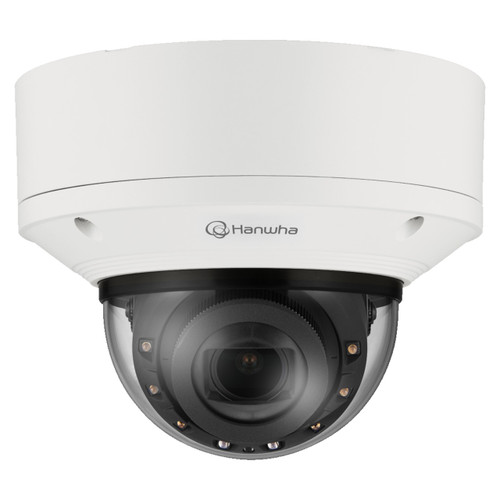
Hanwha XND-9083RV 8MP 4K IR Vandal-Resistant Dome
XND-9083RV
4K vandal-rated indoor dome for vault interior and safe-door positions. High detail for product and handling documentation.
Hanwha
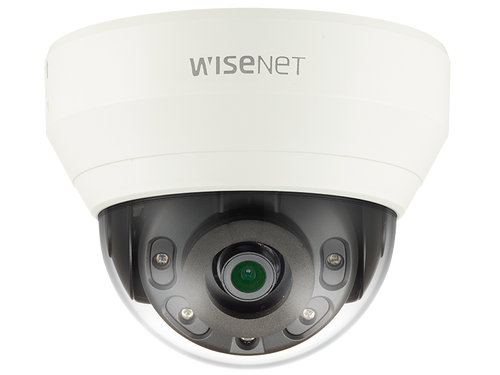
Hanwha QND-7082R 4MP Indoor IR Dome Camera
QND-7082R
4MP indoor IR dome for sales floor, product display cases, and consultation rooms. Reliable 24/7 continuous recording.
Hanwha
Hanwha QND-6010R 2MP Network IR Dome Camera
QND-6010R
2MP indoor dome for back-of-house coverage where full 4MP detail is not required.
Hanwha
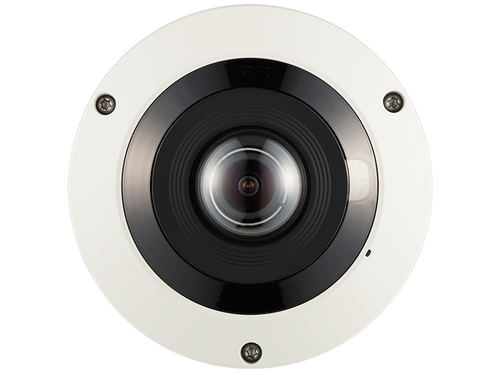
Hanwha PNF-9010RV 12MP 360˚ Fisheye Camera
PNF-9010RV
12MP fisheye at sales-floor ceiling center for large dispensaries. One clearly-posed camera covers the entire floor.
Hanwha
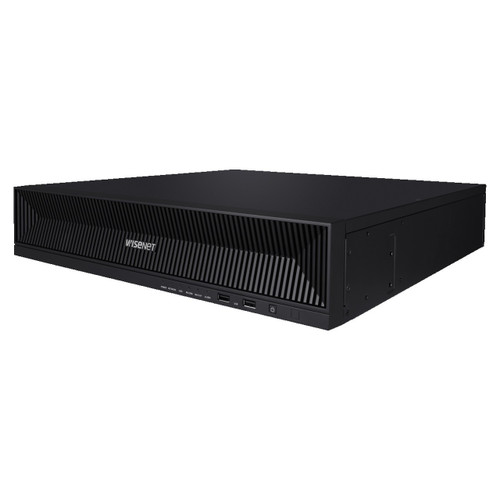
Hanwha XRN-1620B2 16-Channel 4K NVR
XRN-1620B2
16-channel 4K NVR for standard dispensary 12-16 camera deployment. Continuous recording, RAID expansion, compliant VMS.
Also Consider: Outdoor and Perimeter
Complete a dispensary deployment with exterior and parking coverage.
Hanwha
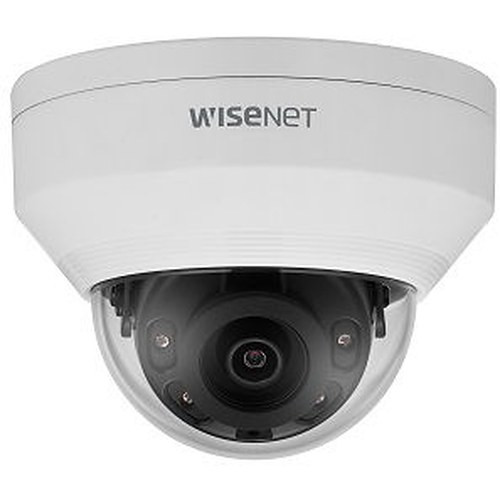
Hanwha ANV-L7012R 4MP High-Resolution Day/Night IR Outdoor Vandal Dome IP Camera
ANV-L7012R
Outdoor vandal dome for exterior entry coverage. Low-profile aesthetic appropriate for retail context.
Axis
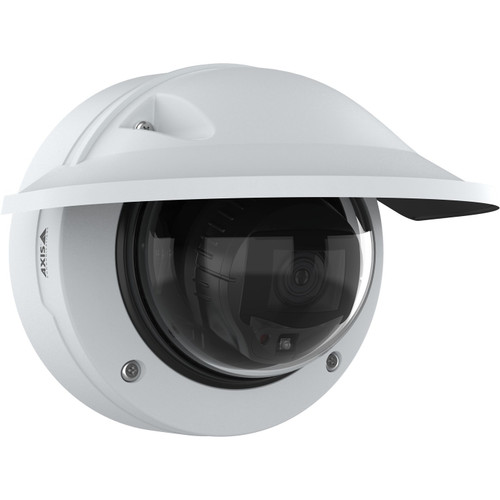
Axis P3277-LVE 5MP Outdoor AI IR Dome Camera - 03153-001
03153-001
Axis P3277-LVE for higher-value main entry positions. Lightfinder 2.0 handles mixed entry lighting.
Hanwha
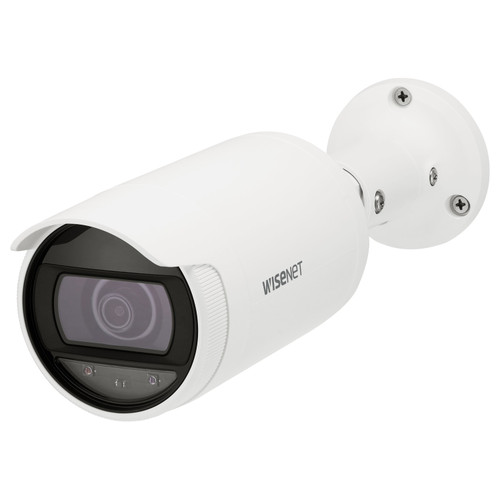
Hanwha ANO-L7012R 4MP Wide-Angle Low Light Outdoor Bullet IP Camera
ANO-L7012R
Outdoor bullet for parking and perimeter. Wide-angle with low-light for after-hours continuous recording.
Frequently Asked Questions
How many cameras does a typical dispensary need?
12 to 32 depending on store size, entry count, and display-case layout. A standard 1,500 sq ft dispensary runs 16-20 cameras: 3-4 at POS, 2 at vault, 4-6 on sales floor, 3-4 at entries and employee areas, 2-3 outside. Larger or multi-story dispensaries run 24-32+.
Do we need one camera per cash register?
Yes, in most state programs. A wide-view camera covering multiple registers does not satisfy coverage requirements. One dedicated camera per register is the default.
What resolution should POS cameras be?
4MP minimum; 4K or 8MP recommended for high-traffic dispensaries or positions where customer identification detail matters. The 4K premium is worth it at the register for audit defensibility.
How should vault cameras be positioned?
Minimum 2 cameras from different angles. One wide-view of the vault interior with every square foot of the floor visible; one focused on the safe door or primary storage position. Add a hallway camera covering the approach to the vault.
Do we need cameras in budtender consultation rooms?
Usually yes, in most state programs. Consultation rooms are not exempt from coverage; every room where customers and staff interact with product needs camera visibility.
Can we use a fisheye for the sales floor?
Yes, especially for large sales floors. A single 360-degree fisheye at the ceiling center provides full-floor coverage from one unit. Pair with fixed cameras at specific high-value positions (POS, vault entry).
Do we need cameras in the restroom?
No. Restrooms are privacy-protected in all jurisdictions. Cover the restroom entry from the hallway, not the restroom interior.
What's the single most-checked position during inspection?
POS register. Inspectors verify that each register has a dedicated camera, captures the customer face, captures the drawer and product, and records continuously. This is the position where failures trigger the most significant findings.
No Bots, Just Experts
No bots, just experts. Free pre-sales support for every customer — product questions, BOM quotes, compatibility checks, price confirmation — typically answered within one business day. Paid services available like full system design, remote installation, and more. Know what you need? Send us your BOM, free quote. Need camera placement designed from a floor plan? That is engineering work — $175 per hour, qty 1 = 1 hour. Typical single-site placement runs 3 to 4 hours. We scope the hours with you before you purchase. Hardware buyers get up to one hour ($175) credited back against their order as a thank-you.