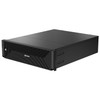
Product images are provided for reference and may not represent the exact model, configuration, or included components.

Overview

SKU: XRN-3220B4
UPC: 8801089221261
Condition: New
Availability: Usually Ships Same Business Day
Write a Review 30% OFF

Hanwha XRN-3220B4 32-Channel 8K Network Video Recorder

32-channel 8K NVR with 520 Mbps bandwidth and 160TB RAID storage

$6,710.00 $4,664.99 SAVE $2045
Ships same business day
In stock

Quantity:

Adding to cart… The item has been added
Compatibility guidance available for your deployment
Senior specialists for pre and post-sales support
Authorized sourcing and documentation support
Shipping and lead-time confirmation before install

Laura Bennett, IPSD Senior Specialist

Talk to Laura

200+ hrs training • U.S - based

Senior Specialist • 877-277-7147

Hanwha XRN-3220B4 32-Channel 8K Network Video Recorder

$6,710.00
$4,664.99

Overview

SKU: XRN-3220B4
UPC: 8801089221261
Condition: New
Availability: Usually Ships Same Business Day

No Bots, Just Experts

Questions about this product? Free pre-sales support from a senior specialist — product questions, compatibility checks, BOM quotes, price confirmation — typically answered within one business day. Need camera placement or system design work? Engineering time is $175 per hour (qty 1 = 1 hour). Hardware buyers get up to one hour ($175) credited back on their order.

Description

Hanwha XRN-3220B4 32-Channel 8K Network Video Recorder

The Hanwha XRN-3220B4 is a 32-channel network video recorder engineered for enterprise-scale deployments where high-resolution feeds, fault tolerance, and storage flexibility drive operational requirements. Built on a Linux platform with dual HDMI outputs, this NVR ingests up to 32MP camera streams and manages recording across 16 SATA HDD bays—essential infrastructure for large facilities where downtime translates directly to liability or security gaps.

Overview

The XRN-3220B4 targets organizations deploying dozens of cameras across multiple zones or buildings. Its 32-channel capacity means you avoid cascading smaller recorders across a facility; one unit consolidates monitoring, storage, and failover logic. The architecture supports both network video recorders running standard H.265 compression—which cuts storage footprint roughly 40–60% versus H.264 depending on scene complexity—and flexible recording profiles that scale resolution and frame rate based on bandwidth or retention policy. This matters when you're balancing 24/7 recording across 32 simultaneous streams.

Recording bandwidth reaches 520 Mbps in normal or RAID modes with distributed recording, allowing you to mix resolution tiers: 32MP at 15fps (H.265), 12MP at 30fps (H.265), 8.3MP across 4 channels, 1080p across 16 channels, 720p on all 32 channels, or D1 on 48 virtual channels at 30fps. Playback bandwidth supports 200 Mbps across all 32 channels simultaneously, with local access to all 32 channels and remote access scaling to 80 total channels. This flexibility prevents costly over-specification: you buy one recorder and tune it to your actual throughput and storage runway.

Key Features

  • 32-channel network input with 32MP support: Future-proofs your investment—allows integration of high-resolution or 8K-capable Hanwha IP cameras without recorder bottlenecks. A single unit replaces multiple smaller recorders, reducing operational overhead.
  • Dual HDMI outputs (asymmetric): HDMI 1 delivers 4K (3840×2160) at 30Hz for your NOC or control room display; HDMI 2 runs 1080p at 60Hz for secondary operations or failover monitoring. Eliminates the need to purchase separate display hardware for different resolution tiers.
  • 520 Mbps recording bandwidth: Sufficient to handle 32 simultaneous high-resolution streams without frame dropping or encoder bottlenecks. Critical in security operations where motion or incident detection depends on full framerate capture.
  • 16 SATA HDD bays, up to 160TB total (non-RAID): Maximum capacity scales retention windows proportionally—160TB supports roughly 30–60 days of 24/7 recording on high-resolution feeds, depending on compression and resolution mix. Hot-swap capability in RAID mode means you replace failed drives without powering down, reducing unplanned downtime.
  • RAID 5/6 with N+1 failover and automatic recovery backup (ARB): Enterprise-grade redundancy: RAID 5 tolerates one drive failure; RAID 6 tolerates two simultaneous failures. N+1 failover automatically activates a standby recorder if the primary unit goes offline. ARB restores recording continuity from a recovery point, preventing gaps in critical surveillance footage.
  • H.265, H.264, and MJPEG codec support: H.265 reduces bandwidth and storage load; H.264 ensures compatibility with legacy cameras; MJPEG suits motion-heavy scenes (parking lots, entrances) where compression artifacts matter less. Dual-stream recording lets you store high-resolution H.265 for archive and low-bitrate H.264 for real-time remote viewing.
  • ONVIF and SUNAPI protocol compatibility: ONVIF ensures interoperability with third-party IP cameras and video management systems (VMS). SUNAPI is Hanwha's native protocol—choose either based on your existing ecosystem. Avoids vendor lock-in and simplifies multi-site deployments.
  • AI-ready support for Hanwha AI cameras: Integrates video analytics from Hanwha's deep-learning-enabled cameras directly into the NVR, enabling object detection, intrusion alerts, and people counting without external analytics appliances.
  • Fisheye dewarping: Supports panoramic camera feeds locally and via the CMS (Content Management System), extracting usable rectilinear video from 180° or 360° fisheye lenses—useful in hallways, lobbies, or parking structures where space is tight.
  • 2-way audio communication: G.711, G.726, and AAC codec support enables two-way calling between the NVR and remote clients—valuable for emergency response or intercom-style operations without external audio infrastructure.

Event Management and Automation

The XRN-3220B4 triggers on alarm inputs, video loss (camera disconnection or failure), camera-native events (motion, sensor, analytics), defocus alerts, and audio anomalies. Actions include email notifications, event push alerts to mobile devices, PTZ presets (move a camera to a preset position on alarm), relay outputs (trigger sirens or door locks), FTP uploads for off-site backup, SUNAPI remote commands, and emergency shutdown logic. This event framework replaces manual monitoring: configure once, and the recorder enforces your security policy automatically.

Display Layouts and Multi-Screen Control

Dynamic virtual layouts support up to 32 divisions on HDMI 1 and 16 on HDMI 2. Web layouts (accessible via Chrome, Edge, Safari on Windows 10+, macOS 13.5.2+, iOS, and Android) offer flexible grid options: 1, 2H, 2V, 3V, 4, 6, 8, or 9 divisions. Clone mode replicates a channel across multiple displays simultaneously. Supports up to 4 local users and 3 remote users; live streaming handles up to 10 unicast viewers and 3 search users concurrently—scales for multi-shift operations without connection conflicts.

Integration and Compatibility

The recorder works with standard PoE switches and power supplies to provision 32 networked cameras. iSCSI external storage integration extends retention beyond the internal 16 bays. Remote access via web browsers and mobile apps connects security teams across office, field, and emergency response vehicles. For large campus deployments, storage and retention planning guides help calculate drive configurations based on your actual camera count and resolution mix.

Deployment Considerations

The XRN-3220B4 is built for facilities managing dozens of zones simultaneously: enterprise campuses, critical infrastructure (utilities, data centers), transportation hubs (parking, terminals), retail chains (multi-location loss prevention), and government installations. Its dual-output architecture supports NOC operations where one team monitors live 4K feeds while another manages playback and search. The RAID and failover architecture suits environments where a recorder outage directly impacts insurance, compliance, or physical security commitments.

Frequently Asked Questions

Q: What's the maximum concurrent remote viewing capacity on the XRN-3220B4?

A: Up to 10 unicast (point-to-point) viewers can stream live video simultaneously, plus 3 additional search users for archive playback. This supports a typical security operations center where multiple analysts access the recorder at the same time without performance degradation.

Q: Does the XRN-3220B4 support fisheye camera dewarping?

A: Yes. The NVR dewraps panoramic (180° or 360°) fisheye feeds into rectilinear video both locally on the display outputs and within the CMS, eliminating distortion without third-party plugins.

Q: What storage capacity is required for typical 24/7 recording?

A: Storage runway depends on resolution mix and codec. At 32MP H.265 on all 32 channels, expect roughly 30–40 days of retention with maximum 160TB (16 × 10TB drives). Scaling to 1080p H.264 extends retention to 60+ days. Configure drives based on your facility's incident investigation window and compliance retention periods.

Q: Can the XRN-3220B4 failover to a backup recorder automatically?

A: Yes. N+1 failover is built in: if the primary unit goes offline, a standby recorder automatically takes over. Automatic recovery backup (ARB) restores recording continuity from the last known checkpoint, preventing gaps in footage.

Q: What happens if a hard drive fails in RAID mode?

A: RAID 5 tolerates one drive failure; RAID 6 tolerates two simultaneous failures. The recorder continues recording on remaining drives without interruption. Hot-swap capability lets you replace the failed drive without powering down the unit, minimizing downtime.

Q: Is the XRN-3220B4 compatible with non-Hanwha IP cameras?

A: Yes. ONVIF protocol support ensures compatibility with any ONVIF-compliant IP camera. If you prefer Hanwha's native protocol, SUNAPI is also supported. Choose based on your existing camera ecosystem.

Karl Wilson
Karl Wilson
Perspective based on aggregated IP Security Depot and affiliated engineering team experience.

The XRN-3220B4 fills a specific niche: organizations outgrowing dual or quad-channel recorders and needing consolidated enterprise infrastructure without the complexity of a full video management system (VMS) deployment. The dual HDMI asymmetric design (4K primary, 1080p secondary) is pragmatic—your NOC gets pristine 4K monitoring while your second operator or failover team runs standard 1080p without fighting for display bandwidth. The 520 Mbps recording throughput is genuinely usable; you're not padding specs—that's real performance scaling from 32 × 1080p all the way up to mixed high-resolution feeds.

Technical Highlights:

  • 520 Mbps bandwidth with distributed recording: This isn't a theoretical maximum. You can actually record 32 simultaneous 1080p streams at 30fps without frame loss or encoder bottlenecks, then scale up to 12MP at 30fps on a subset of channels. Real throughput matters when your incident response depends on full framerate capture during peak activity.
  • RAID 5/6 + N+1 failover + ARB recovery: Three layers of fault tolerance. RAID handles single or dual drive failure; N+1 handles recorder failure; ARB restores continuity from a checkpoint. In critical infrastructure or government sites, this redundancy justifies the capital cost versus standalone recorders.
  • 160TB maximum capacity via 16 SATA bays: At 32MP H.265, you're looking at 30–40 days of retention. That's enough for most post-incident investigations and compliance holdover periods (typically 30 days). Hot-swap drives mean replacement without powering down—critical in 24/7 operations.
  • H.265 codec as default: You'll see storage savings roughly 50% versus H.264 on typical surveillance scenes (corridors, parking, entrances). On a 160TB system, that translates to 50+ days of 24/7 recording instead of 25–30.

Deployment Considerations:

  • Bandwidth planning is non-negotiable: 520 Mbps total budget means a 32-camera deployment averaging 16 Mbps per stream is tight. If you're mixing high-resolution with D1 fallback streams, you have breathing room. If all 32 cameras are 4K, you will hit the cap. Plan your resolution profile upfront based on actual camera placement and retention policy.
  • User limit is modest: 4 local users and 3 remote users (10 concurrent live streams) works for typical security teams but feels cramped in a 500-person organization with shift coverage. Larger installations should plan multi-site VMS deployments with this recorder as a local appliance.
  • HDMI 2 at 1080p/60Hz is practical but not 4K: If your secondary monitor is 4K and you want both outputs running pristine resolution, you'll need to accept 1080p on HDMI 2. This is a real tradeoff in mixed-display environments.

The XRN-3220B4 is your answer for enterprise campus surveillance, critical infrastructure monitoring, or multi-floor retail loss prevention where one consolidated recorder beats managing three or four smaller units. It's not a universal solution—a 64-channel deployment or a 50-site retail chain needs a true VMS—but for single-location or dual-site operations managing 20–32 cameras with redundancy and full-resolution retention, it's the right choice.

Specifications
Inputs: Max. 32CH
Protocols: SUNAPI, ONVIF
Local Display: Dual HDMI: 4K 30Hz + 1080p 60Hz
Multi Screen Display: Up to 32 division multi-screen display
Resolution: 32MP @ 15fps, 12MP @ 30fps, 1080p, 720p, D1
Object Attribute: Compatible for Hanwha AI Camera
Embedded: Linux
Recording Bandwidth: Up to 520 Mbps
Mode: Normal, Dual Stream, Schedule, Event, Bookmark
Event Trigger: Alarm Input, Video Loss, Camera Event(Sensor, MD, Video Analytics, Defocus, Audio), Dynamic Event, User Event
Event Action: Email, Push, PTZ Preset, Alarm Out, Buzzer, FTP, Shutdown
Playback Bandwidth: Up to 200Mbps(32CH simultaneously)
User: Max. 4 Users (Local 1, Remote 3)
Simultaneous playback: Max. 80CH(Local 32CH, Remote 16CH per user)
Fisheye Dewarping: Support (Local 1CH), CMS
Playback Control: Fast/Slow Forward / Backward, Move one step Up / Down
Supported HDD: Up to 10TB
HDD Slot: SATA 16ea(Max. 160TB, Non-RAID mode), Hot swap
External: iSCSI storage
RAID Support: RAID-5/6(Array Size : 8 HDDs x 2 Array)
File backup: Recorder/SEC/AVI/JPG(Local), AVI/PNG(Network)
Function: Multi channel(Up to 16CH) Play, Date-Time/Title display
Input/Output: 32 CH(network)
Video Compression: G.711, G.726, AAC(16/48KHz)
Audio Communication: 2-Way
Supported OS: Windows10 or higher, macOS 13.5.2 or higher
Supported browser: Google Chrome, Microsoft Edge, Mac Safari
Register: Auto, Manual
Item: IP address, Add profile edit, Bitrate, Compression, GOP, Quality, Camera MD setup (4, 8 point polygon) Camera video setup (Simple focus, Brightness/Contrast, Flip/Mirror, IRIS, WDR, D&N, SSNR, Shutter, SSDR, DIS), Fisheye Dewarping Mode
Preset: 300 Presets
Support Model: iOS, Android
Protocol Support: RTP, RTSP, HTTP, CGI(SUNAPI)
Control: Live 16CH(Multi-Profile Support), Playback 4CH
Max. Remote Users: Search(3), Live Unicast(10)
Failover: N+1
ARB: Support
Indicator: HDD, Alarm, Power, Record, Backup, Network, RAID
Log List: Max. 100,000 (System Log, Event Log each)
Operating Temperature: 0°C to +40°C(32℉ to 104℉)
Operating Humidity: 20% ~ 85% RH
Input Voltage: 100 ~ 240 VAC ±10%; 50/60 Hz, 2.7A (Single SMPS)
Power (Max: Max. 265W (904.2 BTU with HDD 16ea)
Color / Material: Black / Metal
Dimension (WxHxD: 440.0 x 132.0 x 571.1mm
Weight: Approx. 14Kg(30.9 lb, HDD not included)
Product Type: NVR
Max Resolution: 2MP
Housing Color: White
Q&A
Reviews
Have Questions?

RELATED PRODUCTS

System Design, Deployment & Technical Support

Support services and planning resources for commercial surveillance, access control, and infrastructure deployments.

Fixed scope • Fixed price

System Design Assistance

  • Get help validating product compatibility
  • Coverage requirements
  • Storage planning and deployment architecture before you buy.
Request Design Help

Deployment & Configuration Support

  • Access fixed-scope support for rollout planning
  • User setup guidance
  • Migration and system standardization across single-site or multi-site deployments
View Support Services

Guides, Tools & Calculators

  • PoE requirements
  • Storage retention
  • Camera selection and deployment methodology
Open Technical Resources