
TP-Link SG2008P vs Comnet CNGE8MS: Specification Comparison
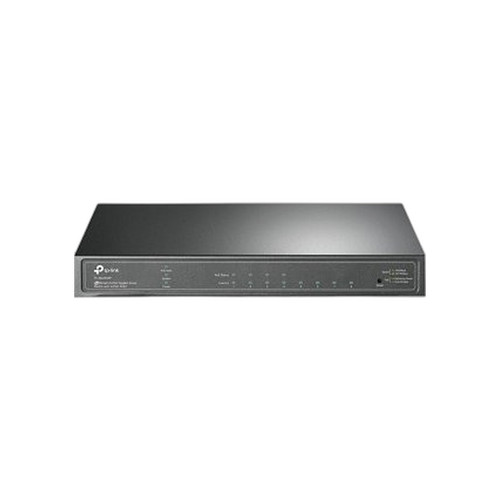
The TP-Link SG2008P and Comnet CNGE8MS are both 8-port, 1 Gbps managed switches aimed at IP security and surveillance infrastructure, but they are engineered for distinctly different deployment environments. The SG2008P targets indoor IT closets and small-to-medium installations where 802.3at PoE+ device powering and cloud-based SDN management are priorities. The CNGE8MS targets harsh-environment and industrial edge sites where wide-range DC power, DIN-rail mounting, ring redundancy, and an extended temperature ceiling are non-negotiable. Both share a 16 Gbps switching fabric.
In This Guide
- How do the port layout, PoE capability, and switching throughput compare?
- Which switch is better suited to harsh physical environments and non-standard power sources?
- How do management capabilities, VLAN support, and network redundancy features differ?
- Which should you choose: the SG2008P or the CNGE8MS?
- Side-by-Side Specs
- FAQ
How do the port layout, PoE capability, and switching throughput compare?
Both switches deliver 16 Gbps of switching bandwidth across 8 ports at 1000 Mbps per port. The SG2008P provides 8 × RJ-45 copper ports, all PoE/PoE+-capable (802.3af/at), with a 62 W total PoE budget — sufficient to power approximately four 802.3at (30 W) cameras simultaneously. No SFP or fiber uplink is specified for the SG2008P.
The CNGE8MS offers a mixed-media port layout: 4 × RJ-45 copper ports and 4 × SFP combo slots, enabling fiber uplinks or extended copper runs depending on the SFP inserted. The CNGE8MS carries no PoE capability per the provided specifications. It also publishes a switching latency of 7 μs and an 8,192-entry MAC table — neither figure is provided for the SG2008P.
For deployments requiring PoE-powered cameras or access control readers, the SG2008P is the only option of the two. For deployments requiring fiber connectivity or long-distance uplinks to a head-end, the CNGE8MS's SFP combo ports address that need directly.
Which switch is better suited to harsh physical environments and non-standard power sources?
The SG2008P is powered by an external 53.5 VDC / 1.31 A AC adapter. It is rated for –40°C to 60°C operating temperature per the provided specifications, and supports wall or rack mounting. No ingress protection (IP) rating, humidity tolerance, or storage temperature is specified for the SG2008P.
The CNGE8MS is rated –40°C to +75°C operating (–40°C to +85°C storage), with humidity tolerance of 5%–95% non-condensing. It accepts dual DC inputs from 12–48 VDC, providing input-redundancy and compatibility with battery-backed DC power plants common in utility, transportation, and outdoor cabinet deployments. Typical power consumption is 25 W. It mounts on DIN-rail or wall — no rack mount is specified.
The CNGE8MS's +75°C operating ceiling, dual DC power inputs, and published humidity specification make it the clear choice for industrial enclosures, outdoor cabinets, and sites where AC mains are unavailable. The SG2008P's power supply dependency on an AC adapter limits its placement to locations with reliable mains power.
How do management capabilities, VLAN support, and network redundancy features differ?
The SG2008P is managed via TP-Link's Omada SDN platform, which supports cloud-based or on-premises controller management. Beyond the Omada SDN designation, the provided specifications do not list specific VLAN counts, MAC table size, supported IEEE management standards, or ring/redundancy protocols for the SG2008P.
The CNGE8MS specifies support for 4,096 VLANs (802.1Q), IEEE 802.1D/1p/1Q/1w/1s/1x/1AB standards, and proprietary ring redundancy protocols: C-Ring, Legacy Ring, and C-RSTP. These ring protocols enable sub-50 ms failover in ring topologies, a requirement in many industrial and critical-infrastructure surveillance networks. The CNGE8MS also carries a lifetime warranty; no warranty term is specified for the SG2008P.
Installers building ring-redundant fiber backbones for campus or perimeter surveillance will find the CNGE8MS's ring technology indispensable. Installers managing multiple sites from a single cloud dashboard will benefit from the SG2008P's Omada SDN integration, though the depth of that management feature set is not fully quantified in the provided specifications.
Which should you choose: the SG2008P or the CNGE8MS?
Our take: The SG2008P is the stronger choice when the deployment is indoors, requires PoE+ to power cameras or access control devices, and benefits from centralized Omada SDN cloud management. It delivers 62 W of 802.3at PoE budget across all 8 copper ports — the CNGE8MS provides zero PoE. The CNGE8MS is the stronger choice for harsh-environment and industrial edge sites: it extends 15°C higher in operating temperature (+75°C vs. +60°C), accepts dual 12–48 VDC inputs versus a single AC adapter, and adds fiber-capable SFP combo ports plus C-Ring/C-RSTP redundancy protocols absent from the SG2008P. It also carries a lifetime warranty against an unspecified term for the TP-Link. Choose the SG2008P for PoE-heavy indoor surveillance closets on an Omada-managed network; choose the CNGE8MS for industrial cabinets, outdoor enclosures, ring-topology backbones, or any site where AC mains reliability or ambient temperature is a concern.
Side-by-Side Comparison
Spec-for-spec, from manufacturer data.
| Specification | TP-Link SG2008P | Comnet CNGE8MS |
|---|---|---|
| Total Ports | 8 × RJ-45 | 4 × RJ-45 + 4 × SFP Combo |
| Port Speed | 1000 Mbps (Gigabit) | 1000 Mbps (Gigabit) |
| Switching Bandwidth | 16 Gbps | 16 Gbps |
| Switching Latency | — | 7 μs |
| PoE Support | 802.3af/at (all 8 ports) | None |
| PoE Budget | 62 W | — |
| Operating Temperature | –40°C to +60°C | –40°C to +75°C |
| Storage Temperature | — | –40°C to +85°C |
| Humidity Tolerance | — | 5%–95% non-condensing |
| Power Input | 53.5 VDC / 1.31 A (external AC adapter) | Dual DC 12–48 VDC |
| Power Consumption | 62 W (max with PoE) | 25 W typical |
| Mounting | Wall; Rack | DIN-Rail; Wall |
| VLAN Support | — | 4096 (802.1Q) |
| MAC Table Size | — | 8192 entries |
| Ring Redundancy | — | C-Ring, Legacy Ring, C-RSTP |
| Warranty | — | Lifetime |
| Management Platform | Omada SDN | — |
Frequently Asked Questions
Which should you choose: the SG2008P or the CNGE8MS?
The SG2008P is the stronger choice when the deployment is indoors, requires PoE+ to power cameras or access control devices, and benefits from centralized Omada SDN cloud management. It delivers 62 W of 802.3at PoE budget across all 8 copper ports — the CNGE8MS provides zero PoE. The CNGE8MS is the stronger choice for harsh-environment and industrial edge sites: it extends 15°C higher in operating temperature (+75°C vs. +60°C), accepts dual 12–48 VDC inputs versus a single AC adapter, and adds fiber-capable SFP combo ports plus C-Ring/C-RSTP redundancy protocols absent from the SG2008P. It also carries a lifetime warranty against an unspecified term for the TP-Link. Choose the SG2008P for PoE-heavy indoor surveillance closets on an Omada-managed network; choose the CNGE8MS for industrial cabinets, outdoor enclosures, ring-topology backbones, or any site where AC mains reliability or ambient temperature is a concern.
Can either switch power IP cameras directly without a separate PoE injector?
Only the SG2008P supports PoE. It provides 802.3af/at on all 8 RJ-45 ports with a 62 W total budget. The CNGE8MS does not include PoE capability per its published specifications, so cameras would require separate PoE injectors or a PoE-capable NVR port if paired with the CNGE8MS.
Which switch is better for an outdoor or industrial enclosure installation?
The CNGE8MS is purpose-built for that environment. It is rated to +75°C operating temperature, accepts 12–48 VDC dual inputs compatible with battery-backed DC power systems, and publishes a humidity tolerance of 5–95% non-condensing. It also mounts on DIN-rail, the standard in industrial enclosures. The SG2008P requires an AC adapter and no ingress or humidity rating is provided in the available specifications.
Does either switch support ring redundancy for a looped fiber backbone?
Yes — the CNGE8MS supports C-Ring, Legacy Ring, and C-RSTP ring protocols, enabling resilient ring topologies with fast failover. It also provides 4 SFP combo ports for fiber runs. The SG2008P's specifications do not list any ring redundancy protocol, and it has no SFP ports, making it unsuitable for ring-topology fiber backbones.
More Network Switch Comparisons
- TP-Link SG2210XMP-M2 vs Ubiquiti USW-FLEX-2.5G-8
- TP-Link SG2210XMP-M2 vs Comnet CNGE8MS
- TP-Link SG2210XMP-M2 vs Lantronix S2220-1014-NA
- TP-Link SG2210XMP-M2 vs TP-Link S4500-8GP
- TP-Link SG2210XMP-M2 vs TP-Link SG2008P
- TP-Link S4500-8GP vs Ubiquiti USW-FLEX-2.5G-8
Network Switch Buying Guides
Get a Second Opinion on Your Camera Choice
Share your site layout, coverage goals, and budget. Our team will validate the camera selection, flag anything we would change, and recommend products that match the use case.