
TP-Link S4500-8GP vs Ubiquiti USW-FLEX-2.5G-8: Specification Comparison
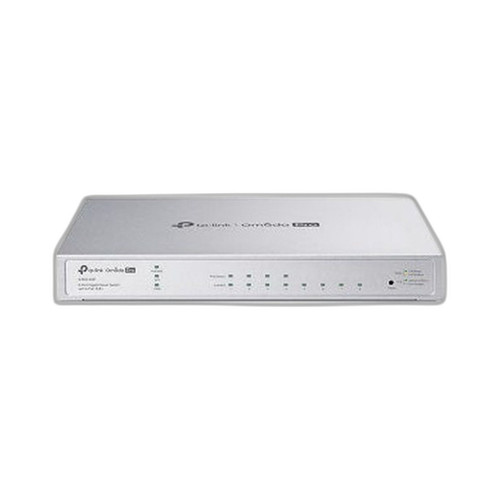
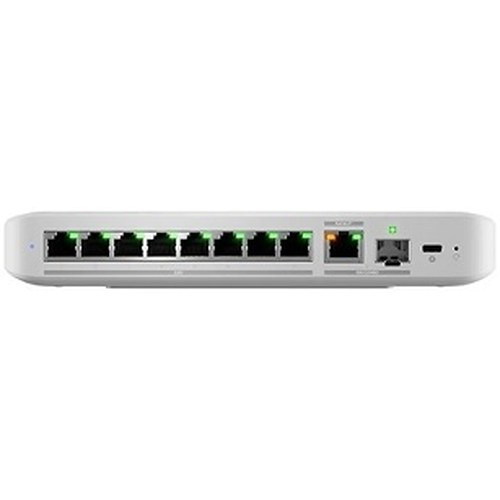
Both the TP-Link S4500-8GP and the Ubiquiti USW-FLEX-2.5G-8 are 8-port managed switches aimed at surveillance and networking installers, but they represent distinctly different performance tiers. The S4500-8GP delivers Gigabit copper ports with a 62 W PoE+ budget suited to powering edge devices, while the USW-FLEX-2.5G-8 offers 2.5 GbE per port with a 10 G hybrid uplink at the cost of a minimal 14 W passive power budget. This comparison covers port speed and throughput, power delivery and mounting, and management and integration.
In This Guide
- Which switch delivers more bandwidth and throughput for growing camera or wireless deployments?
- Which switch can power more and more varied edge devices, and where can it physically be installed?
- Which switch integrates more easily into an existing managed network and security ecosystem?
- Which should you choose: the S4500-8GP or the USW-FLEX-2.5G-8?
- Side-by-Side Specs
- FAQ
Which switch delivers more bandwidth and throughput for growing camera or wireless deployments?
The USW-FLEX-2.5G-8 operates at 2.5 GbE per access port versus the S4500-8GP's 1 GbE, giving each device connection 2.5× the headroom. The Ubiquiti's switching capacity is 60 Gbps with a stated non-blocking throughput of 30 Gbps and a forwarding rate of 45 Mpps. The TP-Link S4500-8GP specifies a switching capacity of 16 Gbps. The USW-FLEX-2.5G-8 also adds a hybrid 10 G uplink (RJ45 or SFP+), enabling a high-bandwidth fiber or copper trunk to an aggregation layer. The S4500-8GP spec sheet lists 2 SFP slots but does not specify uplink speed beyond the base 16 Gbps fabric figure. For deployments running high-resolution multi-stream cameras or Wi-Fi 6/6E access points where 1 Gbps per port is becoming a bottleneck, the Ubiquiti unit has a clear architectural advantage.
Which switch can power more and more varied edge devices, and where can it physically be installed?
The S4500-8GP is purpose-built for PoE delivery. It provides 62 W of PoE+ (802.3at/af) budget across 4 PoE+ ports, using a 53.5 VDC / 1.31 A external adapter, and supports wall or rack mounting with 11.6 × 7.1 × 1.7 in dimensions. This makes it practical for powering cameras, IP intercoms, or access control readers without a separate injector.
The USW-FLEX-2.5G-8's PoE posture is fundamentally different. It is a PoE-powered device (receives PoE+ input or USB-C 5 V/3 A), drawing only 14 W maximum itself; it does not source PoE to downstream ports per the provided specs. Its compact polycarbonate enclosure (212.9 × 76 × 33.5 mm, 395 g) supports wall, DIN-rail, and magnetic mounting, and is rated −20 to 45 °C — a wider thermal envelope than the S4500-8GP, for which no operating temperature is listed in the provided specs. Installers who need to power cameras directly from the switch must use the S4500-8GP or an external PoE injector on the Ubiquiti side.
Which switch integrates more easily into an existing managed network and security ecosystem?
The S4500-8GP is an Omada Pro L2+ smart switch managed via Omada SDN (web UI, CLI, SNMP Trap/Inform) with security features including 802.1X port authentication, ACL, and DoS defense. It supports EEE (energy-efficient Ethernet) and up to 256 VLANs is not explicitly stated in the provided specs — VLAN count is not listed. For teams already running TP-Link Omada controllers for wireless and routing, it slots into an existing single-pane management framework.
The USW-FLEX-2.5G-8 is a UniFi ecosystem device managed through UniFi Network, a well-established platform for unified wired and wireless management. It supports 256 VLANs with QoS per the provided specs. Its NDAA compliance is explicitly listed, which may be a procurement requirement for government or certain commercial security projects. The S4500-8GP does not list NDAA compliance in the provided specs. Management protocol depth (SNMP version, CLI access) for the Ubiquiti unit is not detailed in the provided specs.
Which should you choose: the S4500-8GP or the USW-FLEX-2.5G-8?
Our take: The S4500-8GP is the stronger choice when the deployment requires on-switch PoE+ power delivery to cameras, access control readers, or VoIP devices and the network runs at Gigabit speeds, particularly within an existing TP-Link Omada SDN environment. Its 62 W PoE+ budget directly powers up to 4 devices without injectors, and its L2+ feature set with 802.1X and ACL adds access-layer security. The USW-FLEX-2.5G-8 is the stronger choice when per-port bandwidth is the constraint: its 2.5 GbE access ports, 60 Gbps switching capacity, and 10 G hybrid uplink outperform the S4500-8GP's 16 Gbps fabric by a significant margin, and its −20 to 45 °C rating and multi-surface mounting suit harsh or space-constrained installs. However, it does not source PoE per the provided specs, requiring upstream power injection. NDAA compliance on the Ubiquiti unit may be decisive for government-adjacent projects. Choose by PoE need versus bandwidth headroom.
Side-by-Side Comparison
Spec-for-spec, from manufacturer data.
| Specification | TP-Link S4500-8GP | Ubiquiti USW-FLEX-2.5G-8 |
|---|---|---|
| Access Port Speed | 1 GbE (8 ports) | 2.5 GbE (8 ports) |
| Uplink Port | 2 × SFP (speed not specified in provided specs) | 1 × 10G hybrid (RJ45/SFP+) |
| Switching Capacity | 16 Gbps | 60 Gbps |
| Non-Blocking Throughput | — | 30 Gbps |
| Forwarding Rate | — | 45 Mpps |
| PoE Sourcing | 62 W PoE+ (802.3at/af), 4 ports | Not listed in provided specs |
| PoE Input (powered device) | — | PoE+ (802.3at) or USB-C 5 V/3 A |
| Max Power Consumption | 62 W | 14 W |
| Power Supply | 53.5 VDC / 1.31 A external adapter | AC/DC external 15 W |
| VLAN Support | Not listed in provided specs | 256 VLANs with QoS |
| Management Platform | Omada SDN (web, CLI, SNMP) | UniFi Network (Ethernet management) |
| Security Features | 802.1X, ACL, DoS Defense | — |
| Operating Temperature | — | −20 to 45 °C |
| Mount Options | Wall, Rack | Wall, DIN-rail, Magnetic |
| Enclosure | — | Polycarbonate, fanless |
| NDAA Compliant | — | Yes |
| Dimensions | 11.6 × 7.1 × 1.7 in | 212.9 × 76 × 33.5 mm |
| Weight | — | 395 g (0.87 lb) |
Frequently Asked Questions
Which should you choose: the S4500-8GP or the USW-FLEX-2.5G-8?
The S4500-8GP is the stronger choice when the deployment requires on-switch PoE+ power delivery to cameras, access control readers, or VoIP devices and the network runs at Gigabit speeds, particularly within an existing TP-Link Omada SDN environment. Its 62 W PoE+ budget directly powers up to 4 devices without injectors, and its L2+ feature set with 802.1X and ACL adds access-layer security. The USW-FLEX-2.5G-8 is the stronger choice when per-port bandwidth is the constraint: its 2.5 GbE access ports, 60 Gbps switching capacity, and 10 G hybrid uplink outperform the S4500-8GP's 16 Gbps fabric by a significant margin, and its −20 to 45 °C rating and multi-surface mounting suit harsh or space-constrained installs. However, it does not source PoE per the provided specs, requiring upstream power injection. NDAA compliance on the Ubiquiti unit may be decisive for government-adjacent projects. Choose by PoE need versus bandwidth headroom.
Can the USW-FLEX-2.5G-8 power my IP cameras directly like the S4500-8GP does?
Based on the provided specs, no. The USW-FLEX-2.5G-8 is a PoE-powered device — it receives PoE+ or USB-C power input and draws up to 14 W itself. It does not list outbound PoE sourcing to downstream ports. The S4500-8GP explicitly provides 62 W of 802.3at/af PoE+ budget to power cameras and other edge devices directly from the switch.
Is the S4500-8GP or USW-FLEX-2.5G-8 better for high-resolution camera streams that may saturate Gigabit links?
The USW-FLEX-2.5G-8 has a clear advantage here. Each of its 8 access ports runs at 2.5 GbE, and its switching fabric is rated at 60 Gbps with 30 Gbps non-blocking throughput. The S4500-8GP provides 1 GbE per port with a 16 Gbps switching capacity. If individual cameras or NVRs are approaching or exceeding 1 Gbps aggregate, the Ubiquiti unit provides the headroom; for standard HD/4K single-stream cameras well within 1 Gbps, either switch is sufficient at the port level.
Which switch is appropriate if my project has NDAA compliance requirements?
The USW-FLEX-2.5G-8 explicitly lists NDAA compliance in the provided specifications. The S4500-8GP does not list NDAA compliance in its provided specs. If NDAA compliance is a formal procurement requirement, the Ubiquiti USW-FLEX-2.5G-8 is the only unit of the two with a documented claim in the available data.
More Network Switch Comparisons
- TP-Link SG2210XMP-M2 vs Ubiquiti USW-FLEX-2.5G-8
- TP-Link SG2210XMP-M2 vs Comnet CNGE8MS
- TP-Link SG2210XMP-M2 vs Lantronix S2220-1014-NA
- TP-Link SG2210XMP-M2 vs TP-Link S4500-8GP
- TP-Link SG2210XMP-M2 vs TP-Link SG2008P
- TP-Link S4500-8GP vs Comnet CNGE8MS
Network Switch Buying Guides
Get a Second Opinion on Your Camera Choice
Share your site layout, coverage goals, and budget. Our team will validate the camera selection, flag anything we would change, and recommend products that match the use case.